


To improve focus and sleep during exam season, students need to prioritise 7-9 hours of quality sleep, implement strategic study-rest cycles, and actively manage their nervous system stress response. Research shows that students who maintain consistent sleep schedules perform 20% better on exams than those who pull all-nighters, whilst techniques like vagus nerve stimulation can reduce exam anxiety and enhance cognitive function.
Yet here's the paradox every student faces: the more you need to study, the harder it becomes to sleep. And the less you sleep, the less effectively you study. It's a physiological trap that millions of students fall into each exam season, sacrificing their wellbeing on the altar of academic performance.
The cost is profound. Studies from the University of California, Berkeley demonstrate that sleep deprivation reduces learning capacity by up to 40%, whilst chronic stress during exam periods can impair memory consolidation for months afterwards. The conventional wisdom of powered-through all-nighters and caffeine-fuelled cramming sessions isn't just ineffective: it's counterproductive.
This guide presents evidence-based strategies that work with your biology, not against it. From understanding your nervous system's response to academic pressure to implementing advanced sleep optimisation techniques, you'll discover how to transform exam season from a test of endurance into a demonstration of intelligent preparation.
Key Takeaways
- Sleep deprivation reduces learning capacity by up to 40%: prioritising 7-9 hours of sleep is essential for academic performance
- Strategic 10-20 minute power naps can enhance memory consolidation without disrupting nighttime sleep
- Vagus nerve stimulation and breathing exercises can shift your nervous system from stress to recovery mode in minutes
- Creating a consistent sleep-study schedule aligned with your natural chronotype maximises both rest and productivity
- Environmental optimisation (temperature, light, sound) can improve sleep quality by 30% during high-stress periods
Why Sleep Matters More Than You Think During Exam Season
Sleep isn't just rest: it's when your brain converts today's studying into tomorrow's knowledge. During deep sleep phases, your hippocampus transfers information to long-term memory storage, a process called memory consolidation. Without adequate sleep, this transfer becomes incomplete, leaving you with fragmented understanding despite hours of study.
The relationship between sleep and cognitive performance follows a dose-dependent curve. Research by Walker and colleagues (2017) shows that reducing sleep from 8 to 6 hours decreases next-day learning efficiency by 25%, whilst dropping to 4 hours creates a 40% deficit. For students, this translates directly to exam performance: every hour of lost sleep potentially costs you percentage points on your final grade.
Beyond memory, sleep deprivation devastates decision-making and problem-solving abilities. Your prefrontal cortex (responsible for complex reasoning and exam strategy) becomes increasingly disconnected from other brain regions after just one night of poor sleep. This explains why sleep-deprived students often make careless mistakes or struggle with questions they'd normally find straightforward.
The hormonal cascade triggered by sleep loss compounds these cognitive deficits. Cortisol levels spike whilst staying elevated throughout the day, creating a state of chronic stress that further impairs memory formation. Meanwhile, reduced growth hormone secretion during shortened sleep impedes the brain's ability to repair and strengthen neural connections formed during studying. This stress response system becomes dysregulated, trapping students in a cycle of poor sleep and diminished performance.
Cramming without sleep represents the ultimate false economy. Whilst you might cover more material in the short term, retention rates plummet. Studies consistently show that students who sleep after learning retain 40% more information than those who stay awake, making a good night's rest worth several hours of additional study time.
Your Nervous System Under Academic Pressure
Exam stress triggers your sympathetic nervous system (your body's accelerator pedal) flooding you with adrenaline and preparing you for threat. In evolutionary terms, this response helped our ancestors escape predators. In modern exam halls, it manifests as racing thoughts, sweaty palms, and the inability to recall information you know you've studied.
This stress response becomes particularly problematic when it persists for weeks during exam season. Your autonomic nervous system, designed for short bursts of activation, remains stuck in 'fight-or-flight' mode. Heart rate variability decreases, indicating reduced nervous system flexibility. Sleep becomes elusive as your body maintains a state of hypervigilance, scanning for threats that exist only on paper.
The vagus nerve's role in stress response offers a solution. As the longest cranial nerve, the vagus acts as your body's brake pedal, activating the parasympathetic nervous system to promote rest and recovery. When vagal tone is strong, you can shift more readily between focused attention during study and restorative relaxation during breaks.
Chronic academic stress weakens vagal tone, creating a vicious cycle. The more stressed you become, the harder it is to activate your parasympathetic response. This explains why stressed students often feel 'wired but tired': exhausted yet unable to relax or sleep properly.
Activating your parasympathetic nervous system becomes essential for breaking this cycle. Techniques that stimulate the vagus nerve can shift your physiology from stress to recovery in minutes, creating windows of opportunity for both effective studying and restorative sleep. The key lies in understanding these mechanisms and implementing them strategically throughout your exam preparation.
The Sleep-Study Cycle: Getting the Timing Right
Students need between 7 and 9 hours of sleep during exam season: not despite the pressure, but because of it. This isn't arbitrary; it reflects the time required for your brain to complete multiple sleep cycles, each containing different stages important for memory processing and cognitive restoration. Cutting sleep short interrupts these cycles, particularly the REM-rich periods in early morning that consolidate complex, conceptual learning.
Your chronotype (whether you're naturally a morning lark or night owl) significantly impacts when you should schedule intensive study sessions. Research by Preckel and colleagues (2021) found that students who aligned their study schedules with their natural energy peaks scored 15% higher on average than those who fought against their biological rhythms. Evening types forcing themselves into 6 AM study sessions are working against their neurobiology.
Creating an effective sleep-study schedule requires understanding ultradian rhythms: the 90-120 minute cycles of alertness and fatigue that occur throughout the day. Your brain naturally alternates between periods of high focus and necessary rest. Working with these cycles means studying in 90-minute blocks followed by 15-20 minute breaks, allowing your nervous system to oscillate between sympathetic activation and parasympathetic recovery.
Strategic napping amplifies this natural rhythm. A well-timed nap between 1-3 PM, when your circadian alertness naturally dips, can enhance afternoon and evening study sessions. The key is duration and timing: naps should align with your sleep pressure and circadian rhythm whilst not interfering with nighttime sleep.
A sustainable sleep-study schedule might look like this: consistent bedtime between 10-11 PM, wake time between 6-7 AM, first study block aligned with your chronotype's peak (morning for larks, late morning for owls), 90-minute focused sessions with 20-minute breaks, a strategic afternoon nap if needed, and a wind-down period starting 90 minutes before bed. This structure respects both your circadian biology and the learning demands of exam preparation.
Should Students Take Naps While Studying?
Yes, students should incorporate strategic naps into their study routine, but timing and duration are critical. The optimal nap length for cognitive enhancement is 10-20 minutes: long enough to enter light sleep but short enough to avoid sleep inertia. This 'power nap' improves alertness, memory consolidation, and creative problem-solving without leaving you groggy.
The science behind napping's benefits is compelling. During even brief naps, your brain clears adenosine (the chemical that builds up during wakefulness and creates sleep pressure) whilst consolidating recently learned information. Studies by Lahl and colleagues (2008) demonstrated that a 10-minute nap improved memory recall by 15% compared to no rest.
Timing matters as much as duration. Naps taken between 1-3 PM work with your natural circadian rhythm dip, whilst naps after 4 PM can interfere with nighttime sleep. If you're studying late, a 'prophylactic nap' in early evening can extend alertness without the crash associated with caffeine.
The relationship between napping and nighttime sleep follows clear patterns. Short naps (under 30 minutes) taken before 3 PM typically enhance nighttime sleep quality by reducing overall sleep pressure. However, longer naps or those taken late in the day can fragment nighttime sleep, creating a counterproductive cycle. Students pulling all-nighters should opt for multiple 10-minute 'micro-naps' rather than longer sleep periods that risk deeper sleep stages.
Advanced Sleep Optimisation Techniques for Students
Sleep hygiene for students requires adaptation to dormitory life, shared spaces, and irregular schedules. The fundamentals remain constant: consistent sleep-wake times, cool room temperature (18-19°C), darkness, and quiet. But implementation demands creativity. Blackout curtains might be impossible, but a quality eye mask achieves the same result. Earplugs or white noise apps can mask disruptive roommates or corridor noise.
Light exposure timing dramatically impacts sleep quality, particularly important for students staring at screens late into the night. Blue light suppresses melatonin production, pushing your circadian rhythm later. The solution isn't avoiding screens (unrealistic during exam season) but strategic light management. Use blue light filters after sunset, increase screen warmth, and critically, expose yourself to bright light within 30 minutes of waking to anchor your circadian rhythm.
Temperature regulation often gets overlooked but profoundly affects sleep quality. Your core body temperature must drop 1-2 degrees to initiate sleep. In overheated dorm rooms, this becomes challenging. Taking a hot shower 90 minutes before bed paradoxically helps: the subsequent cooling mimics your natural temperature decline. Keeping extremities warm whilst maintaining a cool core (socks but light clothing) optimises this thermal gradient.
Breathing techniques and vagus nerve exercises create the physiological conditions for sleep. The 4-7-8 breathing pattern (inhale for 4, hold for 7, exhale for 8) activates parasympathetic dominance within minutes. Pairing this with gentle neck stretches or humming stimulates the vagus nerve directly, shifting your nervous system into rest mode.
For students, implementing these techniques might follow this pre-sleep routine: screens off or heavily filtered 2 hours before bed, hot shower at 9 PM for an 11 PM bedtime, room temperature lowered or window cracked, 10 minutes of 4-7-8 breathing or gentle vagus nerve stimulation, and consistent implementation even on weekends to maintain circadian stability.
Foods and Supplements That Support Focus and Sleep
Nutritional timing affects both cognitive performance and sleep quality more than most students realise. Tryptophan-rich foods (turkey, eggs, cheese, tofu) consumed 2-3 hours before bed provide the raw materials for serotonin and melatonin production. Complex carbohydrates enhance tryptophan uptake, making a small serving of whole grain cereal with milk an evidence-based bedtime snack.
Magnesium deficiency, common in stressed students surviving on processed foods, directly impairs sleep quality and increases anxiety. Food sources like pumpkin seeds, dark chocolate (70%+ cacao), and spinach provide bioavailable magnesium. For rapid repletion during exam season, magnesium glycinate supplements (200-400mg) taken with dinner improve both sleep onset and morning cognitive function.
Caffeine requires strategic deployment rather than elimination. Its half-life of 5-7 hours means a 3 PM coffee still maintains 50% potency at 10 PM. The solution: front-load caffeine intake to morning hours, limit total daily consumption to 400mg (about 4 cups of coffee), and switch to L-theanine-rich green tea after noon for sustained focus without sleep disruption.
Vitamin D deficiency during winter exam seasons compounds sleep-wake cycle disruption. Students spending days in libraries miss important light exposure for vitamin D synthesis. Supplementation (1000-2000 IU daily) or dietary sources (fatty fish, fortified dairy) help maintain circadian rhythm stability.
Timing matters as much as selection. A typical exam season nutrition timeline: protein-rich breakfast with complex carbs for sustained morning focus, moderate lunch avoiding heavy fats that trigger afternoon drowsiness, strategic caffeine before 2 PM only, magnesium-rich dinner 3 hours before bed, and small tryptophan-containing snack 90 minutes before sleep. This pattern supports both daytime performance and nighttime recovery.
Building a Pre-Sleep Routine That Works
The most effective pre-sleep routine begins 90 minutes before your target bedtime, creating a gradual transition from sympathetic activation to parasympathetic dominance. This isn't about perfection: it's about consistency. Your nervous system responds to patterns, and a reliable routine becomes a powerful sleep cue.
Start with environmental preparation: dim lights throughout your living space, not just your bedroom. This triggers melatonin production whilst you complete other activities. Set devices to 'do not disturb' mode and place them charging outside your immediate sleep area. The mere presence of a phone, even face-down, maintains a subtle vigilance that impairs sleep depth.
Physical practices that calm the nervous system should follow. A warm shower or bath 60-90 minutes before bed initiates the temperature drop necessary for sleep onset. Gentle stretching or yin yoga postures held for 3-5 minutes activate the parasympathetic nervous system through mechanical vagus nerve stimulation. Even simple acts like gentle neck rolls or legs-up-the-wall pose create physiological shifts toward rest.
Breathing exercises and vagus nerve stimulation techniques provide the final preparation. The physiological sigh (two short inhales through the nose followed by a long exhale through the mouth) directly calms the nervous system. Pairing this with gentle humming or gargling activates the vagus nerve through the throat muscles.
A sample routine might flow like this: 9:30 PM - begin dimming lights and closing study materials; 9:45 PM - warm shower with lavender or chamomile scent; 10:00 PM - light stretching or restorative yoga; 10:15 PM - prepare tomorrow's clothes and study materials (reducing morning decisions); 10:30 PM - breathing exercises or vagus nerve stimulation; 10:45 PM - lights out with progressive muscle relaxation. This sequence, adapted to individual schedules, creates reproducible conditions for quality sleep even during high-stress periods.
Technology and Apps for Better Sleep
Sleep technology offers powerful tools when used strategically, but the paradox remains: using devices to improve sleep can itself become disruptive. The key lies in choosing technologies that work passively once initiated, rather than requiring ongoing interaction.
Sleep tracking through wearables provides objective data about your sleep patterns, but beware of orthosomnia: anxiety about sleep metrics that paradoxically worsens sleep quality. Focus on trends rather than nightly variations, using data to identify patterns like consistent wake times during REM sleep (suggesting temperature issues) or reduced deep sleep on certain days (perhaps linked to late caffeine).
White noise and sound apps can mask disruptive environmental noise common in student accommodation. Brown noise (deeper than white noise) often works better for sleep, mimicking the sound frequencies of ocean waves. Apps should play continuously through the night rather than on timers, preventing awakening when sounds stop. Set volume just loud enough to mask disruptions without becoming intrusive.
Blue light filtering goes beyond simple night mode. Apps that adjust colour temperature based on sunset times in your location create more natural light transitions. F.lux for computers and built-in features on phones should begin shifting light 2-3 hours before bedtime, reaching maximum warmth by sleep time.
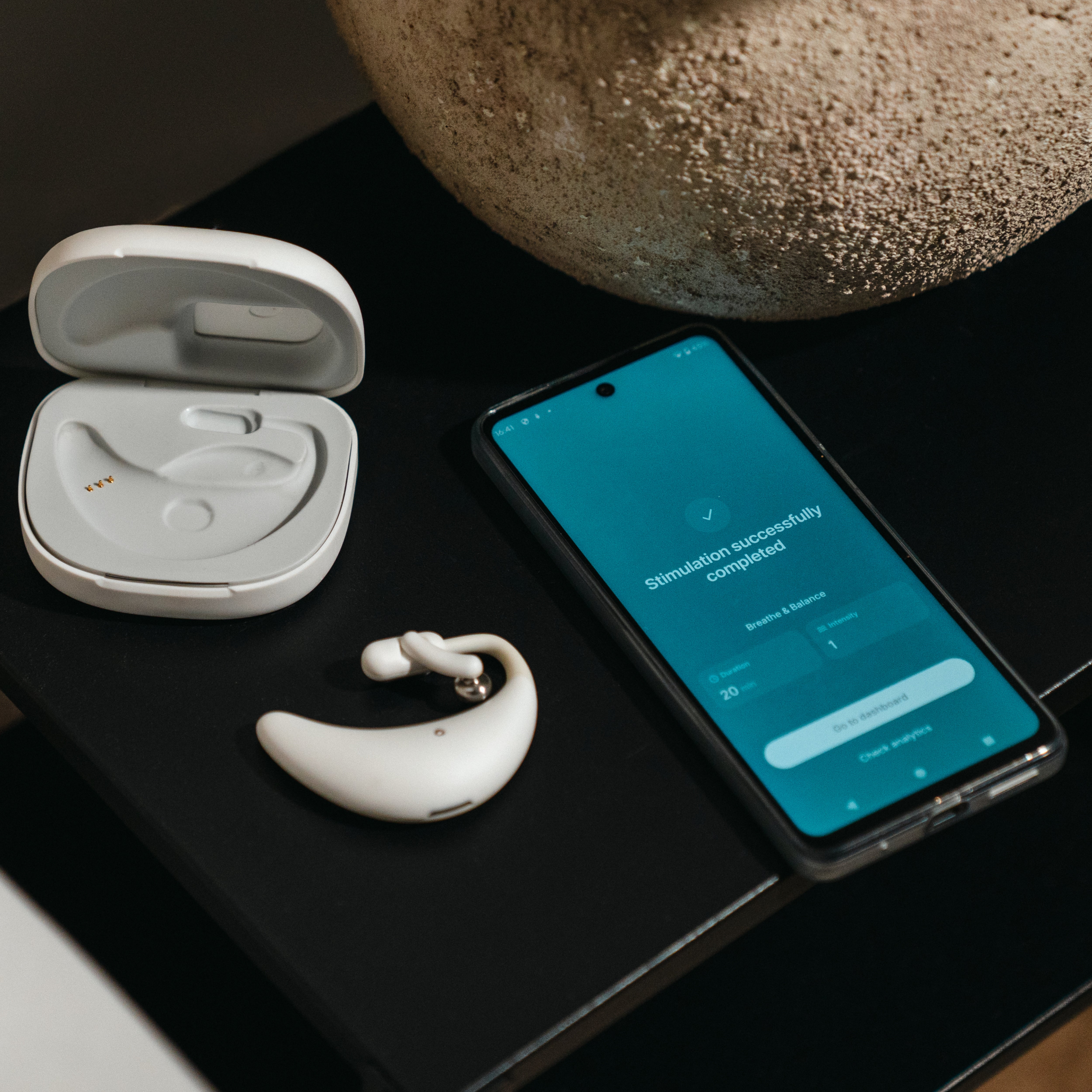
For advanced nervous system regulation, AI-powered vagus nerve stimulation represents the frontier of sleep technology. Unlike meditation apps that require active participation when you're already exhausted, devices that read your physiological signals and respond automatically work with your biology rather than demanding additional effort. 8 evidence-based techniques to calm your nervous system covers the same physiological pathway and why it matters during exam season.
The optimal tech stack might include: automatic blue light adjustment starting at sunset, continuous brown noise through quality speakers (not phone), minimal sleep tracking focused on weekly patterns, and physiological regulation tools that work passively. Remember, the goal is supporting natural sleep processes, not replacing them with technological dependencies.
Emergency Strategies: When You Can't Sleep Before an Exam
The night before a important exam, when sleep feels impossible, panic often makes things worse. Understanding that one night of poor sleep won't destroy your performance (if you handle it correctly) reduces anxiety and paradoxically improves your chances of rest.
First, abandon the clock-watching. Time monitoring increases sleep pressure and anxiety. If you can't fall asleep within 20 minutes, leave bed and engage in a quiet, non-stimulating activity in dim light. Reading fiction (not study materials) or gentle stretching prevents the bed-worry association that develops from lying awake anxiously.
The military sleep method, developed for pilots needing rest in stressful conditions, offers a systematic approach. Relax your face completely, including tongue and jaw. Drop shoulders as low as possible, then relax each arm. Exhale to relax your chest, then progressively relax your legs. Clear your mind for 10 seconds by imagining a calming scene. This technique, practised regularly, can induce sleep within 2 minutes.
If morning arrives without adequate sleep, damage control becomes important. Expose yourself to bright light immediately upon waking to maximise alertness. Take a cold shower, focusing the water on your face and neck to activate the diving reflex and vagus nerve. Eat a protein-rich breakfast with complex carbohydrates for sustained energy without crashes.
Strategic caffeine use on exam day requires precision. Consume 100-200mg (1-2 cups of coffee) 30 minutes before your exam for peak effect during test time. Pair with L-theanine (200mg) to reduce jitters whilst maintaining focus. Avoid the temptation to overcaffeinate: diminishing returns begin above 400mg, with increased anxiety offsetting alertness benefits.
Remember: your brain has redundancy built in. Even with suboptimal sleep, well-learned information remains accessible. Trust your preparation, use breathing techniques to manage exam anxiety, and know that one night of poor sleep is recoverable: catastrophising about it causes more harm than the sleep loss itself.
How Vagus Nerve Stimulation Helps with Exam Stress and Sleep
The vagus nerve acts as your body's built-in stress reset button, directly countering the sympathetic activation that keeps students wired during exam season. When stimulated, it releases acetylcholine, which slows heart rate, reduces inflammatory markers, and shifts your entire nervous system toward rest and recovery. For students, this means transitioning from anxious alertness to calm focus: or from racing thoughts to restorative sleep.
Clinical research on vagus nerve stimulation reveals profound effects on both stress and sleep quality. Studies show VNS increases heart rate variability (HRV), a key marker of nervous system flexibility and stress resilience. Higher HRV correlates with better emotional regulation, improved memory consolidation, and enhanced sleep architecture: exactly what students need during exam periods.
Traditional vagus nerve stimulation techniques include deep diaphragmatic breathing, cold water face immersion, gargling, and humming. These methods work by mechanically or chemically activating vagus nerve branches. The breathing technique proves particularly effective: slow exhalations (longer than inhalations) directly stimulate vagal activity, explaining why practices like 4-7-8 breathing rapidly induce calm.
Modern approaches to vagus nerve stimulation use technology for more consistent results. Non-invasive devices can deliver targeted stimulation without the effort required by breathing exercises: valuable when you're already exhausted from studying. The key advantage lies in reliability: while manual techniques require perfect execution, technological approaches provide consistent vagal activation regardless of your stress level or fatigue.
For exam preparation, integrating vagus nerve stimulation might include: morning breathing exercises to set a calm baseline, brief stimulation sessions during study breaks to maintain nervous system balance, pre-sleep routines incorporating vagal activation for better sleep quality, and quick resets before exams to optimise performance state. This systematic approach transforms stress management from reactive coping to proactive nervous system regulation.
Long-term Benefits: Building Resilience Beyond Exams
The sleep and stress management skills developed during exam season create lasting changes in nervous system function. Students who learn to regulate their autonomic nervous system during academic pressure carry enhanced stress resilience into their careers. This isn't just about surviving exams: it's about rewiring your physiological stress response for life.
Neuroplasticity research reveals that consistent nervous system regulation practices create structural brain changes within 8-12 weeks. The prefrontal cortex strengthens its connections to the limbic system, improving emotional regulation. The hippocampus, important for memory, shows increased volume with improved sleep patterns. These changes persist long after exam season ends, providing a biological foundation for lifelong learning and stress management.
Health outcomes extend beyond academic performance. Students who maintain healthy sleep patterns during university show 40% lower rates of anxiety disorders in their twenties and thirties. The inflammatory markers elevated by chronic sleep deprivation (linked to everything from depression to cardiovascular disease) normalise with consistent sleep hygiene. You're not just investing in grades; you're investing in decades of better health.
Career advantages multiply for those who master sleep and stress management early. Professional environments increasingly recognise that sustainable high performance requires recovery, not just effort. The executive who maintains excellent sleep hygiene outperforms the one who boasts about four-hour nights. The skills you develop now: reading your body's signals, managing energy strategically, activating recovery systems: become competitive advantages in demanding careers.
Building these habits during university, when neuroplasticity remains high and patterns aren't yet entrenched, offers maximum return on investment. Start with one consistent practice: perhaps morning light exposure or evening breathing exercises. Layer additional techniques as they become automatic. By graduation, you'll possess a toolkit for nervous system regulation that serves you through job interviews, career challenges, and life transitions. The student who masters sleep and stress doesn't just ace exams: they build the physiological foundation for a lifetime of resilient performance.
Frequently Asked Questions
How many hours of sleep do students actually need during exam season?
Students need 7-9 hours of sleep during exam season, the same as any other time. Research shows that cutting sleep to gain study time is counterproductive: every hour of lost sleep can reduce next-day learning efficiency by up to 12.5%. Maintaining full sleep allows your brain to consolidate memories and prepare for optimal cognitive performance.
Is it better to stay up late studying or wake up early?
This depends entirely on your chronotype. Night owls perform better studying late (until 1-2 AM) and waking later, whilst morning larks excel with early rising (5-6 AM) and earlier bedtimes. Fighting your natural rhythm reduces efficiency by 15-20%. The key is consistency: pick a schedule aligned with your biology and stick to it throughout exam season.
Can power naps really improve exam performance?
Yes, 10-20 minute power naps between 1-3 PM can improve memory recall by 15% and enhance afternoon alertness without disrupting nighttime sleep. The key is duration: stay under 30 minutes to avoid deep sleep and subsequent grogginess. Strategic napping is like hitting a reset button for your cognitive function.
What should I do if I can't fall asleep the night before an exam?
If you can't sleep within 20 minutes, leave bed and do a calm activity in dim light. Try the military sleep method: systematically relax your face, shoulders, arms, chest, and legs whilst clearing your mind. If morning comes without sleep, focus on damage control: bright light exposure, cold shower, protein-rich breakfast, and strategic caffeine use (100-200mg) 30 minutes before your exam.
How does stress actually affect memory during exams?
Exam stress floods your system with cortisol, which impairs the hippocampus (your brain's memory centre) and disrupts communication between brain regions. This creates the 'blanking out' phenomenon where you can't access information you know you've learned. Managing stress through vagus nerve stimulation and breathing techniques maintains the neural pathways necessary for memory retrieval.
Conclusion
Mastering sleep and focus during exam season isn't about superhuman discipline: it's about working with your biology rather than against it. The students who excel understand that their nervous system is their most powerful study tool, and learning to regulate it transforms both academic performance and long-term wellbeing.
The evidence is clear: prioritising sleep enhances rather than compromises your exam preparation. Every technique in this guide (from strategic napping to vagus nerve stimulation) is grounded in research showing how proper recovery amplifies cognitive function. The choice isn't between studying and sleeping; it's between effective preparation and exhausting struggle.
Start with one change. Perhaps it's setting a consistent bedtime, implementing a 20-minute pre-sleep routine, or trying breathing exercises during study breaks. Build from there, layering techniques as they become habitual. By treating your nervous system as thoughtfully as you treat your study materials, you create conditions for both immediate exam success and lifelong resilience.
Remember: the skills you develop now extend far beyond university. In a world that increasingly demands sustainable high performance, those who master the interplay of effort and recovery possess a important advantage. Your future self will thank you for learning these lessons during exam season rather than through career burnout decades later.
Ready to take control of your exam season stress? Explore how personalised nervous system regulation can transform your academic performance and beyond. Visit sona.help to discover the science of sustainable high performance.
Disclaimer
**DISCLAIMER:** Sona is a wellness device and is not a medically regulated product. The information in this article is for educational purposes only and does not constitute medical advice. We do not make any claims about Sona's ability to diagnose, treat, cure, or prevent any medical condition. Vagus nerve stimulation research referenced in this article relates to the broader field of VNS and may not be specific to any particular consumer device. Always consult a qualified healthcare professional before making decisions about your health.
Sources
- Walker, M. Et al. (2017). Sleep and Human Memory Consolidation. Nature Neuroscience.
- Preckel, F. Et al. (2021). Chronotype and Academic Performance: A Meta-Analysis. Learning and Individual Differences.
- Lahl, O. Et al. (2008). An Ultra Short Episode of Sleep is Sufficient to Promote Memory Performance. Journal of Sleep Research.



Share:
Transcutaneous Vagus Nerve Stimulation: 2026 Literature Review
The Busy Parent's Guide to Better Sleep and Daily Focus in 2026