Personalised vagus nerve stimulation
11 habits that help you recover well from stress
Heart rate variability (HRV) is a useful signal of how your body is responding to stress. It is not a score to chase. These are the habits with the best evidence behind them, what that evidence actually shows, and where SONA fits.


Each mark is a heartbeat, and each bar shows the gap before the next one. The gaps shorten as you breathe in and lengthen as you breathe out, partly because the vagus nerve slows the heart on each exhale. HRV is a measure of that variation. Illustrative, with the effect exaggerated for clarity.
What HRV is, and what it is not
It is a composite signal
HRV reflects several systems at once: the vagus nerve, blood pressure regulation, breathing, temperature and posture all leave their mark on it.¹ No single number captures how well you are coping.
It is highly individual
Age, fitness, genetics, medication and the device doing the measuring all shift HRV. Comparing your number with someone else’s tells you very little. Your own trend over weeks tells you more.
A single reading is noisy
HRV changes with breathing rate, time of day, a late meal, a glass of wine or simply standing up. A day-to-day dip is rarely meaningful on its own.
Higher is not always better in the moment
Some interventions, including taVNS, can lower HRV while they are happening. Pooled trials show no reliable rise in HRV from taVNS either.¹⁵ A dip is a response, not a failure.
So we treat HRV as one input among several, not as the outcome. The outcome that matters is how you feel and function over weeks and months.
The 11 habits
You do not need all of them. Choose two, keep them going for a month, then add another. Each habit carries a label for the strength of evidence behind the outcome it describes, which is not always HRV.
1. Keep a regular sleep schedule
When you sleep matters as much as how long. In a UK Biobank analysis of more than 60,000 adults, sleep regularity predicted mortality risk more strongly than sleep duration did.²
- Fix your wake time first, weekends included.
- Aim for seven to nine hours.
- Keep the bedroom cool, dark and quiet.
After 2 weeks of using Sona I have found considerable improvement in my sleep quality, specifically falling asleep more easily and not waking up throughout the night.

2. Get daylight early in the day
Bright light in the hours after waking is the strongest signal your body clock receives. It anchors the timing of sleep, which supports most of the other habits on this page. In the evening, the overall brightness of your surroundings matters more than the colour of your screen.³
- Spend time outdoors within an hour or so of waking. Overcast daylight is still far brighter than indoor lighting.
- Dim the lights in the last hours before bed.
I've been starting my days with the 10 minute sessions which has reduced my nervousness in the morning really well.

3. Practise slow breathing every day
Breathing at around six breaths a minute amplifies the natural rise and fall of heart rate with each breath. It does this by lining the breathing rhythm up with the baroreflex, the system that steadies blood pressure.⁴ A meta-analysis of trials using this technique found large reductions in self-reported stress and anxiety.⁵
- Breathe in for about four seconds and out for about six.
- Practise for ten to twenty minutes a day.
- The best rate for you lies somewhere between about four and a half and seven breaths a minute, and it differs from person to person.
The difference with SONA is that it combines the guided breathing with actual electrical stimulation so you can physically feel something happening.

4. Use a cyclic sigh when stress spikes
Two inhales through the nose, the second topping up the first, then a long, slow exhale through the mouth. In a one-month randomised study, five minutes a day of cyclic sighing improved mood and lowered breathing rate more than mindfulness meditation did.⁶
- One to three sighs in the moment.
- Five minutes a day as a regular practice.
Combined with the calming sounds of the app and the breathing guidance, after a stressful day at work, this has really helped me unwind and feel relaxed.

5. Build aerobic fitness, and respect recovery
Regular aerobic training is associated with higher resting HRV, particularly in people starting from a low level of fitness.⁷ Hard training without enough recovery pushes the other way in the short term, which is why endurance coaches watch HRV trends to decide when to ease off.⁸
- Do most of your training at a pace where you can still hold a conversation.
- Build gradually, with lighter days between harder ones.
- Judge your HRV by its trend over weeks, not day by day.
Your ability to adapt is only as good as your ability to recover.

Doing the fundamentals? SONA personalises the rest to your own data.
Shop SONA6. Drink less alcohol
Alcohol lowers HRV during sleep, and the effect grows with the dose. In a real-world study of more than 4,000 Finnish employees, even low intake reduced HRV in the first hours of sleep, and higher intake reduced it further.⁹
- Keep several nights a week alcohol-free.
- If you do drink, drink less and finish earlier in the evening.
Alcohol has a negative effect on our recovery while we are asleep.

7. Eat a Mediterranean-style diet
In a study of middle-aged male twins, closer adherence to a Mediterranean dietary pattern was associated with higher HRV, independent of shared genes and upbringing.¹⁰ Trials of fish oil show a small effect on HRV.¹¹
- Eat two portions of fish a week, one of them oily.
- Build meals around vegetables, pulses, wholegrains, nuts and olive oil.
Speak to a clinician before taking high-dose supplements, particularly if you take blood-thinning medication.
The autonomic system controlling someone's heart rate works better in people who eat a diet similar to a Mediterranean diet.

Ten minutes a day, tuned to how your body responds.
Shop SONA8. Use cold water on your face, not a cold shower
Cold water on the face triggers the diving reflex. Receptors around the eyes and nose signal through the trigeminal nerve, and the vagus nerve slows the heart within seconds.¹² A cold shower does something different. Cold on the body triggers cold shock: a gasp, faster breathing and a surge in heart rate.¹³ That is a stress response, not a settling one.
- Hold a cold, wet cloth to your forehead and cheeks, or lower your face into a bowl of cold water, for fifteen to thirty seconds.
- Breathe normally and stop if it is uncomfortable.
Not advised if you have a heart rhythm condition or heart disease without first checking with your doctor.¹⁴
Being immersed in cold water puts a huge strain on the heart, which can cause irregular heartbeats.

9. Train your attention
There is moderate-strength evidence that meditation programmes reduce anxiety, depression and pain.¹⁶ Their effect on HRV itself is less consistent, which is a useful reminder that feeling better and moving a number are not the same thing.
- Start with ten minutes a day.
- A guided programme makes the first weeks easier.
- Regular short sessions do more than occasional long ones.
As an experienced meditator, I was curious whether using it during meditation would make a difference, and I've been surprised on two fronts.

10. Invest in your relationships
Across 148 studies and more than 300,000 people, stronger social relationships were associated with a 50% greater likelihood of survival over the study periods.¹⁷ Few habits on this page have evidence on that scale.
- Make regular time for people you trust.
- Shared activity counts. A walk with a friend covers two habits at once.
When someone is connected to a group and feels responsibility for other people, that sense of purpose and meaning translates to taking better care of themselves and taking fewer risks.

Add the one habit that adapts to you.
Shop SONAPeople respond differently. SONA is built around that.
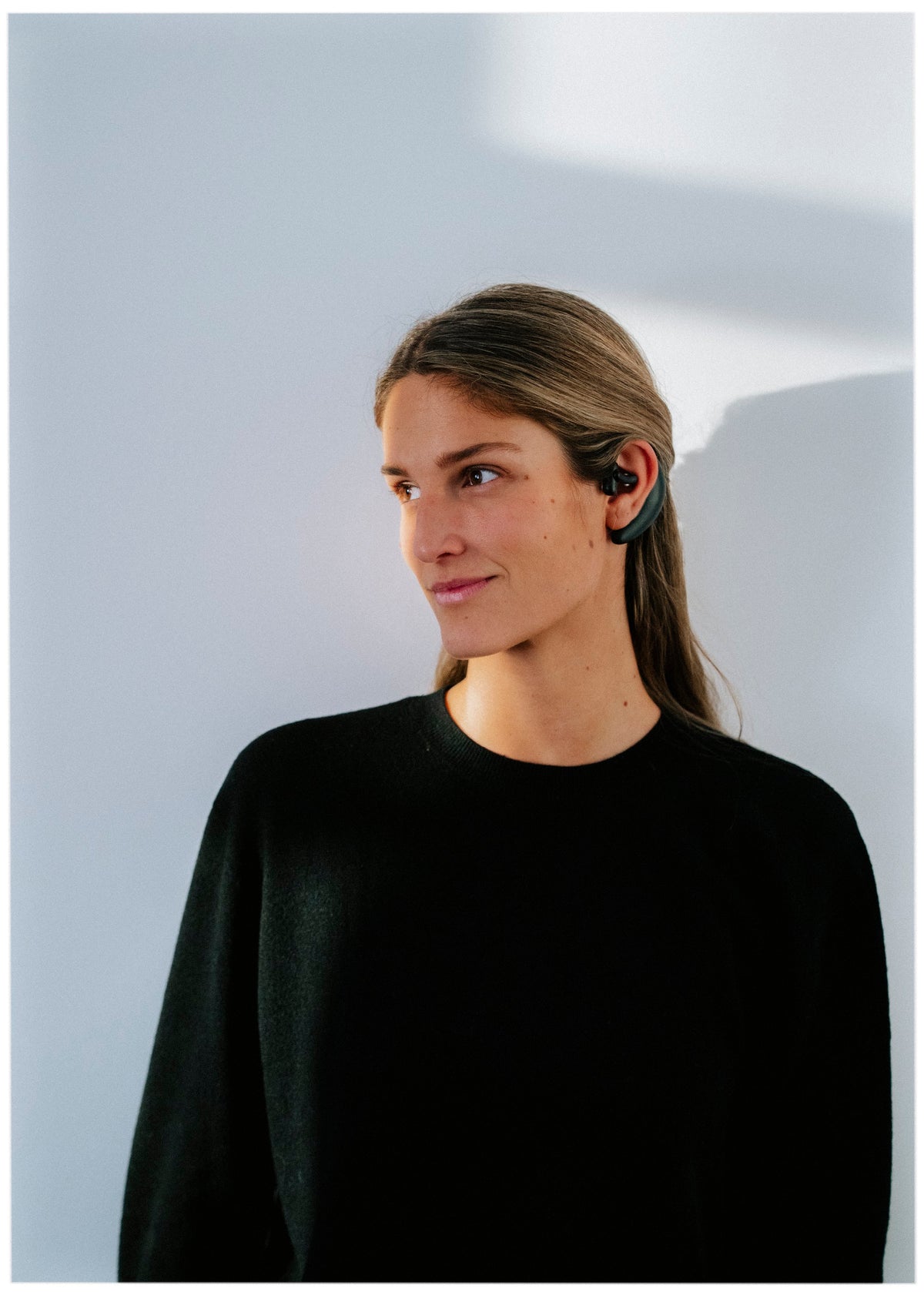
SONA delivers transcutaneous auricular vagus nerve stimulation (taVNS): gentle electrical stimulation through the skin of the outer ear, where a branch of the vagus nerve runs close to the surface.
Most taVNS devices run the same settings for everyone, yet people do not respond in the same way. SONA measures how your body responds and adapts the stimulation to you. HRV is one of the signals it reads, as an input rather than a target.
In many people HRV dips when stimulation begins, and pooled trials show no reliable rise.¹⁵ That is a recognised pattern, and it is why we do not promise you a higher number. We judge success the way you will: by how you feel and function over weeks of use.
- Reads your HRV, heart rate and breathing rate during each session
- Sessions of 5 to 40 minutes, alongside the habits above rather than instead of them
- Wireless, with a charging case, so you can use it on the go
SONA vs. a generic taVNS device
| SONA | Generic taVNS | |
|---|---|---|
| Mechanism | Gentle taVNS at the ear | Gentle taVNS at the ear |
| Personalisation | Adapts to how your body responds | Same settings for everyone |
| Feedback loop | Reads your signals during each session | No feedback |
| Guidance | App-guided, alongside the habits | On your own |
| Design | Wireless, with a charging case. Use it on the go | Often wired, and used lying down |
Start with two habits. Add SONA when you want it personalised.
The fundamentals do most of the work. SONA adapts to how you respond, so the stimulation suits you rather than an average.
Science you can feel — or your money back
We are on a mission to make nervous-system care personal, measurable and genuinely useful. Try SONA daily for 60 days. If it is not right for you, we will refund you — no questions asked.
- 60-day money-back guarantee
- 10% off your first device as a trial
- 1-year warranty: repair or replace, free of charge
- App included
References
- Shaffer F, Ginsberg JP. An overview of heart rate variability metrics and norms. Front Public Health. 2017;5:258.
- Windred DP, Burns AC, Lane JM, et al. Sleep regularity is a stronger predictor of mortality risk than sleep duration: a prospective cohort study. Sleep. 2024;47(1):zsad253.
- Blume C, Garbazza C, Spitschan M. Effects of light on human circadian rhythms, sleep and mood. Somnologie. 2019;23(3):147–156.
- Lehrer PM, Gevirtz R. Heart rate variability biofeedback: how and why does it work? Front Psychol. 2014;5:756.
- Goessl VC, Curtiss JE, Hofmann SG. The effect of heart rate variability biofeedback training on stress and anxiety: a meta-analysis. Psychol Med. 2017;47(15):2578–2586.
- Balban MY, Neri E, Kogon MM, et al. Brief structured respiration practices enhance mood and reduce physiological arousal. Cell Rep Med. 2023;4(1):100895.
- Sandercock GR, Bromley PD, Brodie DA. Effects of exercise on heart rate variability: inferences from meta-analysis. Med Sci Sports Exerc. 2005;37(3):433–439.
- Plews DJ, Laursen PB, Stanley J, Kilding AE, Buchheit M. Training adaptation and heart rate variability in elite endurance athletes: opening the door to effective monitoring. Sports Med. 2013;43(9):773–781.
- Pietilä J, Helander E, Korhonen I, et al. Acute effect of alcohol intake on cardiovascular autonomic regulation during the first hours of sleep in a large real-world sample of Finnish employees: observational study. JMIR Ment Health. 2018;5(1):e23.
- Dai J, Lampert R, Wilson PW, et al. Mediterranean dietary pattern is associated with improved cardiac autonomic function among middle-aged men: a twin study. Circ Cardiovasc Qual Outcomes. 2010;3(4):366–373.
- Xin W, Wei W, Li X. Short-term effects of fish-oil supplementation on heart rate variability in humans: a meta-analysis of randomized controlled trials. Am J Clin Nutr. 2013;97(5):926–935.
- Khurana RK, Watabiki S, Hebel JR, Toro R, Nelson E. Cold face test in the assessment of trigeminal-brainstem-vagal function in humans. Ann Neurol. 1980;7(2):144–149.
- Tipton MJ. The initial responses to cold-water immersion in man. Clin Sci. 1989;77(6):581–588.
- Shattock MJ, Tipton MJ. ‘Autonomic conflict’: a different way to die during cold water immersion? J Physiol. 2012;590(14):3219–3230.
- Wolf V, Kühnel A, Teckentrup V, Koenig J, Kroemer NB. Does transcutaneous auricular vagus nerve stimulation affect vagally mediated heart rate variability? A living and interactive Bayesian meta-analysis. Psychophysiology. 2021;58(11):e13933.
- Goyal M, Singh S, Sibinga EMS, et al. Meditation programs for psychological stress and well-being: a systematic review and meta-analysis. JAMA Intern Med. 2014;174(3):357–368.
- Holt-Lunstad J, Smith TB, Layton JB. Social relationships and mortality risk: a meta-analytic review. PLoS Med. 2010;7(7):e1000316.