

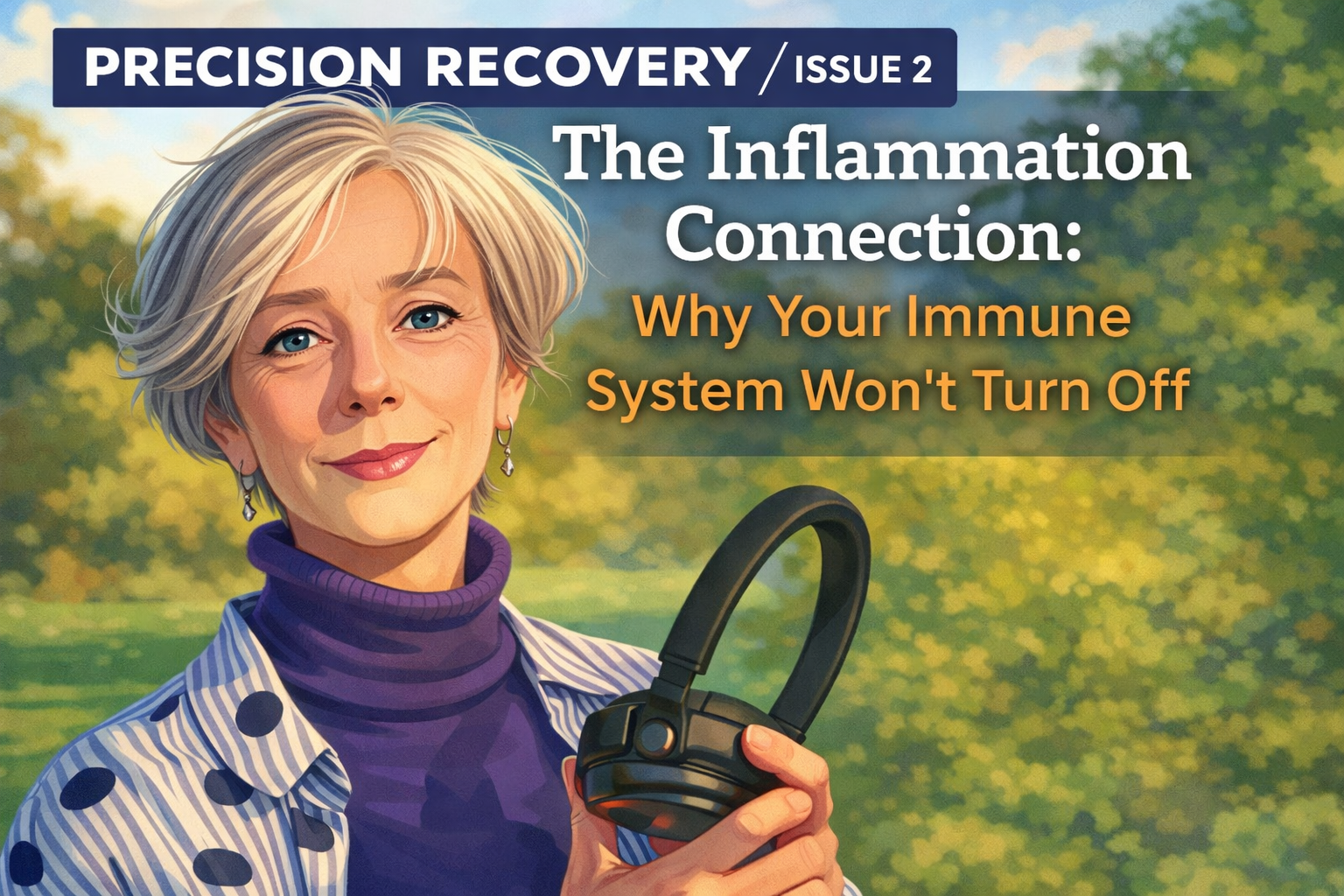
Last month, I introduced the concept of precision recovery - why modern life has broken our capacity to heal and what we can do about it.
The response was overwhelming. Hundreds of messages from people living with chronic inflammation, autoimmune conditions, Long COVID, and illnesses their doctors can't explain.
One question kept coming up: "Why won't my inflammation resolve?"
This month, I'm answering it. And I'll be honest - what I'm about to share might make you angry. Because once you see how this works, you'll realize how many years you've spent treating symptoms of a problem no one explained to you.
But here's the thing: understanding this changes everything.
The Immune System You Don't Know You Have
Pop quiz: What controls your immune system?
If you said "white blood cells" or "antibodies," you're not wrong. But you're missing the bigger picture.
There's another immune system - one that doesn't fight infections but regulates when and how much your body inflames. It's like the thermostat in your house: it doesn't generate the heat, but it controls when the furnace turns on and, crucially, when it shuts off.
That thermostat? It's a single nerve. Your vagus nerve.
Through something called the cholinergic anti-inflammatory pathway (I know, terrible name), your vagus nerve acts as the master switch for your body's inflammatory response. When vagal tone is healthy, inflammation rises when needed - to fight infection, heal a wound - then resolves when the job is done.
But when vagal tone is compromised, when your nervous system is stuck in sympathetic dominance? The thermostat breaks. The furnace stays on. Your house gets hotter and hotter, and no amount of opening windows (anti-inflammatory drugs, supplements, diet changes) can fix the fact that the control system itself is broken.
How a Stuck Nervous System Creates Chronic Inflammation
Let me tell you about one of the most fascinating studies I've ever read.
In the 1990s, psychologist Sheldon Cohen at Carnegie Mellon did something brilliant and slightly diabolical. He recruited healthy volunteers, assessed their stress levels, then deliberately gave them cold viruses via nasal drops. Then he locked them in quarantine and watched to see who got sick.
The results were stunning: people under higher psychological stress were significantly more likely to develop colds after virus exposure, with infection rates ranging from 74% in low-stress individuals to 90% in high-stress individuals. The effect was dose-dependent - every increase in stress meant an increase in risk of getting sick.
But here's the kicker: smoking, alcohol, exercise, diet, sleep quality, and immune markers couldn't explain the relationship. Something else was going on.
That something was inflammation. When Cohen measured inflammatory cytokines in nasal secretions, he found that stressed individuals produced excessive amounts - and it was this inflammatory overproduction that triggered symptoms.
Think about that. Same virus. Same dose. Different nervous system state. Completely different outcome.
Here's what happens at the cellular level:
When you're in chronic stress, when your sympathetic nervous system dominates, vagus nerve activity decreases. Less vagal activity means less acetylcholine (the neurotransmitter your vagus nerve releases) reaching your immune cells.
Without adequate vagal input, immune cells lose their "off switch." They keep producing pro-inflammatory cytokines - the signaling molecules that drive inflammation - even when there's no threat present.
Your body is fighting a war that ended years ago. And it can't hear the signal to stand down.
This mechanism explains why:
-
Autoimmune diseases flare during stress
-
Long COVID symptoms persist months after viral clearance
-
Chronic fatigue won't resolve with rest alone
-
Depression and anxiety often accompany inflammatory conditions
-
Standard anti-inflammatory medications only provide temporary relief
You can't medicate your way out of autonomic dysfunction.
The Long COVID Story
Long COVID gave us a devastating natural experiment in what happens when the nervous system can't reset after infection.
I've worked with Long COVID patients whose stories break my heart. People who ran marathons, now exhausted after walking to the mailbox. People whose careers ended because they can't think through brain fog thick enough to drown in.
Research shows that COVID-19 doesn't just infect the respiratory system - it directly affects the vagus nerve. In some patients, this triggers a cascade of autonomic dysfunction that persists long after the virus is gone. It's like the virus tripped a circuit breaker that won't reset.
The symptoms - crushing fatigue, brain fog, exercise intolerance, dysautonomia - aren't "post-viral syndrome" in some vague sense. They're manifestations of a nervous system stuck in inflammatory overdrive, unable to shift back to healing mode.
And here's what gives me hope: early clinical trials of transcutaneous auricular vagus nerve stimulation in Long COVID patients are showing remarkable results. In one pilot study, 57% of patients with chronic fatigue showed positive responses. Another study of 24 female Long COVID patients demonstrated improvements in cognition, anxiety, depression, sleep, and fatigue severity after just 10 days of treatment.
Why? Because they're addressing the mechanism - restoring vagal tone and allowing the cholinergic anti-inflammatory pathway to function again. They're fixing the circuit breaker, not just managing the symptoms of the power outage.
Autoimmune Disease: When Your Body Attacks Itself
Autoimmune conditions - rheumatoid arthritis, lupus, inflammatory bowel disease, multiple sclerosis - are fundamentally disorders of immune regulation.
For decades, we've treated them with immunosuppressants: medications that broadly dampen immune function to reduce inflammation. These drugs help manage symptoms but don't address why the immune system lost its ability to regulate itself in the first place.
It's like your immune system is a guard dog that's supposed to protect your house. But somewhere along the way, the dog got confused about who belongs and who doesn't. So now it's attacking family members.
Standard treatment? Sedate the dog so it stops attacking. But the dog is still confused. It just can't act on that confusion anymore.
What if instead, we could retrain the dog? Restore its ability to recognize friend from foe?
New research suggests that restoring vagal tone - and with it, the cholinergic anti-inflammatory pathway - may offer exactly that. Not suppressing the immune system, but restoring its capacity for self-regulation.
This isn't theoretical. Clinical trials of vagus nerve stimulation in rheumatoid arthritis patients have shown significant reductions in inflammatory markers and disease severity, in some cases allowing patients to reduce their medication doses.
The mechanism: vagal stimulation increases acetylcholine release, which binds to receptors on immune cells and signals them to stop producing inflammatory cytokines.
Your immune system isn't broken. The regulatory pathway controlling it is stuck. And that's something we can address.
The Stress-Inflammation Cycle
Here's where it gets insidious: inflammation doesn't just result from chronic stress. It perpetuates it.
Remember those stressed volunteers in Cohen's study who got infected with cold virus? They didn't just catch more colds. They produced dramatically higher levels of inflammatory cytokines, even though they got the exact same viral dose as everyone else.
Those inflammatory signals didn't just fight the virus. They traveled to the brain, triggering what scientists call "sickness behavior" crushing fatigue, difficulty concentrating, social withdrawal, loss of motivation. Your brain responding to inflammation the same way it would to a serious infection: by forcing you to rest.
In healthy people with good vagal tone, this is fine. You get sick, inflammation rises, sickness behavior keeps you in bed while you heal, then your vagus nerve signals the immune system to stand down. Inflammation resolves. You recover.
But in chronically stressed people, people with compromised vagal function, the inflammatory response doesn't resolve. The alarm keeps ringing even after the threat has passed.
This creates a devastating feedback loop:
Chronic stress → Reduced vagal tone → Excessive inflammation → Sickness behavior → More stress → Further vagal suppression → More inflammation
You're trapped in a room where the fire alarm won't turn off—even though the fire is out. The constant signal itself becomes the problem.
This is why you can eat the perfect anti-inflammatory diet, take every supplement, practice meditation, and still wake up exhausted with brain fog. You're treating the inflammation, but not the broken regulatory mechanism that allows it to persist.
The inflammation isn't the disease. It's the symptom of a nervous system that's lost its ability to return to baseline.
Why Generic Anti-Inflammatory Approaches Fall Short
You've probably tried:
-
Anti-inflammatory diets (elimination, paleo, AIP)
-
Supplements (turmeric, omega-3s, antioxidants)
-
Medications (NSAIDs, steroids, biologics)
-
Stress reduction (meditation, yoga, therapy)
Some of these help. Temporarily. But the inflammation returns because none of them restore the underlying regulatory mechanism.
It's like bailing water out of a boat without fixing the hole. You might keep yourself afloat, but you'll never stop bailing.
What's needed isn't more anti-inflammatory interventions. It's restoration of your body's innate anti-inflammatory pathway, the one controlled by your vagus nerve.
And here's something important: your mindset matters. Not because chronic inflammation is "all in your head", it absolutely isn't but because how you think about your condition affects your autonomic state.
When you believe healing is possible, when you feel safe and supported, when you can envision a path forward, your nervous system receives those signals too. Hope isn't just emotional. It's physiological. It creates the conditions where your vagus nerve can begin to function again.
This doesn't mean you can think your way out of autoimmune disease. But it does mean that addressing the psychological and emotional dimensions of chronic illness, trauma, fear, isolation, is part of restoring autonomic balance. Mind and body aren't separate systems. They're one integrated whole.
What Restoration Looks Like
When vagal tone is restored and the cholinergic anti-inflammatory pathway begins functioning again, we see measurable changes:
-
HRV increases (often doubling from baseline)
-
Inflammatory markers (CRP, ESR) normalize
-
Deep sleep duration increases significantly
-
Cognitive function returns
-
Fatigue begins to lift
-
Exercise tolerance improves
This isn't about suppressing symptoms. It's about restoring the mechanism that allows your body to regulate itself.
The Precision Approach to Inflammation
Generic vagus nerve stimulation doesn't reliably reduce inflammation. The research shows mixed results at best.
Why? Because effective anti-inflammatory intervention requires:
1. Sufficient dose to activate the cholinergic anti-inflammatory pathway 2. Appropriate timing aligned with circadian immune function 3. Sustained treatment allowing the pathway to re-establish itself 4. Real-time adaptation as autonomic state changes
This is why precision matters. Your inflammation isn't static. Your autonomic state changes throughout the day. Your inflammatory load varies with sleep quality, stress exposure, physical activity.
One-size-fits-all stimulation can't account for this variability. Adaptive, AI-guided intervention can.
What You Can Do
If you're living with chronic inflammation, whether diagnosed as an autoimmune condition, Long COVID, or "unexplained" symptoms, understanding the vagus nerve-inflammation connection matters.
Foundation practices:
-
Prioritize deep, restorative sleep (inflammation peaks during poor sleep)
-
Practice slow breathing (6 breaths per minute activates vagal tone)
-
Cultivate safe social connections (social support enhances vagal function)
-
Avoid chronic stress without recovery (this is the core driver)
When foundation isn't enough:
-
HRV biofeedback training can improve vagal tone
-
Working with practitioners who understand autonomic dysfunction
-
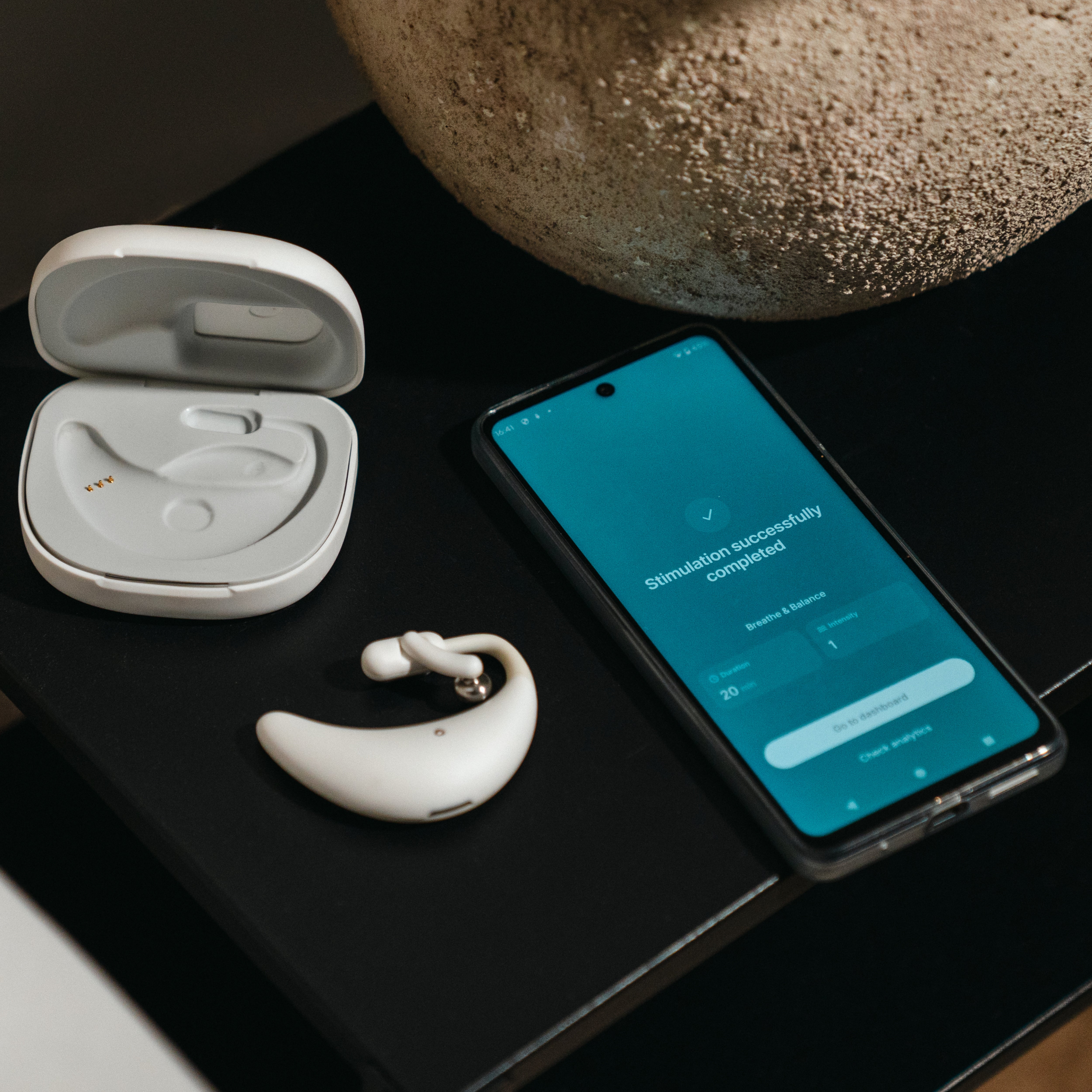
Considering precision neurostimulation for targeted vagal activation
The goal isn't to suppress your immune system. It's to restore its capacity for self-regulation.
We're Here to Help
If you're living with chronic inflammation, whether you have a diagnosis or you're still searching for answers, you don't have to figure this out alone.
We're on a mission to help people restore their capacity to heal. If what you've read here resonates, if you're curious about precision recovery, or if you just need someone who understands what you're going through, please get in touch.
Your story matters. Your healing matters.

Share:
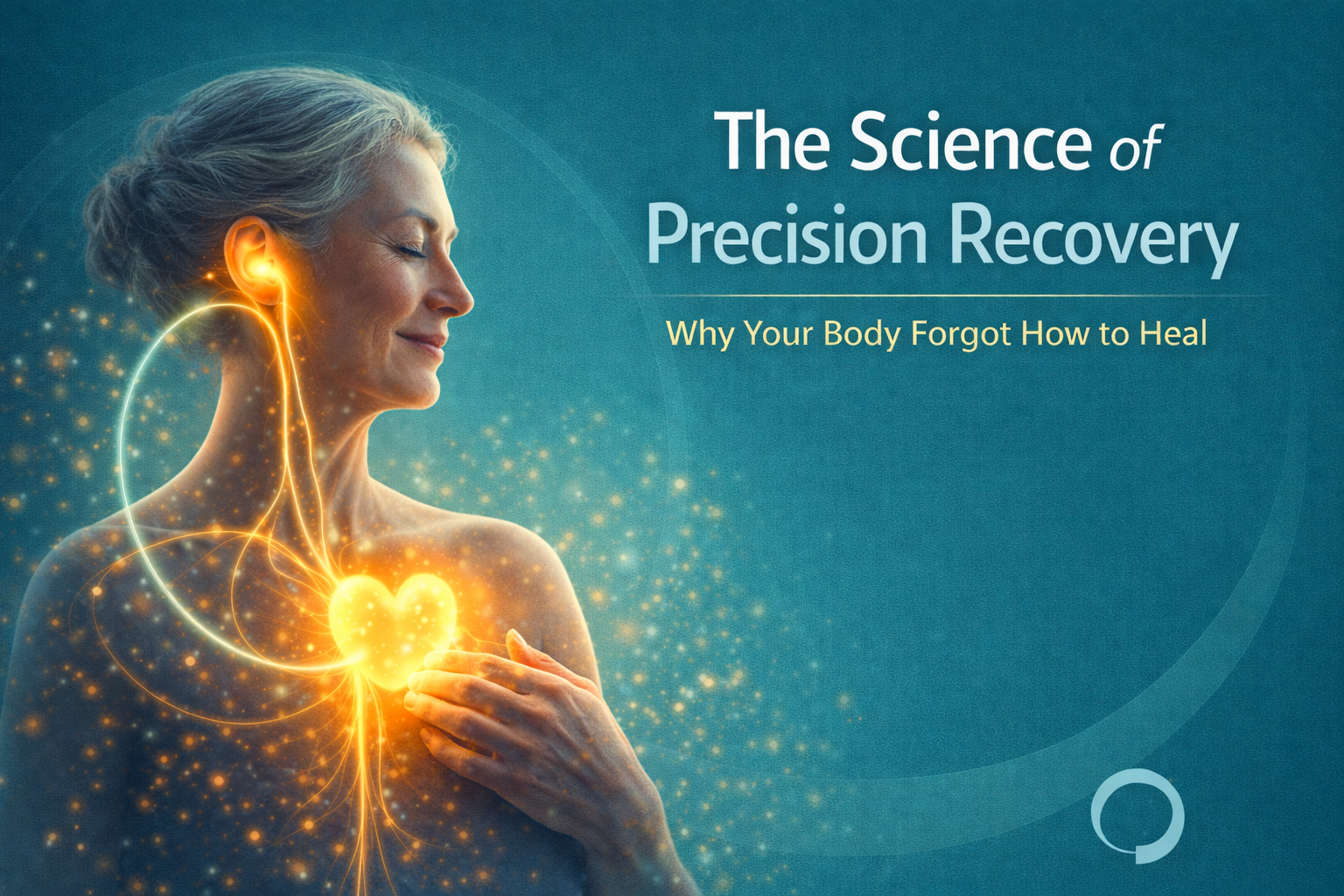
The Science of Precision Recovery: Why Your Body Forgot How to Heal
The Missing Piece in Women’s Health: The Nervous System