


Let's start with a simple, relatable fact: most modern humans are feeling the effects of stress right now. The feeling of being "on," wired or overwhelmed has become the background noise of modern life.
But what if you had a tool in your body that could dial down that stress, clear your mind, and even help you sleep?
You do. It's your breath.
Most of the time, breathing is an unconscious process managed by the background systems of your brain. But it's also the one unconscious process you can consciously take control of. Breath gives us all a lever to pull on your body's master stress-control pane [1]l: the Autonomic Nervous System.
This guide will break down the simple science of why it works and then give you three powerful, evidence-backed techniques—Resonant Breathing, Box Breathing and 4-7-8—each designed for a different goal.
Your Body's Gas Pedal, Brake Pedal and the "Stuck" Accelerator
To understand how a simple breath can change your entire mental state, you first need to meet your Autonomic Nervous System, or ANS. Think of it as your body's "gas pedal and brake pedal" system. This system controls all the involuntary stuff: your heart rate, digestion, blood pressure and, yes, your breathing.
It has two main branches. First is the "Gas Pedal"—the Sympathetic Nervous System or SNS—which is your "fight or flight" response. When your brain perceives a threat, such as a looming deadline, an unexpected bill or a tiger, it floors this gas pedal. Your heart pounds, your muscles tense, your breathing gets fast and shallow, and stress hormones like adrenaline and cortisol flood your system. This is designed to mobilize you for immediate, powerful action.
The second branch is the "Brake Pedal"—the Parasympathetic Nervous System or PNS—which is your "rest and digest" system. It's the "all-clear" signal. The PNS slows your heart rate, lowers your blood pressure and allows your body to perform long-term functions like digestion and sleep.
The problem is, in our modern world, we are set up to always perceive threats. Your body's stress response can't tell the difference between a tiger and an angry email. As a result, most of us are living in a state of chronic sympathetic activation. Our accelerator is stuck to the floor, and we're burning out our engine.
The Vicious Cycle of Stress and Breath
Here’s where it gets tricky. This system creates a powerful feedback loop. When you get stressed, your breathing pattern automatically changes; you start taking small, shallow breaths from your chest.
Your brain, which is constantly monitoring your body, senses this and thinks, "Ah, we're breathing fast and shallow! The threat must be real and ongoing!" This, in turn, tells the nervous system to keep the gas pedal floored.
This style of breathing, known as hyperventilation, doesn't just result from stress; it actively prolongs feelings of anxiety and makes the physical symptoms of stress worse.
Conscious, controlled breathing is the circuit-breaker. By deliberately changing your breathing, you are sending a powerful, physical signal back to your brain that "You are safe." This forces your brain to take its foot off the gas and gently tap the "brake."
The Secret Weapon: Your Built-In "Chill Out" Nerve
So, how does using breath as the remote control really work? The connection between your lungs and your brain is a physical "information superhighway" called the Vagus Nerve.
This nerve is, for all intents and purposes, the main "brake pedal." It contains about 75% of your entire Parasympathetic Nervous System's nerve fibers. When you have high vagal tone, you are calmer, your heart health is better and you are more resilient to stress.
And here is the hack: slow, deep, diaphragmatic (belly) breathing is one of the fastest and most effective ways to physically stimulate your vagus nerve [2].
When you take a slow, deep breath, the movement of your diaphragm activates the vagus nerve endings in your lungs. This sends a direct signal up to your brain that activates your entire "rest and digest" cascade. Your brain then tells your heart to slow down, your blood pressure to lower and your muscles to relax.
The Breathwork Toolkit: Three Techniques for Three Different Goals
The "best" tool depends on the job. Are you trying to build long-term balance, manage a panic attack or just get to sleep? Here is your toolkit to help use this powerful lever.
1. The "Balancer": Resonant or Coherent Breathing
This technique is all about balance, harmony and coherence.
What It Is: Resonant breathing involves breathing at a simple, 1:1 ratio where your inhale and exhale are the same length. The "resonant frequency" is the specific pace that maximises its effect, which for most adults is around 5 to 6 full breaths per minute.
The Pattern:
-
Inhale through your nose for a count of 5.
-
Exhale through your nose for a count of 5.
-
Repeat this cycle (if 5 is too long, start with 4).
The Science Simplified: Maximising Your "Stress Resilience" Score, or HRV.
This technique is the single best way to improve your Heart Rate Variability, or HRV. HRV is not your heart rate; it's the tiny, natural variation in time between your heartbeats. A high HRV is a sign of a healthy, adaptable nervous system. It means your body can quickly shift between "gas" and "brake."
The "Resonance" mechanism works because at the 5:5 pace, you are perfectly synchronising your breath with your heart rate and blood pressure, a process called the baroreflex. You are intentionally making the "wave" of your heart rate—speeding up and slowing down—as big and smooth as possible[2].
The Verdict on When to Use It:
This is your daily training. Think of it like taking your nervous system to the gym. This technique isn't a panic button; it's a proactive tool. You are not just calming down now; you are building a more robust, resilient "brake pedal" for the future.
2. The "Focus-Finder": Box Breathing
This technique is famously used by high-stress professionals like Navy SEALs, soldiers and police officers. That tells you its primary purpose: calm, clear-headed focus under pressure.
What It Is: Also known as "square breathing" or 4x4 breathing, it follows a perfect 1:1:1:1 ratio. You can visualise tracing the four equal sides of a box.
The Pattern:
-
Inhale through your nose for a count of 4.
-
HOLD your breath keeping lungs full for a count of 4.
-
Exhale through your mouth or nose for a count of 4.
-
HOLD your breath keeping lungs empty for a count of 4.
-
Repeat.
The Science Simplified: Beating Panic by Befriending CO₂.
The key feature of box breathing is the two breath-holds.
The Panic Problem arises when you are in an acute stress response—fight or flight—and your breathing becomes rapid and shallow, known as hyperventilation. The "Hold" Solution works because the breath-holds force your body to build up and tolerate a normal level of CO₂. This brief, controlled increase in CO₂ breaks the hyperventilation-panic loop and "resets" your brain's respiratory drive [3]. Additionally, the psychological bonus of the simple, rhythmic counting of 1-2-3-4 acts as a powerful cognitive anchor, helping pull you out of the grip of your "panic brain."
The Verdict on When to Use It:
This is your tool for acute, high-pressure moments. Use it before public speaking, during a difficult test or any time you feel overwhelmed but need to stay sharp and focused.
3. The "Tranquiliser": The 4-7-8 Breath
This technique, drawn from ancient pranayama yoga, was popularised by Dr. Andrew Weil, who calls it a "natural tranquiliser for the nervous system."
What It Is: This technique is very specific, and the steps matter. The power is in the 4:7:8 ratio.
The Pattern:
-
Sit with your back straight.
-
Place the tip of your tongue on the ridge of tissue just behind your top front teeth, keeping it there for the entire exercise.
-
Exhale completely through your mouth, making a "whoosh" sound.
-
Close your mouth and inhale quietly through your nose for a count of 4.
-
Hold your breath for a count of 7.
-
Exhale forcefully through your mouth around your tongue with a "whoosh" sound for a count of 8.
-
This is one breath. Repeat the cycle for a total of 4 breaths.
The Science Simplified: Slamming the Parasympathetic "Brake."
The key here is the dramatically extended exhale. The "Tranquiliser" mechanism works by making your exhale of 8 seconds twice as long as your inhale of 4 seconds; you are dramatically and intentionally activating the parasympathetic "brake."[4].
The Verdict on When to Use It:
This is your "rescue" tool. Use it when you feel a wave of anxiety, when your thoughts are racing or when you are in bed and cannot fall asleep.
Choosing Your Breath: A Quick-Reference Guide
The evidence is clear: different techniques use different mechanisms to achieve different goals.
Your Lungs Are a Superpower. Start Using Them.
The science is clear: slow, controlled breathing is one of the most powerful and accessible tools you have for managing your mental and physical health. The benefits are well understood: lowered blood pressure, lowered heart rate, reduced stress hormones and improved mood.
And you don't need an hour. A 2023 study found that just 5 minutes of daily breathwork improved mood significantly.
The next time you feel that familiar wave of stress, don't just push through it. Take a moment. Pick one of these techniques. Try four or five rounds.
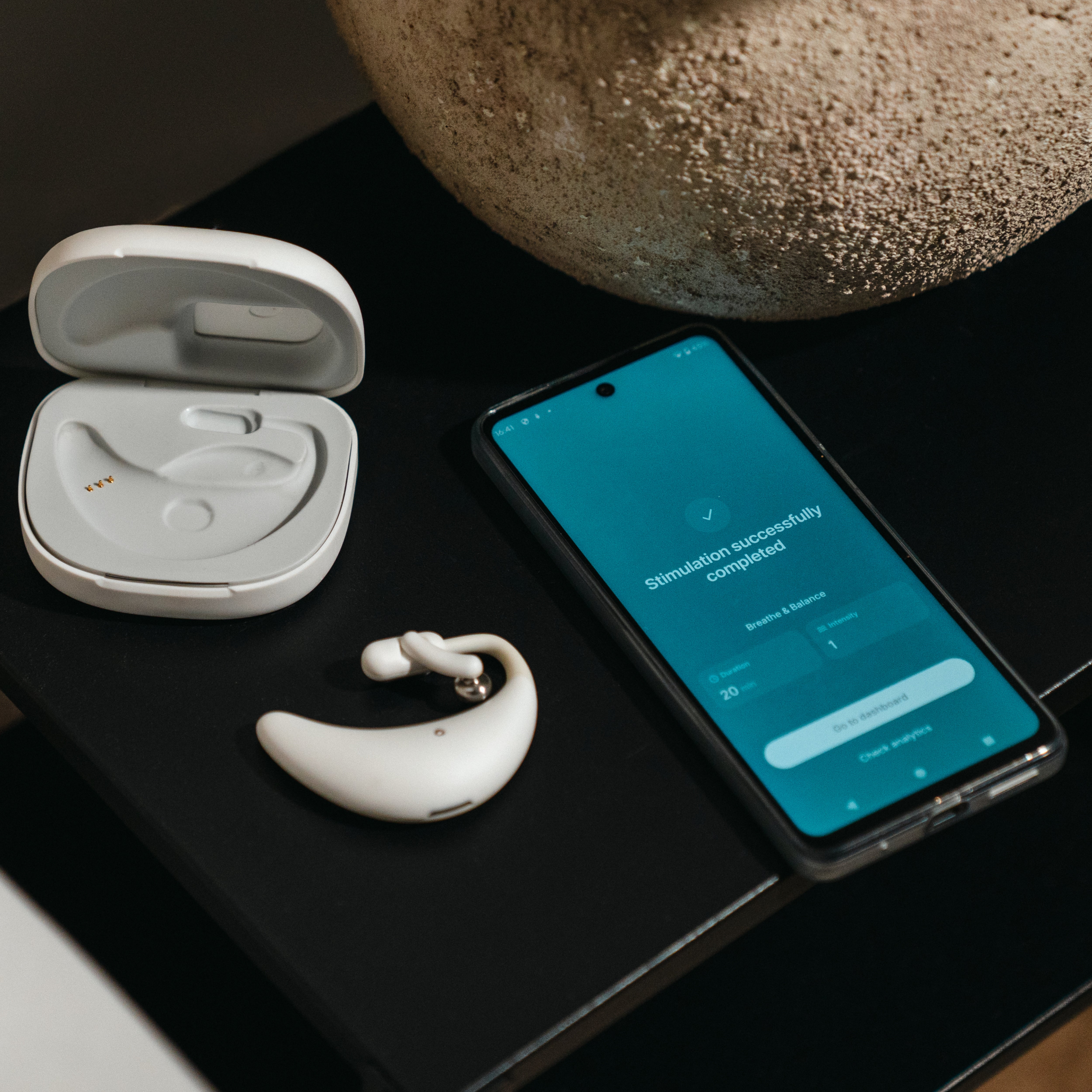
These exercises can be even more powerful when pairing with Vagus Nerve Stimulation, and if you’re a SONA user, we’ve got you covered with breathing pacers for these different methods!
Scientific References
[1] Russo, M. A., et al. (2017). The physiological effects of slow breathing in the healthy human. Breathe, 13(4), 298–309.
[2] Gerritsen, R. J. S., & Band, G. P. H. (2018). Breath of Life: The Respiratory Vagal Stimulation Model of Contemplative Activity. Frontiers in Human Neuroscience, 12, 397.
Share:
The Neuroscience of Burnout: Why It’s Not Just About Working Less
The Science of Precision Recovery: Why Your Body Forgot How to Heal