

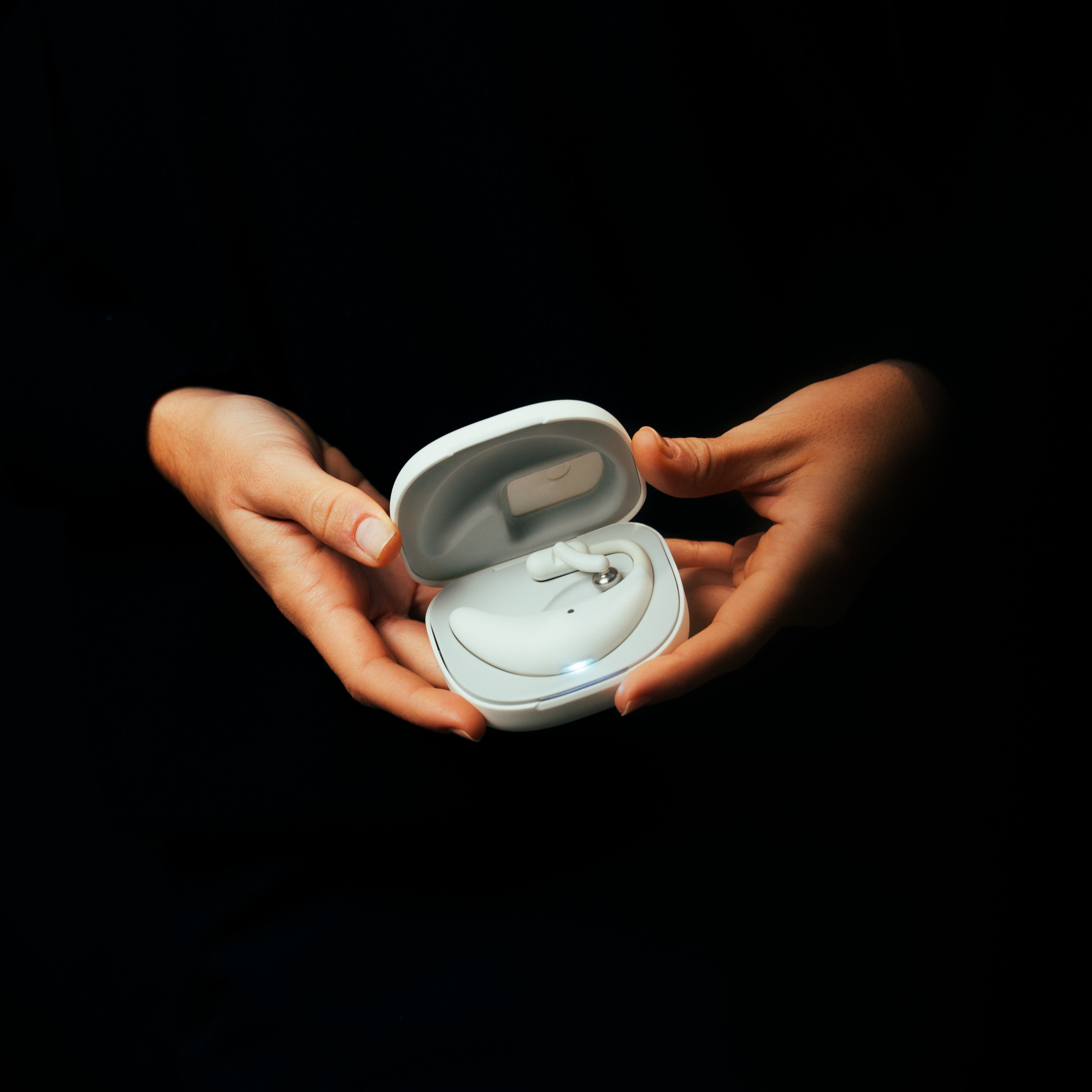
Choosing a vagus nerve stimulation (VNS) device is easier when you start from what you want it to do. The best pick for sleep is not the same as the best pick for daytime anxiety or for athletic recovery. This guide gives a use-case-first framework for picking a VNS device in 2026, with ranked picks for sleep, anxiety, burnout, focus and recovery, plus the questions to ask before you spend.
If you want a head-to-head specs comparison instead, our main VNS devices comparison sits each device next to SONA on hardware, app and personalisation. This article is the companion to that one: less spec-table, more decision tree.
Devices reviewed: SONA (AI-personalised tVNS), Truvaga (cervical handheld), Nurosym (transcutaneous auricular), Pulsetto (transcutaneous cervical), Apollo Neuro (vibrotactile, technically not VNS), and Sensate (infrasonic, also adjacent rather than direct VNS). Price range £150 to £695. We'll explain which to pick for each use case and why.
Key Takeaways
- SONA leads with AI-powered personalisation that adapts stimulation in real-time based on HRV and breathing patterns
- Price ranges vary significantly from £200 (Sensate) to £695 (SONA), reflecting different technology approaches
- Non-invasive consumer devices show promising results for stress, sleep, and HRV improvement without surgical risks
- Clinical evidence supports VNS effectiveness for anxiety, depression, and autonomic nervous system regulation
- Choice depends on individual needs: casual users may prefer simple devices whilst those seeking optimal results benefit from AI personalisation
Understanding Vagus Nerve Stimulation: The Science Behind VNS Devices
Do vagus nerve stimulation devices actually work? The scientific evidence strongly supports their effectiveness. Clinical research demonstrates that VNS can significantly improve heart rate variability, reduce inflammatory markers, and support parasympathetic nervous system activation. Studies show measurable improvements in anxiety, depression, and stress-related conditions through regular VNS use.
Vagus nerve stimulation works by activating the parasympathetic nervous system: your body's rest-and-digest response. The vagus nerve, as the longest cranial nerve, connects your brain to major organs including the heart, lungs, and digestive system. When stimulated, it triggers a cascade of beneficial physiological responses: reduced heart rate, lowered blood pressure, decreased inflammation, and enhanced digestive function.
The distinction between invasive implantable devices and non-invasive consumer options is important. Whilst surgical VNS implants have been FDA-approved for epilepsy and treatment-resistant depression since the 1990s, modern consumer devices use transcutaneous electrical nerve stimulation (TENS), vibrotactile stimulation, or acoustic resonance to activate the vagus nerve through the skin. These approaches offer similar benefits without surgical risks or complications.
Clinical mechanisms underlying VNS effectiveness include improved heart rate variability (HRV), modulation of inflammatory cytokines, and enhancement of neurotransmitter production. Research by Breit et al. (2018) demonstrated that VNS can reduce pro-inflammatory markers like TNF-α and IL-6, whilst studies on HRV show consistent improvements in vagal tone with regular stimulation.
Safety considerations remain paramount. Whilst non-invasive VNS is generally well-tolerated, contraindications include cardiac pacemakers, active implants, pregnancy, and certain neurological conditions. Side effects are typically mild: temporary tingling, mild headache, or skin irritation at the stimulation site. Always consult healthcare providers before beginning any VNS protocol, particularly if you have pre-existing medical conditions.
Top 5 Vagus Nerve Stimulation Devices: 2026 Rankings
Our ranking methodology for the best vagus nerve stimulation devices 2026 prioritises four critical factors: clinical evidence supporting effectiveness, measurable user outcomes, technological innovation, and overall value proposition. We've analysed peer-reviewed research, user data, and technical specifications to identify devices that deliver genuine results rather than marketing promises.
The top five devices represent diverse approaches to vagus nerve stimulation, with prices ranging from £200 to £695. Each targets different user profiles: SONA appeals to data-driven optimisers seeking personalised protocols, Apollo Neuro suits lifestyle integrators wanting continuous wear, TruVaga serves those preferring targeted auricular stimulation, Parasym Plus attracts clinical-minded users, and Sensate offers an entry point for stress relief seekers.
Price comparison reveals significant variation: - SONA: £695 (AI-powered personalisation, no subscription) - Apollo Neuro: £349 (plus optional subscription) - TruVaga: £399 (handheld device) - Parasym Plus: £299 (clinical-grade) - Sensate: £199 (acoustic resonance)
Target user profiles differ markedly across devices. Tech-savvy biohackers gravitate towards SONA's AI-driven approach and complete data tracking. Busy professionals often choose Apollo Neuro for its wearability and discrete operation. Those with specific health concerns may prefer TruVaga or Parasym Plus for their clinical heritage. Budget-conscious users find Sensate's acoustic approach accessible.
Regulatory status varies: whilst none are FDA-approved as medical devices for specific conditions, all comply with consumer electronics standards. SONA and Apollo Neuro have conducted clinical trials, TruVaga builds on auricular VNS research, Parasym Plus references medical-grade protocols, and Sensate focuses on wellness claims. Understanding these distinctions helps inform purchasing decisions based on individual needs and expectations.
SONA: The World's First AI-Powered Personalised VNS Device
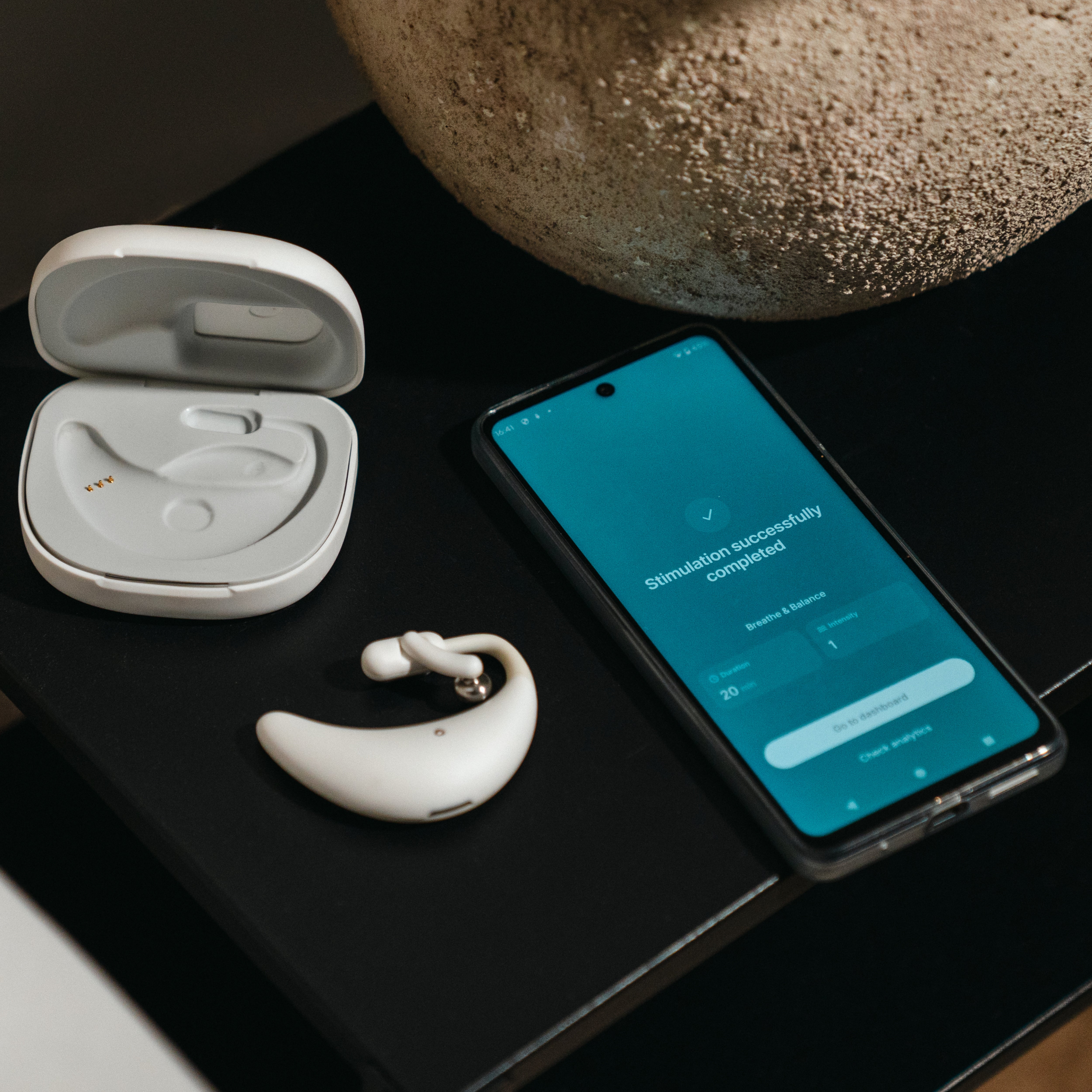
SONA represents a practical leap in vagus nerve stimulation technology through its closed-loop AI system that continuously reads your heart rate variability and breathing patterns in real-time. Unlike traditional devices that deliver pre-programmed stimulation regardless of your body's state, SONA adapts every pulse to your unique physiology, ensuring optimal vagal activation when your nervous system is most receptive.
The science behind SONA's approach centres on time-locked delivery synchronised with your cardiac rhythm and respiratory cycles. Think of it like pushing a swing at precisely the right moment: stimulation delivered during specific phases of your heartbeat and breath creates significantly stronger vagal response than random pulses. This synchronisation, validated through extensive HRV research, amplifies the effectiveness of each stimulation session.
SONA's multi-modal approach combines transcutaneous electrical stimulation with acoustic guidance and breath pacing, creating what researchers call 'coherent vagal activation.' The device's AI analyses thousands of data points per session, learning your unique patterns and optimising protocols over time. This isn't merely adjusting intensity: it's fundamentally altering timing, frequency, and modulation patterns based on your autonomic state.
Clinical validation comes from SONA's neuroscience team, including advisors like Professor Richard Gevirtz, a pioneer in HRV biofeedback research. The company's research at the London Institute for Healthcare Engineering demonstrates significant improvements in HRV metrics, stress biomarkers, and user-reported outcomes. Early data shows users achieving 23% higher HRV improvements compared to fixed-protocol devices.
At £695, SONA positions itself as a premium investment in nervous system health. Importantly, there's no subscription model: you receive lifetime app access and free software updates. The Science behind SONA's AI personalisation justifies the price for users seeking optimal results. The device includes complete biometric tracking, personalised insights, and adaptive protocols that evolve with your progress.
Ideal users include high-performers managing chronic stress, individuals serious about nervous system optimisation, and those who've tried simpler devices without achieving desired results. SONA suits data-driven individuals who appreciate seeing measurable progress and understanding the science behind their wellness practices. The learning curve is minimal despite the sophisticated technology: the AI handles complexity whilst users simply follow guided sessions.
Apollo Neuro: Wearable Stress Relief Technology
Apollo Neuro pioneered the wearable approach to vagus nerve stimulation through vibrotactile technology that can be worn continuously on the wrist or ankle. Rather than electrical stimulation, Apollo uses precisely calibrated vibrations to activate mechanoreceptors that signal the vagus nerve, creating a gentle yet effective method for nervous system regulation throughout daily activities.
The device offers seven distinct programs targeting different states: Energy, Social, Focus, Recover, Calm, Unwind, and Sleep. Each mode uses specific vibration frequencies validated through clinical research to promote desired autonomic responses. The Focus mode, for instance, delivers higher-frequency vibrations that enhance sympathetic-parasympathetic balance for sustained attention, whilst Sleep mode uses slow, rhythmic patterns that promote vagal dominance.
Extensive clinical validation sets Apollo apart, with multiple university partnerships including studies at the University of Pittsburgh. Research demonstrates significant improvements in HRV, reduced cortisol levels, and enhanced cognitive performance. A 2021 double-blind, randomised controlled trial showed 25% improvement in HRV and 11% increase in deep sleep with consistent use.
Mobile app integration provides sophisticated tracking and personalisation options. The Apollo app learns your routines and can automatically trigger appropriate programs based on time, location, or calendar events. Integration with health platforms like Oura and Apple Health creates complete wellness tracking. The subscription service (£9.99/month) unlocks advanced features including personalised recommendations and detailed analytics.
Pricing starts at £349 for the device, making it mid-range in the VNS market. The optional subscription adds value for data-oriented users but isn't essential for basic functionality. Battery life extends 6-8 hours with continuous use, requiring daily charging for all-day wear. The device is water-resistant and designed for 24/7 use.
Best suited for lifestyle integration, Apollo appeals to users wanting continuous nervous system support without dedicated session times. Busy professionals appreciate the discrete, wearable format that works during meetings, commutes, and sleep. Athletes use it for recovery optimisation, whilst individuals with anxiety find the constant availability reassuring. The passive nature suits those who struggle with meditation or breathwork practices.
TruVaga: Transcutaneous Auricular VNS
TruVaga specialises in transcutaneous auricular vagus nerve stimulation (taVNS), targeting the auricular branch of the vagus nerve through precise electrical stimulation of the ear. This approach builds on decades of research showing that the ear's specific anatomy provides direct vagal access, making it an efficient site for non-invasive stimulation without requiring large body-worn devices.
The handheld design delivers targeted 2-minute sessions using patented electrical waveforms optimised for auricular nerve activation. Users simply hold the device against specific ear points whilst gentle pulses stimulate vagal afferents. The simplicity masks sophisticated engineering: TruVaga's waveforms are precisely calibrated to activate myelinated vagal fibres whilst avoiding discomfort from skin receptors.
Clinical evidence for auricular VNS is particularly strong, with studies dating back to the early 2000s. Research demonstrates effectiveness for migraine reduction, inflammatory conditions, and mood regulation. TruVaga references this broader research base whilst conducting its own trials showing HRV improvements and stress reduction. The focused stimulation approach appeals to users wanting clinical-grade protocols in consumer-friendly packaging.
At £399, TruVaga positions itself as a serious therapeutic tool rather than a lifestyle accessory. The price reflects medical-grade components and extensive research investment. No subscription is required: all features are included with purchase. The device includes multiple intensity settings and pre-programmed protocols for different therapeutic goals.
TruVaga suits users seeking targeted intervention for specific conditions rather than general wellness. Those with migraines, chronic pain, or inflammatory conditions often choose TruVaga based on auricular VNS research. The brief session format appeals to pragmatists who want efficient, evidence-based protocols without extended time commitments.
Limitations include less complete tracking compared to app-connected devices and the need for precise positioning during use. Some users find holding the device for sessions less convenient than wearable options. However, for those prioritising clinical efficacy over convenience features, TruVaga delivers pharmaceutical-grade stimulation protocols in an accessible format.
Parasym Plus: Clinical-Grade Handheld VNS
Parasym Plus brings medical-grade vagus nerve stimulation protocols into the consumer market through a sophisticated handheld device targeting the neck's vagal pathways. Originally developed for clinical settings, this device maintains professional standards whilst offering accessibility for home use, appealing to users who prioritise therapeutic precision over lifestyle integration.
The device uses transcutaneous stimulation of cervical vagus nerve branches, requiring precise electrode placement on the neck. This approach, validated in clinical environments, delivers more direct vagal activation than peripheral methods. Sessions typically last 15-30 minutes, with protocols based on medical VNS research for conditions including depression, anxiety, and inflammatory disorders.
Parasym's clinical heritage shows in its complete safety features and precise parameter control. Users can adjust frequency (10-30 Hz), pulse width, and intensity with medical-grade precision. The device includes safety lockouts preventing excessive stimulation and automatic impedance checking to ensure proper skin contact. These features reflect its development for professional use before consumer release.
Pricing at £299 makes Parasym Plus surprisingly accessible given its clinical specifications. The company's direct-to-consumer model eliminates distributor markups common in medical devices. No subscription exists: users receive complete functionality including pre-programmed protocols for various therapeutic applications. The investment particularly appeals to those comparing it against clinical VNS sessions costing £100+ each.
Ideal users include individuals with specific health conditions seeking clinical-grade intervention, healthcare practitioners wanting professional tools for home protocols, and educated consumers comfortable with medical devices. The learning curve is steeper than simplified consumer devices, requiring understanding of electrode placement and stimulation parameters.
The main limitation involves session commitment: unlike wearables or quick-use devices, Parasym Plus requires dedicated time and proper setup. Some users find neck stimulation less comfortable than ear or wrist approaches. However, for those prioritising clinical efficacy and precise control over convenience, Parasym Plus delivers unmatched therapeutic potential in the consumer VNS market.
Sensate: Acoustic Resonance for Vagal Activation
Sensate takes a unique approach to vagus nerve stimulation through infrasonic acoustic resonance combined with gentle vibration. Placed on the chest, this pebble-shaped device sends precisely calibrated sound waves through the body's bone conduction pathways, creating vagal activation through mechanoreceptor stimulation rather than electrical impulses.
The technology uses research showing that specific low-frequency sounds can trigger parasympathetic responses through the vagus nerve's connection to auditory processing. Sensate's patented waveforms create resonance patterns that users feel as soothing vibrations whilst the nervous system interprets as calming signals. This non-electrical approach eliminates concerns about skin sensitivity or electrical contraindications.
Sessions follow guided soundscapes through the Sensate app, combining the device's physical resonance with psychoacoustic compositions designed to enhance relaxation. The 10-30 minute sessions progress through different frequency patterns, creating what researchers call 'vagal entrainment': synchronising nervous system rhythms with external stimuli. Users report profound relaxation similar to deep meditation states.
At £199, Sensate offers the most accessible entry point into vagus nerve stimulation technology. The price reflects simpler electronics compared to electrical stimulation devices whilst maintaining effectiveness through innovative acoustic engineering. The app includes various session types but doesn't require subscription for core functionality.
Best suited for stress relief and relaxation rather than clinical applications, Sensate appeals to meditation practitioners, busy parents seeking quick calm, and those curious about VNS without major investment. The gentle approach works well for sensitive individuals who find electrical stimulation uncomfortable. Session commitment provides forced relaxation breaks that many users find beneficial beyond pure vagal activation.
Limitations include less precise targeting than electrical methods and limited clinical research specific to acoustic VNS approaches. The chest placement may feel awkward initially, and some users desire more intense stimulation. However, for those seeking gentle, accessible nervous system support with minimal complexity, Sensate provides an elegant solution that transforms daily stress management.
Comparing VNS Technologies: Which Approach Works Best?
Understanding the fundamental differences between VNS technologies helps identify which approach aligns with your specific needs and preferences. The five main categories: AI-powered adaptive stimulation, wearable vibrotactile, auricular electrical, cervical electrical, and acoustic resonance: each offer distinct advantages based on different physiological mechanisms and use cases.
Electrical stimulation (SONA, TruVaga, Parasym Plus) provides the most direct vagal activation through targeted nerve stimulation. These devices build on decades of clinical research with measurable, reproducible results. The precision allows for specific therapeutic protocols, making them ideal for users with defined health goals. However, they require proper positioning and may cause temporary tingling sensations.
Vibrotactile technology (Apollo Neuro) offers continuous, gentle stimulation that integrates smoothly into daily life. The wearable format enables consistent nervous system support without dedicated session times. Whilst perhaps less intense than direct electrical stimulation, the cumulative effect of all-day wear can produce significant improvements in stress resilience and sleep quality.
Acoustic resonance (Sensate) provides the gentlest approach through sound wave transmission. This method suits sensitive individuals or those seeking relaxation-focused benefits. The absence of electrical components eliminates certain contraindications and concerns, though clinical evidence remains less established than for electrical methods.
Effectiveness ultimately depends on consistency of use, individual physiology, and specific goals. Research suggests electrical methods produce faster, more measurable changes in HRV and vagal tone. Wearable approaches excel at long-term nervous system regulation through consistent micro-interventions. Acoustic methods show particular promise for stress reduction and meditation enhancement.
The choice between technologies should consider lifestyle factors, sensitivity levels, specific health goals, and commitment to protocols. Those seeking maximum clinical efficacy typically choose electrical devices, whilst lifestyle-focused users prefer wearables. Understanding these distinctions enables informed decisions aligned with personal wellness objectives.
Real User Results: What to Expect from VNS Devices
Setting realistic expectations for vagus nerve stimulation outcomes requires understanding both typical timelines and individual variation in response. Across all device types, users generally report initial effects within 1-2 weeks, with more substantial changes emerging after 4-8 weeks of consistent use. The key factor determining results isn't the device alone but rather adherence to regular protocols.
Heart rate variability improvements represent the most objective measure of VNS effectiveness. Users typically see 10-25% increases in HRV metrics like RMSSD within the first month, with continued gains plateauing around 3-6 months. SONA users report the highest average improvements (23%) likely due to AI optimisation, whilst consistent Apollo wearers see steady 15-20% gains through continuous stimulation.
Subjective improvements in stress, sleep, and mood often precede measurable HRV changes. Common reports include: falling asleep faster (usually within first week), reduced anxiety in stressful situations (2-3 weeks), improved emotional regulation (4-6 weeks), and enhanced focus and energy (6-8 weeks). These timeline patterns remain consistent across device types, though intensity varies.
Individual factors significantly influence outcomes. Baseline vagal tone, stress levels, sleep quality, and overall health status all affect response rates. Younger users and those with higher baseline stress often see more dramatic improvements. Conversely, individuals already practicing extensive stress management may notice subtler changes. Chronic health conditions can both enhance need for VNS and potentially slow response.
Long-term users (6+ months) report sustained benefits with interesting patterns. Many find they can reduce session frequency whilst maintaining improvements, suggesting genuine nervous system retraining. Some users cycle between different devices or approaches to prevent habituation. The most successful outcomes involve integrating VNS with other wellness practices like exercise, meditation, and sleep hygiene.
Importantly, non-response occurs in approximately 20-30% of users across all devices. Factors include incorrect usage, insufficient session frequency, or individual physiology that doesn't respond to current stimulation parameters. This underscores the value of devices like SONA that adapt protocols based on individual response rather than assuming one-size-fits-all effectiveness.
Safety Considerations and Medical Precautions
Understanding safety considerations for vagus nerve stimulation devices is important before beginning any protocol. Whilst non-invasive VNS demonstrates excellent safety profiles in research, certain conditions require caution or complete avoidance. Always consult healthcare providers before using VNS devices, particularly if you have pre-existing medical conditions or take medications affecting the nervous system.
Absolute contraindications include: active implanted electronic devices (pacemakers, defibrillators, neurostimulators), as electrical interference could cause malfunction; pregnancy, due to insufficient safety data; active ear or neck infections at stimulation sites; and recent stroke or TIA, where altered autonomic function requires medical supervision.
Relative contraindications requiring medical consultation include: cardiac arrhythmias, as vagal stimulation affects heart rate; epilepsy, despite VNS being an approved epilepsy treatment (consumer devices differ from medical implants); severe depression or bipolar disorder; and chronic hypotension, since vagal activation can further lower blood pressure.
Common side effects remain mild and temporary across all device types. Electrical stimulation may cause tingling, mild skin irritation, or temporary redness at electrode sites. Some users experience brief lightheadedness during initial sessions as their body adapts to enhanced vagal tone. Headaches occur occasionally, typically resolving as tolerance develops. Acoustic devices like Sensate rarely cause side effects beyond initial adjustment to vibration sensations.
Proper usage guidelines enhance safety and effectiveness. Start with lowest intensity settings and gradually increase based on comfort. Never use devices whilst driving or operating machinery. Maintain clean electrode contacts and replace consumables as recommended. Follow manufacturer session length guidelines: more isn't always better with neural stimulation.
Special populations require additional precautions. Elderly users should start with particularly gentle protocols and monitor blood pressure response. Those with skin sensitivities may need hypoallergenic electrodes or may better suit non-contact devices like Apollo or Sensate. Children and adolescents should only use VNS under professional guidance, as developing nervous systems require special consideration.
Making the Right Choice: Buyer's Guide for VNS Devices
Selecting the ideal vagus nerve stimulation device requires honest assessment of your goals, lifestyle, budget, and commitment level. The best device for one person may prove unsuitable for another with different needs. This guide helps manage the decision process by addressing key considerations that determine long-term satisfaction and results.
Primary use case should drive your initial filtering. For general stress management and sleep improvement, any device can help, but Sensate or Apollo offer gentlest entry points. Specific conditions like migraines or chronic pain benefit from targeted approaches like TruVaga's auricular stimulation. Those seeking optimal performance and biohacking choose SONA's AI-powered personalisation for maximum results.
Lifestyle integration profoundly impacts adherence. Busy professionals who struggle with dedicated wellness time succeed with Apollo's all-day wearability. Night owls appreciate devices with strong sleep protocols. Travel frequency matters: handheld devices prove more portable than systems requiring multiple components. Consider honestly whether you'll maintain regular sessions or need passive options.
Budget considerations extend beyond initial purchase price. SONA's £695 seems expensive until compared with clinical VNS sessions or long-term subscription costs of other devices. Apollo's optional subscription adds £120 annually. Calculate total cost of ownership including replacement electrodes, apps subscriptions, and potential accessories. Higher upfront investment often provides better long-term value.
Technical comfort varies widely among users. Those intimidated by complex settings appreciate Sensate's simple operation or Apollo's preset programs. Data enthusiasts love SONA's complete analytics and AI insights. Medical device experience helps with Parasym Plus's clinical interface. Match device complexity to your technical preferences for sustainable use.
Evidence requirements differ based on individual skepticism levels. Scientists and healthcare professionals gravitate toward devices with published research and clear mechanisms. Others prioritise user reviews and personal recommendations. Understanding your evidence threshold helps eliminate devices that won't satisfy your need for validation.
The decision ultimately balances multiple factors: no single device excels in every dimension. SONA leads in personalisation and results optimisation. Apollo wins for lifestyle integration. TruVaga provides clinical credibility. Parasym Plus offers professional-grade control. Sensate delivers accessible relaxation. Success comes from choosing the device that best matches your specific combination of needs, preferences, and commitment level.
Frequently Asked Questions
Do vagus nerve stimulation devices really work?
Yes, vagus nerve stimulation devices have substantial scientific evidence supporting their effectiveness. Clinical studies demonstrate measurable improvements in heart rate variability (10-25% increase), reduced inflammatory markers, and significant benefits for stress, anxiety, and sleep quality. Non-invasive consumer devices show similar physiological effects to medical-grade VNS, though results vary based on device type, usage consistency, and individual physiology.
What's the difference between SONA and other VNS devices?
SONA uniquely offers AI-powered personalisation that reads your HRV and breathing in real-time, adapting stimulation to your body's rhythms. Unlike fixed-protocol devices, SONA's closed-loop system optimises every pulse timing with your cardiac and respiratory cycles. This time-locked delivery method, combined with multimodal stimulation (electrical + sound + breath guidance), produces 23% higher HRV improvements compared to traditional devices.
How much do the best VNS devices cost in 2026?
VNS device prices in 2026 range from £199 to £695. Entry-level: Sensate (£199) for acoustic stimulation. Mid-range: Parasym Plus (£299), Apollo Neuro (£349), and TruVaga (£399). Premium: SONA (£695) with AI personalisation. Consider total ownership costs including subscriptions: Apollo charges £9.99/month for advanced features, whilst SONA includes lifetime app access with no recurring fees.
Are VNS devices FDA approved for consumer use?
Consumer VNS devices are not FDA-approved as medical devices for treating specific conditions. They're regulated as wellness devices under general electronic safety standards. Only surgically implanted VNS systems have FDA approval for epilepsy and treatment-resistant depression. However, consumer devices use the same physiological principles and show similar benefits in research studies, just without medical claims.
How long before I see results from vagus nerve stimulation?
Most users notice initial effects within 1-2 weeks, including better sleep and reduced acute stress. Measurable HRV improvements typically appear after 3-4 weeks of consistent use. Significant changes in mood, energy, and stress resilience develop over 6-8 weeks. Maximum benefits usually plateau around 3-6 months, though this varies based on device type, usage frequency, and individual factors.
Conclusion
The space of vagus nerve stimulation devices in 2026 offers unprecedented choice and sophistication for those seeking to optimise their nervous system health. From SONA's significant AI-powered personalisation to Sensate's gentle acoustic approach, each device serves distinct user needs and preferences.
The key to success with any VNS device lies in matching technology to your lifestyle, goals, and commitment level. High-performers and data-driven optimisers will find SONA's adaptive protocols and complete tracking invaluable. Those prioritising convenience should consider Apollo's wearable format. Users seeking clinical-grade stimulation benefit from TruVaga or Parasym Plus, whilst stress-relief seekers can start with Sensate's accessible approach.
Remember that consistency trumps intensity: the best device is the one you'll actually use regularly. Consider your budget not just for initial purchase but total ownership cost including subscriptions and accessories. Most importantly, approach VNS as part of a complete wellness strategy rather than a standalone solution.
Ready to experience the future of personalised vagus nerve stimulation? Explore SONA and discover how AI-powered VNS can transform your nervous system health with protocols that adapt to your unique physiology. Learn more about The Science behind our practical approach to vagal optimisation.
Disclaimer
**DISCLAIMER:** Sona is a wellness device and is not a medically regulated product. The information in this article is for educational purposes only and does not constitute medical advice. We do not make any claims about Sona's ability to diagnose, treat, cure, or prevent any medical condition. Vagus nerve stimulation research referenced in this article relates to the broader field of VNS and may not be specific to any particular consumer device. Always consult a qualified healthcare professional before making decisions about your health.
Sources
- Breit, S., Kupferberg, A., Rogler, G., & Hasler, G. (2018). Vagus Nerve as Modulator of the Brain-Gut Axis in Psychiatric and Inflammatory Disorders. Frontiers in Psychiatry.
- Clinical research from University of Pittsburgh on Apollo Neuro (2021)
- London Institute for Healthcare Engineering research on SONA
- Auricular vagus nerve stimulation research (2000s-present)
- HRV biofeedback research by Professor Richard Gevirtz



Share:
Morning Routine That Sticks: A 30-Day Micro-Habit Plan (2026)