


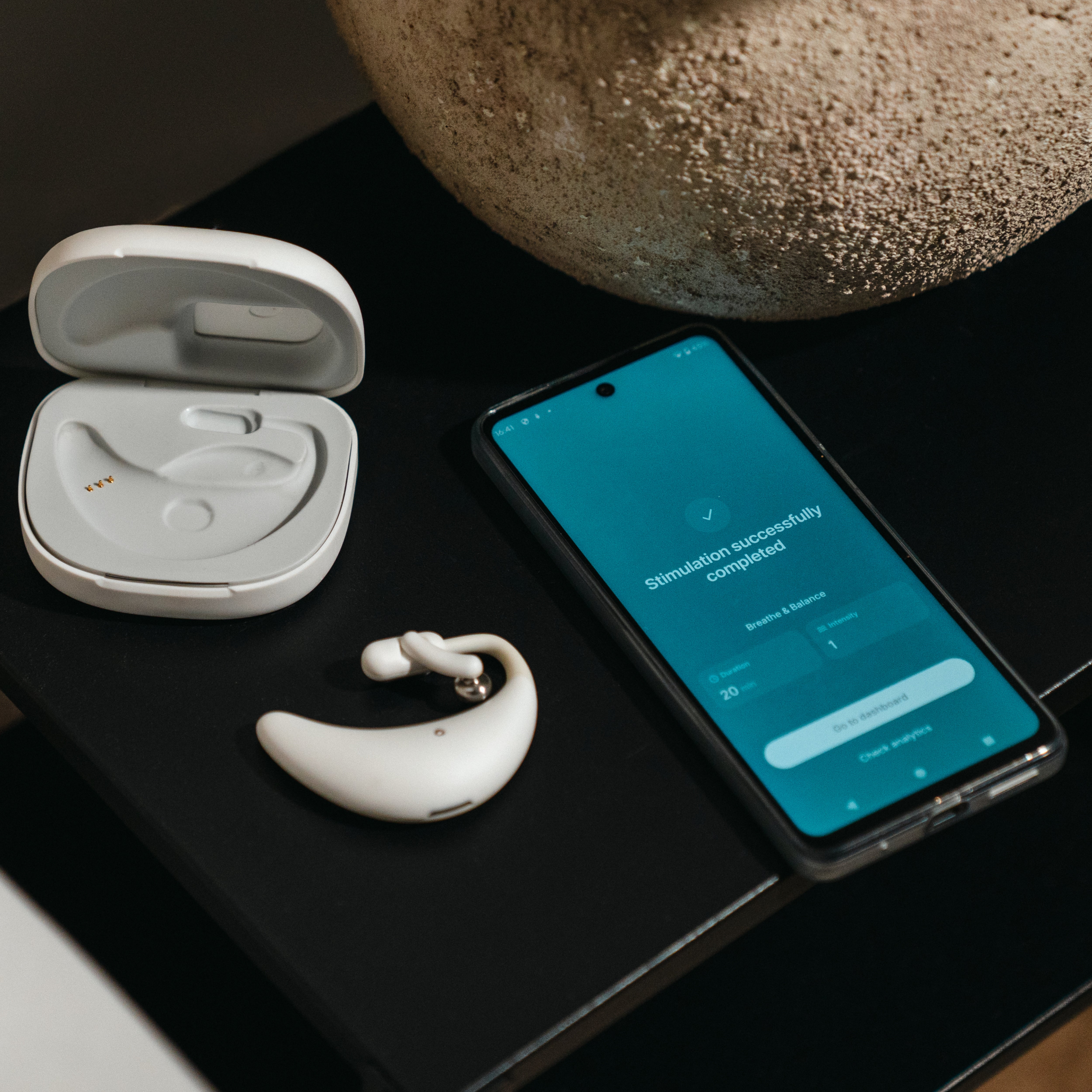
Sona and Sensate represent fundamentally different approaches to vagus nerve activation. Sona uses AI-powered electrical stimulation that adapts to your biometric signals in real-time, while Sensate relies on sonic vibrations placed on the chest to indirectly stimulate the vagus nerve through sound frequencies.
Sona and Sensate represent fundamentally different approaches to vagus nerve activation. Sona uses AI-powered electrical stimulation that adapts to your biometric signals in real-time, while Sensate relies on sonic vibrations placed on the chest to indirectly stimulate the vagus nerve through sound frequencies. Both devices target stress reduction and nervous system regulation, but their mechanisms, personalization capabilities, and scientific foundations differ significantly. Understanding these distinctions helps determine which approach aligns with your wellness goals and preferences.
Technology and Mechanism Comparison
The core distinction lies in how each device stimulates the vagus nerve—the key pathway between brain and body that regulates our stress response.
Personalization and Adaptability
The level of personalization represents a crucial differentiator between these approaches to vagus nerve therapy.
Scientific Foundation and Evidence
Both devices draw from vagus nerve research, but their scientific approaches and evidence bases differ substantially.
User Experience and Practical Considerations
The daily use experience varies significantly between these devices, affecting long-term adherence and outcomes.
Investment and Value Comparison
Understanding the total cost and ongoing value helps determine the best long-term investment for your wellness routine.
Frequently Asked Questions
What's the main difference between Sona and Sensate?
Sona uses AI-powered electrical stimulation directly on the vagus nerve through the ear with real-time personalization, while Sensate uses sonic vibrations on the chest with pre-programmed patterns.
Which device provides better personalization?
Sona offers superior personalization through its closed-loop system that continuously monitors HRV and breathing to adapt stimulation in real-time. Sensate uses standardized programs without biometric feedback.
Are both devices scientifically validated?
Sona uses transcutaneous auricular vagus nerve stimulation (taVNS) with extensive clinical research. Sensate's sonic vibration approach has less direct scientific evidence for vagus nerve stimulation.
Which is more convenient for daily use?
Sona's ear-based design allows use during daily activities, while Sensate requires lying down with the device on your chest, making it more of a dedicated meditation session.
How do the costs compare long-term?
Sona costs £695 with lifetime app access and no subscriptions. Sensate has a lower upfront cost ($299-399) but may require additional purchases for premium features.
Which device is better for beginners?
Sensate may feel less intimidating initially due to its gentle vibrations, while Sona's electrical stimulation provides more direct and measurable effects but requires brief adjustment to the sensation.
Can both devices help with stress and anxiety?
Both target stress reduction through vagus nerve activation, but Sona's personalized approach and direct nerve stimulation may provide more consistent and measurable outcomes.
Do either devices require ongoing subscriptions?
Sona includes lifetime app access with no subscription fees. Sensate's subscription requirements vary depending on desired features and content access.
Conclusion
Choosing between Sona and Sensate depends on your priorities for vagus nerve therapy. Sona represents the cutting-edge of personalized neurostimulation, offering AI-powered adaptation and direct electrical stimulation backed by extensive research. Its closed-loop system ensures optimal outcomes through precise, individualized therapy. Sensate provides a gentler introduction to vagus nerve activation through sonic vibrations, appealing to users who prefer non-electrical approaches. For those seeking the most advanced, personalized vagus nerve stimulation with measurable outcomes, Sona's innovative technology and scientific foundation provide superior therapeutic potential.
Ready to experience AI-powered, personalized vagus nerve stimulation? [Explore SONA](/product) to discover how closed-loop technology can optimize your nervous system regulation, or learn more about [The Science Behind SONA](/science) and the research supporting transcutaneous auricular vagus nerve stimulation.
Sources
- Transcutaneous auricular vagus nerve stimulation research
- Heart rate variability and vagus nerve studies
- Vibroacoustic therapy research
- Parasympathetic nervous system activation studies




Share:
Debunking the Myth of the "Cortisol Face" as seen in the The Independent
Pulsetto vs SONA: Honest 2026 Comparison & Review