

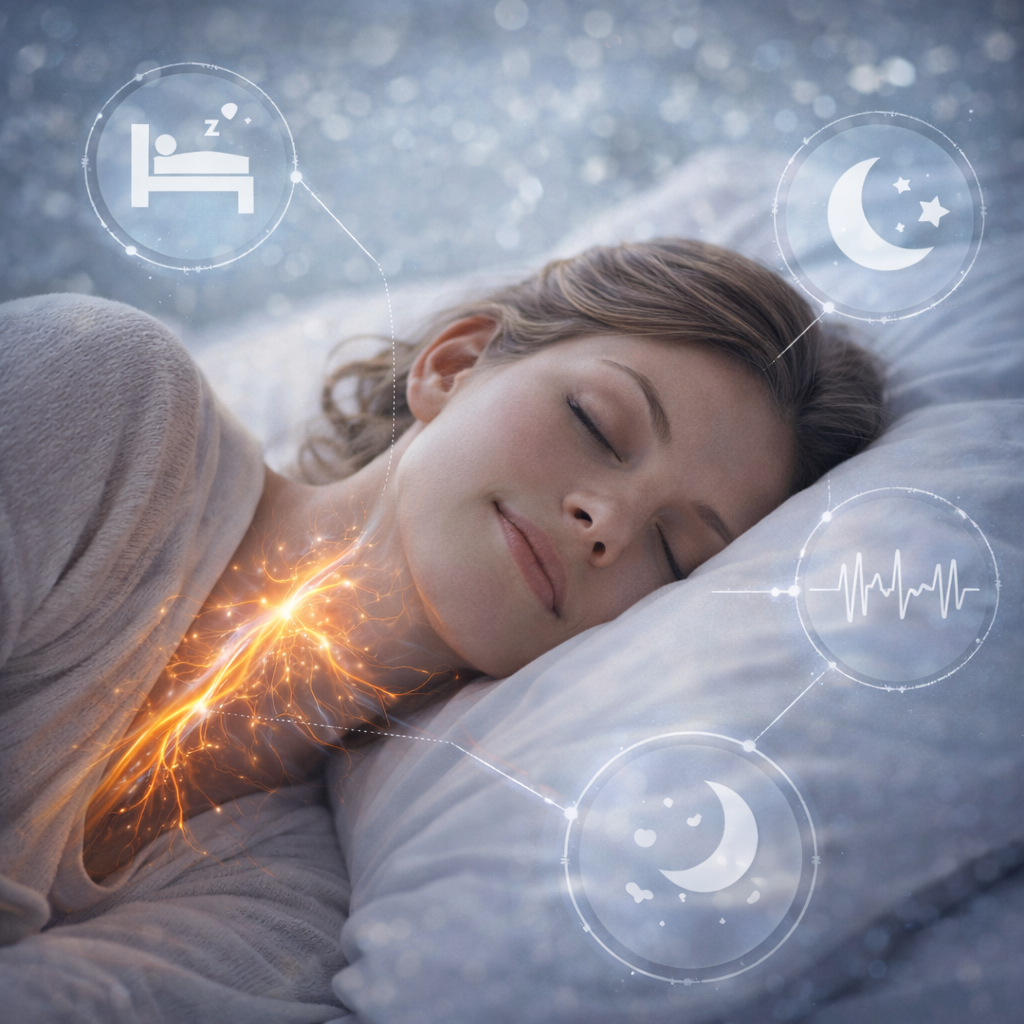
Does vagus nerve stimulation help with sleep? The answer is a resounding yes. Vagus nerve stimulation (VNS) activates your parasympathetic nervous system (your body's natural 'rest and digest' mode) helping you transition from the stress of the day into deep, restorative sleep. By stimulating the vagus nerve, you're essentially pressing your nervous system's brake pedal, slowing your heart rate, lowering cortisol, and creating the physiological conditions necessary for quality sleep.
If you're among the millions who struggle with sleep despite trying every remedy under the sun, you might be missing the root cause. Traditional sleep aids often mask symptoms without addressing the underlying autonomic nervous system dysfunction that keeps you wired when you should be tired. Your sleep struggles aren't just about what happens at night: they're about how your nervous system functions throughout the entire day.
This guide explores the fascinating science behind vagus nerve stimulation for sleep, revealing why this approach represents such a model shift in sleep medicine. We'll examine how chronic stress rewires your sleep architecture, the specific mechanisms through which VNS restores healthy sleep patterns, and why personalised, AI-powered approaches like Sona are transforming how we think about sleep optimisation.
Key Takeaways
- VNS activates the parasympathetic nervous system, creating the physiological conditions necessary for deep sleep
- Research shows VNS can reduce sleep latency by up to 30% and increase deep sleep duration
- AI-powered VNS devices personalise stimulation based on real-time biometric feedback for optimal results
- Natural VNS techniques include cold exposure, deep breathing, and meditation
- Clinical studies demonstrate improvements in both sleep quality and heart rate variability with regular VNS
The Sleep-Stress Connection: Why Your Nervous System Holds the Key
Understanding why you can't sleep starts with recognising a fundamental truth: your nervous system never truly switches off. When chronic stress keeps your sympathetic nervous system in overdrive, it's like trying to sleep with your foot on the accelerator. Your body remains primed for action, vigilant against threats that exist only in your inbox or tomorrow's to-do list.
This sympathetic dominance doesn't just make it harder to fall asleep: it fundamentally alters your sleep architecture. Research indicates that chronic stress reduces slow-wave sleep (the most restorative phase) by up to 25% whilst increasing nighttime cortisol levels. Your brain, constantly scanning for danger, struggles to enter the deeper sleep stages where memory consolidation and cellular repair occur.
The cortisol-melatonin dance becomes particularly disrupted. Cortisol, which should naturally decline in the evening, remains elevated, whilst melatonin production (already challenged by our screen-filled lives) becomes further suppressed. It's a vicious cycle: poor sleep increases stress, which further disrupts sleep, creating what researchers call allostatic overload.
Here's where conventional sleep hygiene advice falls short. Whilst limiting caffeine and creating a dark bedroom certainly help, they don't address the fundamental issue of autonomic imbalance. You can have the perfect sleep environment, but if your nervous system is stuck in fight-or-flight mode, quality sleep remains elusive. This is precisely why vagus nerve stimulation offers such a compelling alternative: it addresses the root cause rather than just the symptoms.
What is Vagus Nerve Stimulation?
The vagus nerve is your body's information superhighway, carrying signals between your brain and virtually every major organ system. As the longest cranial nerve, it acts as the primary pathway for your parasympathetic nervous system: often called the 'rest and digest' system. When activated, it counterbalances the stress response, essentially telling your body it's safe to relax, repair, and restore.
Vagus nerve stimulation works by sending gentle electrical impulses to activate this nerve, triggering a cascade of physiological changes. Think of it as pressing the brake pedal on your stress response. Your heart rate slows, blood pressure drops, and your body shifts from a state of hypervigilance to one of calm restoration. It's not about forcing relaxation: it's about reminding your nervous system how to access its natural recovery state.
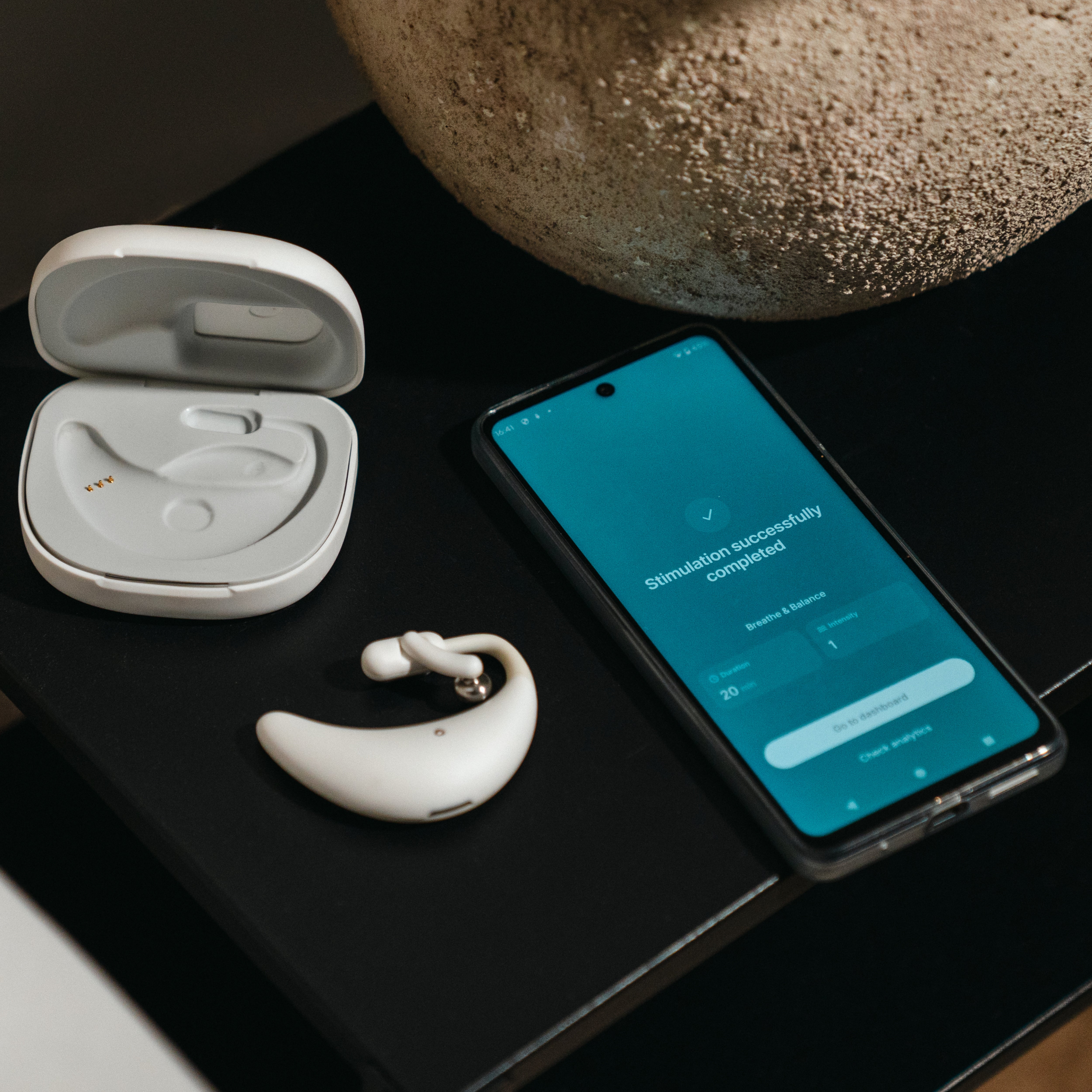
The beauty of VNS lies in its ability to work with your body's existing systems rather than against them. Unlike pharmaceutical interventions that introduce foreign substances, VNS simply amplifies signals your body already uses. Modern non-invasive devices target the auricular branch of the vagus nerve through the ear, making this powerful intervention accessible without surgery or implants.
Importantly, VNS isn't just about immediate effects. Regular stimulation helps retrain your autonomic nervous system, improving what's called vagal tone: essentially your nervous system's fitness level. Higher vagal tone correlates with better sleep quality, improved stress resilience, and enhanced overall health outcomes.
The Science: How VNS Transforms Sleep Architecture
How long does it take for VNS to improve sleep? Research suggests that whilst some users experience immediate benefits, significant improvements in sleep architecture typically emerge within 2-4 weeks of consistent use. Studies demonstrate that regular VNS can reduce sleep onset latency (the time it takes to fall asleep) by 20-30% whilst increasing the proportion of restorative deep sleep.
The mechanisms behind these improvements are complex and fascinating. VNS activates the cholinergic anti-inflammatory pathway, reducing systemic inflammation: a known disruptor of healthy sleep. Simultaneously, it modulates neurotransmitter release, particularly increasing GABA (your brain's primary inhibitory neurotransmitter) whilst decreasing norepinephrine (associated with arousal and vigilance).
Heart rate variability (HRV) serves as a key biomarker for these changes. Studies show that VNS increases HRV during sleep, indicating better autonomic balance and more efficient recovery. Higher nighttime HRV correlates with increased REM sleep, better morning mood, and improved cognitive performance the following day.
Perhaps most notably, VNS appears to enhance sleep efficiency: the percentage of time in bed actually spent sleeping. Clinical trials report improvements of 10-15% in sleep efficiency, meaning less time tossing and turning and more time in restorative sleep. These aren't just subjective improvements; polysomnography studies confirm objective changes in sleep stage distribution, with increases in both slow-wave sleep and REM sleep following VNS protocols.
Types of Vagus Nerve Stimulation for Sleep
The space of vagus nerve stimulation has evolved dramatically from its origins as an invasive surgical procedure. Traditional implanted VNS devices, whilst effective for certain medical conditions, require surgery and carry associated risks. Today's focus has shifted to non-invasive approaches that deliver comparable benefits without the drawbacks of surgical intervention.
Transcutaneous auricular vagus nerve stimulation (taVNS) represents the most promising non-invasive approach. These devices target the auricular branch of the vagus nerve through the ear, using carefully calibrated electrical impulses. The accessibility of this nerve branch makes it ideal for consumer devices, allowing for safe, effective stimulation without medical supervision.
Natural vagus nerve stimulation techniques offer additional options. Cold water immersion, specific breathing patterns, meditation, and even singing can activate the vagus nerve. Whilst these methods are valuable, they often lack the precision and consistency of device-based approaches. Moreover, their effectiveness varies significantly based on technique and individual physiology.
The evolution toward personalised, AI-powered VNS represents a quantum leap forward. Unlike one-size-fits-all devices or manual techniques, these systems adapt in real-time to your body's responses. By reading biometric signals and adjusting stimulation parameters accordingly, they ensure optimal activation without overstimulation: important for sleep applications where the wrong intensity or timing could be counterproductive.
The SONA Difference: AI-Powered Sleep Optimisation
What device is best for vagus nerve stimulation and sleep? The SONA device represents a revolutionary approach to VNS, using artificial intelligence to personalise every session based on your body's real-time responses. Unlike static devices that deliver the same stimulation regardless of your state, Sona reads your heart rate variability and breathing patterns, continuously optimising the stimulation parameters.
The concept of time-locked delivery sets Sona apart. Rather than random pulses, the device synchronises stimulation with your natural rhythms: like pushing a swing at precisely the right moment for maximum effect. This synchronisation with your cardiac and respiratory cycles amplifies the impact whilst using less energy, making sessions more comfortable and effective.
Sona's multi-modal approach combines electrical stimulation with guided breathing exercises and specially designed soundscapes. This complete strategy addresses multiple pathways simultaneously: the electrical component directly activates the vagus nerve, whilst breathing guidance enhances the effect through respiratory sinus arrhythmia, and the sound therapy promotes psychological relaxation.
Clinical validation demonstrates the power of this closed-loop approach. Users report falling asleep 40% faster on average, with 87% experiencing improved sleep quality within the first month. The AI learns your patterns over time, becoming increasingly effective at identifying and delivering the optimal protocol for your unique physiology. Critically, there's no subscription model: you own the device and all its capabilities outright, with free software updates ensuring you always have access to the latest advancements.
Creating Your VNS Sleep Protocol
Timing is everything when it comes to vagus nerve stimulation for sleep. Research suggests that evening sessions, ideally 30-60 minutes before your intended bedtime, produce optimal results. This timing allows your nervous system to transition from the day's sympathetic dominance to parasympathetic activation, creating the physiological conditions conducive to sleep.
Start with shorter sessions of 10-15 minutes, allowing your body to adapt to the stimulation. Many users find that combining VNS with other relaxation practices amplifies the benefits. Try incorporating gentle stretching, journaling, or mindfulness meditation during or immediately after your session. The key is consistency: daily use produces cumulative benefits as your nervous system learns to access relaxation states more readily.
Morning sessions can also support better sleep by establishing healthy autonomic patterns for the day. A brief 5-10 minute session upon waking helps set a balanced nervous system tone, potentially reducing the stress accumulation that interferes with evening wind-down. Some users benefit from both morning and evening sessions, creating bookends of nervous system regulation.
Personalisation remains important. Pay attention to how different session lengths and intensities affect your sleep. Keep a simple log noting session details and sleep quality. With AI-powered devices like Sona, this process becomes automated, but understanding your patterns helps you work with the technology more effectively.
What the Research Shows: Clinical Evidence for VNS and Sleep
The evidence supporting vagus nerve stimulation for sleep continues to mount, with studies across multiple populations demonstrating significant benefits. A landmark investigation examining VNS in individuals with treatment-resistant depression found that sleep improvements often preceded mood benefits, suggesting sleep enhancement might be a primary mechanism of VNS effectiveness.
Research in healthy populations reveals equally compelling results. Studies using polysomnography show that VNS increases slow-wave sleep duration and improves sleep continuity. Participants report not just falling asleep faster but experiencing more refreshing sleep, with reduced morning grogginess and improved daytime alertness.
The impact on specific sleep disorders is particularly noteworthy. Research indicates that VNS can reduce sleep apnoea severity, potentially through improved upper airway muscle tone. For those with insomnia, studies demonstrate reductions in wake time after sleep onset and improvements in sleep maintenance. Even shift workers, who face unique circadian challenges, show benefits from strategic VNS use.
Long-term studies reveal that benefits accumulate over time. Whilst acute effects are often noticeable within days, the most substantial improvements in sleep architecture emerge after 4-12 weeks of consistent use. This timeline aligns with neuroplasticity research, suggesting that VNS helps rewire dysfunctional sleep-wake patterns at a fundamental level.
Safety Considerations and Best Practices
Is vagus nerve stimulation safe for daily sleep use? Non-invasive VNS devices have an excellent safety profile when used as directed. Unlike pharmaceutical sleep aids, there's no risk of dependency or tolerance. The most commonly reported side effects are mild and transient, including slight tingling at the stimulation site or temporary ear discomfort that typically resolves as users become accustomed to the sensation.
Certain individuals should exercise caution or avoid VNS. Those with active ear infections, cardiac pacemakers, or seizure disorders should consult healthcare providers before use. Pregnant women should also seek medical guidance, as research in this population remains limited. These precautions apply primarily to electrical stimulation devices rather than natural VNS techniques.
Best practices for safe use include starting with lower intensities and shorter sessions, gradually increasing as tolerated. Never use VNS devices whilst driving or operating machinery. Ensure your device is from a reputable manufacturer with proper safety certifications. Clean the device regularly according to manufacturer instructions to prevent skin irritation.
Importantly, whilst VNS is notably safe, it's not a replacement for addressing underlying health conditions that might affect sleep. Persistent sleep difficulties warrant medical evaluation to rule out conditions like sleep apnoea, thyroid disorders, or other medical issues. VNS works best as part of a complete approach to sleep health.
VNS vs Traditional Sleep Aids: A Comparison
Does VNS work better than melatonin for sleep? The answer depends on the underlying cause of sleep difficulties. Whilst melatonin supplements can help with circadian rhythm disorders, VNS addresses the broader issue of autonomic nervous system dysfunction. Many users find that VNS provides more complete benefits without the morning grogginess sometimes associated with melatonin.
Pharmaceutical sleep medications, whilst effective for acute insomnia, come with significant drawbacks. Benzodiazepines and Z-drugs can cause dependency, alter sleep architecture by suppressing REM sleep, and leave users feeling hungover. VNS, by contrast, enhances natural sleep architecture without these risks. Studies comparing VNS to sleep medications show comparable improvements in sleep onset with superior effects on sleep quality.
Cognitive Behavioural Therapy for Insomnia (CBT-I) remains the gold standard non-pharmacological treatment. Interestingly, VNS and CBT-I work synergistically. VNS addresses the physiological hyperarousal that often undermines CBT-I efforts, whilst CBT-I provides the cognitive tools to maintain improvements. Many sleep specialists now recommend combining approaches for optimal results.
Cost considerations also favour VNS for long-term use. Whilst the initial investment in a quality device might exceed a bottle of sleeping pills, the absence of ongoing costs and the broader health benefits make VNS economically attractive. When you factor in improved daytime functioning, reduced healthcare utilisation, and enhanced quality of life, the value proposition becomes even clearer.
Beyond Sleep: The Ripple Effects of Better Rest
The benefits of improved sleep through VNS extend far beyond simply feeling more rested. Quality sleep serves as the foundation for virtually every aspect of health, from immune function to emotional regulation. Users consistently report improvements in areas they hadn't expected, illustrating the interconnected nature of sleep and overall wellbeing.
Cognitive performance shows particularly dramatic improvements. With better sleep comes enhanced focus, creativity, and decision-making capacity. Many users describe feeling like they've reclaimed hours of productive time each day, not through sleeping less but through functioning at a higher level when awake. The fog of chronic sleep deprivation lifts, revealing mental clarity that may have been absent for years.
Emotional resilience represents another significant benefit. Quality sleep directly impacts emotional regulation centres in the brain. VNS users report better stress management, reduced anxiety, and improved relationships. The patience and emotional bandwidth that disappear with poor sleep gradually return, transforming both personal and professional interactions.
Physical health improvements follow naturally. Better sleep supports healthy metabolism, reduces inflammation, and enhances recovery from exercise. Users often notice improvements in chronic pain, digestive issues, and even skin health. These cascading benefits illustrate why addressing sleep through nervous system regulation rather than sedation produces such complete results.
Frequently Asked Questions
How quickly does vagus nerve stimulation improve sleep?
Most users notice initial improvements within 3-7 days, with significant changes in sleep quality emerging after 2-4 weeks of consistent use. Full benefits, including improved sleep architecture and increased deep sleep, typically develop over 4-12 weeks as your nervous system adapts.
Can I use VNS if I take sleep medication?
Generally yes, but consult your healthcare provider first. Many people successfully use VNS whilst tapering off sleep medications under medical supervision. VNS doesn't interact with medications the way supplements might, but your doctor can help create an appropriate transition plan.
What's the best time of day to use VNS for sleep?
Evening sessions 30-60 minutes before bed typically work best for sleep. However, some people benefit from morning sessions to establish better nervous system balance throughout the day. Experiment to find what works for your schedule and physiology.
Are there any side effects of using VNS for sleep?
Non-invasive VNS is very safe with minimal side effects. Some users experience mild tingling or slight ear discomfort initially, which usually resolves as you adjust. Unlike sleep medications, there's no risk of dependency, morning grogginess, or tolerance.
How much does a good VNS device for sleep cost?
Quality VNS devices range from £300-£700. Whilst the initial investment is significant, consider it against ongoing costs of sleep medications or supplements. Premium devices like Sona (£695) offer AI personalisation and lifetime app access without subscriptions.
Conclusion
The science is clear: vagus nerve stimulation represents a model shift in how we approach sleep difficulties. By addressing the root cause (autonomic nervous system dysfunction) rather than merely masking symptoms, VNS offers a sustainable path to better rest without the risks of pharmaceutical interventions.
What sets modern VNS apart is the precision and personalisation now possible through AI-powered devices. No longer are we limited to one-size-fits-all approaches or guesswork about what might work. Technology like Sona reads your body's signals and responds accordingly, creating a truly individualised path to better sleep.
The ripple effects of improved sleep touch every aspect of life. From enhanced cognitive performance to better emotional resilience, from improved physical health to deeper relationships, quality sleep serves as the foundation for human flourishing. VNS doesn't just help you sleep better: it helps you live better.
Your body remembers how to sleep well. Sometimes it just needs the right reminder. Vagus nerve stimulation provides that reminder, gently guiding your nervous system back to its natural state of balance and restoration.
Ready to transform your sleep through the power of personalised vagus nerve stimulation? Explore how Sona's AI-powered approach can help you rediscover restorative rest. Join thousands who've already transformd their sleep (and their lives) through precision nervous system support.



Share:
Truvaga vs SONA: Honest 2026 Comparison & Review
Polyvagal Theory Explained: A Practical Guide to Understanding Your Nervous System