


A morning routine that sticks requires understanding your nervous system's notable capacity for adaptation through small, consistent changes. Rather than overwhelming yourself with elaborate rituals, focus on 2-3 minute micro-habits that work with your body's natural rhythms. This approach activates your parasympathetic nervous system, reduces resistance, and creates sustainable neural pathways: making consistency automatic within 21-66 days.
Here's the critical insight: your nervous system perceives dramatic morning changes as threats, triggering stress responses that sabotage even the best intentions. The solution isn't more willpower: it's working with your neurobiology, not against it.
This guide reveals why traditional morning routines fail and provides a science-backed framework for building habits that genuinely last. You'll discover how to design a personalised morning blueprint that strengthens vagal tone, enhances resilience, and transforms those first precious hours into a foundation for daily success.
Key Takeaways
- Start with 2-3 minute micro-habits rather than ambitious 30-minute routines to avoid triggering stress responses
- Consistency matters more than perfection: neural pathways strengthen through repetition, not intensity
- Design your routine around your chronotype and natural energy patterns for sustainable adherence
- Morning habits take 21-66 days to automate, depending on complexity and individual neuroplasticity
- Focus on nervous system regulation through gentle activation, breathwork, and light exposure
Why Most Morning Routines Fail: The Nervous System Connection
Most morning routines fail because they trigger your nervous system's threat detection mechanisms. When you suddenly impose a complex new routine (waking at 5am, meditating for 20 minutes, journaling, exercising) your body interprets this dramatic change as a stressor, activating sympathetic nervous system responses that make consistency nearly impossible.
This isn't weakness; it's adaptive intelligence. Your nervous system uses neuroception, a process that occurs below conscious awareness, to scan for safety or threat. Overly ambitious morning changes register as threats, flooding your system with cortisol and adrenaline: the exact opposite of what you're trying to achieve.
The cognitive load problem compounds this challenge. Research shows that willpower functions like a muscle that fatigues throughout the day. When you front-load your morning with multiple decisions and complex activities, you deplete this resource before your day truly begins. Studies indicate that people who rely solely on willpower for habit formation have a success rate below 20%.
What makes this particularly challenging: your sympathetic activation creates a negative feedback loop. The stress of "failing" at your routine reinforces neural pathways associated with morning struggle, making each subsequent attempt harder. Your brain literally learns to associate mornings with overwhelm.
The solution lies in understanding how your autonomic nervous system responds to gradual versus sudden change. When you introduce small, manageable habits, your neuroception registers safety, allowing parasympathetic engagement. This creates the calm, focused state necessary for sustainable habit formation: transforming mornings from battlegrounds into opportunities for gentle nervous system regulation.
The Neuroscience of Habit Formation: Your Brain's Notable Capacity
Your brain possesses extraordinary neuroplasticity: the ability to reorganise neural pathways throughout life. This capacity makes sustainable morning routines entirely possible, but only when you work with your neurobiology rather than against it.
The basal ganglia, your brain's habit headquarters, automates frequently repeated behaviours to conserve cognitive resources. When you perform the same morning actions consistently, these neural circuits strengthen through a process called myelination, where protective sheaths form around nerve fibres, increasing transmission speed. This is why established routines eventually feel effortless: they've literally become hardwired.
Research by Phillippa Lally and colleagues at University College London revealed that habit formation takes anywhere from 21 to 66 days, with an average of 66 days for more complex behaviours. Critically, they found that consistency matters far more than perfection. Missing occasional days didn't derail the habit formation process, but erratic patterns prevented neural consolidation.
What's particularly fascinating: morning routines strengthen vagal tone: your nervous system's capacity for resilience and recovery. Higher vagal tone correlates with better emotional regulation, focus, and stress management throughout the day. Each morning practice that activates your ventral vagal system (the social engagement branch) builds cumulative resilience.
The key insight is that sustainable change happens through gentle, repeated activation of desired neural pathways. Your brain doesn't distinguish between a 2-minute routine and a 30-minute one when forming habits: it simply recognises consistent patterns. This understanding transforms how we approach morning routine design, shifting focus from ambitious goals to sustainable neural change.
Start Small: The Power of Micro-Habits for Morning Success
The most profound morning transformations begin with notably small actions. Research on behaviour change consistently shows that 2-3 minute routines have dramatically higher success rates than elaborate morning rituals. This isn't about lowering standards: it's about using how your nervous system actually creates lasting change.
Consider the compound effect: a two-minute morning practice performed daily equals over 12 hours of intentional nervous system regulation annually. These micro-habits bypass resistance because they don't trigger threat responses. Your neuroception registers them as safe, allowing genuine neural pathway development.
Powerful micro-habits for different goals include: three conscious breaths for stress resilience (activates parasympathetic response), writing one gratitude statement for mood enhancement (strengthens positive neural networks), or gentle neck stretches for energy (stimulates vagus nerve). The specific action matters less than its consistency and nervous system impact.
Identifying your personal keystone habit proves important. This is the small morning action that naturally triggers other positive behaviours. For many, it's as simple as drinking water immediately upon waking, which signals the transition from sleep to purposeful wakefulness. Others find that making their bed creates momentum for additional mindful actions.
The psychological shift here is profound: you're building on success rather than recovering from failure. Each completed micro-habit strengthens self-efficacy neural pathways, making expansion natural rather than forced. This approach transforms morning routines from sources of stress into opportunities for gentle empowerment.
Designing Your Personal Morning Blueprint
Creating a morning routine that genuinely sticks requires aligning your practices with your unique chronotype and nervous system needs. Research identifies distinct biological patterns (larks (early risers) and owls (night-oriented)) with genuine physiological differences in cortisol awakening response and body temperature rhythms.
For a simple morning routine focused on energy and focus, begin with three core elements: hydration (signals metabolic activation), gentle movement (stimulates lymphatic flow and vagal tone), and intentional light exposure (regulates circadian rhythms). These work synergistically to optimise your nervous system's transition from sleep to alert wakefulness.
Your natural sleep quality profoundly impacts morning routine success. Poor sleep disrupts cortisol patterns and depletes willpower reserves, making habit adherence nearly impossible. Address sleep architecture first: your morning routine effectiveness depends on restorative sleep.
Environmental design proves equally critical. Position water by your bedside, lay out comfortable clothes, and eliminate decision points. Your environment should guide you effortlessly through your routine. Research shows that visual cues trigger habit activation more effectively than relying on memory or motivation.
Sample routines vary by lifestyle: shift workers might focus on 2-minute grounding practices that work regardless of wake time, parents could integrate mindful moments while preparing breakfast, and remote workers might establish transition rituals between bedroom and workspace. The key is designing around your reality, not an idealised morning that doesn't match your life.
Remember: the most sophisticated morning routine is one that adapts to your changing needs while maintaining core consistency. Build flexibility into your blueprint: what serves you in summer might shift in winter's darkness.
Essential Elements of a Nervous System-Friendly Morning
A morning routine that supports nervous system balance incorporates gentle activation techniques that enhance parasympathetic tone without triggering stress responses. These practices work with your body's natural awakening process rather than forcing abrupt transitions.
Breathwork forms the foundation of morning routine consistency. Simple techniques like 4-7-8 breathing (inhale for 4, hold for 7, exhale for 8) directly stimulate the vagus nerve, shifting your system from dorsal vagal (shutdown) or sympathetic (stress) states into ventral vagal engagement. This creates the calm alertness necessary for purposeful mornings.
Light exposure acts as your master circadian regulator. Natural sunlight within 30 minutes of waking suppresses melatonin and optimises cortisol rhythms. Even on cloudy days, outdoor light intensity far exceeds indoor lighting. This isn't just about wakefulness: proper light exposure enhances motivation and focus by regulating neurotransmitter production.
Movement practices that energise without overwhelming include gentle stretching, tai chi movements, or simply walking. The goal isn't cardiovascular intensity but proprioceptive activation: waking up your body's position sensors and enhancing vagal tone through rhythmic movement. Research shows that gentle morning movement improves cognitive function more effectively than intense exercise.
Mindfulness doesn't require formal meditation. Simple awareness practices: feeling water temperature while washing your face, noticing breath sensations, or practicing gratitude: strengthen interoception (internal awareness). This enhanced self-awareness helps you recognise and respond to your nervous system's needs throughout the day.
These elements work synergistically. Breathwork prepares your nervous system, light exposure aligns circadian rhythms, movement integrates body-mind connection, and mindfulness sustains awareness. Together, they create a morning foundation that supports resilience and adaptability.
Overcoming Common Obstacles and Setbacks
Understanding predictable challenges in morning routine development helps you manage setbacks with compassion rather than self-criticism. The most common obstacle (inconsistent sleep schedules) requires addressing root causes rather than forcing morning compliance.
When life disrupts your routine (illness, travel, family demands), your nervous system benefits more from gentle adaptation than rigid adherence. Maintain your keystone habit: even one conscious breath preserves neural pathways. Research shows that self-compassion during setbacks actually strengthens long-term habit formation by reducing stress-induced resistance.
The "all-or-nothing" trap deserves particular attention. Your nervous system doesn't require perfection for neural consolidation. A 30-second version of your routine activates the same neural pathways as the full version. This flexibility prevents the sympathetic activation that comes from perceived failure.
Technology can support or sabotage morning consistency. While apps provide helpful reminders, excessive screen exposure immediately upon waking disrupts natural cortisol patterns. Use technology intentionally: set up evening reminders to prepare tomorrow's environment, but keep phones away from immediate reach upon waking.
Tracking provides valuable nervous system feedback when done gently. Rather than rigid metrics, notice qualitative shifts: Do you feel more regulated throughout the day? Is your stress response quicker to recover? These subjective measures often indicate genuine neural changes before external behaviours fully consolidate.
Remember: obstacles aren't failures: they're data about what your nervous system needs. Each challenge offers an opportunity to refine your approach, making your routine more resilient and personally suited to your life's realities.
Frequently Asked Questions
How long does it take for a morning routine to become a habit?
Research shows habit formation takes 21-66 days on average, with simpler behaviours automating faster. The key factor isn't perfection but consistency: your brain strengthens neural pathways through repetition, not intensity. Most people notice their morning routine feeling more automatic after 3-4 weeks of regular practice.
What is the best time to wake up for a morning routine?
The optimal wake time aligns with your natural chronotype rather than following generic advice. If you're naturally a night owl, forcing a 5am wake time triggers stress responses. Instead, work with your biology: consistency matters more than specific timing. Choose a realistic wake time you can maintain seven days a week.
How do I stick to a morning routine when I'm not a morning person?
Start with micro-habits that require minimal morning energy: even 30 seconds of gentle stretching or three conscious breaths. Prepare everything the night before to eliminate decisions. Focus on nervous system regulation rather than productivity. As your vagal tone improves through consistent practice, mornings naturally become easier.
What should I include in a simple morning routine for focus and energy?
A basic routine for focus and energy includes: 1) Immediate hydration to activate metabolism, 2) 2-3 minutes of gentle movement or stretching to stimulate vagal tone, 3) Natural light exposure within 30 minutes of waking, 4) Three rounds of conscious breathing to engage parasympathetic response. These elements work together to optimise nervous system function.
Why do I keep failing at my morning routine?
Most morning routine failures stem from triggering your nervous system's threat response through overly ambitious changes. Your brain interprets dramatic shifts as stressors, activating fight-or-flight responses that sabotage consistency. The solution: start smaller than seems necessary, focus on nervous system safety, and build gradually as neural pathways strengthen.
Conclusion
Building a morning routine that actually sticks isn't about superhuman discipline or perfect execution: it's about understanding and working with your nervous system's notable capacity for adaptation. The science is clear: small, consistent actions create more sustainable neural changes than ambitious overhauls that trigger stress responses.
Your morning routine journey begins with a simple choice: select one 2-3 minute practice that feels genuinely manageable. Whether it's conscious breathing, gentle movement, or mindful hydration, commit to this single action for the next 21 days. As this micro-habit strengthens into an automatic neural pathway, you'll naturally feel ready to expand.
Remember that sustainable morning routines enhance vagal tone, building resilience that extends far beyond those first hours. Each gentle morning practice contributes to your nervous system's long-term capacity for balance and adaptation. This isn't just about productive mornings: it's about creating a foundation for lifelong wellbeing.
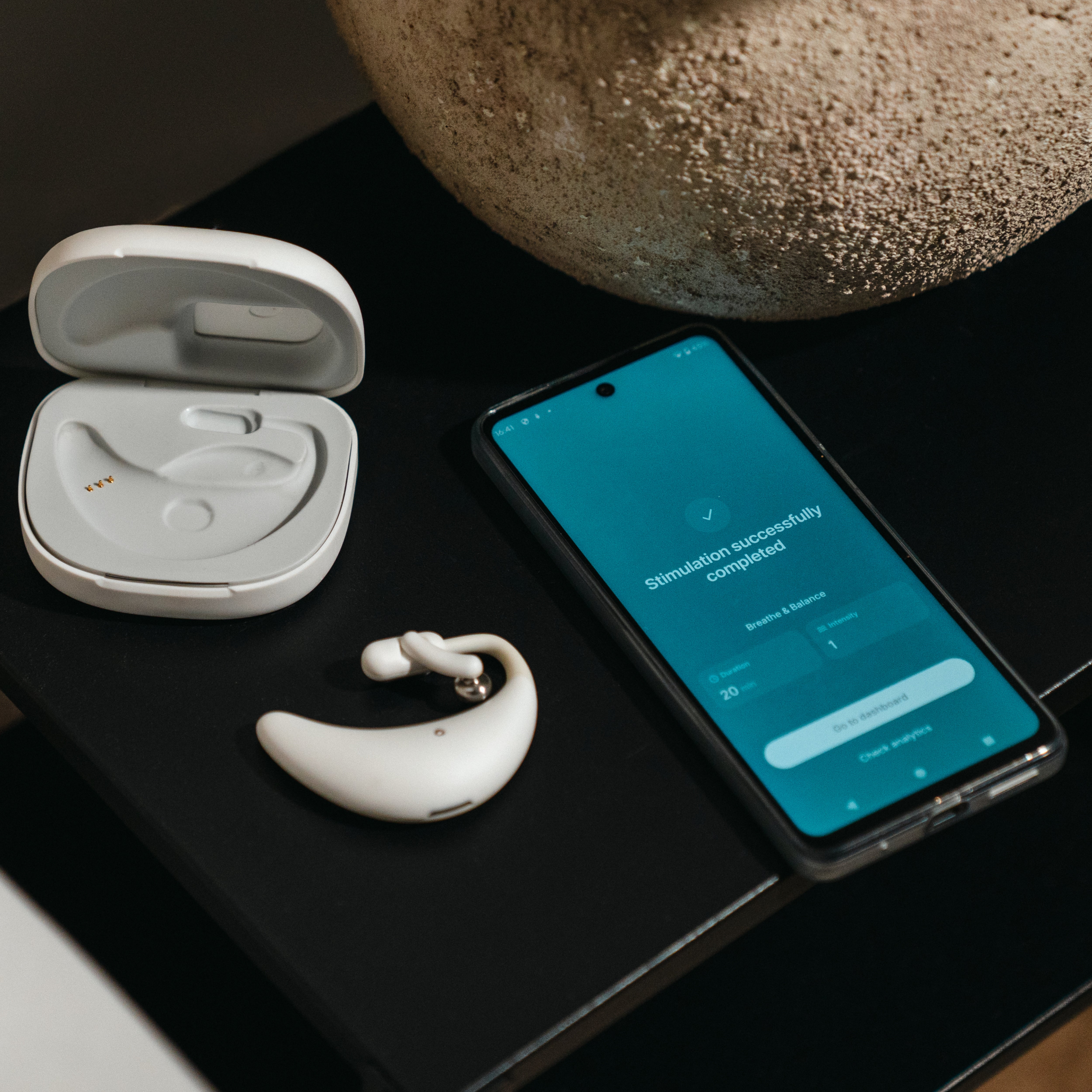
Ready to support your morning routine with science-backed nervous system regulation? Discover how Sona's personalised vagus nerve stimulation can enhance your body's natural capacity for calm focus and sustained energy throughout your day.
Disclaimer
**DISCLAIMER:** Sona is a wellness device and is not a medically regulated product. The information in this article is for educational purposes only and does not constitute medical advice. We do not make any claims about Sona's ability to diagnose, treat, cure, or prevent any medical condition. Vagus nerve stimulation research referenced in this article relates to the broader field of VNS and may not be specific to any particular consumer device. Always consult a qualified healthcare professional before making decisions about your health.
Sources
- Lally, P., van Jaarsveld, C. H. M., Potts, H. W. W., & Wardle, J. (2010). How are habits formed: Modelling habit formation in the real world. European Journal of Social Psychology, 40(6), 998-1009.




Share:
Natural Ways to Improve Sleep: 11 Methods That Actually Work
Sleep Better Tonight: 10 Evidence-Based Tips That Work