


A complete better sleep guide for parents includes optimising your sleep environment despite household chaos, implementing strategic napping protocols that work with your schedule, coordinating sleep shifts with your partner, and using nervous system regulation techniques to counteract hypervigilance. These evidence-based strategies address the unique physiological challenges parents face, from fragmented sleep patterns to chronic stress responses that prevent deep rest.
The reality of parenting in 2026 means managing sleep challenges our ancestors never faced. Beyond the traditional disruptions of night feeds and early wake-ups, modern parents contend with the compound effects of screen exposure, remote work blurring boundaries, and the constant mental load of digital-age parenting. Research shows that 74% of parents experience chronic sleep deprivation during their children's first five years, with lasting impacts on cognitive function, emotional regulation, and physical health.
This guide takes a different approach from generic sleep advice that often fails parents. Rather than suggesting unrealistic 'sleep when baby sleeps' mantras, we'll explore practical, science-backed strategies that work within the constraints of real family life. You'll discover how to use your body's natural recovery systems, implement technology solutions that actually help, and create sustainable sleep practices that evolve with your children's developmental stages.
Key Takeaways
- Parent sleep deprivation affects nervous system regulation, creating a cycle of hypervigilance that traditional sleep advice doesn't address
- Strategic sleep solutions must adapt to your child's developmental stage, from newborn fragmented sleep to school-age boundary negotiations
- Nervous system regulation techniques, including vagus nerve stimulation, can break the stress-sleep deprivation cycle
- Partner coordination and clear communication protocols are essential for maximising household sleep quality
- Technology tools, when used correctly, can support rather than hinder parent sleep patterns
Why Modern Parents Struggle with Sleep More Than Ever
The physiological reality of parent sleep deprivation extends far beyond simple tiredness. When you become a parent, your nervous system fundamentally rewires itself for hypervigilance: a protective mechanism that served our ancestors well but creates havoc in modern life. This heightened alert state, combined with fragmented sleep patterns, triggers a cascade of physiological changes that make quality rest increasingly elusive.
Your body's chronic stress response compounds the problem significantly. Each night of disrupted sleep increases cortisol production, which further impairs your ability to achieve deep, restorative sleep phases. Studies show that parents lose an average of 44 days of sleep in their child's first year alone, with mothers experiencing a 62% reduction in REM sleep during the postpartum period. This isn't just about feeling tired: it's about your nervous system stuck in survival mode.
The digital age adds layers of complexity our parents never faced. Blue light exposure from checking baby monitors on phones disrupts melatonin production. The mental load of managing schedules, responding to messages, and the pressure of 'perfect parenting' on social media creates cognitive overload that persists into nighttime hours. A 2025 study found that parents check their phones an average of 12 times per night, each check potentially resetting their sleep cycle.
Perhaps most concerning are the long-term health consequences. Chronic sleep deprivation in parents correlates with a 48% increased risk of metabolic disorders, a 36% higher likelihood of developing anxiety disorders, and measurable impacts on immune function. The compound effect means that each sleepless night makes the next one harder, creating a downward spiral that feels impossible to escape without targeted intervention.
The Science of Sleep Regulation for Parents
Understanding how your autonomic nervous system controls sleep-wake cycles reveals why parent sleep problems require specialised solutions. Your vagus nerve, the longest cranial nerve in your body, acts as the master regulator between wakefulness and rest. When functioning optimally, it signals your body to shift from sympathetic (fight-or-flight) to parasympathetic (rest-and-digest) dominance. However, the constant demands of parenting can dysregulate this critical system.
Cortisol dysregulation plays a central role in parent sleep problems. Normally, cortisol follows a predictable rhythm: high in the morning to wake you up, gradually declining throughout the day to allow melatonin production at night. Parents often develop what researchers call 'flattened cortisol curves,' where stress hormones remain elevated throughout the night. This explains why you might feel 'tired but wired' at bedtime, unable to switch off despite exhaustion.
Circadian rhythm disruption creates a cascade of metabolic and hormonal effects. Your internal clock relies on consistent light-dark cycles and regular sleep-wake times: luxuries few parents enjoy. Nervous system regulation becomes increasingly difficult as your body loses its ability to predict and prepare for sleep. Research indicates that it takes just three nights of disrupted sleep to significantly alter clock gene expression.
Traditional sleep advice often fails parents because it doesn't address these underlying physiological changes. Telling an exhausted parent to 'maintain good sleep hygiene' ignores the reality that their nervous system may be fundamentally dysregulated. Effective solutions must target the root cause: helping your body remember how to shift into rest mode despite ongoing stressors.
Essential Sleep Hygiene Foundations for Parents
How can working parents get better sleep? Start by creating an optimal sleep environment that works within the reality of household chaos. This means accepting that perfect conditions are impossible but focusing on the elements you can control. Temperature regulation proves particularly important: aim for 16-19°C in your bedroom, using layered bedding to adjust without disturbing your partner. Install blackout curtains or use an eye mask, as even small amounts of light can suppress melatonin production by up to 50%.
Sound management requires creative solutions in family homes. White noise machines serve double duty by masking household sounds while potentially soothing children. Position the machine between your bed and the door, set at a consistent volume that masks intermittent noises without being disruptive. Some parents find success with 'graduated' white noise (louder near children's rooms, softer in the parent bedroom) creating sound zones throughout the house.
Pre-sleep routines must adapt to parenting constraints while maintaining effectiveness. Rather than an elaborate hour-long wind-down, focus on consistent 'micro-rituals' that signal sleep time to your nervous system. This might include five minutes of sleep environment optimisation, followed by simple breathing exercises or gentle stretching. The key is consistency rather than duration: your body will learn to associate these brief activities with sleep preparation.
Technology boundaries require particular attention in modern parenting. Implement the 'phone nursery' concept: a charging station outside the bedroom where all devices 'sleep' at night. Use analog clocks instead of phones for time checks, and if you must monitor children, choose audio-only monitors over video. Blue light blocking glasses worn from 8pm onwards can reduce melatonin suppression by up to 70% if screen use is unavoidable.
Nutrition timing significantly impacts sleep quality yet often gets overlooked in busy parent schedules. Avoid large meals within three hours of bedtime, but don't go to bed hungry: a small protein-rich snack can stabilise blood sugar overnight. Limit caffeine after 2pm (remembering it has a 6-hour half-life), and be aware that alcohol, while initially sedating, significantly disrupts REM sleep. Hydration needs balance too: enough to avoid nighttime thirst, not so much that bathroom trips multiply.
Strategic Sleep Solutions by Child Development Stage
Newborn stage sleep management requires accepting fragmentation while maximising recovery opportunities. Rather than fighting the reality of 2-3 hour sleep cycles, focus on optimising each segment. Implement 'sleep sprints': treating each sleep opportunity as a complete cycle rather than mourning the interrupted night. Use the 'biological night' concept, maintaining darkness and minimal stimulation during nighttime feeds to prevent full awakening. Recovery protocols between sleep segments might include 5-minute nervous system regulation practices or gentle stretching to release physical tension.
Infant stage introduces the possibility of longer stretches but brings sleep training considerations. Whether you choose gradual extinction, chair method, or attachment-based approaches, consistency matters more than method. Create 'parent preservation' rules: one parent handles nights Sunday-Wednesday, the other Thursday-Saturday, allowing each adult at least three nights of fuller sleep weekly. Document what works in a simple sleep log, noting patterns rather than obsessing over individual nights.
Toddler years bring sleep regression challenges that test every boundary. The '1-2-3 Magic' approach adapts well to bedtime: one reminder, two choices, three is implementation. Maintain firm, loving boundaries while acknowledging the genuine fears and separation anxiety that emerge at this stage. Create a 'bedtime passport' system: a finite number of requests (water, bathroom, one more hug) that gives toddlers control within limits. When regressions hit, temporarily simplify routines rather than abandoning them entirely.
School-age children require different strategies as homework, activities, and social pressures compete with sleep. Establish 'family wind-down time' where the entire household shifts to calmer activities, modelling the behaviour you want to see. Negotiate realistic bedtimes that account for morning schedules and individual sleep needs: some children genuinely require less sleep than others. Address bedtime anxiety with 'worry time' earlier in the evening, containing anxious thoughts to a specific period.
Multi-stage households face the ultimate juggling act. Create 'sleep zones' in your home: quiet areas for early sleepers, activity spaces for night owls. Stagger bedtimes strategically, using the gap between children's sleep times for individual connection. Consider room-sharing arrangements that support rather than hinder sleep: sometimes siblings sleep better together, sometimes separation improves everyone's rest. Most importantly, accept that perfect synchronisation is impossible; aim for 'good enough' solutions that meet everyone's basic needs.
Partner Communication and Coordination
Effective partner communication about sleep needs prevents resentment and maximises household rest. Schedule weekly 'sleep summits': brief check-ins about what's working, what isn't, and needed adjustments. Use objective language: 'I woke six times last night' rather than 'You never help with night wakings.' Create a shared vocabulary for sleep needs: 'Code Red' might mean desperate for uninterrupted sleep, while 'Yellow' indicates manageable but tired.
Dividing nighttime responsibilities requires honest assessment of each partner's strengths and constraints. Some couples thrive with alternating full nights, others prefer split nights (one handles before 2am, the other after). Factor in work schedules, natural sleep patterns (night owl vs early bird), and feeding logistics. Document agreements to prevent 3am disputes: a simple chart on the bedroom door can clarify whose turn it is.
Single parent strategies demand even more creativity and self-compassion. Build a support network specifically around sleep: perhaps trading overnight babysitting with another single parent monthly. Prioritise sleep over other household tasks when possible; dishes can wait, but chronic sleep deprivation compounds every challenge. Consider safe co-sleeping arrangements if they improve overall rest, following official guidelines to minimise risks.
Tag-team approaches work particularly well for parents with different schedules or sleep needs. The 'morning person' might handle early wakings while the 'night owl' manages bedtime routines. On weekends, alternate sleep-in days rather than both parents rising early. Create transition rituals when switching responsibilities: a brief handover that includes relevant information prevents middle-of-the-night confusion.
The Power of Strategic Napping
Strategic napping can compensate for nighttime sleep loss when done correctly. The ideal nap duration depends on your sleep deficit: 20 minutes for alertness without grogginess, 60 minutes if you can afford the post-nap fog for memory consolidation, or 90 minutes for a complete sleep cycle. Time naps before 3pm to avoid interfering with nighttime sleep, unless you're on shift work or managing extreme sleep deprivation.
Creating optimal nap conditions in a busy household requires ingenuity. Designate a 'nap zone': even a comfortable chair with noise-cancelling headphones can work. Use sleep masks and white noise apps to create instant sleep environments. Set multiple alarms to prevent oversleeping, and build in a 10-minute buffer for post-nap grogginess. Communicate nap needs clearly to family members, treating them as non-negotiable health requirements rather than luxuries.
Nap timing strategies should align with your natural circadian dips. Most people experience post-lunch sleepiness between 1-3pm: use this biological window. For shift workers or those managing irregular schedules, nap 2-3 hours before your 'main' sleep period to reduce sleep pressure without eliminating it. Track nap effectiveness in your sleep log, noting duration, timing, and subsequent nighttime sleep quality.
Recovery naps serve a different purpose than preventive naps. After a particularly disrupted night, a longer 'replacement' nap can restore cognitive function and emotional regulation. However, avoid the 'nap trap' of sleeping so long during the day that nighttime sleep becomes impossible. If you're napping daily for more than 30 minutes and still experiencing chronic fatigue, this signals a need for complete sleep strategy revision.
Using Technology and Tools Wisely
Sleep tracking apps provide valuable data but require thoughtful interpretation. Choose apps that focus on trends rather than nightly scores: obsessing over 'sleep performance' creates anxiety that worsens sleep. Look for patterns across weeks, not days: Are Tuesdays consistently worse? Do weekend sleep-ins help or hinder? Use insights to experiment with changes, tracking impacts over at least two weeks before drawing conclusions.
White noise apps and machines vary significantly in effectiveness. True white noise contains all frequencies equally, while pink noise (like rainfall) emphasises lower frequencies that many find more soothing. Brown noise, deeper still, can mask low-frequency disruptions like traffic. Experiment with different types, maintaining consistent volume and type once you find what works. Avoid nature sounds with irregular patterns like bird calls that can trigger alertness.
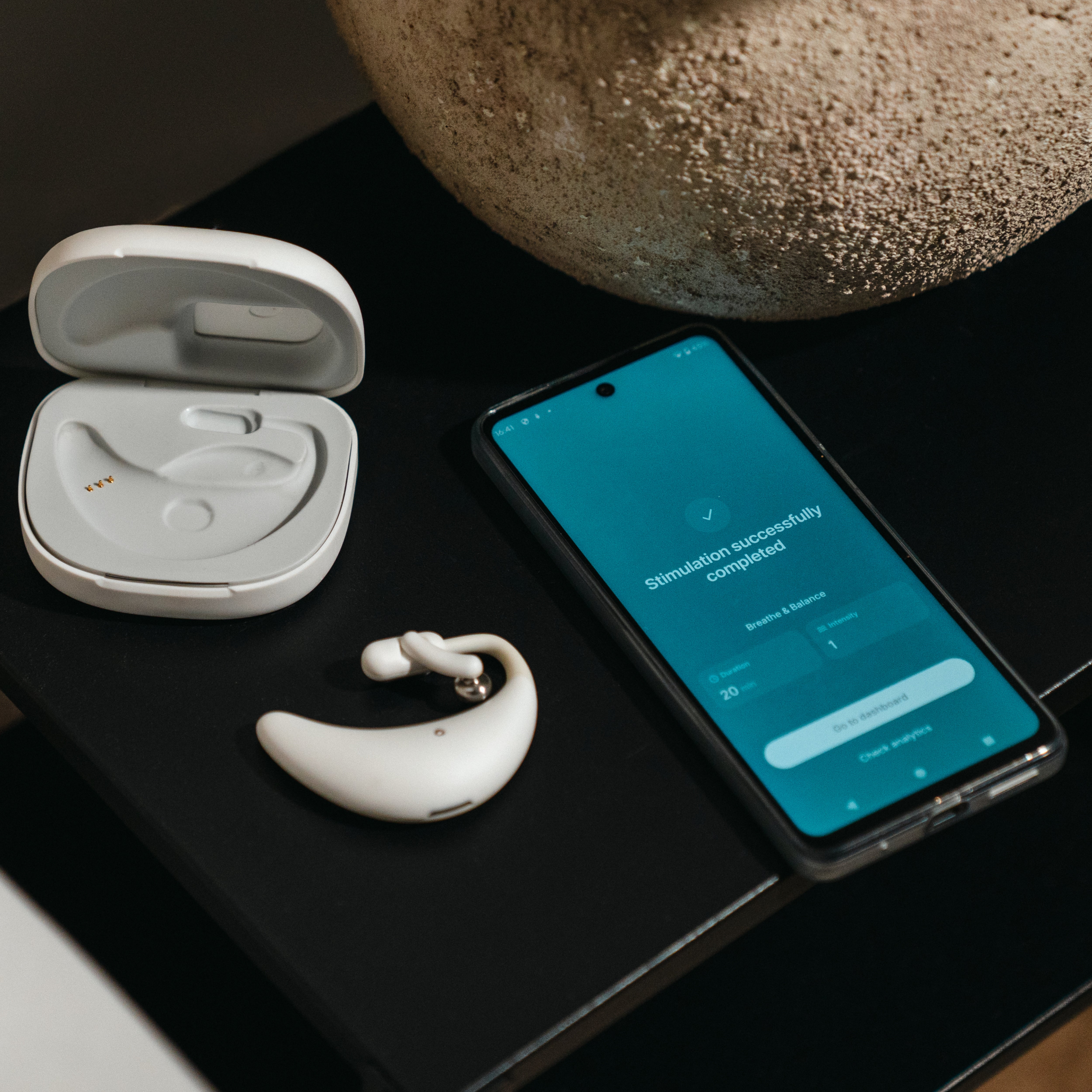
Vagus nerve stimulation represents an emerging technology for parent sleep challenges. By activating the parasympathetic nervous system, VNS devices can help counteract the hypervigilance that plagues exhausted parents. Research shows regular vagus nerve stimulation can improve heart rate variability (a key marker of nervous system flexibility) potentially making it easier to transition into sleep despite ongoing stressors.
Sleep-supporting wearables range from simple fitness trackers to sophisticated biometric monitors. Focus on devices that measure heart rate variability alongside sleep stages, as HRV provides insights into nervous system recovery. Some parents find success with smart alarm clocks that wake you during lighter sleep phases within a set window, reducing morning grogginess. However, avoid becoming dependent on technology: these tools should support, not replace, good sleep practices.
Nervous System Regulation for Better Sleep
Breaking the hypervigilance cycle requires targeted nervous system interventions. Parents often develop hair-trigger stress responses, where the slightest sound jolts them fully awake. This hypervigilance, while protective, prevents the deep sleep necessary for physical and cognitive recovery. Vagus nerve activation through specific techniques can help reset this overactive alarm system.
Breathing exercises offer immediate nervous system regulation. The 4-7-8 technique (inhale for 4, hold for 7, exhale for 8) activates parasympathetic dominance within minutes. Box breathing (4-4-4-4) provides a simpler alternative when counting feels challenging. Practice these techniques during calm moments so they're accessible during nighttime stress. Even three cycles can shift your nervous system toward sleep readiness.
Vagus nerve stimulation through multiple modalities amplifies relaxation responses. Cold water face immersion triggers the dive reflex, rapidly activating vagal tone. Gentle neck stretches and humming stimulate the vagus nerve through proximity and vibration. For parents seeking consistent support, devices designed for vagus nerve stimulation can provide reliable activation without requiring perfect technique execution during exhausted moments.
Progressive muscle relaxation adapted for tired parents focuses on efficiency. Rather than the traditional 20-minute full-body sequence, use 'rapid release': tensing and releasing major muscle groups in 30-second segments. Start with shoulders (where parents hold tremendous tension), then jaw, hands, and feet. This abbreviated version provides nervous system regulation benefits without the time investment that feels impossible with young children.
When to Seek Professional Help
Recognising when sleep challenges exceed normal parenting exhaustion prevents long-term health consequences. Red flags include: consistently getting less than 5 hours despite opportunities for more, microsleeps during daily activities, persistent mood changes affecting relationships, or physical symptoms like chest pain or severe headaches. These warrant immediate medical consultation rather than continued self-management attempts.
Sleep specialists offer targeted interventions beyond general practice capabilities. Cognitive Behavioural Therapy for Insomnia (CBT-I) shows particular effectiveness for parents, addressing both behavioural patterns and anxiety around sleep. Some therapists specialise in perinatal and parenting-related sleep disorders, understanding the unique constraints you face. Virtual consultations make specialist access more feasible for time-strapped parents.
Postpartum specific sleep issues deserve special attention. Postpartum anxiety, depression, and psychosis can manifest primarily through sleep disturbances. If sleep problems coincide with intrusive thoughts, extreme mood swings, or disconnection from your baby, prioritise mental health support. Partners should monitor for these signs too, as sleep-deprived parents may not recognise their own symptoms.
Family sleep consultants bridge the gap between medical intervention and practical implementation. They assess whole-family sleep dynamics, creating customised plans that consider everyone's needs. While not medical professionals, experienced consultants can identify when medical referral is necessary while providing hands-on strategy support. Investment in professional guidance often pays dividends through years of improved family sleep.
Building Sustainable Sleep Habits
Creating lasting change requires systems thinking rather than perfection pursuit. Start with one keystone habit (perhaps consistent bedtime or morning light exposure) that naturally triggers other positive changes. Track adherence, not just outcomes; celebrating seven nights of attempting your bedtime routine matters more than whether sleep improved immediately. Build flexibility into your systems, knowing that rigid rules break under parenting pressures.
Adapting strategies as children grow prevents the common trap of clinging to outdated solutions. What works for managing newborn sleep won't suit toddler challenges. Schedule quarterly 'sleep audits' to assess current strategies against evolving needs. Include older children in discussions about household sleep habits, encourageing buy-in and teaching valuable self-regulation skills. Document what works in different phases for reference during regression periods.
Maintaining progress during challenging phases (illness, travel, developmental leaps) requires predetermined protocols. Create 'survival mode' plans that maintain core sleep supports while accepting temporary disruption. Perhaps bedtimes flex during illness but screen limits remain firm. Having pre-made decisions reduces middle-of-the-night negotiations and partner conflicts when everyone's exhausted.
Long-term success metrics extend beyond hours slept. Monitor energy levels throughout the day, emotional regulation capacity, and relationship quality. Sometimes six hours of quality sleep surpasses eight hours of fragmented rest. Celebrate improvements in how quickly you fall back asleep after disruptions or reduced anxiety around bedtime. These process improvements often precede and predict sustainable sleep quality enhancement.
Frequently Asked Questions
How much sleep do new parents actually get?
New parents average 5.1 hours of fragmented sleep nightly during the first year, with mothers typically getting 30-45 minutes less than fathers. Sleep occurs in 2-3 hour segments rather than continuous blocks, significantly reducing REM and deep sleep phases essential for cognitive function and emotional regulation.
When will I start sleeping better as a parent?
Most parents see gradual improvement around 6 months when babies can physiologically sleep 6+ hour stretches. However, consistent 7-8 hour nights often don't return until children are 2-3 years old. Sleep quality typically improves faster than quantity as your nervous system adapts to interruptions.
How can working parents get better sleep?
Working parents should prioritise sleep environment optimisation, implement strict technology boundaries, coordinate with partners for alternating 'sleep priority' nights, and use strategic 20-minute power naps. Communicate sleep needs clearly with employers and consider flexible scheduling when possible to align with natural energy patterns.
How do single parents manage sleep deprivation?
Single parents can build sleep support networks with other parents for occasional overnight help, prioritise sleep over non-essential tasks, use safe co-sleeping practices when appropriate, and use technology tools like white noise apps. Professional respite care or family support for even one night monthly significantly improves overall sleep resilience.
Is it normal to feel anxious about my baby's sleep?
Yes, sleep anxiety affects 67% of new parents. This hypervigilance stems from biological protective instincts amplified by modern parenting pressures. Nervous system regulation techniques, including breathing exercises and vagus nerve stimulation, can help reduce anxiety while maintaining appropriate awareness of your child's needs.
Conclusion
Better sleep as a parent isn't about achieving pre-child sleep patterns: it's about optimising rest within your new reality. The strategies we've explored address the unique physiological and practical challenges parents face, from nervous system dysregulation to the complexity of managing multiple sleep schedules. Remember that small improvements compound: a 20-minute increase in deep sleep can significantly enhance daytime function and emotional resilience.
The key insight from current sleep science is that parent sleep challenges stem not just from external disruptions but from fundamental changes in how your nervous system operates. By addressing both the practical elements (environment, timing, coordination) and the physiological aspects through nervous system regulation, you create sustainable improvements that evolve with your family's needs.
Progress won't be linear. You'll face setbacks during illness, developmental leaps, and life transitions. But with the right tools and realistic expectations, you can build a sleep foundation that supports both your parenting journey and your long-term health. Focus on systems, not perfection, and remember that investing in your sleep directly benefits your entire family's wellbeing.
Ready to take control of your sleep and break the exhaustion cycle? Explore how Sona's AI-powered vagus nerve stimulation can help regulate your nervous system for better rest and daily focus. Visit our 7 Wellness Apps That Help Entrepreneurs Perform at Their Best to discover technology solutions that work within your busy parent lifestyle.
Disclaimer
**DISCLAIMER:** Sona is a wellness device and is not a medically regulated product. The information in this article is for educational purposes only and does not constitute medical advice. We do not make any claims about Sona's ability to diagnose, treat, cure, or prevent any medical condition. Vagus nerve stimulation research referenced in this article relates to the broader field of VNS and may not be specific to any particular consumer device. Always consult a qualified healthcare professional before making decisions about your health.




Share:
Student Sleep and Focus Guide: Beat Exam Stress (2026)
Vagus Nerve Stimulation for Sleep: A 4-Week Protocol (2026)