


Sleep Anxiety: 8 Tools and Techniques That Finally Helped Me
Sleep anxiety tools and techniques that prove most transformative include vagus nerve stimulation, 4-7-8 breathing, progressive muscle relaxation, cognitive reframing, environmental optimisation, mindfulness-based preparation, technology integration, and nervous system scheduling. These evidence-based approaches work by regulating your nervous system's alert mechanisms, helping shift from hypervigilance to natural sleep readiness.
I remember lying in bed at 2 AM, heart racing, mind churning through tomorrow's meetings whilst simultaneously calculating how many hours of sleep I'd get if I fell asleep right now. The cruel irony of sleep anxiety is that the harder you try to sleep, the more elusive it becomes. After years of research into nervous system regulation and working with thousands experiencing similar struggles, I've discovered that conquering sleep anxiety isn't about willpower or positive thinking - it's about understanding and working with your body's sophisticated safety systems.
What makes these eight tools notable is their foundation in polyvagal theory and nervous system science. Your inability to "switch off" at bedtime isn't a character flaw; it's your autonomic nervous system doing exactly what it's designed to do - keeping you alert to potential threats. The key insight is learning to communicate safety to this ancient protective mechanism through specific, evidence-based techniques.
Key Takeaways
- Sleep anxiety is a physiological response driven by nervous system activation, not a personal weakness
- Vagus nerve stimulation and breathing techniques can shift your body from alert to rest mode within minutes
- Environmental and cognitive tools work synergistically to create complete sleep anxiety management
- Consistency matters more than perfection - building nervous system resilience takes gentle, regular practice
- Technology can enhance traditional techniques when used strategically rather than as a crutch
Understanding Sleep Anxiety: When Your Alert System Won't Switch Off
Sleep anxiety occurs when your sympathetic nervous system - your body's accelerator - remains activated when you need parasympathetic dominance for rest. This isn't a malfunction; it's your nervous system's sophisticated threat-detection system, called neuroception, working overtime. Bedtime triggers a safety assessment below conscious awareness: Is it safe to be vulnerable and unconscious for eight hours?
Common physical symptoms include racing heart, muscle tension, restless legs, and that frustrating "tired but wired" sensation. Cognitively, you might experience racing thoughts, catastrophic thinking about tomorrow, or obsessive clock-watching. These aren't separate issues - they're all manifestations of sympathetic activation.
What causes anxiety when trying to sleep? Often, it's accumulated stress throughout the day that hasn't been properly discharged. Your nervous system doesn't have an off switch; it requires specific signals to downregulate. This is why willpower fails - you can't think your way out of a physiological state. Understanding this removes self-blame and opens the door to effective, body-based solutions.
Tool #1: Vagus Nerve Stimulation - Your Reset Button
The vagus nerve acts as your nervous system's brake pedal, and improving vagal tone - its strength and responsiveness - is foundational for conquering sleep anxiety. When activated, this notable nerve shifts your body from fight-or-flight to rest-and-digest mode, creating the physiological conditions necessary for sleep. Understanding how vagus nerve stimulation works is the first step toward harnessing this powerful mechanism.
Specific techniques I've found most effective include cold water face immersion (activating the mammalian dive reflex), gentle humming or gargling (stimulating vagus nerve branches in the throat), and light neck massage along the carotid sinus. For a deeper dive into hands-on methods, see our guide to vagus nerve exercises for stress relief. The cold water technique is particularly powerful: fill a bowl with cold water, hold your breath, and immerse your face for 15-30 seconds. This triggers an immediate parasympathetic shift.
Timing matters profoundly. Rather than waiting until bedtime when anxiety peaks, I practice vagus nerve stimulation throughout the day, building cumulative resilience. Morning cold showers, afternoon humming during transitions, and evening neck massage create a foundation of vagal strength. This is where personalised approaches become transformative - what works for one person's nervous system may need adjustment for another's.
At Sona, we've observed that consistent vagus nerve stimulation creates lasting changes in nervous system regulation. Users report not just better sleep, but improved stress resilience throughout the day. The key is gentle consistency rather than aggressive intervention - think of it as training your nervous system's flexibility rather than forcing relaxation.
Tool #2: The 4-7-8 Breath - Respiratory Pathway to Calm
What is the 4-7-8 breathing technique for sleep? Developed by Dr. Andrew Weil, this pattern uses your respiratory system's direct connection to autonomic regulation. Inhale through your nose for 4 counts, hold for 7, then exhale through pursed lips for 8. The extended exhale activates your parasympathetic nervous system through respiratory sinus arrhythmia - your heart rate naturally decreases during exhalation.
The magic lies in the ratio, not the exact timing. If 4-7-8 feels strained, try 3-5-6 or even 2-4-5. The principle remains: your exhale should be twice as long as your inhale, with a comfortable hold between. I start with three cycles, building to eight over several weeks. Forcing deep breathing paradoxically increases anxiety - let the breath be gentle and sustainable.
Common mistakes include breathing too forcefully, counting too fast, and giving up after one night. Your nervous system learns through repetition; commit to practicing for at least two weeks before evaluating effectiveness. Position your tongue against the ridge behind your upper teeth throughout - this subtle addition enhances vagus nerve activation.
Combining 4-7-8 breathing with heart rate variability (HRV) biofeedback amplifies results dramatically. Watching your HRV increase in real-time provides immediate confirmation that your nervous system is responding, building confidence and enhancing the technique's effectiveness.
Tool #3: Progressive Muscle Relaxation - Releasing Physical Tension
The science behind progressive muscle relaxation reveals why this 100-year-old technique remains powerful: deliberate tension followed by release sends clear safety signals to your nervous system. When muscles relax, your brain interprets this as evidence that threats have passed, initiating a cascade of calming neurochemicals.
My modified bedtime sequence starts at the toes, tensing for 5 seconds then releasing for 15-20 seconds. Move systematically: feet, calves, thighs, glutes, abdomen, hands, arms, shoulders, neck, and finally facial muscles. The key insight is pairing muscle release with breath awareness - exhale as you release tension, imagining stress flowing out with your breath.
For those with restless leg syndrome or chronic pain, adapt by using gentle engagement rather than full tension. Even imagining muscle tension and release activates similar neural pathways. I've found combining PMR with a body scan meditation creates profound relaxation - after releasing each muscle group, spend a moment simply noticing sensations without judgment.
This technique works best when practiced in the same position you'll sleep in, creating a conditioned response. Your nervous system learns to associate this sequence with safety and rest, making sleep onset progressively easier.
Tool #4: Cognitive Reframing - Interrupting the Worry Loop
Sleep anxiety often features predictable thought patterns: "I'll be exhausted tomorrow," "I can't function without sleep," "Something's wrong with me." These catastrophic narratives activate threat detection systems, creating a self-fulfilling prophecy - and as we explore in our article on how poor sleep kills productivity, those fears aren't unfounded, which makes them even harder to dismiss. Cognitive reframing isn't about positive thinking - it's about accuracy and nervous system regulation.
The 3-4-5 technique interrupts worry loops effectively: identify 3 facts about your current safety, name 4 things you're grateful for today, and list 5 times you've functioned adequately despite poor sleep. This isn't denial; it's providing your neuroception system with accurate safety data. "I'm physically safe in my bed" carries more weight than "Everything will be fine."
Scheduled worry time transforms anxiety from an all-day visitor to a contained appointment. Set aside 15 minutes in early evening to write worries down, brainstorm solutions, then ceremonially close the notebook. When bedtime worries arise, remind your nervous system: "This has been addressed; now is time for rest." This boundary teaches your brain that bed isn't a problem-solving venue.
Neuroscience reveals that rumination strengthens neural pathways, making worry loops more automatic. Pattern interruption - through reframing, physical movement, or sensory engagement - weakens these pathways. Each successful interruption makes the next one easier, gradually rewiring your bedtime neural patterns.
Tool #5: Environmental Optimisation - Creating Your Sleep Sanctuary
Your bedroom environment sends constant signals to your neuroception system, influencing whether your nervous system perceives safety or threat. Temperature proves particularly important - a cool room (15-19°C) supports the natural drop in core body temperature necessary for sleep initiation. This isn't about comfort alone; it's about aligning with circadian biology.
Light exposure dramatically impacts nervous system regulation. Beyond obvious blue light from screens, even small LED indicators can disrupt melatonin production. I use blackout curtains, cover all electronics, and switch to amber lighting two hours before bed. This creates what researchers call "biological darkness" - conditions that signal safety for vulnerable sleep states.
Sound presents a paradox: complete silence can heighten vigilance, whilst inconsistent noise triggers startle responses. Pink noise - deeper than white noise - masks disruptions whilst providing consistent sensory input. Ocean waves, rainfall, or purpose-built pink noise generators create an acoustic cocoon that signals environmental stability to your nervous system.
Technology boundaries require particular attention. Charging phones outside the bedroom eliminates temptation and reduces electromagnetic field exposure. If you must have a phone nearby for emergencies, use airplane mode and place it across the room. This physical barrier makes midnight scrolling less automatic whilst maintaining accessibility for genuine needs.
Tool #6: Mindfulness-Based Sleep Preparation
Mindfulness for sleep differs from daytime meditation - the goal isn't heightened awareness but gentle neural quieting. Body scan meditation proves particularly effective, systematically shifting attention through body regions whilst maintaining an attitude of curious non-judgment. This practice activates the insula, improving interoception and vagal tone simultaneously. Research into vagus nerve stimulation for sleep confirms the link between vagal tone and sleep quality.
I begin at the crown of my head, noticing without changing. The instruction "soften" works better than "relax" - it implies gentle allowing rather than effortful doing. Move through face, neck, shoulders, arms, chest, belly, hips, legs, and feet. When thoughts intrude (they will), acknowledge them as "thinking" and gently return to body sensations. This isn't failure; it's practice.
Yoga nidra, or "yogic sleep," offers a structured journey through consciousness layers. Unlike forcing sleep, this practice guides you through states between waking and sleeping, teaching your nervous system to manage these transitions smoothly. Free guided sessions available online range from 10-45 minutes - start short and expand as comfort grows.
Timing these practices matters: 20-30 minutes before your intended sleep time allows for natural transition. Practicing in bed can create helpful associations, but some prefer a chair to avoid frustration if sleep doesn't immediately follow. Experiment to discover your optimal approach.
Tool #7: Technology Integration for Nervous System Regulation
While technology often disrupts sleep, strategic use can enhance nervous system regulation. HRV biofeedback apps provide real-time data about your autonomic state, turning invisible physiological processes visible. Watching your HRV increase during breathing exercises reinforces the practice's effectiveness, accelerating nervous system learning.
Sleep tracking should focus on trends rather than nightly scores. Obsessing over sleep metrics paradoxically increases anxiety. Instead, use data to identify patterns: Does HRV improve after evening yoga? Does bedroom temperature correlate with sleep quality? This positions technology as a learning tool rather than a judge.
Binaural beats and isochronic tones influence brainwave patterns through auditory stimulation. Delta frequencies (0.5-4 Hz) promote deep sleep, whilst theta (4-8 Hz) aids the transition from waking. Use headphones for binaural beats; isochronic tones work through speakers. Start with 15-minute sessions, noting which frequencies resonate with your nervous system.
AI-powered personalisation represents the frontier of sleep technology. Rather than generic recommendations, advanced systems adapt to your unique physiological patterns. This closed-loop approach - monitoring your response and adjusting accordingly - mirrors how your nervous system naturally operates, creating more effective regulation strategies.
Tool #8: Nervous System Scheduling
Your nervous system thrives on predictability. Creating a consistent wind-down routine signals approaching rest, allowing gradual downregulation rather than abrupt switching. I begin 90 minutes before intended sleep time: dim lights, switch to calming activities, and begin the transition from doing to being mode.
The first 30 minutes involve practical preparation: tomorrow's clothes, kitchen tidying, basic hygiene. These mundane activities serve dual purposes - eliminating tomorrow's micro-stressors whilst providing gentle, rhythmic movement that soothes the nervous system. The key is maintaining relaxed awareness rather than rushed efficiency.
The middle 30 minutes shifts to direct nervous system regulation: gentle stretching, breathing practice, or light reading (fiction works better than non-fiction for promoting parasympathetic activation). This isn't rigid - some nights call for journaling, others for gentle music. The consistency lies in the intention: actively supporting nervous system downregulation.
The final 30 minutes happens in bedroom darkness: progressive relaxation, body scanning, or simply resting in breath awareness. By this point, your nervous system has received 90 minutes of consistent safety signals. Sleep becomes less about forcing unconsciousness and more about allowing natural processes to unfold.
Integration and Troubleshooting
Combining tools amplifies their effectiveness. My current routine integrates vagus nerve stimulation (afternoon cold exposure), 4-7-8 breathing during evening transition, and technology-enhanced mindfulness before bed. This isn't about perfection - it's about creating multiple opportunities for nervous system regulation throughout your day.
When anxiety spikes despite these practices, return to basics: name five things you can see, four you can touch, three you can hear, two you can smell, and one you can taste. This 5-4-3-2-1 grounding technique interrupts catastrophic thinking whilst engaging sensory systems that communicate immediate safety to your nervous system.
Expect non-linear progress. Some nights, anxiety will win - this doesn't negate your practice. Your nervous system changes through accumulated experience, not single victories. Track weekly trends rather than nightly performance. Notice subtle shifts: Do you recover faster from anxiety spikes? Is the intensity decreasing? These incremental changes indicate nervous system resilience building.
Persistence with gentleness proves key. Aggressive attempts to force relaxation activate sympathetic responses - the opposite of your goal. Approach these tools with curious experimentation rather than desperate grasping. Your nervous system responds to authentic safety, not performed calm.
Frequently Asked Questions
What causes anxiety when trying to sleep?
Sleep anxiety stems from sympathetic nervous system activation when you need parasympathetic dominance for rest. Common triggers include unprocessed daily stress, tomorrow's worries, fear of not sleeping, and environmental factors that signal potential threat to your neuroception system. It's a physiological response, not a personal failing.
How do you calm sleep anxiety naturally?
Natural sleep anxiety relief comes through nervous system regulation techniques: vagus nerve stimulation (cold water, humming), extended exhale breathing, progressive muscle relaxation, and consistent bedtime routines. These methods work by activating your parasympathetic nervous system, creating physiological conditions conducive to sleep.
Can sleep anxiety be cured permanently?
While 'cure' implies complete elimination, you can develop strong nervous system resilience that makes sleep anxiety manageable and infrequent. Through consistent practice of regulation techniques and addressing underlying stressors, many people experience months or years without significant sleep anxiety.
How long does it take to overcome sleep anxiety?
Most people notice initial improvements within 2-3 weeks of consistent practice. Significant nervous system regulation changes typically occur after 6-8 weeks. However, timeline varies based on anxiety severity, practice consistency, and underlying factors. Focus on progress trends rather than specific deadlines.
Is sleep anxiety a sign of a bigger problem?
Sleep anxiety can occur independently or signal underlying conditions like generalised anxiety disorder, depression, or chronic stress. If sleep anxiety persists despite consistent self-help efforts, significantly impacts daily functioning, or accompanies other concerning symptoms, consult a healthcare professional for complete evaluation.
Conclusion
After years of dreading bedtime, I now look forward to my evening nervous system regulation practice. The transformation didn't happen overnight - it came through patient, consistent application of these eight tools. What changed everything was understanding that sleep anxiety isn't a character flaw or mysterious affliction; it's a nervous system state that responds predictably to specific interventions.
The key takeaway from my journey: you can't fight your way to peaceful sleep, but you can regulate your way there. These tools work because they speak your nervous system's language - not through force or willpower, but through gentle, persistent signals of safety. Start with one or two techniques that resonate, build consistency, then gradually expand your toolkit. Your nervous system's capacity for change will surprise you.
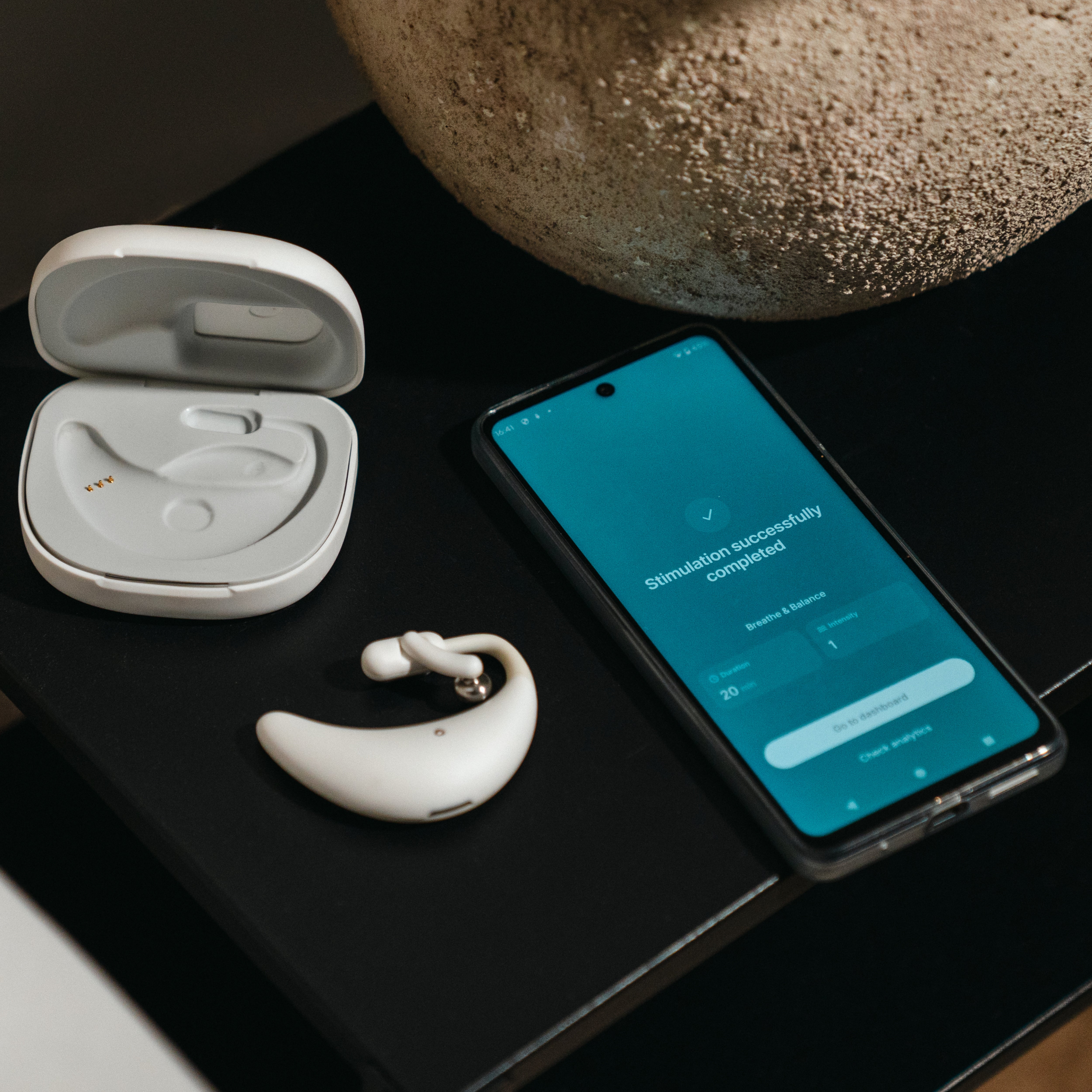
Ready to take your nervous system regulation to the next level? Explore how Sona's personalised vagus nerve stimulation can enhance your natural sleep anxiety management toolkit. Discover how our AI-powered approach adapts to your unique physiology, creating customised pathways to deeper calm and restorative sleep. Learn more about the science behind Sona.
Disclaimer
DISCLAIMER: Sona is a wellness device and is not a medically regulated product. The information in this article is for educational purposes only and does not constitute medical advice. We do not make any claims about Sona's ability to diagnose, treat, cure, or prevent any medical condition. Vagus nerve stimulation research referenced in this article relates to the broader field of VNS and may not be specific to any particular consumer device. Always consult a qualified healthcare professional before making decisions about your health.


Share:
Best HRV Tracking Devices Compared (2026 Guide)
Poor Sleep and Productivity: 9 Warning Signs You're Losing Performance