


The window of tolerance is your nervous system's optimal zone where you can handle stress, process emotions, and respond to life's challenges without becoming overwhelmed or shutting down. Developed by Dr. Dan Siegel, this concept describes the range of arousal where you can think clearly, stay connected to yourself and others, and manage daily experiences effectively.
When you're within your window of tolerance, you feel grounded, present, and capable. Step outside it, however, and you might find yourself in hyperarousal (anxiety, panic, rage) or hypoarousal (numbness, disconnection, collapse). Understanding this framework isn't just academic: it's the key to recognising your nervous system patterns and expanding your capacity for resilience.
In this guide, we'll explore the science behind your window of tolerance, help you identify when you're outside it, and most importantly, share evidence-based strategies to widen your window for greater emotional flexibility and wellbeing.
Key Takeaways
- Your window of tolerance is the optimal arousal zone where you can handle stress and emotions effectively
- Trauma, chronic stress, and early experiences can narrow your window, making you more reactive
- Three zones exist: optimal (regulated), hyperarousal (fight/flight), and hypoarousal (shutdown)
- Expanding your window is possible through nervous system regulation techniques and vagal tone improvement
- Regular practice of grounding exercises, breathwork, and vagus nerve stimulation can widen your tolerance
What Is the Window of Tolerance?
The window of tolerance represents your nervous system's sweet spot: the zone where you can experience the full range of emotions and sensations whilst remaining functional and connected. Dr. Dan Siegel, a clinical professor of psychiatry at UCLA, developed this concept in the 1990s to help explain how trauma affects our capacity for emotional regulation.
Think of it as your nervous system's comfort zone. Within this window, you can handle stress, process difficult emotions, and engage with life's challenges without becoming dysregulated. Your autonomic nervous system maintains a healthy balance between activation and calm, allowing you to respond rather than react.
this isn't a fixed capacity. Some days, your window might feel expansive: you handle traffic jams, work deadlines, and family tensions with relative ease. Other days, a minor inconvenience sends you spiralling. That's because your window of tolerance fluctuates based on factors like sleep, stress levels, physical health, and recent experiences.
In practical terms, being within your window looks like staying present during a difficult conversation, feeling emotions without being overwhelmed by them, and making thoughtful decisions even under pressure. You're neither flooded with anxiety nor checked out and numb: you're simply present, engaged, and resourced.
The Three Zones: Understanding Your Nervous System States
Your nervous system operates in three distinct zones, each with characteristic patterns of thinking, feeling, and behaving. Understanding these zones helps you recognise where you are and what you need to return to regulation.
The Optimal Zone (Window of Tolerance)
When you're within your window, you experience what researchers call 'calm alertness.' You can think clearly, access creativity, and maintain social connection. Your prefrontal cortex (the brain's executive centre) remains online, allowing for rational decision-making and emotional flexibility. Physiologically, your heart rate variability is balanced, breathing is regular, and muscles are relaxed yet ready.
Hyperarousal: The Upper Edge
Push above your window, and you enter hyperarousal: your sympathetic nervous system's domain. Here, fight-or-flight responses dominate. You might experience racing thoughts, anxiety, panic, irritability, or rage. Your body prepares for danger: heart racing, muscles tensing, breathing becoming shallow. In this state, the thinking brain goes offline as survival instincts take over.
Hypoarousal: The Lower Edge
Drop below your window, and you enter hypoarousal: a dorsal vagal shutdown response. This looks like emotional numbness, disconnection, brain fog, or feeling 'zoned out.' Your body conserves energy as if playing dead: heart rate drops, breathing slows dramatically, and you may feel heavy or frozen. This ancient survival mechanism helped our ancestors survive overwhelming threats.
The vagus nerve plays a important role in moving between these states. When functioning optimally, it acts as your body's brake pedal, helping you return to your window after stress. However, chronic dysregulation can weaken this natural recovery mechanism, keeping you stuck in hyperarousal or hypoarousal patterns.
Signs You're Outside Your Window of Tolerance
Recognising when you've left your window of tolerance is the first step toward regulation. Your body provides clear signals: learning to read them empowers you to intervene before dysregulation becomes overwhelming.
Physical Symptoms of Dysregulation
Your body often knows before your mind does. In hyperarousal, you might notice: rapid heartbeat, shallow breathing, muscle tension, sweating, digestive upset, or feeling 'wired but tired.' Hypoarousal brings different signals: heaviness in limbs, difficulty moving, slowed breathing, feeling cold or numb, or digestive shutdown.
Emotional and Cognitive Indicators
Emotionally, hyperarousal manifests as anxiety, panic, irritability, or explosive anger. Thoughts race, worst-case scenarios dominate, and you might feel out of control. Conversely, hypoarousal brings emotional flatness, disconnection from feelings, hopelessness, or a sense of 'why bother?' Cognitively, you might experience brain fog, difficulty making decisions, or feeling mentally 'offline.'
Behavioural Patterns
Your behaviours also shift outside your window. Hyperarousal often drives impulsive actions, aggressive communication, restlessness, or compulsive behaviours. You might find yourself snapping at loved ones or unable to sit still. Hypoarousal shows up as withdrawal, procrastination, excessive sleep, or 'checking out' through scrolling or substances.
Importantly, these aren't character flaws: they're nervous system states. The difference between acute stress (temporary departure from your window) and chronic dysregulation lies in frequency and recovery time. If you're spending more time outside your window than within it, your nervous system needs support to rebuild its regulatory capacity.
What Causes a Narrow Window of Tolerance?
Understanding why your window of tolerance might be narrow helps remove self-blame and points toward healing. Multiple factors influence your nervous system's capacity for regulation, many stemming from experiences beyond your control.
Trauma's Impact on Nervous System Capacity
Trauma fundamentally alters how your nervous system perceives and responds to threat. Whether from single incidents or complex developmental trauma, these experiences teach your system that the world is dangerous, narrowing your window as a protective mechanism. Your nervous system becomes hypervigilant, quick to mobilise defense responses at the slightest trigger.
Chronic Stress and Allostatic Load
Chronic stress acts like a constant weight on your nervous system. When stress hormones remain elevated over time, your window gradually narrows as your system loses flexibility. This allostatic load (the cumulative burden of chronic stress) depletes your regulatory resources, making you more reactive to smaller stressors.
Developmental Factors
Your window of tolerance begins forming in infancy through co-regulation with caregivers. If early relationships lacked consistent safety and attunement, your nervous system may not have learned strong self-regulation skills. This isn't about blame: many parents did their best with limited resources or their own trauma histories.
Medical and Lifestyle Factors
Physical health profoundly impacts nervous system regulation. Chronic pain, autoimmune conditions, hormonal imbalances, and sleep deprivation all narrow your window. Similarly, lifestyle factors like poor nutrition, lack of movement, or substance use affect your nervous system's resilience.
Cultural and societal influences also matter. Living with systemic oppression, financial insecurity, or in high-stress environments chronically activates threat responses. Recognising these broader contexts helps us understand that a narrow window often reflects adaptive responses to challenging circumstances, not personal weakness.
The Science Behind Window of Tolerance Expansion
The notable news is that your window of tolerance isn't fixed. Thanks to neuroplasticity (your nervous system's capacity for change) you can literally rewire your stress responses and expand your regulatory capacity.
Neuroplasticity and Nervous System Adaptation
Your brain and nervous system continuously reshape based on experience. Each time you successfully regulate from a dysregulated state back to your window, you strengthen those neural pathways. This process, called experience-dependent plasticity, means that practising regulation literally builds your capacity for it.
The Role of Vagal Tone
Vagal tone: the strength and responsiveness of your vagus nerve: directly correlates with window of tolerance width. Higher vagal tone means better ability to self-soothe, recover from stress, and maintain emotional balance. Research by Porges and others demonstrates that improving vagal tone through specific practices expands regulatory capacity.
Evidence-Based Interventions
Multiple studies support various approaches for widening the window of tolerance. Breathwork interventions show significant improvements in heart rate variability and stress resilience. Body-based therapies like somatic experiencing help discharge trapped survival energy. Vagus nerve stimulation research indicates enhanced parasympathetic function and emotional regulation.
The key insight from neuroscience: consistent, gentle challenges to your nervous system (staying just at the edge of your window whilst maintaining safety) gradually expand your capacity. This 'optimal stress' promotes growth without overwhelming your system, building resilience over time.
Practical Techniques to Expand Your Window
Expanding your window of tolerance requires consistent practice with nervous system-friendly techniques. These evidence-based strategies work by strengthening vagal tone, building regulatory resources, and teaching your system that it's safe to stay present.
Breathing Techniques for Immediate Regulation
Breath is your most accessible tool for nervous system regulation. The 4-7-8 breath (inhale for 4, hold for 7, exhale for 8) activates your parasympathetic nervous system within minutes. Coherent breathing (5 counts in, 5 counts out) synchronises your heart rate variability, expanding your window in real-time. Start with just 3-5 minutes daily.
Movement and Body-Based Practices
Gentle, rhythmic movement helps discharge hyperarousal and enliven hypoarousal. Practices like yoga, tai chi, or simple walking meditation keep you within your window whilst building capacity. The key is finding movement that feels regulating rather than depleting: honour your body's signals.
Grounding and Orientation Exercises
When you feel yourself leaving your window, grounding brings you back. Try the 5-4-3-2-1 technique: name 5 things you see, 4 you hear, 3 you can touch, 2 you smell, and 1 you taste. This sensory engagement activates your prefrontal cortex, pulling you back into regulation.
Building Long-Term Resilience
Consistent daily practices matter more than intensity. Morning routines that include breathwork, gentle movement, and mindful moments set your nervous system's baseline. Evening wind-down rituals help you process the day's activation. Consider practices like journaling, meditation for vagus nerve, or gentle self-massage.
Remember: expanding your window isn't about pushing through dysregulation. It's about noticing when you're approaching your edges and using tools to stay resourced. Each successful regulation builds your capacity for the next challenge.
Using Vagus Nerve Stimulation to Support Your Window
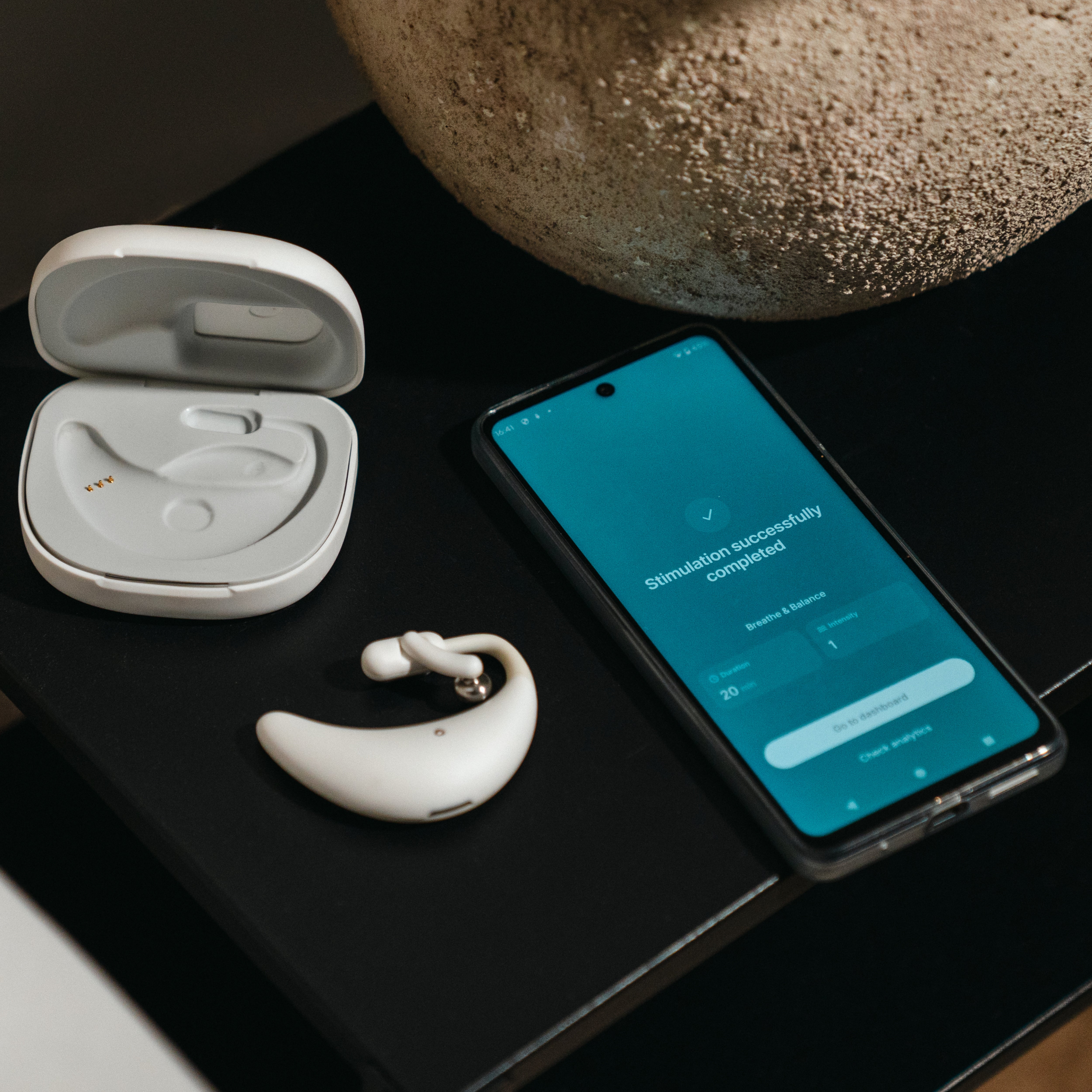
Vagus nerve stimulation represents a powerful tool for expanding your window of tolerance by directly strengthening your body's natural regulation pathways. Research demonstrates how VNS can enhance nervous system flexibility and resilience.
How VNS Improves Nervous System Flexibility
VNS works by activating your parasympathetic nervous system: your body's rest-and-digest response. Studies show that regular vagus nerve stimulation increases heart rate variability, a key marker of nervous system flexibility. This enhanced vagal tone translates to a wider window of tolerance and faster recovery from stress.
Research on VNS and Emotional Regulation
Clinical research reveals significant improvements in emotional regulation with VNS. A 2018 study published in Brain Stimulation found that participants using VNS showed reduced anxiety and improved stress resilience. The mechanism appears to involve enhanced communication between the vagus nerve and emotional regulation centres in the brain.
Combining VNS with Other Practices
VNS amplifies the benefits of other window-expanding practices. When combined with breathwork, the effects on heart rate variability multiply. Pairing VNS with mindfulness practices enhances present-moment awareness, keeping you within your window during challenging experiences.
Creating Sustainable Change
The beauty of VNS lies in its cumulative effects. Each session builds upon the last, gradually expanding your nervous system's capacity. Unlike practices that require extensive time or training, VNS offers a direct pathway to enhanced vagal tone. Users often report feeling more 'bounce-back' capacity: recovering faster from stressors that previously would have dysregulated them for hours or days.
Importantly, VNS isn't about avoiding challenges or staying comfortable. It's about building the nervous system resilience to meet life's inevitable stressors from a resourced place, expanding your capacity to stay present with whatever arises.
Creating Your Personal Window-Expanding Plan
Expanding your window of tolerance requires a personalised approach that honours your unique nervous system patterns and life circumstances. Here's how to create a sustainable plan for building resilience.
Assessing Your Current Window
Begin by mapping your current patterns. Notice what triggers push you into hyperarousal (anxiety, anger) or hypoarousal (numbness, shutdown). Track these patterns for a week, noting times of day, situations, and early warning signs. This baseline helps you understand your starting point without judgment.
Choosing Appropriate Practices
Select practices that match your nervous system's needs. If you tend toward hyperarousal, prioritise calming practices: extended exhales, gentle yoga, or progressive relaxation. For hypoarousal patterns, choose enlivening practices: energising breathwork, dancing, or cold exposure. Start small: even 5 minutes daily creates change.
Building Consistency and Tracking Progress
Consistency trumps perfection. Choose one or two practices and commit to them daily for at least three weeks. Use a simple tracker to note your window of tolerance each day: did you spend more time regulated? Recover faster from stress? Celebrate small wins; nervous system change happens gradually.
When to Seek Additional Support
Whilst self-practice is powerful, some nervous system patterns benefit from professional support. Consider working with trauma-informed therapists, somatic practitioners, or nervous system coaches if you're frequently dysregulated, have trauma history, or feel stuck despite consistent practice. There's no shame in needing support: co-regulation is how we're designed to heal.
Remember: expanding your window of tolerance is a journey, not a destination. Some days your window will feel narrower: that's normal. What matters is building tools and awareness to manage whatever arises with increasing grace and resilience.
Frequently Asked Questions
How do you know if you're outside your window of tolerance?
You're outside your window of tolerance when you experience either hyperarousal symptoms (racing heart, anxiety, anger, racing thoughts) or hypoarousal symptoms (numbness, disconnection, brain fog, inability to think). Physical signs include changes in breathing, muscle tension, or feeling either 'too much' or 'too little' sensation. The key indicator is losing access to clear thinking and flexible responses.
What causes a narrow window of tolerance?
A narrow window of tolerance typically results from trauma, chronic stress, early childhood experiences lacking co-regulation, or ongoing life stressors. Medical conditions, poor sleep, and lifestyle factors also contribute. Your nervous system narrows its window as a protective mechanism when it perceives ongoing threat or lacks sufficient resources for regulation.
Can you expand your window of tolerance?
Yes, you can expand your window of tolerance through consistent nervous system regulation practices. Research shows that breathwork, vagus nerve stimulation, somatic therapies, and mindfulness practices increase nervous system flexibility. The key is regular practice that gently challenges your edges whilst maintaining safety, allowing gradual expansion over time.
What is hyperarousal vs hypoarousal?
Hyperarousal is the upper edge outside your window, characterised by sympathetic nervous system activation: anxiety, panic, anger, racing thoughts, and physical tension. Hypoarousal is the lower edge, marked by dorsal vagal shutdown: numbness, disconnection, brain fog, and physical heaviness. Both represent dysregulated states outside your optimal functioning zone.
Who created the window of tolerance theory?
Dr. Dan Siegel, a clinical professor of psychiatry at UCLA School of Medicine, developed the window of tolerance concept in the 1990s. He created this framework to help explain how trauma affects nervous system regulation and to provide a practical model for understanding and expanding our capacity for emotional regulation.
Conclusion
Understanding your window of tolerance transforms how you relate to stress, emotions, and your own nervous system responses. Rather than judging yourself for becoming dysregulated, you now have a map for recognising where you are and tools for finding your way back to balance.
The journey of expanding your window isn't about achieving perfect regulation or avoiding all stress. It's about building resilience, increasing your capacity to stay present with life's challenges, and recovering more quickly when you do become dysregulated. Each time you successfully manage back to your window, you strengthen those neural pathways.
Your nervous system's capacity for change is notable. Through consistent practice with breathing techniques, movement, grounding exercises, and tools like vagus nerve stimulation, you can literally rewire your stress responses. What once overwhelmed you may become manageable. What once shut you down may become workable.
Most importantly, remember that expanding your window of tolerance is an act of self-compassion. You're not broken for having a narrow window: your nervous system adapted to keep you safe. Now, you're simply teaching it that there's room for more flexibility, more presence, and more aliveness.
Your body knows how to heal. Your nervous system knows how to regulate. Sometimes it just needs a little support remembering the way home.
Ready to expand your window of tolerance? Discover how Sona's personalised vagus nerve stimulation can support your nervous system regulation journey. Learn more about the science behind VNS and emotional resilience.
Sources
- Siegel, D. J. (1999). The Developing Mind: How Relationships and the Brain Interact to Shape Who We Are
- Porges, S. W. (2011). The Polyvagal Theory: Neurophysiological Foundations of Emotions, Attachment, Communication, and Self-Regulation
- Brain Stimulation Journal (2018). Effects of transcutaneous vagus nerve stimulation on stress and emotional regulation




Share:
Polyvagal Theory Explained Simply: Understanding Your Nervous System
Heart Rate Variability (HRV): What It Is & How to Improve It