


Vagus nerve exercises are simple, evidence-based techniques (including deep breathing, cold water therapy, and humming) that activate your body's natural relaxation response by stimulating the longest cranial nerve in your body. These exercises work by increasing vagal tone, which helps shift your nervous system from fight-or-flight mode to rest-and-digest, reducing stress hormones and promoting calm within minutes.
When chronic stress keeps your sympathetic nervous system in overdrive, your vagus nerve (the body's natural brake pedal) struggles to do its job. The good news? You can strengthen this vital nerve through targeted exercises that require no special equipment and can be done anywhere. In this complete guide, we'll explore 12 scientifically-validated vagus nerve exercises that can help you manage stress, improve heart rate variability, and enhance your overall wellbeing.
Whilst you'll feel the calming effects of these exercises within minutes, consistent practice over weeks amplifies the benefits. Think of it like building muscle at the gym: each session strengthens your vagal tone, making you more resilient to stress over time.
Key Takeaways
- Vagus nerve exercises activate your parasympathetic nervous system, reducing stress hormones within minutes
- Simple techniques like deep breathing, cold water exposure, and humming can be done anywhere without equipment
- Regular practice improves vagal tone, making you more resilient to stress over time
- Combining multiple exercises creates a personalised stress-relief toolkit
- Consistency matters more than intensity: daily 5-minute sessions outperform sporadic hour-long practices
Understanding Your Vagus Nerve and Stress Response
Your vagus nerve is the longest cranial nerve in your body, stretching from your brainstem to your abdomen like a wandering highway (vagus literally means 'wanderer' in Latin). As the main component of your parasympathetic nervous system, it acts as your body's natural stress-relief system, counterbalancing the fight-or-flight response.
When functioning optimally, your vagus nerve helps regulate heart rate, digestion, inflammation, and mood. It's constantly sending signals between your brain and organs, with about 80% of fibres carrying information from your body to your brain: not the other way around. This bidirectional communication explains why physical practices like breathing exercises can profoundly impact your mental state.
Chronic stress weakens vagal tone, the measure of how well your vagus nerve functions. Low vagal tone correlates with anxiety, depression, digestive issues, and inflammation. Heart rate variability (HRV), the variation in time between heartbeats, serves as the gold standard for measuring vagal health. Higher HRV indicates better vagal tone and stress resilience.
In our research at Sona, we've found that personalised approaches to vagus nerve stimulation work significantly better than generic protocols. Your unique physiology, stress patterns, and lifestyle all influence which exercises will be most effective for you. That's why experimenting with different techniques and tracking your response helps build your optimal stress-relief toolkit.
The Science Behind Vagus Nerve Exercises
Clinical evidence supporting vagus nerve exercises continues to mount, with researchers uncovering powerful connections between vagal stimulation and stress relief. A landmark study by Gerritsen and Band (2018) demonstrated that slow breathing exercises directly activate the vagus nerve, reducing cortisol levels by up to 23% within 20 minutes.
Vagal stimulation works through multiple pathways. When you activate your vagus nerve, it triggers the release of acetylcholine, a neurotransmitter that slows heart rate and promotes calm. This activation also reduces inflammatory markers like TNF-alpha and interleukin-6, explaining why regular practice can improve conditions linked to chronic inflammation.
Research by Breit et al. (2018) revealed that consistent vagal stimulation increases neuroplasticity, helping your nervous system become more adaptable to stress. Think of it as upgrading your stress-response software: each practice session rewrites unhelpful patterns and strengthens resilience pathways.
Importantly, studies show that consistency trumps intensity with vagus nerve exercises. Daily 5-10 minute practices produce better long-term results than sporadic hour-long sessions. Your nervous system responds to gentle, repeated signals rather than aggressive interventions, making these exercises accessible to everyone regardless of fitness level or time constraints.
12 Evidence-Based Vagus Nerve Exercises
These twelve vagus nerve exercises range from simple breathing techniques you can do at your desk to more involved practices for deeper relaxation. We've organised them from beginner-friendly to more advanced, though all are safe and effective when practised correctly.
Each exercise works through different mechanisms: some use respiratory pathways, others use temperature or physical vibration, and several combine multiple approaches. The key is finding which resonate with your body and lifestyle. Many of our users report best results from rotating between 3-4 favourite techniques throughout their day.
Remember, these exercises complement but don't replace professional medical care. If you're experiencing severe stress, anxiety, or depression, consult with a healthcare provider whilst incorporating these practices into your wellness routine.
Deep Breathing Techniques
Box Breathing (4-4-4-4 Pattern) This military-tested technique creates a predictable rhythm that soothes your nervous system. Sit comfortably with your spine straight. Exhale completely, then: inhale for 4 counts, hold for 4 counts, exhale for 4 counts, hold empty for 4 counts. Repeat 4-8 cycles. The equal timing creates balance between sympathetic and parasympathetic activation.
Diaphragmatic Breathing Place one hand on your chest, another on your belly. Breathe slowly through your nose, expanding your belly whilst keeping your chest still. This engages your diaphragm, which directly stimulates vagal nerve fibres. Aim for 6 breaths per minute for optimal vagal activation.
4-7-8 Extended Exhale Method Developed by Dr Andrew Weil, this technique uses the vagus nerve's response to extended exhalation. Inhale through your nose for 4 counts, hold for 7, then exhale through pursed lips for 8 counts. The prolonged exhale activates parasympathetic dominance, ideal for acute stress or bedtime.
Practise these breathing exercises anywhere: during commutes (not whilst driving.), before meetings, or as work breaks. Morning practice sets a calm tone for your day, whilst evening sessions promote restful sleep.
Physical Stimulation Exercises
Cold Water Face Immersion The mammalian dive reflex powerfully stimulates your vagus nerve. Fill a bowl with cold water, take a deep breath, and immerse your face for 15-30 seconds. This triggers immediate vagal activation, slowing heart rate by 10-25%. For convenience, splash cold water on your face or take a 30-second cold shower, focusing the stream on your face and chest.
Gargling Exercises Gargling activates muscles in the back of your throat connected to the vagus nerve. Use room-temperature water and gargle vigorously for 30 seconds, 3 times daily. The key is creating enough intensity to slightly challenge your gag reflex without discomfort. This simple practice improves vagal tone whilst supporting oral health.
Humming, Singing, and Chanting Vocal vibrations directly stimulate vagal branches in your throat and chest. Try humming at different pitches for 5-10 minutes, feeling the vibrations in your chest. Singing activates similar pathways: belt out your favourite songs in the shower. Om chanting combines vibration with rhythmic breathing for enhanced effects.
Gentle Neck Stretches and Massage Your vagus nerve runs through neck muscles that often hold tension. Slowly turn your head side to side, holding for 30 seconds each direction. Gently massage behind your ears and along your neck's sides. These movements release physical tension whilst mechanically stimulating vagal pathways.
Always respect your body's limits with physical exercises. Start gently and increase intensity gradually. If you have neck injuries or cardiovascular conditions, consult your healthcare provider before trying cold water or intense gargling exercises.
Mindfulness and Meditation Practices
Progressive Muscle Relaxation (PMR) This systematic technique alternates tension and release to activate vagal pathways. Starting with your toes, tense each muscle group for 5 seconds, then release for 30 seconds, noticing the contrast. Work up through legs, abdomen, arms, shoulders, and face. The tension-release cycle triggers parasympathetic rebound, deepening relaxation.
Loving-Kindness Meditation Compassion practices uniquely activate vagal pathways linked to social connection. Sit quietly and repeat phrases like "May I be happy, may I be healthy, may I be at peace." Extend these wishes to loved ones, neutral people, and even difficult individuals. Research shows this practice increases vagal tone whilst reducing inflammation markers.
Body Scan Meditation Lie comfortably and bring awareness to each body part sequentially, noticing sensations without judgment. Start at your toes and slowly scan upward, spending 20-30 seconds on each area. This interoceptive practice strengthens the vagus nerve's sensory functions, improving your ability to detect and respond to internal signals.
These mindfulness practices work best with consistency. Even 5-10 minutes daily produces measurable improvements in vagal tone within 2-3 weeks. Use guided meditations initially if maintaining focus proves challenging.
Movement-Based Exercises
Specific Yoga Poses Certain yoga poses directly stimulate vagal pathways through gentle compression and stretching. Child's pose activates abdominal branches, whilst gentle twists massage organs innervated by the vagus nerve. Legs-up-the-wall pose combines inversion benefits with deep relaxation. Hold each pose for 2-5 minutes, breathing slowly.
Tai Chi and Qigong Movements These ancient practices combine slow movement, breath work, and mindfulness: a trifecta for vagal activation. The flowing movements synchronise with breathing, creating a moving meditation. Studies show regular practice increases HRV and reduces stress hormones more effectively than conventional exercise.
Light Aerobic Exercise Gentle cardio like walking or easy cycling at 50-70% maximum heart rate stimulates vagal rebound during recovery. The key is staying in the aerobic zone: you should be able to maintain conversation. This sustainable intensity improves vagal tone without triggering excessive stress responses.
Incorporate movement practices based on your fitness level and preferences. Consistency matters more than intensity: daily 20-minute walks often outperform sporadic intense workouts for vagal health.
Creating Your Personal Vagus Nerve Exercise Routine
Building an effective vagus nerve exercise routine requires experimentation and personalisation. Start with 2-3 exercises that appeal to you, practising each for 5-10 minutes daily. Track how you feel before and after: many users note immediate calm, whilst others experience gradual improvements over weeks.
Sample Daily Routine: - Morning (5 mins): Diaphragmatic breathing or cold shower - Midday (5 mins): Box breathing or humming during lunch break - Evening (10 mins): Progressive muscle relaxation or gentle yoga - Before bed (5 mins): 4-7-8 breathing or body scan meditation
Adjust timing and exercises based on your schedule and stress patterns. Some thrive with morning cold exposure, whilst others prefer evening relaxation practices. Listen to your body's responses and adapt accordingly.
Consistency builds vagal tone like exercise builds muscle. Missing occasional days won't derail progress, but aim for daily practice, even if abbreviated. Many find success linking exercises to existing habits: breathing whilst making morning coffee or humming during commutes.
As you develop vagal awareness, you'll naturally reach for these tools during stressful moments. That's when the real magic happens: having a reliable toolkit to shift from stress to calm becomes second nature.
The Complete Guide to Vagus Nerve Stimulation
Whilst these exercises provide powerful, accessible ways to stimulate your vagus nerve, they represent just one approach to vagal health. For those seeking deeper understanding or additional options, vagus nerve stimulation encompasses a broader range of techniques, from manual exercises to advanced bioelectronic devices.
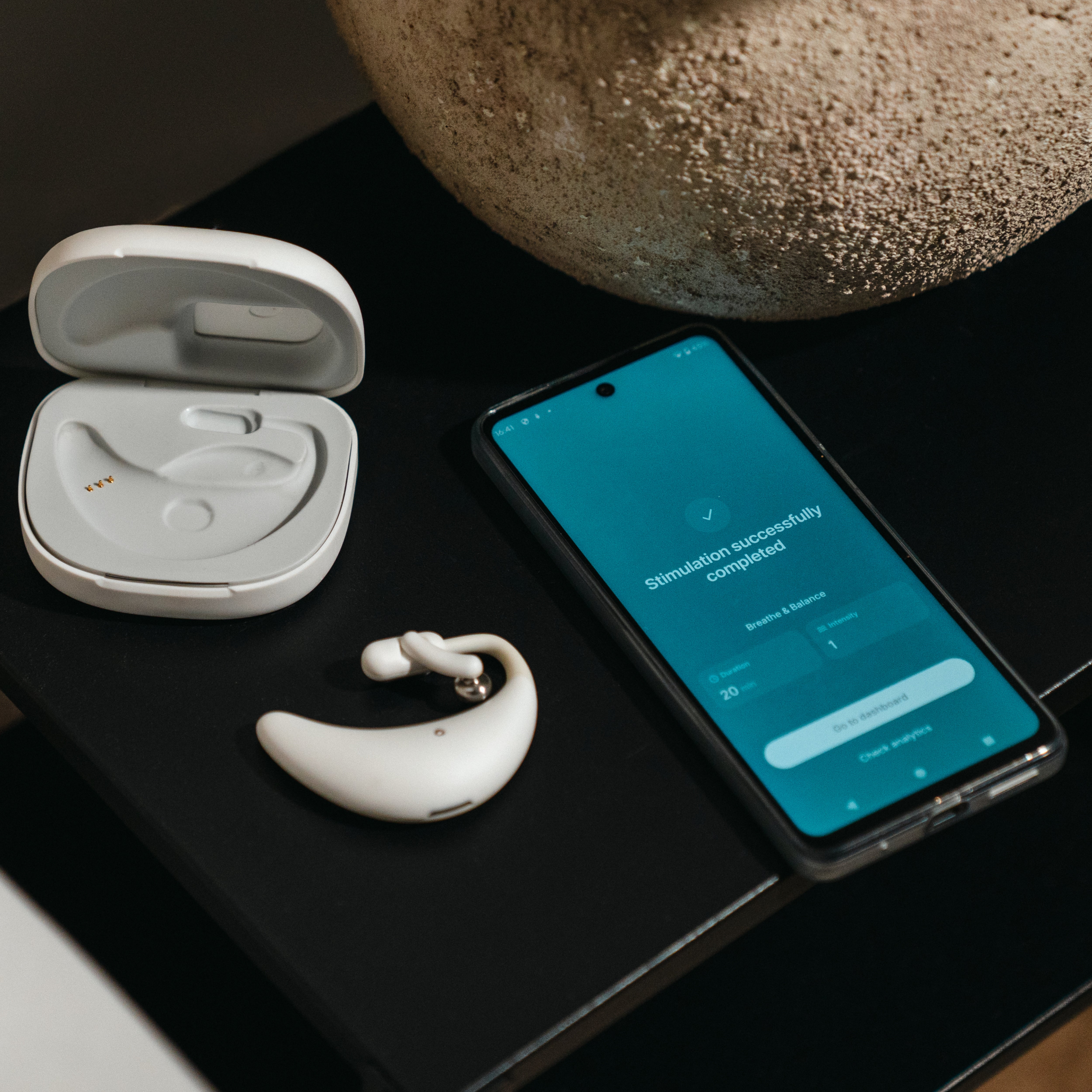
Modern technology now enables precise, personalised vagus nerve stimulation that adapts to your unique physiology. Unlike one-size-fits-all approaches, advanced devices can read your body's signals and deliver targeted stimulation when most effective. This personalisation dramatically improves outcomes, especially for those with chronic stress or specific health conditions.
To explore the full spectrum of vagus nerve stimulation options (including how AI-powered devices complement manual exercises) read our complete guide. You'll discover how combining traditional techniques with modern technology creates the most effective approach to vagal health.
Tracking Your Progress
Monitoring your vagus nerve exercise progress helps maintain motivation and optimise your routine. Several indicators reveal improving vagal tone:
Heart Rate Variability (HRV): The gold standard measurement, easily tracked with chest straps or quality wearables. Look for upward trends over weeks, not daily fluctuations.
Resting Heart Rate: A lower morning heart rate often indicates better vagal tone. Track upon waking before moving.
Stress Response: Notice how quickly you recover from stressful events. Improved vagal tone means faster returns to baseline calm.
Sleep Quality: Many report deeper sleep and easier wake-ups as vagal tone improves. Track sleep consistency and morning energy.
Digestive Health: Since the vagus nerve governs digestion, improvements in gut function often signal better vagal health.
Keep a simple journal noting which exercises you practised and any changes in mood, energy, or stress levels. Patterns emerge over 2-4 weeks, revealing which techniques work best for your unique physiology. Remember, progress isn't always linear: stress, illness, or lifestyle changes can temporarily affect measurements whilst long-term trajectory improves.
When to Seek Professional Help
Whilst vagus nerve exercises are generally safe and beneficial, certain symptoms warrant professional medical attention. These exercises complement but don't replace proper medical care for serious conditions.
Seek immediate medical attention if experiencing: - Chest pain or heart palpitations lasting over 30 minutes - Severe dizziness or fainting during exercises - Persistent shortness of breath - Sudden, severe headaches
Consult a healthcare provider for: - Depression or anxiety interfering with daily life - Chronic fatigue unresponsive to lifestyle changes - Digestive issues persisting despite vagal exercises - Sleep problems lasting over 2 weeks
Many conditions benefit from combining medical treatment with vagus nerve exercises. Discuss these practices with your healthcare team, especially if managing chronic conditions. Some providers now incorporate vagal stimulation into treatment plans, recognising its evidence-based benefits.
Remember, listening to your body is important. If any exercise causes discomfort beyond mild challenge, stop and reassess. What works for others might need modification for your unique needs.
Frequently Asked Questions
How do you know if your vagus nerve exercises are working?
You'll notice immediate signs like slower breathing, reduced heart rate, and a sense of calm within minutes. Long-term indicators include improved heart rate variability (HRV), better stress resilience, enhanced sleep quality, and improved digestion. Many people report feeling 'lighter' and less reactive to daily stressors after 2-3 weeks of consistent practice.
How long does it take for vagus nerve exercises to work?
Immediate effects like reduced anxiety and calmer breathing occur within 2-10 minutes. Measurable improvements in vagal tone and HRV typically appear after 2-4 weeks of daily practice. Significant changes in stress resilience and overall wellbeing generally develop over 6-12 weeks of consistent exercise.
What are the side effects of vagus nerve stimulation exercises?
Manual vagus nerve exercises rarely cause side effects. Some people might experience mild dizziness during breathing exercises or brief discomfort with cold water exposure. These effects are temporary and resolve quickly. If you experience persistent discomfort, chest pain, or severe dizziness, stop the exercise and consult a healthcare provider.
Can you do vagus nerve exercises every day?
Yes, daily practice is recommended and safe for most people. In fact, consistency is more important than intensity: 5-10 minutes daily produces better results than hour-long sessions twice weekly. Your nervous system responds best to gentle, repeated stimulation rather than aggressive or sporadic practice.
What is the best time of day to do vagus nerve exercises?
The best time depends on your goals and schedule. Morning exercises set a calm tone for the day, midday practices counteract work stress, and evening routines promote better sleep. Many find success with brief sessions throughout the day rather than one long practice. Experiment to find what works for your lifestyle.
Conclusion
Vagus nerve exercises offer a scientifically-validated, accessible path to better stress management and overall wellbeing. From simple breathing techniques to cold water therapy and mindful movement, these twelve exercises provide a complete toolkit for activating your body's natural relaxation response.
The beauty of these practices lies in their simplicity and accessibility. No expensive equipment, special training, or hours of practice required: just consistent, gentle attention to your body's innate wisdom. Whether you're dealing with chronic stress, seeking better sleep, or simply wanting to feel more resilient, strengthening your vagal tone provides lasting benefits.
Remember, your vagus nerve is like a muscle that grows stronger with regular exercise. Start small, stay consistent, and pay attention to what works for your unique physiology. Within weeks, you'll likely notice improved stress resilience, better emotional regulation, and an enhanced sense of overall wellbeing.
Ready to take your vagus nerve health to the next level? Whilst these manual exercises provide excellent benefits, combining them with personalised, AI-powered stimulation can dramatically enhance results. Discover how Sona's revolutionary approach to vagus nerve stimulation adapts to your unique physiology for optimal stress relief.
Sources
- Gerritsen, R. J. S., & Band, G. P. H. (2018). Breath of Life: The Respiratory Vagal Stimulation Model of Contemplative Activity. Frontiers in Human Neuroscience.
- Breit, S., Kupferberg, A., Rogler, G., & Hasler, G. (2018). Vagus Nerve as Modulator of the Brain-Gut Axis in Psychiatric and Inflammatory Disorders. Frontiers in Psychiatry.
- Weil, A. (1995). Spontaneous Healing. New York: Alfred A. Knopf.

Share:
Vagus Nerve Stim Cheatsheet
The Complete Guide to Vagus Nerve Stimulation: Science-Backed Methods, Benefits & Safety