

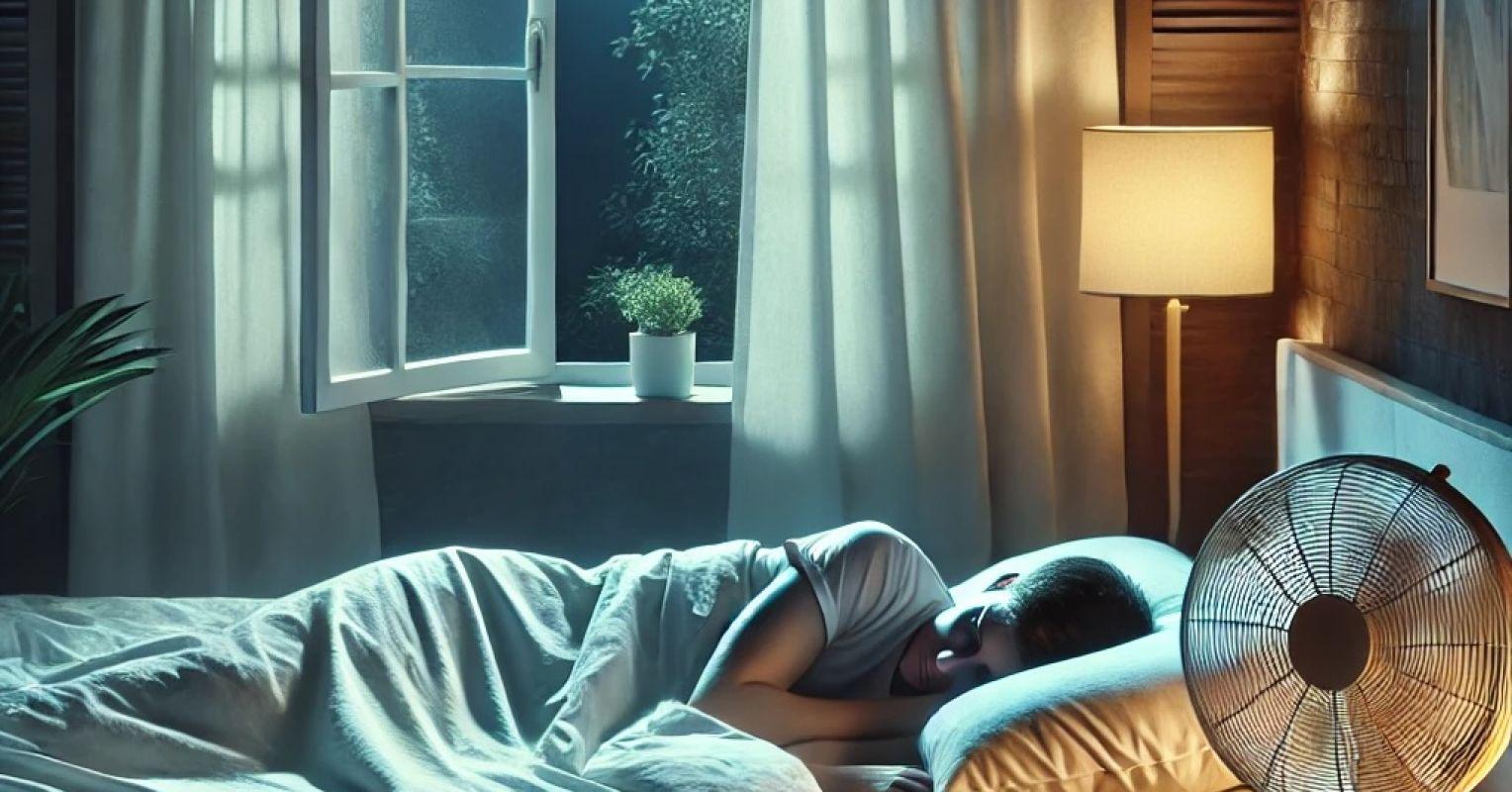
Temperature affects sleep because your body has to cool down to fall asleep and stay asleep. As bedtime approaches, your core temperature dips by around half a degree Celsius, and that drop is one of the signals your brain uses to switch over to sleep. A slightly cool bedroom helps the drop happen; a warm, stuffy one fights it, which is why hot summer nights leave you tossing and waking.
Most people land somewhere between 16 and 19°C (roughly 60 to 67°F) for comfortable sleep, though the right number is personal and your own comfort matters more than any chart. The useful part is knowing why temperature works, because once you do, a handful of small changes start to pay off the very first night.
Key Takeaways
- Falling asleep depends on a small drop in core body temperature, so an over-warm room is one of the most common hidden causes of poor sleep.
- A bedroom around 16 to 19°C (60 to 67°F) suits most people, but treat it as a starting point and adjust to your own comfort.
- A warm bath 60 to 90 minutes before bed helps you cool down faster afterwards, which speeds up sleep onset.
- Humidity and bedding matter as much as the thermostat, because both affect how easily your body sheds heat overnight.
- Temperature works by shifting your nervous system from alert to calm, the same parasympathetic state that vagal tone and HRV reflect.
Your body falls asleep on a falling temperature
Your core temperature isn't fixed. It runs on a daily cycle, peaking in the late afternoon and bottoming out in the small hours of the morning. That evening decline travels alongside the release of melatonin, and together they tell your body it's time to wind down. Work on the temperature dependence of sleep (Harding, Franks and Wisden, 2019) frames this cooling as a core trigger for sleep onset.
So anything that keeps you warm late into the evening can blur that signal. A hot bedroom, a heavy dinner, a hard workout at 9pm, even a warm room with no airflow. Your body is trying to lose heat, and you've made it harder.
Why a cooler room usually wins
Reviews of the sleeping environment (Okamoto-Mizuno and Mizuno, 2012) find that heat exposure at night raises the number of times you wake and cuts into deep, slow-wave sleep and REM. Cold has its own downsides, but for most of us a too-warm room is the bigger problem.
If you don't have a thermostat to adjust, you have other levers. Open a window for airflow, run a fan, swap a heavy duvet for a lighter one, or move to breathable bedding. You're not trying to make the room cold. You're trying to let your body finish its natural cooling curve without anything in the way.
The warm bath trick that actually cools you down
Here's the counterintuitive bit. A warm bath or shower before bed helps you fall asleep faster, even though warmth seems like the wrong direction. A systematic review by Haghayegh and colleagues (2019) found that passive body heating one to two hours before bed improved both how quickly people fell asleep and how well they slept.
The reason is neat. Warming your skin pulls blood toward your hands and feet, and that flush of blood to the surface releases heat once you step out. Your core then cools faster than it otherwise would. You feel warm for a few minutes, then drop. Aim for that bath around 60 to 90 minutes before lights out so the cool-down lines up with bedtime.
Don't overlook humidity and bedding
Temperature rarely acts on its own. Humid air feels warmer and stops sweat from evaporating, so your body can't offload heat the usual way, and sleep gets choppier. Natural-fibre bedding and sleepwear (cotton, linen, wool) help keep the small pocket of air around your body stable through the night. On a muggy evening, a cracked window or a dehumidifier often does more for your sleep than turning the thermostat down a notch.
How to get your sleep temperature right
A short list you can apply tonight:
- Start cool, then personalise. Try the room around 16 to 19°C and adjust to what feels right for you and anyone you share a bed with.
- Bath or shower 60 to 90 minutes before bed. Let the cool-down afterwards do the work.
- Warm feet, cool core. Socks or a hot water bottle at your feet speed up heat loss, a small trick with real physiology behind it.
- Choose breathable layers. Natural fibres manage both heat and humidity better than synthetics.
- Watch the timing of anything that heats you up. Hard exercise, big meals and alcohol all keep your core warm late.
- Deal with humidity. Airflow or a dehumidifier helps your body release heat when the air is heavy.
Where your nervous system comes in
Notice what every one of these has in common. A cool room, a warm bath, breathable sheets, slow breathing in the dark, they all coax your body out of a wired, alert state and into a calmer one. Sleep onset is, underneath everything, a nervous-system event. The vagus nerve runs the calming, parasympathetic side of that system, and vagal tone (often tracked through heart rate variability, or HRV) reflects how readily you can make the shift.
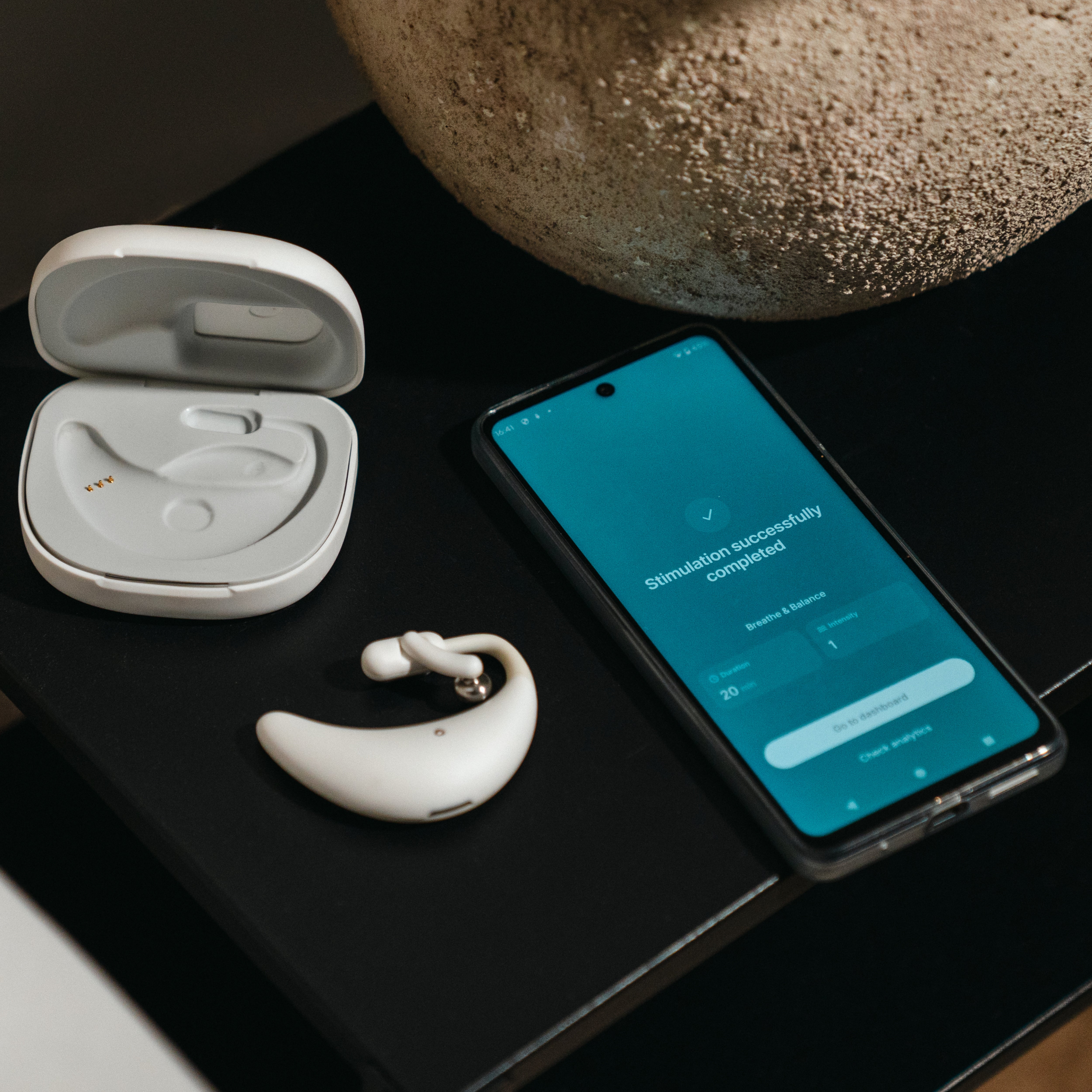
That's the link between your thermostat and your sleep, and it's where a tool like Sona fits. Sona isn't a thermostat, but it works on the other half of the equation. As a personalised, AI-powered vagus nerve stimulation wearable, it reads signals like HRV and breathing in real time and adapts each session to support parasympathetic calm. In Sona's own data, most people report feeling calmer or more rested within about ten minutes. Think of temperature as the environment you set and vagal tone as the capacity you build. They work best together. For more on the behavioural side, our guide to natural ways to improve sleep goes deeper, and our science-backed guide to VNS for sleep covers the nervous-system angle.
Frequently Asked Questions
What is the best bedroom temperature for sleep?
There's no single right number, but many sleep researchers suggest starting around 16 to 19°C (60 to 67°F) and adjusting to your own comfort. A slightly cool room supports the natural drop in core temperature that helps you fall asleep, while a warm room tends to cause more waking and lighter sleep.
Why does a warm bath help me sleep if a cool room is better?
A warm bath 60 to 90 minutes before bed sends blood to your skin and limbs. When you get out, that helps your core temperature fall faster than usual, and it's the cool-down after the warmth, not the warmth itself, that supports falling asleep.
Does a hot bedroom really ruin sleep?
Yes. Research on the sleeping environment links heat exposure at night to more awakenings and less deep and REM sleep. If you can't lower the temperature directly, airflow from a fan or open window, lighter bedding, and managing humidity all help your body shed heat.
Should my room be cold or just cool for sleep?
Cool, not cold. The aim is to let your core temperature complete its natural evening drop, not to make yourself shiver. Cold extremities can actually keep you awake, which is why warm socks plus a cool core often works better than a cold room alone.
How does temperature connect to the vagus nerve?
Cooling down helps shift your body toward the calming, parasympathetic state that the vagus nerve governs, the same state that allows sleep. Vagal tone, measured through HRV, reflects how easily you make that shift, which is why temperature and nervous-system regulation work together.
Conclusion
You don't need a perfect routine to sleep better tonight. Cool the room a little, take a warm bath an hour or so beforehand, sort out airflow and bedding, and you've removed some of the most common obstacles between you and deep sleep. Get the temperature right and you're working with your body's own machinery instead of against it.
The thread underneath all of it is your nervous system. Sleep isn't something you force, it's something you allow by moving from alert to calm. Temperature is one of the simplest ways to send that message.
Want to work on the most powerful lever of all, your nervous system, with precision? Sona is the world's first truly personalised, AI-powered vagus nerve stimulator, reading your HRV and breathing in real time to guide you toward calm. Explore how Sona works and find a smarter route to better rest. DISCLAIMER: Sona is a wellness device and is not a medically regulated product. The information in this article is for educational purposes only and does not constitute medical advice. We do not make any claims about Sona's ability to diagnose, treat, cure, or prevent any medical condition. Vagus nerve stimulation research referenced in this article relates to the broader field of VNS and may not be specific to any particular consumer device. Always consult a qualified healthcare professional before making decisions about your health.
Sources
- Harding, E. C., Franks, N. P., & Wisden, W. (2019). The Temperature Dependence of Sleep. Frontiers in Neuroscience.
- Okamoto-Mizuno, K., & Mizuno, K. (2012). Effects of thermal environment on sleep and circadian rhythm. Journal of Physiological Anthropology.
- Haghayegh, S., et al. (2019). Before-bedtime passive body heating by warm shower or bath to improve sleep: A systematic review and meta-analysis. Sleep Medicine Reviews.




Share:
Vagus Nerve Dysfunction: Signs, Causes and Recovery (2026)
How Temperature Affects Stress: Hot, Cold and Staying Calm