


Temperature affects stress through your autonomic nervous system, the network that switches you between "fight or flight" and "rest and recover". Being too hot for too long is a physical stressor that pushes you toward the alert, sympathetic side, raising heart rate and stress hormones. Used deliberately, though, temperature can do the opposite. A cool splash of water, a warm bath or a sauna can all nudge you toward the calmer, parasympathetic side instead.
In other words, heat you can't escape tends to wind you up, while temperature shifts you choose can wind you down. The difference is control, and once you understand the mechanism you can use hot and cold on purpose to manage your stress.
Key Takeaways
- Sustained heat acts as a stressor, activating the sympathetic nervous system and adding a low-grade load you may not consciously notice.
- Brief cold exposure, especially to the face and neck, can trigger a calming parasympathetic response through the vagus nerve.
- Deliberate warmth, such as a sauna or warm bath, is associated with relaxation and is itself a cue for the body to downshift.
- Persistent thermal discomfort at your desk or in bed is a constant, quiet drain on your stress system that's easy to fix.
- Whether hot or cold, the benefit comes from shifting your nervous system out of stress, which is what vagal tone and HRV track.
Heat is a stressor your body has to manage
When you're too hot, your body goes to work to cool itself, and that effort isn't free. Sustained heat exposure acts as a physiological stressor, leaning on the sympathetic nervous system and the body's stress-hormone response. You feel it as irritability, restlessness, and the frayed mood that comes with a sweltering night you can't sleep through.
The trap is the loop. Heat disrupts your sleep, poor sleep raises your stress, and a more stressed body handles the next hot day worse. None of it is dramatic on its own, but it compounds. Removing the heat removes the input.
Cold exposure and the vagus nerve
Cold can work in your favour when you choose it. A cold shower, an outdoor cold spell, or simply splashing cool water on your face can prompt a parasympathetic response linked to the body's dive reflex, slowing the heart and shifting you toward calm. Work by Jungmann and colleagues (2018) found that cold stimulation increased markers of cardiac-vagal activity in healthy adults.
The research is still young and people respond differently, so treat cold as something to experiment with rather than a guaranteed switch. Start gently. A few seconds of cool water on the face when you feel wound up is enough to notice whether it helps you.
Deliberate warmth and the relaxation response
Warmth, in the right setting, does the opposite of stress. Sauna bathing has been associated with relaxation and a range of cardiovascular benefits in long-running research from Finland (Laukkanen and colleagues, 2018). Part of the effect is straightforwardly physical, and part is the simple fact that feeling warm, safe and comfortable is a parasympathetic cue in itself.
It's the same reason a warm bath, a heated blanket or a hot drink can feel genuinely calming rather than just pleasant. So the lesson from cold and warmth isn't about temperature for its own sake. It's that both, used well, are ways to move your nervous system out of a stress state.
How to use temperature to lower stress
Practical ways to put this to work:
- Cool down to calm down. On a hot, restless day, actively lowering the temperature around you takes load off an already-activated stress system.
- Try a brief cold reset. A short cold shower, or cool water on your face and neck, can prompt a calming shift when you feel tense. Ease into it.
- Use warmth on purpose. A sauna, a warm bath or even a warm drink can act as a recovery cue. Schedule it rather than leaving it to chance.
- Fix nagging thermal discomfort. Too hot at your desk, too cold in the evening? It's a small, constant stress input, and sorting it removes a drain you'd stopped noticing.
- Pair temperature with your breath. A slow, long exhale during a cold splash or a warm soak deepens the calming effect by engaging the vagus nerve directly.
The nervous-system link
Look at what connects every example here. Heat and cold both matter because of what they do to your autonomic nervous system, the same system that decides how quickly you settle, how well you recover, and how steady you feel under pressure. The vagus nerve is the main route into the calming, parasympathetic branch, and vagal tone (tracked through HRV) is one of the clearest signs of how well you can move out of stress and into recovery.
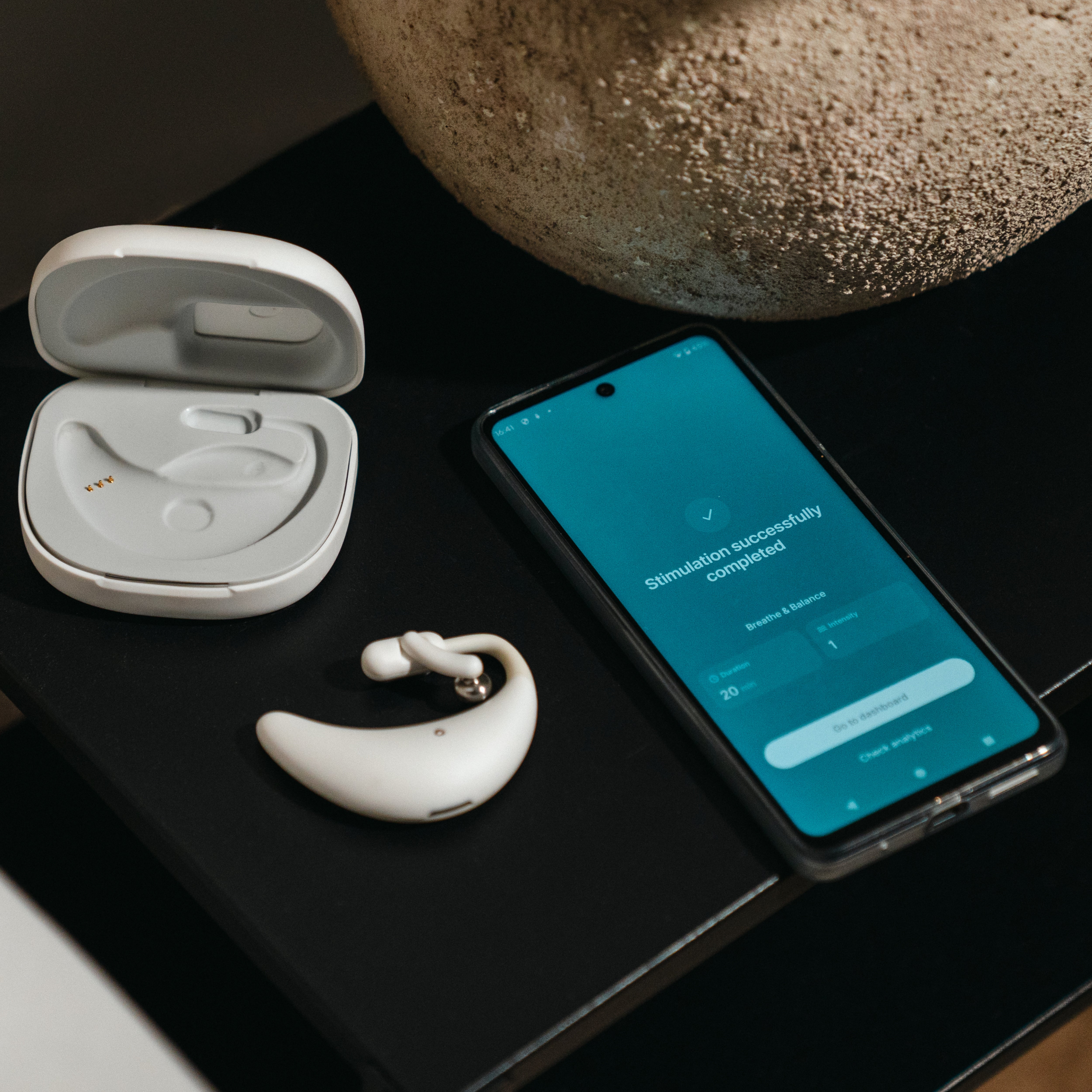
That's where Sona fits. It isn't about temperature at all, but it works on the same nervous system temperature is influencing. As a personalised, AI-powered vagus nerve stimulation wearable, Sona reads HRV and respiration in real time and adapts each session to support parasympathetic balance. In Sona's own data, most people report feeling calmer or more focused within about ten minutes. A cold splash and a sauna are levers you reach for in the moment. Building vagal tone is the longer game underneath them. If you want techniques you can do without any kit, our guide to vagus nerve exercises is a good place to start, and our evidence-based tools to calm your nervous system cover the overlap with sleep.
Frequently Asked Questions
Does heat make you more stressed?
It can. Sustained heat is a physical stressor that activates the sympathetic nervous system and adds to your body's stress load, often showing up as irritability and restlessness. It also disrupts sleep, which raises stress further, so cooling your environment removes a hidden input.
Can a cold shower reduce stress?
Brief cold exposure, especially to the face and neck, can trigger a calming parasympathetic response through the vagus nerve, slowing your heart rate. Responses vary between people, so start gently and treat it as something to experiment with rather than a guaranteed fix.
Why does a sauna feel so relaxing?
Sauna bathing is associated with relaxation and cardiovascular benefits in long-running research, and the warmth itself is a cue for your body to shift toward its calmer, parasympathetic state. Feeling warm, safe and comfortable signals that it's safe to recover.
Is cold or warm better for managing stress?
Both can help, because the benefit comes from shifting your nervous system out of a stress state rather than from the temperature itself. Use a brief cold reset when you feel wound up and deliberate warmth when you want to recover, and pair either with slow breathing.
How does temperature affect the nervous system?
Temperature influences the balance between your sympathetic, "fight or flight" branch and your parasympathetic, "rest and recover" branch. Used deliberately, hot and cold can both push you toward the calming side, which is reflected in vagal tone and heart rate variability.
Conclusion
Temperature isn't just a comfort setting. Heat you can't escape adds quietly to your stress, while a cold splash or a warm soak you choose can help you let it go. The trick is to use temperature on purpose, as a tool rather than an afterthought.
And as with sleep, the real action is in your nervous system. Every temperature reset is a way of telling your body it's safe to step out of stress and into recovery. Learn to read that, and a hot day or a tense afternoon becomes something you can actively turn around.
Want to work on the most powerful lever of all, your nervous system, with precision? Sona is the world's first truly personalised, AI-powered vagus nerve stimulator, reading your HRV and breathing in real time to guide you toward calm. Explore how Sona works and find a smarter route to resilience. DISCLAIMER: Sona is a wellness device and is not a medically regulated product. The information in this article is for educational purposes only and does not constitute medical advice. We do not make any claims about Sona's ability to diagnose, treat, cure, or prevent any medical condition. Vagus nerve stimulation research referenced in this article relates to the broader field of VNS and may not be specific to any particular consumer device. Always consult a qualified healthcare professional before making decisions about your health.
Sources
- Jungmann, M., et al. (2018). Effects of Cold Stimulation on Cardiac-Vagal Activation in Healthy Participants. JMIR Formative Research.
- Laukkanen, J. A., Laukkanen, T., & Kunutsor, S. K. (2018). Cardiovascular and Other Health Benefits of Sauna Bathing: A Review of the Evidence. Mayo Clinic Proceedings.
- Okamoto-Mizuno, K., & Mizuno, K. (2012). Effects of thermal environment on sleep and circadian rhythm. Journal of Physiological Anthropology.

Share:
How Temperature Affects Sleep: The Science of Sleeping Cool
Breathwork for Stress: Techniques That Calm Your Nervous System Fast