


Vagus nerve dysfunction describes a vagus nerve that is not signalling as it should, from mild, modifiable low vagal tone driven by chronic stress, through to genuine nerve damage from injury, surgery or illness. The two are very different, and telling them apart matters. This guide explains the signs and causes, how function is assessed, what helps, and, importantly, when to see a doctor.
The vagus nerve touches almost every part of the body's recovery system, so when it underperforms the effects can be wide-ranging and easy to misattribute. Some of that underperformance is a matter of tone and can be supported with everyday habits; some signals a medical problem that needs proper assessment.
Below we separate the two, set realistic expectations about what you can influence yourself, and flag the red-flag symptoms that should send you to a clinician rather than a breathing app.
Key Takeaways
- "Vagus nerve dysfunction" spans a spectrum: from modifiable low vagal tone (often stress-driven) to genuine nerve damage that needs medical care.
- Low vagal tone can often be supported with breathing, movement and stress management; nerve damage cannot, and requires a clinician.
- Common signs of low vagal tone include poor stress recovery, digestive issues, disturbed sleep and feeling "wired but tired".
- Heart rate variability (HRV) is a useful proxy for vagal tone, but it is not a medical diagnosis.
- Red-flag symptoms, fainting, swallowing or voice changes, severe digestive problems, need prompt medical assessment.
What Is the Vagus Nerve and What Does It Do?
The vagus nerve is the longest cranial nerve and the main pathway of the parasympathetic nervous system, the "rest and digest" branch. It connects the brainstem to the heart, lungs, gut and other organs, regulating heart rate, digestion, breathing and the body's recovery from stress.
Because it influences so many systems, the vagus nerve's performance has a broad reach. When it works well, the body recovers easily and stays balanced; when it underperforms, the effects can show up almost anywhere, which is exactly what makes "vagus nerve dysfunction" both a useful and a slippery term.
For background on the nerve and how it can be stimulated, see our complete guide to vagus nerve stimulation.
What Is Vagus Nerve Dysfunction?
It helps to think of vagus nerve dysfunction as a spectrum rather than a single condition.
At one end is low vagal tone: the nerve is intact, but chronic stress, poor sleep and inactivity have left it under-active. This is common, largely modifiable, and the focus of most wellness advice about the vagus nerve. At the other end is genuine nerve damage or disease, where the nerve itself is injured or impaired, a medical issue that needs diagnosis and treatment.
Most people searching for "vagus nerve dysfunction" are experiencing the milder, tone end of the spectrum. But because the two can share symptoms, it is important not to assume, and to take persistent or severe symptoms to a doctor.
Signs and Symptoms of Vagus Nerve Dysfunction
Because the vagus nerve regulates several systems, the signs of underactivity are varied. With low vagal tone, people often report poor recovery from stress, a persistent "wired but tired" feeling, digestive discomfort that worsens under pressure, disturbed sleep and low heart rate variability.
More significant nerve dysfunction can produce clearer physical symptoms, depending on which branch is affected: difficulty swallowing, hoarseness or voice changes, a persistently fast or slow heart rate, fainting, or significant digestive problems such as delayed stomach emptying.
The distinction matters: the first cluster is generally something you can work on; the second warrants medical assessment. We cover the overlap with nervous-system states in our guides to the window of tolerance and polyvagal theory.
Can You Damage Your Vagus Nerve?
Can you damage your vagus nerve? Yes, though true structural damage is far less common than simple low tone. Recognised causes include physical injury or trauma to the neck or chest, complications of surgery in those areas, certain viral infections, and long-term conditions such as poorly controlled diabetes, which can affect nerves throughout the body.
Chronic, severe stress does not "damage" the nerve in a structural sense, but it can keep vagal activity suppressed over long periods, which is why stress features so heavily in discussions of vagal dysfunction.
If you suspect genuine damage, particularly after an injury, surgery or illness, or alongside the physical red-flag symptoms above, this is firmly medical territory and should be assessed by a clinician.
Vagus Nerve Dysfunction vs Dorsal Vagal Shutdown
These two ideas are often confused, but they are not the same thing.
Vagus nerve dysfunction, as used here, is about how well the nerve itself is functioning, its tone or, at the extreme, its integrity. Dorsal vagal shutdown is a nervous-system state described in polyvagal theory: a protective "freeze" or collapse response to overwhelm, in which an intact nervous system shifts into a particular mode.
You can experience dorsal vagal states without any damage to the nerve at all. If your interest is in that freeze/shutdown response rather than the nerve's physical function, our dedicated guide to the dorsal vagal response covers it in detail.
How Is Vagus Nerve Function Assessed?
For everyday purposes, heart rate variability (HRV) is the most accessible proxy for vagal tone. Higher HRV generally reflects stronger parasympathetic activity, and tracking your HRV trend over time can show whether your supportive habits are working.
It is important to be clear about what HRV is not: it is a wellness metric, not a medical diagnosis. A low HRV reading does not mean your vagus nerve is damaged, and a normal one does not rule out a problem.
Genuine assessment of nerve function, where damage is suspected, is done clinically, through tests a doctor will arrange. Our guides to what your HRV reveals about stress and how to improve HRV naturally explain how to use the metric sensibly.
Low Vagal Tone and Chronic Stress
For the large majority of people, what feels like "vagus nerve dysfunction" is really low vagal tone driven by sustained stress. The mechanism is straightforward: when the sympathetic "fight or flight" system stays switched on, the parasympathetic vagus is, in effect, kept in the background.
Over time this shows up as the familiar cluster, poor recovery, digestive niggles, disrupted sleep, a sense of never quite switching off. The encouraging part is that tone is trainable: the same way muscles respond to exercise, vagal tone tends to improve with regular practice.
Our guide to VNS for stress sets out the practical methods in more depth.
How to Support Vagus Nerve Function
How do you support an underactive vagus nerve? For low vagal tone, several evidence-informed practices help, and most are free.
Slow, exhale-led breathing (for example a four-second inhale and an eight-second exhale) activates the vagus nerve directly. Cold exposure, such as a cool splash to the face, triggers a calming vagal reflex. Humming, singing and gentle movement engage the nerve, and regular aerobic exercise and good sleep support tone over time.
Consistency is what matters. Our 12 science-backed vagus nerve exercises give a practical routine to build from.
Can Vagus Nerve Stimulation Help?
For low vagal tone, transcutaneous vagus nerve stimulation (tVNS) offers a structured, measurable way to support the nerve alongside breathing and lifestyle work. It does not, and cannot, repair a physically damaged nerve, that is a medical matter, but it can help shift the balance towards the parasympathetic state.
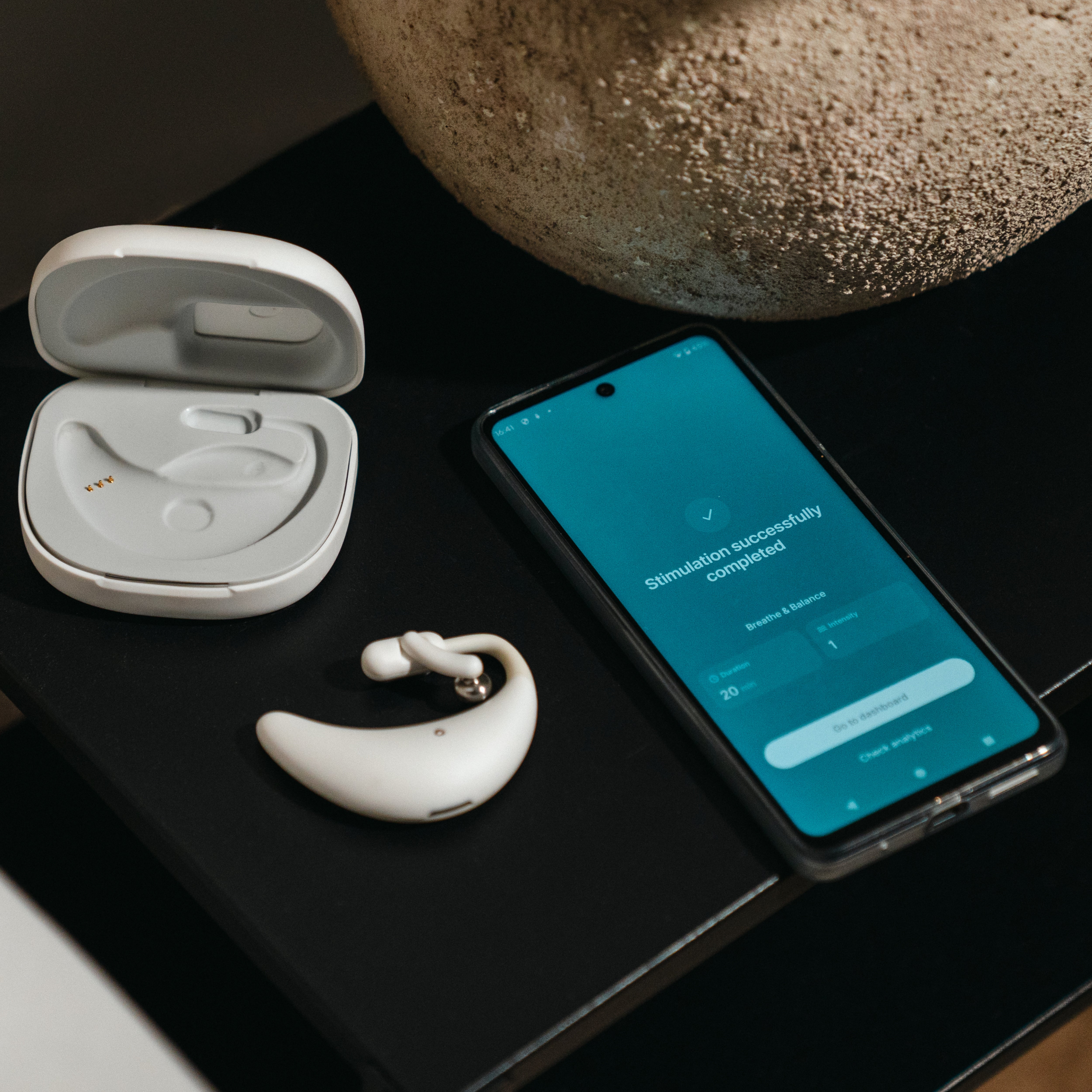
Sona is an AI-powered, personalised tVNS device (£695) that adapts each session to your real-time HRV, so the stimulation matches your nervous system's current state. For people working on low vagal tone, that measurability can turn a vague intention into a consistent practice.
As always, treat a device as one part of a wider approach, and as no substitute for medical assessment where damage is suspected.
Lifestyle and Recovery
Supporting vagal tone is less about any single technique and more about the overall conditions you give your nervous system. Regular movement, consistent sleep, time outdoors, social connection and managing chronic stressors all contribute, because each reduces the sympathetic load that keeps the vagus suppressed.
Nutrition plays a supporting role too: a varied, fibre-rich diet supports the gut, which is in constant dialogue with the vagus nerve. None of this is dramatic, but together these habits create the environment in which vagal tone recovers.
Set realistic expectations: improvements in tone build over weeks of consistency rather than overnight, and tracking HRV alongside how you feel helps you see progress without guessing.
When to See a Doctor
This is the most important section. Self-directed vagal support is appropriate for low tone, but several symptoms point to something that needs medical assessment rather than a breathing exercise.
See a doctor promptly if you experience fainting or near-fainting, difficulty swallowing, a persistent change in your voice, a heart rate that is consistently very fast or very slow, or significant digestive problems such as persistent vomiting or a feeling that food is not emptying from your stomach. The same applies if symptoms began after an injury, surgery or illness.
Supporting your vagus nerve is something you do alongside good medical care, never instead of it. When in doubt, get assessed.
Frequently Asked Questions
What are the symptoms of vagus nerve dysfunction?
With low vagal tone, common signs include poor stress recovery, a "wired but tired" feeling, stress-related digestive issues, disturbed sleep and low HRV. More significant dysfunction can cause swallowing difficulty, voice changes, heart-rate abnormalities or fainting, which need medical assessment.
Can you damage your vagus nerve?
Yes, though true structural damage is uncommon. Causes include neck or chest injury, surgical complications, some viral infections and conditions such as poorly controlled diabetes. Chronic stress does not damage the nerve structurally but can keep its activity suppressed.
Is vagus nerve dysfunction the same as dorsal vagal shutdown?
No. Dysfunction concerns how well the nerve itself is working, while dorsal vagal shutdown is a protective nervous-system state described in polyvagal theory. You can experience dorsal vagal states with a perfectly intact nerve.
How can I improve a weak or underactive vagus nerve?
For low vagal tone, slow exhale-led breathing, cold exposure, humming, regular exercise and good sleep all help, and transcutaneous VNS devices such as Sona can support the nerve. Genuine nerve damage needs medical care, not self-treatment.
Can vagus nerve stimulation repair a damaged vagus nerve?
No. VNS can help support low vagal tone, but it does not repair a physically damaged nerve. If you suspect nerve damage, especially after injury, surgery or illness, see a clinician.
Conclusion
"Vagus nerve dysfunction" covers a wide spectrum, and the most useful thing you can do is work out where on it you sit. For most people, the issue is low vagal tone, a stressed, under-active nerve that responds well to breathing, movement, sleep and consistent stress management.
For a smaller number, the symptoms point to genuine nerve damage or disease, which is firmly medical territory. The red-flag symptoms above are the dividing line, and when they are present the right move is assessment, not self-treatment.
If you are in the low-tone majority, the path forward is encouraging: vagal tone is trainable, and small, consistent habits compound. Track your HRV, build a simple routine, and consider personalised tVNS if you want a measurable way to support the nerve, alongside, never instead of, good medical care.
Want a measurable way to support your vagal tone? Explore Sona at sona.help, the world's first AI-powered, personalised vagus nerve stimulation device, built to adapt to your nervous system in real time.
Sources
- Cleveland Clinic, Vagus Nerve (anatomy, function and disorders)
- Harvard Health, Heart rate variability as a marker of autonomic balance
- NHS, When to get medical help for unexplained symptoms
Disclaimer
DISCLAIMER: Sona is a wellness device and is not a medically regulated product. The information in this article is for educational purposes only and does not constitute medical advice. We do not make any claims about Sona's ability to diagnose, treat, cure, or prevent any medical condition. Vagus nerve stimulation research referenced in this article relates to the broader field of VNS and may not be specific to any particular consumer device. Always consult a qualified healthcare professional before making decisions about your health.



Share:
Vagus Nerve and Gut Health: The Gut-Brain Axis (2026)
How Temperature Affects Sleep: The Science of Sleeping Cool