


Heart rate variability (HRV) serves as your body's real-time stress monitor, measuring the subtle variations between heartbeats that reveal whether your nervous system is in fight-or-flight mode or rest-and-digest. Higher HRV indicates better stress resilience and autonomic flexibility, whilst chronically low HRV signals that stress has hijacked your nervous system's ability to recover.
Think of HRV as a window into your autonomic nervous system: the control centre that manages everything from heart rate to digestion without conscious thought. When chronic stress keeps your sympathetic nervous system in overdrive, your vagus nerve (the body's natural brake pedal) struggles to do its job. The result? Reduced HRV that shows up in everything from poor sleep to difficulty concentrating.
This guide explores the fascinating science behind HRV and stress, helping you understand what your measurements really mean and, more importantly, how to improve them using evidence-based techniques.
Key Takeaways
- HRV measures beat-to-beat variations, not average heart rate: higher variability indicates better stress resilience
- Normal HRV ranges vary dramatically by age, gender, and individual baseline: your trend matters more than single readings
- Chronic stress reduces HRV by keeping your sympathetic nervous system dominant and suppressing vagal tone
- Morning measurements provide the most reliable HRV data when taken consistently at the same time
- Improving HRV requires addressing both acute stressors and building long-term nervous system resilience
What Is Heart Rate Variability (HRV)?
Heart rate variability isn't about how fast your heart beats: it's about the tiny variations between each heartbeat. If your heart rate is 60 beats per minute, those beats aren't spaced exactly one second apart. Instead, there might be 0.95 seconds between one beat and 1.05 seconds before the next. These millisecond variations are what we call HRV.
This variability reflects the delicate dance between your sympathetic nervous system (your accelerator) and parasympathetic nervous system (your brake). When both systems work in harmony, your heart rhythm shows healthy variation: like an orchestra conductor making subtle tempo adjustments to create beautiful music. Your autonomic nervous system constantly fine-tunes your heart rate in response to breathing, blood pressure changes, and emotional states.
whilst a metronome-like heartbeat might seem ideal, it actually signals rigidity in your nervous system. High HRV means your body can quickly shift between states: ramping up for challenges and efficiently returning to baseline. Low HRV suggests your nervous system has lost this flexibility, often stuck in a stress response.
The distinction from average heart rate is important. Two people might both have a resting heart rate of 65 bpm, but one with high HRV has a responsive, adaptable nervous system whilst the other with low HRV may be experiencing chronic stress or autonomic dysfunction. This is why HRV has emerged as one of the most valuable biomarkers for understanding stress and overall health.
The Science Behind HRV and Stress Response
The vagus nerve acts as your body's primary 'brake pedal' for stress, comprising 80% of your parasympathetic nervous system. When functioning optimally, this wandering nerve sends signals to your heart's sinoatrial node (your natural pacemaker) creating the beat-to-beat variations we measure as HRV. Higher vagal tone means more variation between beats and better stress resilience.
During acute stress, your sympathetic nervous system floods your body with adrenaline and cortisol, temporarily suppressing vagal influence. Your HRV drops as your heart rhythm becomes more regular, preparing you for action. This is perfectly normal (even beneficial) for short-term challenges. The problems arise when stress becomes chronic.
Chronic stress fundamentally alters this balance, keeping your sympathetic system dominant whilst suppressing vagus nerve activity. Research by Thayer and Lane (2009) demonstrated that persistent stress creates a negative feedback loop: reduced vagal tone leads to inflammation, poor emotional regulation, and difficulty recovering from daily stressors, which further suppresses HRV.
The physiological mechanism is elegantly simple yet profoundly important. Your vagus nerve releases acetylcholine at the sinoatrial node, which binds to muscarinic receptors and slows heart rate. But it doesn't just slow things down: it creates dynamic variability by responding to respiratory patterns (respiratory sinus arrhythmia) and baroreceptor feedback. When chronic stress hijacks this system, you lose this adaptive capacity. Your nervous system becomes like a car stuck in third gear: functional but unable to shift efficiently between different demands.
Normal HRV Ranges: What Your Numbers Actually Mean
Understanding HRV norms requires acknowledging the tremendous individual variation in these measurements. Whilst population averages provide context, your personal baseline and trends matter far more than hitting a specific target. Age significantly impacts HRV, with typical RMSSD values ranging from 40-80ms for adults in their 20s, gradually declining to 20-40ms by age 60.
Gender differences add another layer of complexity. Pre-menopausal women often show HRV variations throughout their menstrual cycle, with higher readings during the follicular phase. Men typically display more stable day-to-day HRV but may show greater declines with age. Athletes frequently record HRV values 50-100% higher than sedentary individuals of the same age.
Here's the important insight: a marathon runner with an HRV of 60ms might be overtrained, whilst an office worker achieving 40ms could represent excellent nervous system health for their fitness level. Context is everything. Factors like genetics, fitness, sleep quality, and stress load all influence your 'normal' range.
Rather than chasing arbitrary numbers, focus on establishing your baseline over 2-4 weeks of consistent morning measurements. A sustained 10-20% drop from your baseline often signals increased stress, poor recovery, or impending illness: regardless of whether your absolute values seem 'good' or 'bad'. Remember, higher isn't always better; some individuals naturally operate with lower HRV whilst maintaining excellent health and stress resilience.
How to Measure Your HRV Accurately
Accurate HRV measurement starts with choosing the right tool. Chest strap monitors provide the gold standard for precision, detecting electrical signals directly from your heart with ECG-level accuracy. Popular options like Polar H10 can detect R-R intervals within 1-2 milliseconds. Wrist-based wearables offer convenience but sacrifice some accuracy, particularly during movement or with irregular heart rhythms.
Timing is everything for reliable HRV data. Morning measurements, taken within 10 minutes of waking whilst still lying in bed, provide the most consistent baseline. Your nervous system hasn't yet responded to the day's stressors, caffeine hasn't altered your autonomic balance, and you're in a naturally parasympathetic state. This consistency matters more than the absolute time: 7am every day beats random measurements at 'perfect' times.
Environmental factors significantly impact accuracy. Temperature extremes, bright lights, loud noises, or even checking emails before measuring can skew results. Create a simple ritual: wake naturally (no jarring alarms), remain lying down, breathe normally, and measure for 2-5 minutes. Many HRV tracking devices now guide you through this process.
Measurement frequency depends on your goals. Daily tracking helps identify patterns and stress triggers, whilst 3-4 times weekly suffices for general wellness monitoring. Avoid measuring immediately after exercise, alcohol consumption, or during illness: these create artificial drops that don't reflect your true baseline. The key is consistency: same time, same position, same conditions for meaningful trend analysis.
Factors That Impact Your HRV
Acute and chronic stress create distinctly different HRV signatures. Acute stress (like an important presentation) temporarily suppresses HRV but typically rebounds within hours or days. Chronic stress, however, creates a persistent downward trend, with your baseline gradually declining over weeks or months. Research shows that workplace burnout can reduce HRV by 20-40%, equivalent to ageing your nervous system by a decade.
Lifestyle factors profoundly influence HRV patterns. Sleep quality stands out as the strongest predictor: even one night of poor sleep can slash next-day HRV by 15-30%. Alcohol creates a dose-dependent suppression lasting 24-48 hours, whilst moderate caffeine shows mixed effects: improving HRV in some individuals whilst reducing it in others. Regular aerobic exercise enhances baseline HRV, but overtraining paradoxically suppresses it.
Medical conditions and medications significantly alter HRV readings. Diabetes, cardiovascular disease, and autoimmune conditions typically reduce variability through autonomic neuropathy or systemic inflammation. Beta-blockers artificially elevate HRV by slowing heart rate, whilst antidepressants may suppress or enhance it depending on their mechanism. Always inform healthcare providers about HRV tracking when discussing medications.
Age-related decline isn't inevitable: it's largely driven by accumulated lifestyle factors. A 60-year-old who manages stress, exercises regularly, and prioritises sleep can maintain HRV comparable to sedentary 40-year-olds. The key insight? Most HRV-reducing factors are modifiable. Even genetic predisposition to low HRV can be offset through targeted lifestyle interventions and stress management techniques.
Using HRV to Identify Stress Patterns
Daily HRV tracking reveals stress patterns invisible to conscious awareness. Many users discover their lowest readings occur on Sunday evenings (anticipatory stress about the upcoming week) rather than during obviously stressful moments. This objective data helps identify hidden stressors: that 'relaxing' social media scrolling might actually activate your sympathetic nervous system.
Integrating HRV with lifestyle logging unveils powerful connections. Track sleep quality, exercise intensity, alcohol intake, work stress, and social interactions alongside HRV measurements. Patterns emerge within weeks: perhaps your HRV consistently drops after late-night screen time or spikes following morning meditation. This personalised feedback loop guides behaviour change far more effectively than generic advice.
Workplace stress monitoring through HRV offers unique insights. A 2021 study found that employees who tracked HRV showed 30% better recognition of burnout warning signs. Simple strategies emerged: scheduling difficult conversations when HRV is highest, taking recovery breaks when readings drop, and identifying which work activities genuinely restore versus deplete nervous system resources.
Common patterns to watch for include: Monday morning drops (weekend-to-work transition stress), gradual weekly decline without weekend recovery (chronic overload), persistent low readings despite feeling 'fine' (hidden burnout), and sudden drops preceding illness. These patterns become your early warning system, allowing intervention before stress manifests as physical symptoms or performance decline.
Evidence-Based Ways to Improve HRV
Targeted breathing exercises offer the fastest route to HRV improvement. Resonance frequency breathing (typically around 5-6 breaths per minute) directly stimulates vagal tone. Start with 4 seconds in, 6 seconds out, adjusting to find your personal resonance point where HRV peaks. Just 10 minutes daily can increase baseline HRV by 15-25% within two weeks, according to research by Lehrer and Gevirtz (2014).
Vagus nerve stimulation techniques provide powerful HRV enhancement through multiple pathways. Cold exposure (whether cold showers, face immersion, or winter swimming) creates controlled stress that strengthens vagal tone. Singing, humming, and gargling activate the vagus through throat vibrations. These simple practices, when performed consistently, create measurable HRV improvements within days.
Sleep optimization might be the single most impactful HRV intervention. Consistent sleep-wake times, cool bedroom temperatures (16-19°C), and complete darkness support parasympathetic dominance. Research shows that improving sleep quality from 'poor' to 'good' can boost HRV by 30-50%: more than most other interventions combined. Focus on sleep consistency over duration; irregular schedules suppress HRV even with adequate total sleep.
Exercise requires a nuanced approach for HRV optimization. Moderate aerobic exercise (Zone 2 training) enhances parasympathetic tone, whilst excessive high-intensity training temporarily suppresses HRV. The sweet spot? 150-300 minutes weekly of moderate activity, with high-intensity sessions limited to 1-2 times per week. Monitor morning HRV to ensure full recovery between intense sessions: persistent suppression indicates overtraining requiring extended recovery.
HRV Training and Biofeedback
HRV biofeedback transforms abstract nervous system concepts into tangible skills. Using real-time HRV monitoring, you learn to consciously influence autonomic balance: like learning to ride a bicycle for your nervous system. Sessions typically involve watching your HRV graph whilst practicing different breathing patterns, gradually discovering which techniques create the strongest parasympathetic response.
Effective protocols follow a structured progression. Begin with basic coherence training: breathe at your resonance frequency whilst maintaining positive emotional states. Advanced techniques incorporate visualization, progressive relaxation, and even subtle muscle tensions that enhance vagal tone. Research by Gevirtz (2013) found that 10 sessions of HRV biofeedback created lasting improvements equivalent to months of meditation practice.
The learning curve varies dramatically between individuals. Some achieve significant HRV increases within days, whilst others require weeks to develop conscious autonomic control. Key success factors include consistent practice (daily 10-20 minute sessions), accurate feedback devices, and patience with the process. Many report an 'aha' moment when they first consciously raise their HRV: suddenly understanding how thoughts and breathing directly impact physiology.
Integration into daily life determines long-term success. Rather than viewing biofeedback as isolated training, apply techniques throughout your day: before stressful meetings, during commutes, or as transitions between activities. Mobile HRV apps now enable discrete practice anywhere. The goal isn't perpetual parasympathetic dominance but rather autonomic flexibility: the ability to shift states as situations demand.
When to Seek Professional Help
Persistently low HRV despite lifestyle interventions warrants professional evaluation. Whilst stress commonly suppresses HRV, readings consistently below age-appropriate ranges might indicate underlying health conditions. Cardiovascular disease, diabetes, thyroid dysfunction, and autoimmune disorders all impact autonomic function. Don't panic: but do investigate readings persistently 50% below age norms.
Certain patterns demand immediate attention. Sudden, dramatic HRV drops (30-50% below baseline) lasting more than a few days could signal developing illness, overtraining syndrome, or significant psychological stress requiring support. Irregular heart rhythms appearing in HRV data (seen as erratic, unpatterned readings) always merit cardiac evaluation, even without symptoms.
Working with HRV-literate healthcare providers enhances treatment outcomes. Cardiologists increasingly use HRV for risk stratification, whilst psychiatrists employ it for monitoring treatment response in anxiety and depression. Bring your HRV data to appointments: trends over weeks provide valuable clinical insights beyond single-day measurements. Many providers now prescribe HRV biofeedback as adjunct therapy.
Remember that HRV is one biomarker among many. Excellent HRV doesn't guarantee perfect health, nor does low HRV doom you to illness. Context matters: symptoms, energy levels, performance, and other health markers all contribute to the complete picture. Use HRV as a valuable guide for optimizing health, not as a source of anxiety about achieving 'perfect' numbers.
Frequently Asked Questions
What is a good HRV score for my age?
Good HRV varies significantly by age, with healthy ranges typically being: 20s-30s: 55-80ms (RMSSD), 40s: 35-60ms, 50s: 30-50ms, 60+: 25-45ms. However, your personal baseline matters more than population averages: focus on maintaining consistent readings and watching for significant drops from your norm.
Can stress cause low heart rate variability?
Yes, both acute and chronic stress significantly reduce HRV by activating your sympathetic nervous system and suppressing vagal tone. Chronic stress can reduce baseline HRV by 20-40%, equivalent to premature ageing of your autonomic nervous system.
How quickly can HRV improve with stress reduction?
Acute improvements can occur within minutes through breathing exercises or relaxation. Baseline HRV typically improves within 2-4 weeks of consistent stress management practices, with significant gains possible within 8-12 weeks of dedicated training.
What HRV device is most accurate?
ECG-based chest straps like Polar H10 provide gold-standard accuracy, detecting R-R intervals within 1-2ms. Quality optical wrist sensors (Apple Watch, Whoop) offer good accuracy for trends but may miss subtle beat variations that chest straps capture.
Is high HRV always better?
Not necessarily. Whilst higher HRV generally indicates better stress resilience, extremely high readings can signal arrhythmias or overcompensation. Consistency and appropriate response to stressors matter more than achieving maximum values.
Can anxiety affect HRV measurements?
Absolutely. Anxiety activates your sympathetic nervous system, temporarily suppressing HRV. Even anxiety about the measurement itself can skew results. This is why consistent, relaxed morning measurements provide the most reliable baseline data.
How often should I check my HRV?
For general wellness, 3-4 weekly measurements suffice to identify trends. Athletes or those managing chronic stress benefit from daily tracking. Consistency matters more than frequency: same time, same conditions for meaningful data.
What time of day is best to measure HRV?
First thing in the morning, within 10 minutes of waking whilst still lying in bed, provides the most consistent baseline. Your nervous system hasn't yet responded to daily stressors, making morning readings ideal for tracking true changes over time.
Conclusion
Heart rate variability offers an extraordinary window into your body's stress response, revealing the hidden impact of chronic stress on your nervous system whilst pointing the way toward evidence-based recovery. By understanding what your HRV patterns mean and implementing targeted improvements, you're not just managing stress: you're building fundamental resilience at the autonomic level.
The key insight from HRV science is both sobering and hopeful: whilst chronic stress leaves measurable fingerprints on your nervous system, these changes are notably responsive to intervention. Whether through breathing exercises, lifestyle optimization, or advanced biofeedback training, you can meaningfully improve your HRV and, by extension, your body's ability to manage life's inevitable challenges.
Your HRV journey is deeply personal. Start by establishing your baseline, identify your unique stress patterns, and experiment with different interventions to discover what moves the needle for your nervous system. Remember, you're not chasing perfect numbers: you're building a more flexible, responsive autonomic nervous system that serves you well in both challenge and recovery.
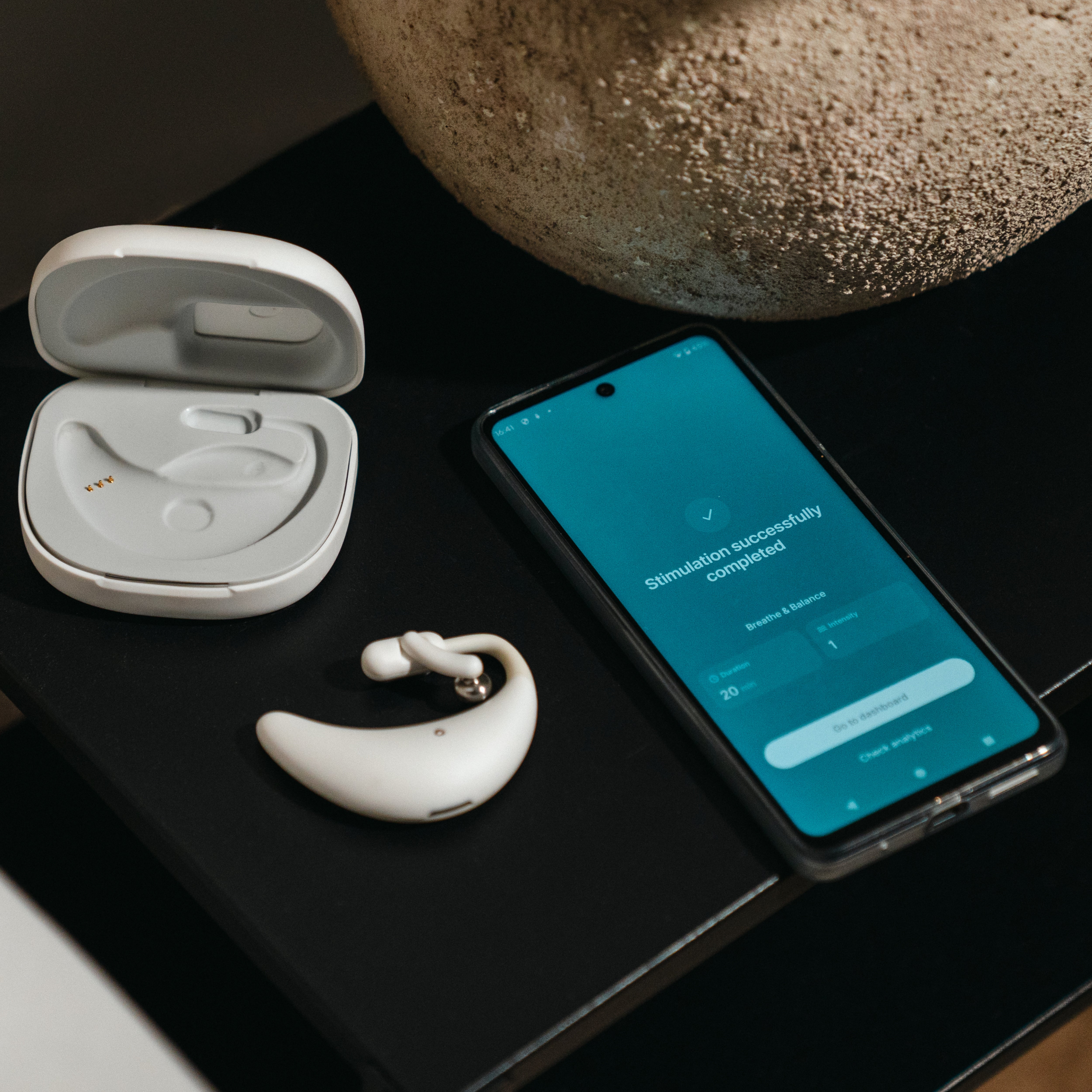
Ready to take your HRV improvement to the next level? Explore how SONA's AI-powered vagus nerve stimulation adapts to your real-time HRV patterns, providing personalised support for building nervous system resilience. Learn more about the science behind personalised VNS technology.
Sources
- Thayer, J. F., & Lane, R. D. (2009). Claude Bernard and the heart–brain connection: Further elaboration of a model of neurovisceral integration. Neuroscience & Biobehavioral Reviews, 33(2), 81-88.
- Lehrer, P. M., & Gevirtz, R. (2014). Heart rate variability biofeedback: How and why does it work? Frontiers in Psychology, 5, 756.
- Gevirtz, R. (2013). The promise of heart rate variability biofeedback: Evidence-based applications. Biofeedback, 41(3), 110-120.




Share:
How to Improve Your HRV: 11 Science-Backed Methods (2026)
Best HRV Tracking Devices Compared (2026 Guide)