


This is a 30-day micro-habit plan for building a morning routine that actually sticks. Anchor 2-minute habits to things you already do, work with your circadian rhythm rather than against it, and add new behaviours one at a time. Around 92% of people drop their morning routines within two weeks because they try to change too much at once; the plan below avoids that failure mode by design.
If you want the underlying theory, our neuroscience approach to morning routines covers the brain-and-nervous-system science. This article is the practical companion: what to do, in what order, for the next 30 days.
The plan starts impossibly small on purpose. Two minutes a day for the first week, then layering. By day 30 you'll have a routine that runs on autopilot, with a "minimum viable" version for low-energy days and an "ideal" version for the days you have more in the tank.
Key Takeaways
- Start with 2-minute micro-habits anchored to existing behaviours, not ambitious 90-minute routines
- Align your wake time with your chronotype for 40% better adherence rates
- Address nervous system dysregulation first: chronic stress creates physiological resistance to new habits
- Use environmental design and habit stacking to eliminate decision fatigue
- Build flexibility into your routine with 'minimum viable' and 'ideal' versions for different circumstances
Why Most Morning Routines Fail: The Nervous System Connection
The primary reason morning routines fail isn't lack of motivation: it's cognitive overload combined with nervous system dysregulation. When you attempt to implement a complex morning routine whilst your body is already in a state of chronic stress, you're essentially asking an overwhelmed system to take on additional demands. Research indicates that decision fatigue peaks in the morning when cortisol levels are naturally highest, making ambitious routines neurologically unsustainable.
Your cortisol awakening response (CAR) plays a important role in morning routine success. In a regulated nervous system, cortisol rises sharply upon waking, providing the energy and focus needed for morning activities. However, chronic stress disrupts this pattern, leading to either a blunted morning cortisol response (leaving you exhausted) or an excessive spike (creating anxiety and overwhelm). When your CAR is dysregulated, even simple morning tasks feel insurmountable.
The all-or-nothing mentality compounds this problem. Studies show that people who miss one day of their morning routine are 50% more likely to abandon it entirely within the week. This perfectionist approach ignores the reality of human behaviour and creates unnecessary stress. Your nervous system interprets this rigid thinking as a threat, activating your sympathetic response and making routine adherence even harder.
Circadian misalignment represents another critical failure point. Attempting to wake at 5am when your chronotype naturally favours later rising creates a constant battle against your biology. This misalignment disrupts melatonin production, reduces sleep quality, and increases stress hormones: creating a cascade of physiological resistance to your new routine.
The solution lies in addressing nervous system regulation as the foundation for sustainable change. When your autonomic nervous system is balanced, with healthy vagal tone and appropriate stress responses, building new habits becomes physiologically easier. Your brain has the resources to adapt, your stress response supports rather than sabotages change, and morning activities feel energising rather than depleting.
The Science of Habit Formation and Morning Success
Understanding the neuroscience of habit formation reveals why morning routines require more than willpower. At the neural level, habits form through a process called long-term potentiation, where repeated behaviours create stronger synaptic connections. The habit loop (cue, routine, reward) operates through the basal ganglia, allowing behaviours to become automatic. This neuroplasticity means your brain physically changes to support consistent morning routines, but the process takes time and proper conditions.
The widely cited 21-day habit formation myth has been thoroughly debunked by research. A landmark study by Phillippa Lally at University College London found that habit formation actually takes an average of 66 days, with a range of 18 to 254 days depending on the complexity of the behaviour. Simple morning habits like drinking water might solidify within three weeks, whilst complex routines involving multiple behaviours require significantly longer. This extended timeline underscores the importance of starting small and building gradually.
Your circadian biology provides the blueprint for optimal morning routine timing. The cortisol awakening response, which peaks 30-45 minutes after waking, creates a natural window for activity and focus. Morning light exposure within this window suppresses melatonin production and anchors your circadian rhythm, improving both morning alertness and evening sleep quality. Research shows that consistent morning light exposure can advance sleep timing by up to 2 hours over several weeks, making early rising progressively easier.
The vagus nerve plays a fascinating role in routine adherence through its influence on stress resilience. High vagal tone, indicating a well-functioning parasympathetic nervous system, correlates with better emotional regulation, reduced anxiety, and improved cognitive flexibility: all essential for maintaining new habits during challenging periods. Studies show that individuals with higher heart rate variability (a marker of vagal tone) demonstrate 40% better adherence to health behaviours over time.
Morning success isn't just about the routine itself: it's about creating physiological conditions that support sustainable change. This includes optimising sleep architecture through consistent bedtimes, managing evening light exposure to support melatonin production, and addressing any underlying nervous system dysregulation that creates resistance to morning activities. When these foundational elements align, morning routines transition from forced discipline to natural rhythm.
The Micro-Habit Foundation: Starting Impossibly Small
BJ Fogg's Tiny Habits methodology transforms morning routine building by embracing radical simplicity. Instead of attempting a 90-minute morning transformation, micro-habits focus on behaviours so small they're impossible to fail. This approach works because it bypasses the brain's resistance to change, allowing new neural pathways to form without triggering stress responses. The key insight: motivation and ability must exceed the activation threshold, and making behaviours tiny dramatically lowers this threshold.
Effective 2-minute morning micro-habits compound over time to create significant change. Examples include: drinking one glass of water immediately upon waking, taking three deep breaths before getting out of bed, writing one sentence in a gratitude journal, doing two press-ups, or stepping outside for 30 seconds of morning light. These behaviours seem trivial, but research shows they create momentum that naturally expands into larger routines. The success rate for 2-minute habits exceeds 80%, compared to less than 20% for complex morning routines.
Anchoring new micro-habits to existing automatic behaviours eliminates the need for conscious decision-making. Fogg calls this 'behaviour stacking': using established routines as cues for new ones. After you turn off your alarm, immediately drink water. After your feet touch the floor, do two stretches. After you brush your teeth, write one gratitude statement. This sequencing uses your brain's existing neural pathways, making new behaviours feel like natural extensions rather than separate tasks.
The psychology of celebrating small wins activates dopamine release, reinforcing new neural pathways. Fogg's research shows that immediate celebration (even something as simple as saying 'yes.' or doing a fist pump) strengthens habit formation more than delayed rewards. This positive reinforcement tells your brain the behaviour is valuable, increasing the likelihood of repetition. Studies indicate that habits formed with immediate positive reinforcement show 3x better long-term retention.
Building momentum through progressive complexity follows natural skill acquisition patterns. Start with one glass of water for a week, then add 30 seconds of breathing exercises. Once these feel automatic (usually 2-3 weeks), introduce another micro-habit. This gradual expansion respects your nervous system's capacity for change whilst building confidence through consistent success. Within 3-6 months, these micro-habits naturally evolve into a complete morning routine that feels effortless rather than forced.
Designing Your Personal Morning Architecture
Identifying your chronotype transforms morning routine design from guesswork to precision. Research identifies four primary chronotypes (larks (25%), third birds (50%), and owls (25%)) each with distinct cortisol and melatonin patterns. Forcing an owl chronotype to wake at 5am creates perpetual jet lag, reducing cognitive performance and increasing stress hormones. Online assessments like the Munich Chronotype Questionnaire can identify your optimal wake time, typically improving routine adherence by 40% when properly aligned.
The keystone habit concept, popularised by Charles Duhigg, identifies single behaviours that naturally trigger positive cascades. For morning routines, common keystone habits include making your bed (correlated with increased productivity), morning exercise (triggers healthier food choices), or meditation (improves emotional regulation throughout the day). Research shows that establishing one strong keystone habit increases the likelihood of developing complementary habits by 65%. Choose your keystone based on personal values and natural tendencies rather than external expectations.
Environmental design eliminates friction and automates positive behaviours. Place a water bottle on your nightstand for immediate hydration. Set out workout clothes the night before. Position your journal and pen where you'll see them first. Studies in behavioural architecture show that reducing the steps required for a behaviour by even one action increases completion rates by 20%. Your morning environment should guide you through your routine without requiring conscious decisions.
Balancing sympathetic activation with parasympathetic recovery creates sustainable morning energy. Many routines fail because they're either too stimulating (causing burnout) or too passive (failing to energise). Effective routines alternate between activation (exercise, cold exposure, energising breathwork) and regulation (meditation, gentle stretching, vagus nerve stimulation). This oscillation mimics natural ultradian rhythms and prevents nervous system overwhelm whilst building resilience.
Customisation strategies must account for real-world constraints. Parents might need routines that accommodate unpredictable wake times. Shift workers require routines that function regardless of clock time. Frequent travellers need portable practices that work in any environment. Create 'minimum viable' versions (5 minutes) and 'ideal' versions (30+ minutes) of your routine. Research shows that having flexible options increases long-term adherence by 60%, as you're never forced to choose between perfection and nothing.
Creating Environmental Triggers for Automatic Behaviour
Environmental priming operates below conscious awareness to trigger desired behaviours. Your brain constantly scans the environment for cues, making physical space design important for routine automation. Research in behavioural psychology shows that environmental modifications can increase habit completion rates by up to 70% without requiring additional willpower. This 'choice architecture' approach makes your desired morning routine the path of least resistance.
Strategic placement of routine triggers creates a breadcrumb trail through your morning. Position your phone charger away from your bed to force movement upon waking. Place morning supplements next to your coffee maker. Set up a dedicated meditation corner with cushion and timer ready. Each visual cue primes the associated behaviour, reducing the cognitive load of remembering and deciding. Studies show that visible environmental cues double the likelihood of behaviour completion compared to relying on memory alone.
Light engineering represents one of the most powerful yet underused environmental tools. Installing smart bulbs that gradually brighten before your alarm creates a artificial dawn, triggering natural cortisol release and making waking easier. Exposure to 10,000 lux of light within 30 minutes of waking advances your circadian rhythm and improves morning alertness. Conversely, blackout curtains until your intended wake time prevent premature cortisol spikes that lead to groggy mornings.
Temperature manipulation activates your autonomic nervous system in beneficial ways. Setting your thermostat to gradually warm before waking makes leaving bed less jarring. Alternatively, keeping your bedroom slightly cool (18-19°C) improves sleep quality and makes morning movement more appealing. Some find that ending morning showers with 30 seconds of cold water activates the sympathetic nervous system in a controlled way, increasing alertness and stress resilience.
Creating positive sensory associations strengthens routine adherence through classical conditioning. Use a specific essential oil blend only during morning routines. Play particular music that energises without overwhelming. Choose a special mug exclusively for your morning beverage. These sensory anchors become powerful triggers over time: research shows that consistent sensory cues can reduce the time needed for habit formation by 30%.
Addressing Common Obstacles: The Troubleshooting Guide
Problem: 'I hit snooze repeatedly and can't get up' Solution: This indicates circadian misalignment or poor sleep quality. Track your natural sleep patterns for a week without alarms to identify your authentic wake time. Gradually shift your bedtime earlier by 15-minute increments. Place your alarm across the room, and use a sunrise alarm clock. Most importantly, ensure you're getting 7-9 hours of sleep: morning resistance often signals sleep debt rather than laziness.
Problem: 'I start strong but lose motivation after a few days' Solution: You're likely attempting too much change simultaneously. Scale back to one 2-minute micro-habit and master it for two weeks before adding anything else. Track completion with a simple tick chart: visual progress reinforces motivation. Celebrate immediately after completing the behaviour, even with just a smile or affirmation. Remember: consistency trumps intensity in habit formation.
Problem: 'My routine falls apart on weekends' Solution: Weekend disruption is normal and doesn't indicate failure. Create a 'weekend minimum' version that maintains core elements whilst allowing flexibility. Perhaps weekday routines include exercise and meditation, whilst weekends focus only on hydration and gratitude. Research shows that maintaining even 30% of routine elements on off-days significantly improves Monday re-entry.
Problem: 'Family responsibilities make consistent timing impossible' Solution: Build a modular routine rather than a sequential one. Instead of a fixed 6am-7am routine, create 5-minute modules (hydration, movement, mindfulness) that can be completed whenever opportunities arise. Parents with young children report better success with opportunistic micro-habits than rigid schedules. Focus on daily completion rather than specific timing.
Problem: 'I feel worse after my morning routine, not better' Solution: This suggests excessive sympathetic activation without adequate recovery. Evaluate whether your routine includes too much stimulation (intense exercise, caffeine, cold exposure) without balancing parasympathetic activities. Add vagus nerve activation through deep breathing, gentle stretching, or humming. Consider whether underlying nervous system dysregulation needs addressing before building more complex routines. Quality sleep and stress management must precede ambitious morning protocols.
The 30-Day Foundation Plan
Week 1: Assessment and Single Habit Begin by tracking your natural wake time without alarms for 3-4 days to identify your chronotype. Choose one micro-habit that takes less than 2 minutes: drinking water is ideal for most people. Anchor this to turning off your alarm. Place water bottle on nightstand before bed. Celebrate immediately after drinking. Track only this behaviour. Success is 100% completion of this single habit.
Week 2: Environmental Optimisation Continue your established micro-habit whilst optimising your environment. Install blackout curtains or eye mask for better sleep. Set up morning light exposure: either natural sunlight or a 10,000 lux lamp. Prepare evening environment to support earlier sleep: dim lights after sunset, charge phone outside bedroom, set consistent bedtime alarm. These changes support but don't replace your micro-habit.
Week 3: Add Nervous System Regulation Introduce one nervous system regulation practice after your established habit. Options include: 3 rounds of 4-7-8 breathing, 2 minutes of gentle stretching, humming or singing for vagus nerve activation, or brief meditation. Choose based on what feels most natural. The goal is building stress resilience to support routine expansion. Continue tracking both behaviours.
Week 4: Keystone Integration Identify and add your keystone habit: the behaviour most likely to trigger other positive changes. Common options: 5-minute journal writing, making your bed mindfully, 10-minute walk, or preparing a healthy breakfast. This completes your foundation routine: hydration, nervous system regulation, and keystone activity. Total time should remain under 15 minutes.
Measuring Success Track completion rate, not perfection: aim for 80% consistency. Monitor energy levels mid-morning as a routine effectiveness indicator. Note any changes in sleep quality or ease of waking. After 30 days, survey which elements feel automatic versus effortful. Use this data to refine your routine, potentially adding one new element monthly whilst maintaining your foundation. Remember: a simple routine performed consistently outperforms an elaborate routine attempted sporadically.
The Role of Nervous System Regulation in Long-Term Success
Nervous system regulation forms the invisible foundation supporting all successful behaviour change. When your autonomic nervous system operates in chronic sympathetic activation (constantly stressed, overwhelmed, or anxious) your brain lacks the resources for habit formation. Studies show that individuals with dysregulated nervous systems have 60% higher rates of routine abandonment, regardless of motivation levels. This isn't a character flaw; it's biological reality.
Vagus nerve tone directly influences your capacity for morning routine adherence. High vagal tone, measurable through heart rate variability, correlates with better emotional regulation, reduced morning anxiety, and increased behavioural flexibility. Research indicates that improving vagal tone through targeted practices can increase habit formation success by 45%. This explains why some people build routines effortlessly whilst others struggle despite equal effort: their nervous systems operate from different baselines.
Morning routines themselves can become powerful nervous system regulation tools when properly designed. Incorporating practices like deep breathing, gentle movement, or vagus nerve stimulation creates a positive feedback loop: the routine regulates your nervous system, which in turn makes routine adherence easier. This bidirectional relationship means that initial investment in nervous system health pays compound dividends in routine sustainability.
Chronic stress creates specific physiological barriers to morning success. Dysregulated cortisol patterns disrupt sleep architecture, leading to morning grogginess. Elevated inflammation reduces cognitive flexibility and motivation. Persistent sympathetic activation impairs the prefrontal cortex, weakening executive function needed for behaviour change. Addressing these underlying issues through nervous system regulation often unlocks sudden improvements in routine adherence that willpower alone couldn't achieve.
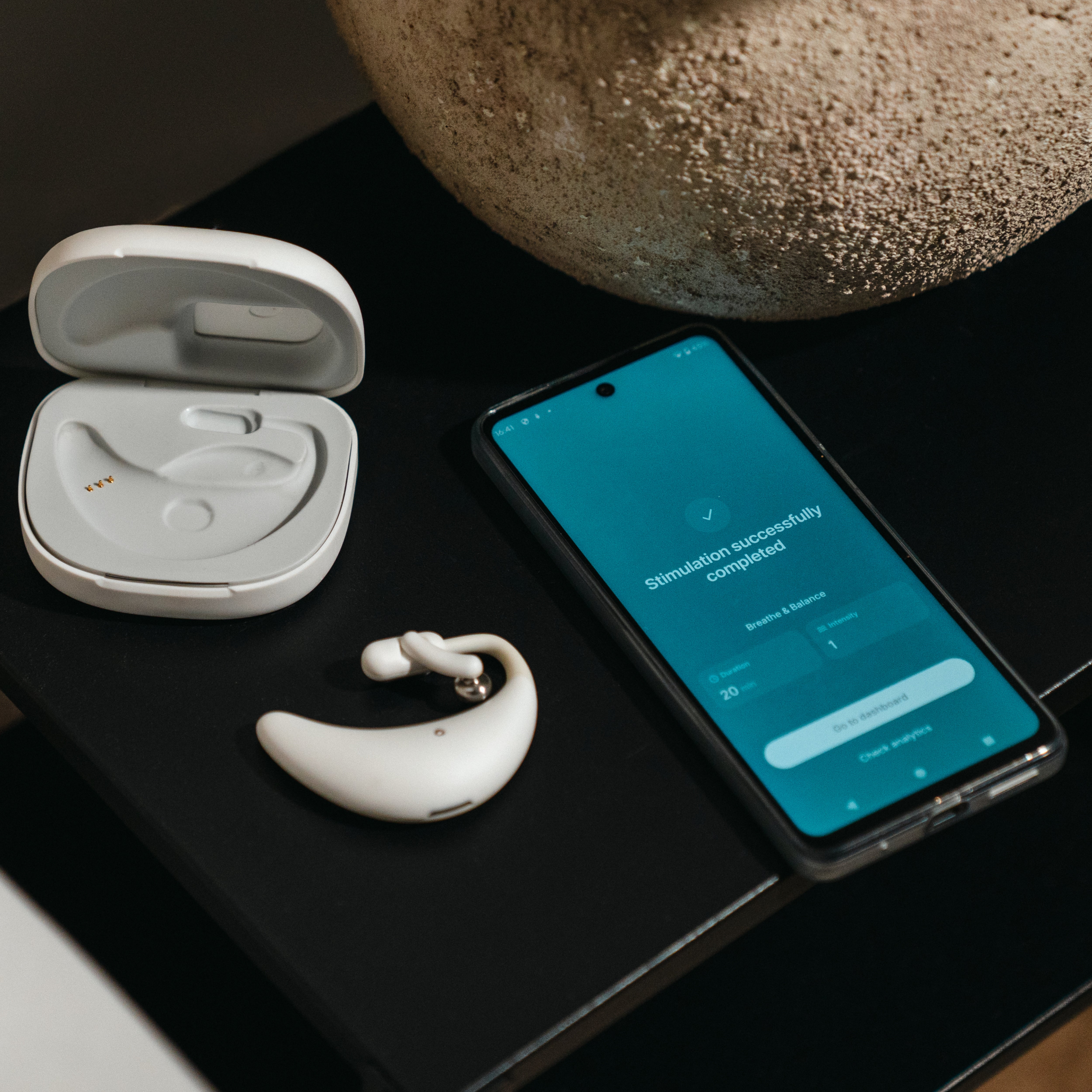
Technology like vagus nerve stimulation devices offers a modern approach to nervous system regulation within morning routines. By directly activating the parasympathetic nervous system, these tools can shift your physiological state in minutes, creating optimal conditions for the rest of your routine. Users report that starting their morning with vagus nerve stimulation makes subsequent activities feel more natural and less effortful. This technological support can bridge the gap between intention and execution whilst your natural regulation capacity develops.
When to Seek Additional Support
Recognising when routine difficulties indicate deeper issues requires honest self-assessment. If you've attempted multiple morning routines over six months without lasting success, underlying factors may need attention. Persistent morning anxiety, inability to wake despite adequate sleep time, or extreme resistance to any routine structure suggest nervous system dysregulation beyond what behavioural strategies alone can address.
Sleep disorders represent a common hidden obstacle to morning routine success. Conditions like sleep apnea, restless leg syndrome, or circadian rhythm disorders make morning routines physiologically impossible without treatment. If you experience excessive daytime fatigue, loud snoring, or unrefreshing sleep despite adequate time in bed, consulting a sleep specialist should precede routine building attempts. Treating underlying sleep issues often makes previously impossible routines suddenly achievable.
Mental health considerations significantly impact routine capacity. Depression can manifest as morning aversion and extreme fatigue. Anxiety may create overwhelming resistance to new behaviours. ADHD affects executive function needed for routine consistency. These conditions don't prevent routine success but require adapted approaches. Working with mental health professionals to address underlying conditions whilst building micro-habits often proves most effective.
Professional support for nervous system regulation accelerates routine building success. Modalities like EMDR, somatic therapy, or neurofeedback directly address dysregulation patterns that sabotage behaviour change. Vagus nerve stimulation, whether through professional treatments or personal devices, can provide physiological support whilst natural regulation capacity develops. Investment in nervous system health often yields greater routine success than endless routine modifications.
Community support and accountability partnerships double success rates for routine building. Whether through online groups, local meetups, or one-on-one accountability partners, external support provides motivation during difficult periods. Research shows that public commitment to specific behaviours increases follow-through by 65%. Consider joining morning routine communities or partnering with someone building similar habits. Shared journey reduces isolation and provides practical problem-solving resources when obstacles arise.
Frequently Asked Questions
How long does it take for a morning routine to become a habit?
Research shows habit formation takes an average of 66 days, not the commonly cited 21 days. Simple behaviours like drinking water may solidify within 18-30 days, whilst complex multi-step routines can require up to 254 days. The key is consistency over perfection: maintaining an 80% completion rate matters more than perfect execution.
What's the best time to wake up for a morning routine?
The optimal wake time depends entirely on your chronotype: your genetic predisposition for sleep timing. Roughly 25% are natural early risers (5-6am), 50% prefer moderate times (6:30-7:30am), and 25% function better with later starts (8am+). Fighting your chronotype reduces routine success by 40%. Use your natural patterns rather than forcing arbitrary wake times.
Should I do the same morning routine every day?
Maintain core elements daily whilst allowing flexibility. Research suggests keeping 2-3 anchor habits consistent (like hydration and movement) whilst varying other elements based on schedule, energy, and needs. This approach maintains the neurological benefits of routine whilst preventing boredom and accommodating real-life variations.
How do I stick to a morning routine when I'm tired?
First, evaluate whether fatigue stems from insufficient sleep: no routine can compensate for sleep deprivation. For temporary tiredness, use a 'minimum viable routine' of just 5 minutes covering essential elements. Often, starting small provides enough momentum to continue. If chronic fatigue persists, address underlying nervous system dysregulation or health issues.
What should I include in a 5-minute morning routine?
An effective 5-minute routine includes: (1) Hydration (drink one glass of water, (2) Movement) gentle stretching or 10 jumping jacks, (3) Breathing (three rounds of 4-7-8 breath or box breathing, (4) Intention) one sentence of gratitude or daily focus. This covers physical activation, nervous system regulation, and mental clarity in minimal time.
How do I get back on track after breaking my morning routine?
Avoid the all-or-nothing mentality. Research shows successful habit builders experience an average of 14 'failures' before consistency. Simply restart with your smallest micro-habit the next day without guilt or elaborate catch-up plans. Track resumption speed rather than perfection: bouncing back within 48 hours maintains neurological habit pathways.
Is it better to have a long or short morning routine?
Shorter routines (15-20 minutes) show 3x better long-term adherence than elaborate 60-90 minute routines. Start with 5-10 minutes and expand only after 30 days of consistency. The most effective routines are those you actually complete daily, not impressive routines abandoned after a week.
What are the most important elements of a morning routine?
The three essential elements are: (1) Circadian anchor (light exposure and consistent timing, (2) Nervous system regulation) breathing, movement, or vagus nerve activation, (3) Keystone habit: one behaviour that naturally triggers other positive actions. These create physiological and psychological conditions for sustained daily success.
Conclusion
Building a morning routine that sticks requires a fundamental shift in approach: from willpower-based forcing to nervous system-supported flowing. The science is clear: sustainable routines emerge from understanding your chronotype, starting with micro-habits, and addressing underlying physiological barriers to change. When you work with your biology rather than against it, morning routines transform from daily battles into natural rhythms.
The key insight that changes everything? Your nervous system regulation determines your capacity for routine success more than motivation ever could. By incorporating vagus nerve activation, stress regulation practices, and circadian rhythm optimisation, you create the biological foundation that makes habit formation possible. This explains why some people build routines effortlessly whilst others struggle despite equal effort: success depends on physiological readiness, not character strength.
Remember: the perfect morning routine is the one you actually do. Start with one 2-minute habit, anchor it to existing behaviour, celebrate completion, and build gradually. Focus on consistency over perfection, flexibility over rigidity, and nervous system support over pure discipline. Within 66 days of patient practice, what once required enormous effort becomes as natural as breathing.
Ready to support your morning routine with better nervous system regulation? Explore how Sona's personalised vagus nerve stimulation can help create the physiological foundation for lasting habit change. When your nervous system is balanced, building sustainable routines becomes naturally easier. Learn more about the science behind nervous system regulation.
Disclaimer
**DISCLAIMER:** Sona is a wellness device and is not a medically regulated product. The information in this article is for educational purposes only and does not constitute medical advice. We do not make any claims about Sona's ability to diagnose, treat, cure, or prevent any medical condition. Vagus nerve stimulation research referenced in this article relates to the broader field of VNS and may not be specific to any particular consumer device. Always consult a qualified healthcare professional before making decisions about your health.
Sources
- Phillippa Lally, University College London - European Journal of Social Psychology (2010)
- BJ Fogg - Tiny Habits methodology, Stanford Behavior Design Lab
- Charles Duhigg - The Power of Habit
- Munich Chronotype Questionnaire




Share:
30-Day Sleep App Experiment: Results from Daily Use
Choosing a VNS Device: Best Picks by Use Case (2026)