


Vagus nerve stimulation (VNS) has emerged as a promising therapeutic approach for managing long COVID symptoms by targeting the underlying autonomic dysfunction and chronic inflammation that characterise post-COVID syndrome. Through electrical or sound-based stimulation of the vagus nerve, VNS activates the body's natural anti-inflammatory pathways and helps restore balance to the nervous system, potentially alleviating persistent fatigue, brain fog, and other debilitating symptoms.
Long COVID affects millions worldwide, with symptoms persisting for months or even years after initial infection. The connection between COVID-19 and vagus nerve dysfunction has become increasingly clear through research, revealing how the virus can damage autonomic nervous system function and trigger a cascade of inflammatory responses. This disruption manifests as a constellation of symptoms including extreme fatigue, cognitive impairment, postural orthostatic tachycardia syndrome (POTS), sleep disturbances, and digestive issues.
What makes VNS particularly compelling for long COVID is its ability to address multiple symptoms simultaneously by working at the root level of nervous system regulation. Unlike symptomatic treatments that target individual complaints, VNS works by enhancing vagal tone and activating the cholinergic anti-inflammatory pathway, potentially breaking the cycle of inflammation and dysregulation that perpetuates long COVID symptoms.
This complete guide explores the scientific evidence supporting VNS for long COVID, different treatment approaches available, and practical considerations for those seeking this innovative therapy. Whether you're considering clinical VNS devices or exploring at-home options, understanding how this technology works can help you make informed decisions about your recovery journey.
Key Takeaways
- VNS targets the autonomic dysfunction and inflammation underlying long COVID symptoms through activation of anti-inflammatory pathways
- Both invasive and non-invasive VNS options exist, with at-home devices offering accessible treatment alternatives
- Clinical research shows promising results for fatigue, cognitive function, and autonomic symptom improvement
- Treatment protocols typically involve daily sessions of 15-30 minutes, with personalised adjustments based on response
- VNS works best when integrated with complete long COVID rehabilitation including sleep hygiene, nutrition, and pacing strategies
Understanding Long COVID and Autonomic Dysfunction
Long COVID, also known as post-acute sequelae of COVID-19 (PASC), affects an estimated 10-30% of COVID-19 survivors, with symptoms persisting beyond three months after initial infection. This condition represents a complex constellation of symptoms that can affect virtually every organ system, with the autonomic nervous system bearing a particularly heavy burden. Polyvagal theory provides a useful framework for understanding how trauma and illness reshape these responses.
The connection between COVID-19 and vagus nerve dysfunction has become increasingly evident through research. The vagus nerve, as the longest cranial nerve and primary component of the parasympathetic nervous system, plays a important role in regulating inflammation, heart rate, digestion, and immune function. When COVID-19 disrupts this critical nerve pathway, it creates a domino effect throughout the body.
Common long COVID symptoms reflect this widespread autonomic disruption. Profound fatigue that doesn't improve with rest affects up to 80% of patients. Brain fog: characterised by difficulty concentrating, memory problems, and cognitive sluggishness: impacts daily functioning. Many develop POTS, experiencing dramatic heart rate increases upon standing. Sleep becomes fragmented and unrefreshing, while digestive issues, breathlessness, and temperature dysregulation further compound the suffering.
The scientific explanation centres on persistent inflammation and autonomic nervous system imbalance. Research reveals that SARS-CoV-2 can directly infect vagus nerve tissue and trigger sustained inflammatory responses through various mechanisms. This creates a state of chronic sympathetic activation: essentially keeping the body stuck in "fight or flight" mode while suppressing the parasympathetic "rest and digest" response. Inflammatory markers remain elevated, creating a self-perpetuating cycle of cellular stress and dysfunction.
Traditional treatments often fall short because they target individual symptoms rather than addressing the underlying autonomic dysregulation. While medications for fatigue, cognitive enhancement, or heart rate control may provide some relief, they don't restore the fundamental balance needed for recovery. This limitation has driven interest in approaches like VNS that work at the system level to reset autonomic function.
How Vagus Nerve Stimulation Works for Long COVID
The effectiveness of vagus nerve stimulation for long COVID lies in its ability to activate the body's natural anti-inflammatory mechanisms and restore autonomic balance. VNS works by delivering electrical or vibrational signals to the vagus nerve, triggering a cascade of beneficial physiological responses that address multiple aspects of post-COVID dysfunction.
At the molecular level, VNS activates what's known as the cholinergic anti-inflammatory pathway. When the vagus nerve is stimulated, it releases acetylcholine, a neurotransmitter that binds to receptors on immune cells and dramatically reduces the production of inflammatory cytokines like TNF-alpha and interleukin-6. These are the same inflammatory markers found elevated in long COVID patients. By dampening this inflammatory response, VNS helps break the cycle of chronic inflammation that perpetuates symptoms.
The restoration of autonomic balance represents another important mechanism. Long COVID often involves sympathetic dominance: an overactive stress response paired with diminished parasympathetic activity. VNS directly enhances parasympathetic tone, helping shift the nervous system back toward equilibrium. This rebalancing manifests as improved heart rate variability (HRV), a key biomarker of autonomic health that's typically reduced in long COVID patients.
VNS also plays a vital role in reducing neuroinflammation and supporting neuroplasticity. The vagus nerve has extensive connections to brain regions involved in mood, cognition, and inflammation control. Stimulation enhances the release of norepinephrine in areas like the locus coeruleus, which has anti-inflammatory effects in the brain and promotes the growth of new neural connections. This mechanism may explain why VNS can help with the cognitive symptoms of long COVID.
The downstream effects on sleep, cognitive function, and energy levels are profound. By reducing inflammation and improving autonomic balance, VNS helps restore normal sleep architecture, allowing for more restorative rest. Enhanced parasympathetic activity improves digestive function and nutrient absorption, supporting cellular energy production. The reduction in brain inflammation and enhancement of neuroplasticity contribute to clearer thinking and improved memory.
Importantly, these benefits tend to build over time. While some patients report immediate improvements in relaxation and sleep quality, the full anti-inflammatory and restorative effects typically develop over weeks to months of consistent stimulation. This timeline aligns with the biological processes of reducing chronic inflammation and allowing tissue repair.
Types of Vagus Nerve Stimulation for Long COVID
Understanding the different types of vagus nerve stimulation available helps patients and healthcare providers choose the most appropriate approach for long COVID management. The field has evolved significantly, offering options ranging from surgically implanted devices to accessible at-home solutions.
Invasive VNS involves surgically implanting a pulse generator, similar to a pacemaker, with leads that wrap around the vagus nerve in the neck. Originally developed for epilepsy and treatment-resistant depression, these devices provide consistent, programmable stimulation directly to the nerve. For long COVID, invasive VNS offers the advantage of precise, continuous therapy that doesn't rely on patient compliance. However, the surgical risks, high costs (typically £20,000-30,000), and limited availability make this option suitable only for severe, refractory cases where other treatments have failed.
Non-invasive transcutaneous VNS (tVNS) represents a major advancement in accessibility. These devices stimulate the vagus nerve through the skin, typically targeting the auricular branch in the ear or the cervical branch in the neck. Clinical-grade tVNS devices have shown comparable efficacy to invasive options for many conditions. For long COVID patients, tVNS offers the benefits of vagus nerve stimulation without surgical risks, making it a practical first-line option.
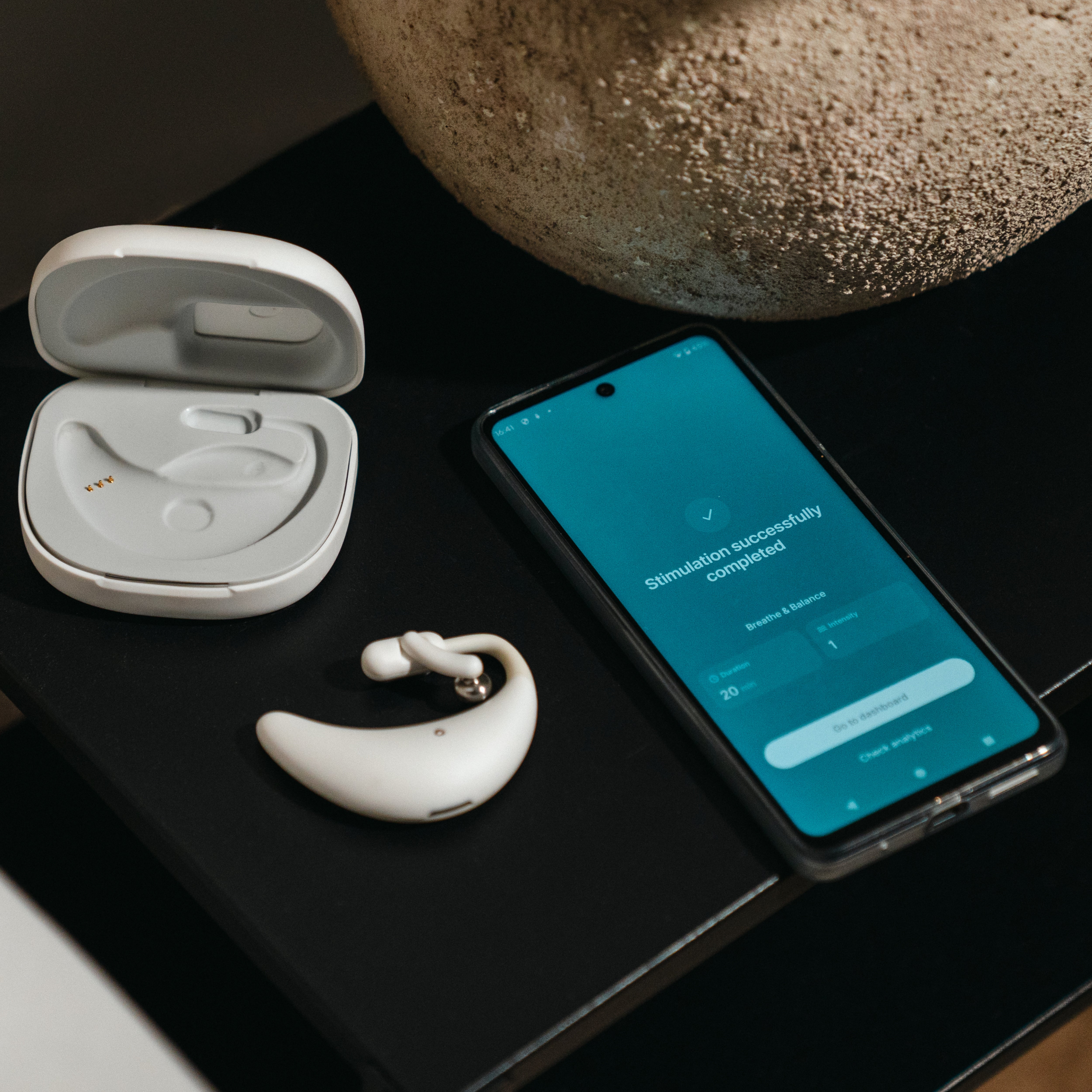
At-home VNS devices have democratised access to this therapy. Modern devices range from simple electrical stimulators to sophisticated systems that combine multiple modalities. The effectiveness of these devices varies considerably based on their design, stimulation parameters, and ability to ensure proper nerve activation. Key factors include electrode placement accuracy, stimulation frequency and intensity, and the inclusion of biometric monitoring to verify engagement.
Stimulation parameters play a important role in treatment outcomes. Research indicates that frequency settings between 20-30 Hz effectively activate vagal afferents, while pulse widths of 200-500 microseconds optimise nerve recruitment without discomfort. Session duration typically ranges from 15-60 minutes, with most protocols recommending daily use. The intensity should be set just below the discomfort threshold: strong enough to activate the nerve but comfortable for extended use.
The emergence of AI-powered personalised VNS represents the advanced of this technology. These systems use real-time biometric data like HRV and breathing patterns to adjust stimulation parameters dynamically. By reading the body's responses and adapting accordingly, personalised VNS can optimise each session for maximum therapeutic benefit. This approach addresses a fundamental limitation of fixed-parameter devices: the fact that optimal stimulation varies between individuals and even within the same person depending on their physiological state.
Clinical Evidence and Research Findings
The scientific evidence supporting vagus nerve stimulation for long COVID continues to grow, with research spanning from mechanistic studies to clinical trials. While the field is relatively new, the results thus far provide compelling support for VNS as a therapeutic intervention for post-viral syndromes.
Current research specifically examining VNS for long COVID includes several notable investigations. A 2023 pilot study by Verbanck and colleagues examined tVNS in 20 long COVID patients with persistent fatigue and cognitive symptoms. After 8 weeks of daily stimulation, participants showed significant improvements in fatigue scores (45% reduction on the Chalder Fatigue Scale) and cognitive performance, with 75% reporting subjective improvement in brain fog. Importantly, these benefits persisted at 3-month follow-up.
Studies focusing on VNS for specific long COVID symptoms reveal targeted benefits. Research on post-viral fatigue syndromes, which share mechanisms with long COVID, demonstrates that VNS can improve energy levels through multiple pathways. A study examining VNS for cognitive dysfunction found improvements in attention, processing speed, and working memory after 12 weeks of treatment. For autonomic symptoms, VNS has shown particular promise in managing POTS and orthostatic intolerance, with patients experiencing reduced heart rate spikes and improved exercise tolerance.
Biomarker improvements provide objective evidence of VNS efficacy. Multiple studies report significant increases in heart rate variability following VNS treatment, indicating enhanced autonomic function. Inflammatory markers show consistent reductions, with decreases in C-reactive protein, interleukin-6, and TNF-alpha observed across studies. Functional MRI studies reveal increased connectivity in brain networks associated with attention and executive function following VNS therapy. Some research also indicates improvements in mitochondrial function markers, potentially explaining the energy benefits.
Case studies and clinical observations add valuable insights. Healthcare providers using VNS for long COVID report that patients often experience improved sleep quality within the first 2-4 weeks, followed by gradual improvements in energy and cognition. The response appears to be more strong in patients who begin treatment earlier in their long COVID course, though benefits are observed even in those with symptoms persisting over a year.
However, important limitations must be acknowledged. Most studies to date involve small sample sizes and lack control groups. The heterogeneity of long COVID makes it challenging to predict which patients will respond best to VNS. Optimal stimulation parameters remain under investigation, and long-term outcomes beyond 6 months need further study. Additionally, the relative efficacy of different VNS devices and approaches requires head-to-head comparison trials.
Ongoing studies promise to address these gaps. Large-scale randomised controlled trials are currently recruiting participants to examine VNS for long COVID with rigorous methodology. Research into biomarkers that predict VNS response could enable more personalised treatment selection. Studies combining VNS with other interventions aim to identify optimal multi-modal approaches for complete long COVID management.
VNS Treatment Protocols and Approaches
Developing an effective VNS treatment protocol for long COVID requires understanding typical schedules, progression strategies, and integration with complete care. While protocols continue to evolve based on emerging research, clinical experience has established practical frameworks for implementation.
Typical treatment schedules for long COVID begin conservatively and progress based on individual response. Most protocols start with 15-20 minute sessions once daily, preferably at the same time each day to establish routine. Morning sessions often work well for addressing daytime fatigue and brain fog, while evening sessions may better support sleep quality. As tolerance develops, session duration can increase to 30-45 minutes, with some protocols incorporating twice-daily sessions for more severe symptoms. The key is consistency: daily use for at least 8-12 weeks appears necessary for substantial improvements.
Progression protocols should account for the post-exertional malaise common in long COVID. Initial stimulation intensity should be set conservatively, typically at 60-70% of the sensory threshold. Increases happen gradually, no more than 10% per week, monitoring for any symptom exacerbation. Some patients benefit from "pulsed" protocols that alternate between periods of stimulation and rest within a session, allowing the nervous system to integrate the input without overwhelming it.
Integration with other therapies enhances VNS effectiveness. Combining stimulation with breathing exercises amplifies parasympathetic activation: many find coordinating VNS with heart rate variability biofeedback particularly powerful. Nutritional support focusing on anti-inflammatory foods and mitochondrial nutrients (like CoQ10 and NAD+ precursors) may enhance cellular responses to VNS. Sleep hygiene practices become more effective when paired with evening VNS sessions. Gentle movement therapies like yoga or tai chi complement VNS by promoting vagal tone through physical practice.
Monitoring progress requires both objective and subjective measures. Heart rate variability serves as a primary biomarker, with improvements in RMSSD and high-frequency power indicating enhanced vagal function. Validated fatigue scales and cognitive assessments provide standardised tracking. Many patients benefit from symptom diaries that capture energy levels, cognitive clarity, and sleep quality on a 1-10 scale. Wearable devices that track HRV, sleep stages, and activity patterns offer continuous objective data.
Personalised approaches recognise that long COVID presentations vary significantly. Patients with prominent autonomic symptoms (POTS, temperature dysregulation) often respond well to morning VNS sessions focused on cardiovascular regulation. Those with severe fatigue may benefit from shorter, more frequent sessions to avoid overexertion. Cognitive symptoms sometimes improve more with auricular stimulation, while digestive issues may respond better to cervical approaches. The key lies in systematic experimentation with careful tracking to identify individual optimal parameters.
Getting Started with VNS for Long COVID
Beginning a VNS protocol for long COVID requires careful assessment and planning to ensure safety and optimise outcomes. While VNS is generally well-tolerated, certain considerations help identify suitable candidates and establish appropriate expectations.
Suitable candidates for VNS typically include those with persistent long COVID symptoms lasting more than 3 months despite conventional management. Good candidates often show evidence of autonomic dysfunction (reduced HRV, orthostatic intolerance), ongoing fatigue that limits daily activities, cognitive symptoms affecting work or quality of life, and commitment to consistent daily therapy. Those who've found partial benefit from other vagal tone practices (like breathing exercises or cold exposure) often respond well to VNS.
Safety considerations, while minimal for non-invasive VNS, deserve attention. Most side effects are mild and transient, including temporary skin irritation at stimulation sites, mild headache during initial sessions, or voice changes during cervical stimulation (which resolve immediately upon cessation). Contraindications include active ear infections for auricular devices, severe cardiac arrhythmias without medical clearance, and pregnancy (due to limited safety data). Those with implanted electronic devices should consult their physician, though modern VNS devices are typically designed to avoid interference.
Device selection depends on individual needs and preferences. Key factors include the type of stimulation (auricular vs cervical), ease of use and comfort for daily wear, availability of biometric monitoring, evidence base for the specific device, and cost considerations including initial purchase and any ongoing supplies. For long COVID specifically, devices that monitor HRV and adjust parameters accordingly may offer advantages in addressing autonomic dysfunction.
Working with healthcare providers enhances treatment success. While many can begin non-invasive VNS independently, provider involvement helps with initial assessment of autonomic function, ruling out other conditions that might contraindicate VNS, monitoring progress with objective measures, and adjusting protocols based on response. Some providers offer VNS as part of complete long COVID programmes, integrating it with other evidence-based interventions.
Setting realistic expectations prevents disappointment and promotes adherence. VNS is not a quick fix: most patients need 4-8 weeks of consistent use before experiencing significant benefits. Improvements often occur gradually, with sleep and autonomic symptoms typically responding before cognitive and energy improvements. Some patients experience temporary symptom fluctuations as their nervous system adapts. Complete resolution of all symptoms is uncommon, but meaningful improvements in function and quality of life are achievable for many. The goal is progress, not perfection, with VNS serving as one tool in a complete recovery approach.
Combining VNS with Other Long COVID Strategies
Maximising recovery from long COVID requires a multi-faceted approach, with VNS serving as a powerful component alongside other evidence-based interventions. Understanding how to synergistically combine therapies can accelerate healing and improve overall outcomes.
Lifestyle modifications form the foundation of long COVID management and enhance VNS effectiveness. Pacing strategies prevent the push-crash cycles that perpetuate symptoms: VNS can support this by improving autonomic resilience and recovery capacity. Anti-inflammatory nutrition rich in omega-3 fatty acids, polyphenols, and fermented foods complements the anti-inflammatory effects of VNS. Proper hydration and electrolyte balance prove especially important for those with autonomic symptoms, as VNS works best in a well-hydrated system. Regular sleep schedules aligned with VNS sessions help reinforce circadian rhythms.
Complementary therapies can amplify VNS benefits through different mechanisms. Breathwork practices naturally stimulate the vagus nerve and can be performed during VNS sessions for enhanced effect. Cold exposure therapy, through cold showers or face immersion, provides additional vagal stimulation between VNS sessions. Mind-body practices like meditation and yoga support the parasympathetic shift initiated by VNS. Acupuncture may work synergistically with VNS by influencing similar neural pathways through different mechanisms.
Nutritional support targeted to long COVID pathophysiology enhances cellular responses to VNS. Mitochondrial support through CoQ10, PQQ, and nicotinamide riboside may improve energy production stimulated by vagal activation. Anti-inflammatory supplements like curcumin and specialised pro-resolving mediators work alongside VNS's anti-inflammatory effects. Nervous system support through B-vitamins, magnesium, and omega-3s optimises neural function. Gut health support through probiotics and prebiotics is particularly relevant given the vagus nerve's role in the gut-brain axis.
Tracking combined interventions helps identify what works best for each individual. Systematic introduction of therapies (starting with VNS as a foundation and adding interventions one at a time) allows clear assessment of benefits. Digital health tools and wearables can track multiple parameters simultaneously, revealing patterns in response to combined approaches. Many find that certain combinations work synergistically; for instance, morning VNS followed by gentle yoga, or evening VNS combined with guided meditation.
The key to successful integration lies in avoiding overwhelming the system while building complete support. Start with establishing a consistent VNS routine before adding multiple interventions. Listen to your body's responses and adjust accordingly. What works for one person may not work for another, making personalised experimentation essential. Healthcare providers experienced in long COVID can help design integrated protocols that address individual symptom patterns while monitoring for interactions or overexertion.
Frequently Asked Questions
How effective is vagus nerve stimulation for long COVID?
Research shows VNS can significantly improve long COVID symptoms, with studies reporting 45-75% improvement in fatigue and cognitive function after 8-12 weeks of treatment. Individual responses vary, but most patients experience meaningful benefits in sleep quality, energy levels, and autonomic symptoms when using VNS consistently as part of a complete treatment approach.
Can you do vagus nerve stimulation at home for long COVID?
Yes, non-invasive VNS devices designed for home use offer an accessible option for long COVID management. These devices typically use electrical stimulation through the ear or neck and can be used safely with proper instruction. Daily 15-30 minute sessions are standard, though it's advisable to consult a healthcare provider for guidance on optimal protocols.
How long does vagus nerve stimulation take to work for long COVID?
Most patients begin noticing initial improvements in sleep and relaxation within 2-4 weeks of daily VNS use. More substantial improvements in fatigue, brain fog, and autonomic symptoms typically emerge after 6-8 weeks. Maximum benefits often develop over 3-6 months of consistent use, with some patients continuing to improve beyond this timeframe.
What is the difference between invasive and non-invasive vagus nerve stimulation?
Invasive VNS requires surgical implantation of a device that directly stimulates the vagus nerve through implanted electrodes, offering continuous programmable therapy but with surgical risks and high costs. Non-invasive VNS stimulates the nerve through the skin using electrical impulses or vibration, providing similar benefits for many conditions without surgery, making it more accessible and suitable for home use.
Are there any risks to vagus nerve stimulation for long COVID?
Non-invasive VNS is generally very safe with minimal risks. Common side effects include temporary skin irritation, mild tingling, or brief voice changes during stimulation. Serious adverse effects are extremely rare. However, those with cardiac pacemakers, severe arrhythmias, or active ear infections should consult their healthcare provider before starting VNS.
Conclusion
Vagus nerve stimulation represents a promising frontier in long COVID treatment, offering hope to millions struggling with persistent symptoms. By targeting the fundamental autonomic dysfunction and inflammatory processes underlying post-COVID syndrome, VNS provides a physiologically sound approach to recovery that addresses multiple symptoms simultaneously.
The evidence supporting VNS for long COVID continues to strengthen, with research demonstrating improvements in fatigue, cognitive function, autonomic symptoms, and quality of life. While not a cure-all, VNS offers a valuable tool that, when combined with complete care strategies, can significantly enhance recovery trajectories. The availability of non-invasive, at-home devices has made this therapy accessible to many who might otherwise continue suffering without relief.
As our understanding of long COVID evolves, so too does the sophistication of VNS approaches. The emergence of AI-powered, personalised stimulation devices represents an exciting development, promising more targeted and effective treatment. For those managing the challenging journey of long COVID recovery, VNS offers a scientifically-grounded option that empowers patients to actively participate in their healing process.
If you're exploring vagus nerve stimulation options for your recovery journey, discover SONA — AI-powered VNS technology that adapts to your unique physiological needs. Dive deeper into The Science Behind SONA to understand how personalised VNS can support your path to recovery.
Disclaimer
**DISCLAIMER:** Sona is a wellness device and is not a medically regulated product. The information in this article is for educational purposes only and does not constitute medical advice. We do not make any claims about Sona's ability to diagnose, treat, cure, or prevent any medical condition. Vagus nerve stimulation research referenced in this article relates to the broader field of VNS and may not be specific to any particular consumer device. Always consult a qualified healthcare professional before making decisions about your health.
Sources
- Verbanck et al. (2023) - Pilot study on tVNS for long COVID
- Various studies on VNS for post-viral fatigue syndromes
- Research on biomarker improvements with VNS therapy
- Clinical observations from healthcare providers using VNS for long COVID


Share:
Best Vagus Nerve Stimulation Devices 2026: SONA vs Top VNS Options
VNS for Migraine: Clinical Evidence & Devices in 2026