


Vagus nerve stimulation (VNS) reduces inflammation by activating the cholinergic anti-inflammatory pathway, where the vagus nerve releases acetylcholine that binds to immune cells, suppressing production of inflammatory cytokines like TNF-α and IL-6 whilst increasing anti-inflammatory markers. This natural mechanism offers a drug-free approach to managing chronic inflammation.
Chronic inflammation underlies countless health conditions, from autoimmune disorders to cardiovascular disease. When your body's inflammatory response becomes stuck in overdrive, it creates a cascade of cellular damage that traditional treatments often struggle to control. The vagus nerve (your body's longest cranial nerve) holds a notable key to naturally regulating this inflammatory response.
Through VNS, we can tap into your nervous system's built-in anti-inflammatory mechanism, offering hope for those seeking alternatives to long-term medication. This guide explores the science behind how vagus nerve stimulation works as an anti-inflammatory treatment, examines the clinical evidence, and helps you understand whether VNS could support your health journey. If you want a primer on why chronic inflammation persists in the first place, our deep-dive on why your immune system won't turn off pairs well with this article.
Key Takeaways
- VNS activates the cholinergic anti-inflammatory pathway, naturally reducing inflammatory markers
- Clinical studies show VNS effectiveness for rheumatoid arthritis, IBD, and other inflammatory conditions
- Non-invasive VNS devices offer accessible alternatives to implanted medical devices
- HRV monitoring provides real-time feedback on your anti-inflammatory capacity
- Personalised VNS protocols optimise treatment based on individual physiology
Understanding the Vagus Nerve and Inflammation Connection
The vagus nerve serves as your autonomic nervous system's primary conduit between brain and body, carrying vital signals that regulate everything from heart rate to digestion. What makes this fascinating is its role as nature's anti-inflammatory switch: a discovery that transformd our understanding of how the nervous and immune systems communicate.
In 2000, neuroscientist Kevin Tracey made a significant discovery: the inflammatory reflex pathway. His research revealed that when activated, the vagus nerve releases acetylcholine, a neurotransmitter that acts as the body's natural anti-inflammatory compound. This acetylcholine binds to specific receptors on immune cells, instructing them to dial down their inflammatory response.
Think of vagal tone (the strength of your vagus nerve activity) as your body's anti-inflammatory thermostat. Higher vagal tone correlates with lower levels of inflammatory markers in the blood, whilst poor vagal tone often accompanies chronic inflammatory conditions. Research consistently shows that people with conditions like rheumatoid arthritis, inflammatory bowel disease, and even depression tend to have reduced vagal activity.
When this delicate system becomes disrupted (through chronic stress, poor sleep, or illness) your inflammatory response can become stuck in the 'on' position. Without adequate vagal brake on inflammation, immune cells continue pumping out inflammatory cytokines, creating the persistent low-grade inflammation that underlies so many modern health challenges. The beauty lies in this system's responsiveness: by stimulating the vagus nerve, we can help restore this natural anti-inflammatory mechanism.
The Science Behind VNS Anti-Inflammatory Effects
The cholinergic anti-inflammatory pathway represents one of the most elegant examples of mind-body connection in human physiology. When electrical or other stimulation activates the vagus nerve, it triggers a cascade of anti-inflammatory effects that begin within minutes and can last for hours.
the vagus nerve communicates with immune cells through alpha-7 nicotinic acetylcholine receptors. When acetylcholine binds to these receptors on macrophages and other immune cells, it blocks the production of pro-inflammatory cytokines. Studies show VNS can reduce TNF-α levels by up to 40%, whilst also decreasing IL-1β and IL-6: the inflammatory trio implicated in everything from arthritis to heart disease.
Simultaneously, VNS increases production of anti-inflammatory markers like IL-10, creating a shift from inflammatory to anti-inflammatory immune response. This isn't simply suppressing inflammation: it's restoring balance to an overactive system. Research by Koopman and colleagues (2016) demonstrated that VNS could achieve clinical remission in rheumatoid arthritis patients who had failed multiple medications.
What inflammatory conditions can be treated with VNS? Clinical evidence supports VNS for rheumatoid arthritis, Crohn's disease, ulcerative colitis, chronic fatigue syndrome, fibromyalgia, and inflammatory aspects of depression and anxiety. Emerging research also suggests benefits for cardiovascular inflammation, metabolic syndrome, and neuroinflammation associated with cognitive decline.
Heart rate variability (HRV) serves as a real-time biomarker for this anti-inflammatory capacity. Higher HRV indicates stronger vagal tone and greater anti-inflammatory potential. By monitoring HRV during VNS treatment, we can optimise stimulation parameters to maximise anti-inflammatory benefits: a personalised approach that traditional anti-inflammatory treatments simply cannot match.
Clinical Evidence and Research Studies
The clinical evidence for VNS as an anti-inflammatory treatment has grown from intriguing laboratory findings to strong human trials that challenge conventional approaches to inflammatory disease management.
The landmarkRAVA study (Koopman et al., 2016) marked a turning point in VNS research. This pioneering trial enrolled rheumatoid arthritis patients who had exhausted conventional treatments, including biologics. Using an implanted VNS device, researchers achieved something notable: 70% of patients showed significant improvement in disease activity scores, with several achieving clinical remission. Inflammatory markers dropped dramatically: TNF-α levels decreased by 40% on average, whilst IL-6 showed similar reductions.
For inflammatory bowel disease, the research tells an equally compelling story. A 2016 study by Bonaz and colleagues examined VNS in Crohn's disease patients with moderate to severe symptoms. After six months of treatment, 45% achieved clinical remission, with endoscopic evidence showing healed intestinal tissue. Particularly striking was the sustained response: benefits persisted even after reducing stimulation frequency.
Multiple studies have documented consistent biomarker changes with VNS treatment. C-reactive protein (CRP), a key inflammatory marker, typically decreases by 30-50% within weeks of starting VNS. Research shows corresponding improvements in clinical symptoms across diverse conditions: from reduced joint swelling in arthritis to decreased fatigue in chronic inflammatory syndromes.
Meta-analyses paint a broader picture of VNS efficacy. A 2021 systematic review examining VNS across inflammatory conditions found consistent anti-inflammatory effects regardless of the specific diagnosis. The analysis revealed that both invasive and non-invasive VNS approaches achieved significant cytokine reduction, though optimal parameters varied by condition.
What makes these findings particularly compelling is the safety profile. Unlike immunosuppressive drugs that can leave patients vulnerable to infection, VNS works by restoring natural regulatory mechanisms. Side effects remain minimal (primarily mild sensations during stimulation) whilst benefits often extend beyond inflammation to include improved mood, sleep, and overall quality of life.
Inflammatory Conditions That Respond to VNS
The reach of VNS extends across a notable spectrum of inflammatory conditions, each responding through the common pathway of vagal anti-inflammatory activation whilst presenting unique considerations for treatment optimisation.
Rheumatoid Arthritis and Autoimmune Conditions: VNS has shown particular promise for autoimmune conditions where conventional treatments often come with significant side effects. In rheumatoid arthritis, VNS not only reduces joint inflammation but also addresses the systemic inflammatory burden that contributes to cardiovascular risk. Research indicates similar benefits for psoriatic arthritis, lupus, and other autoimmune disorders where TNF-α plays a central role.
Inflammatory Bowel Diseases: Both Crohn's disease and ulcerative colitis respond to VNS through reduced intestinal inflammation and improved barrier function. The vagus nerve's direct connection to the gut makes it particularly effective for these conditions. Patients report not just reduced inflammation but improved digestion, less abdominal pain, and better quality of life.
Chronic Fatigue Syndrome and Fibromyalgia: These complex conditions often involve neuroinflammation and dysregulated immune response. VNS addresses both the inflammatory component and the autonomic dysfunction that characterises these syndromes. Studies show improvements in fatigue levels, pain perception, and cognitive function. For readers recovering from stress-driven exhaustion specifically, our VNS for burnout recovery guide covers protocols that overlap heavily with fatigue-related inflammation.
Cardiovascular Inflammation: The inflammatory basis of heart disease makes VNS a promising intervention. Research demonstrates reduced arterial inflammation, improved endothelial function, and decreased inflammatory markers associated with atherosclerosis. This systemic anti-inflammatory effect may help prevent cardiovascular events.
Neuroinflammation and Mood Disorders: Depression, anxiety, and cognitive decline often involve inflammatory processes in the brain. VNS reduces neuroinflammation whilst simultaneously improving mood through vagal pathways. This dual action makes it particularly valuable for conditions where inflammation and mental health intersect. See our breakdown of the neuroscience of burnout and our guide to VNS for anxiety for more on the mood–inflammation axis.
Types of Vagus Nerve Stimulation for Inflammation
The evolution of VNS technology has transformed what once required surgery into accessible, personalised treatments that can be tailored to individual inflammatory conditions and physiology.
Implanted VNS Devices: These FDA-approved medical devices represent the gold standard for severe inflammatory conditions. Surgically placed stimulators deliver precise electrical pulses directly to the vagus nerve. Whilst highly effective (particularly for treatment-resistant cases) they require surgical implantation and carry associated risks. Clinical trials predominantly use these devices, providing the strongest evidence base.
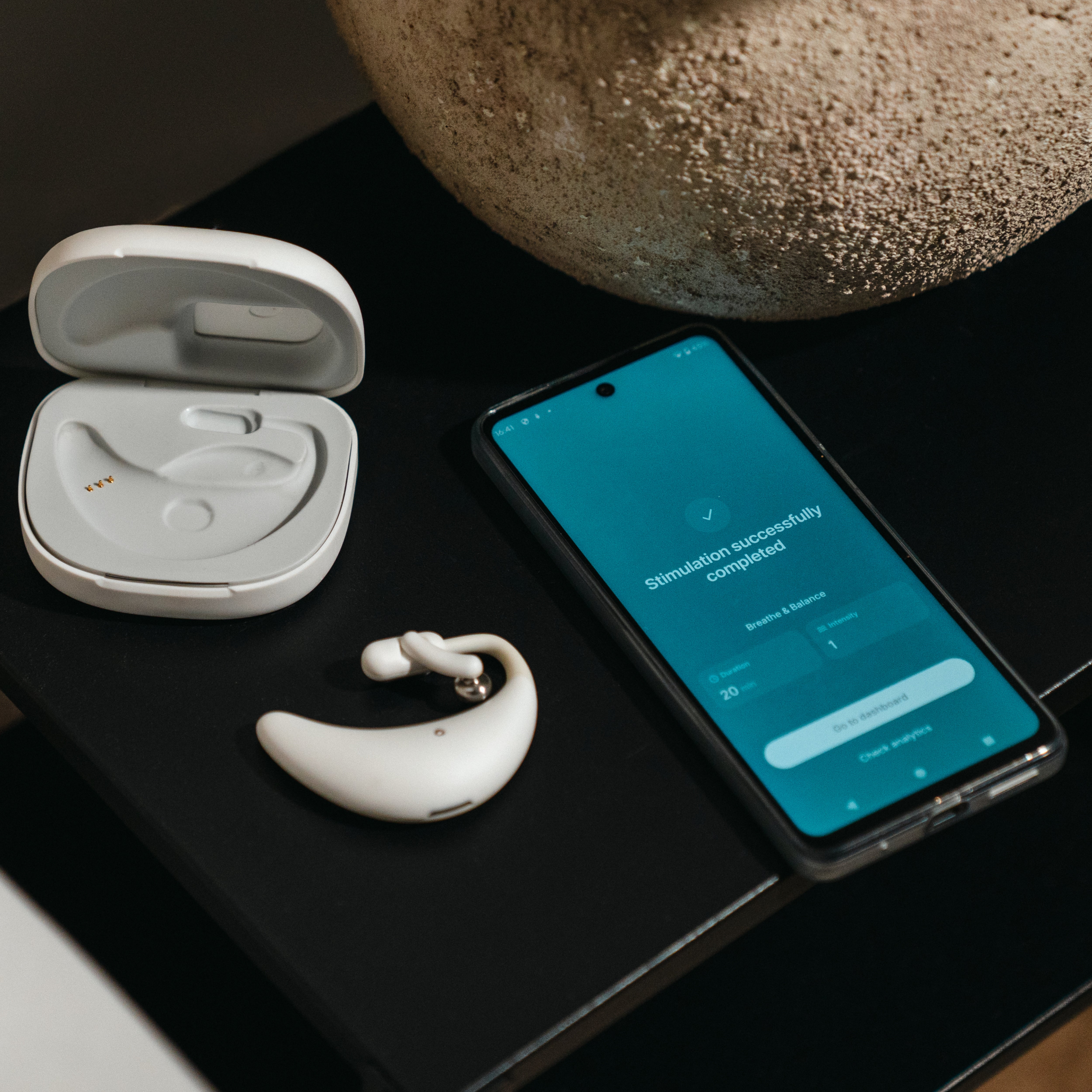
Non-invasive Transcutaneous VNS (taVNS): This breakthrough approach stimulates the vagus nerve through the skin, typically at the ear where the auricular branch surfaces. Studies show taVNS achieves similar anti-inflammatory effects to implanted devices, with cytokine reductions averaging 25-35%. The accessibility and safety of taVNS has democratised access to vagus nerve therapy.
AI-Powered Personalised VNS Technology: The latest generation of VNS devices uses artificial intelligence to optimise stimulation based on real-time physiological feedback. By monitoring HRV, breathing patterns, and other biomarkers, these systems adjust parameters to maximise anti-inflammatory response. This personalised approach recognises that optimal stimulation varies between individuals and even within the same person across different states.
Natural Vagus Nerve Stimulation Methods: Whilst less potent than electrical stimulation, natural methods like cold exposure, deep breathing, and singing can enhance vagal tone and reduce inflammation. These techniques work synergistically with device-based VNS, creating a complete anti-inflammatory protocol. Slow, extended-exhale breathing is the most accessible lever: our guide to the secret rhythm behind HRV explains why a 6-breaths-per-minute cadence maximises vagal activation.
Comparing effectiveness across modalities reveals nuanced differences. Implanted devices show the strongest clinical evidence, particularly for severe inflammatory conditions. Non-invasive approaches achieve 60-80% of the anti-inflammatory effect with dramatically improved accessibility. Natural methods provide modest but consistent benefits, ideal for prevention and mild inflammation. The key lies in matching the approach to individual needs, severity, and treatment goals.
How to Use VNS for Inflammation Management
Effective VNS for inflammation requires understanding that this isn't a one-size-fits-all treatment: optimal protocols vary based on your specific condition, inflammation levels, and individual physiology.
Treatment Protocols and Timing: Research suggests starting with 15-20 minute sessions, twice daily for inflammatory conditions. Morning sessions help modulate the inflammatory response for the day ahead, whilst evening stimulation supports overnight healing processes. For acute flares, increasing to 3-4 shorter sessions can provide additional relief. The key is consistency: anti-inflammatory effects build cumulatively over weeks. For a deeper dive into circadian timing effects on VNS outcomes, see morning, noon, or night: timing your vagus nerve stimulation.
Optimal Parameters: Frequency settings between 20-30 Hz show the strongest anti-inflammatory effects in studies. Intensity should feel like a mild tingling: strong enough to activate the nerve but comfortable for extended sessions. Pulse width typically ranges from 200-500 microseconds. These parameters may need adjustment based on your response and HRV readings.
Monitoring Your Response: Track inflammatory markers through both subjective and objective measures. Keep a symptom diary noting pain levels, stiffness, fatigue, and overall wellbeing. Many find HRV monitoring invaluable: rising HRV often precedes clinical improvement by days or weeks. Blood tests for CRP, ESR, and specific cytokines can provide objective evidence of response.
Combining with Other Treatments: VNS works synergistically with anti-inflammatory lifestyle approaches. Pairing stimulation with breathing exercises amplifies vagal activation. Many users find combining VNS with gentle movement, meditation, or cold therapy enhances benefits. If you're on anti-inflammatory medications, VNS may allow for dose reduction over time: always under medical supervision.
Timeline expectations matter for maintaining motivation. Initial improvements in energy and mood often appear within days. Inflammatory marker changes typically become measurable at 2-4 weeks. Clinical improvements in conditions like arthritis or IBD generally emerge by 6-8 weeks, with continued improvement over months. Patience pays off: the gradual restoration of anti-inflammatory balance creates more sustainable results than symptom suppression alone.
Safety Considerations and Side Effects
The safety profile of VNS for inflammation stands in stark contrast to conventional anti-inflammatory drugs, offering a treatment option that works with your body's natural mechanisms rather than suppressing immune function.
Common Side Effects: Most users experience minimal side effects, primarily limited to sensations during stimulation. These include mild tingling at the stimulation site, occasional voice changes during treatment (with neck-based devices), and temporary ear warmth with auricular stimulation. These effects typically diminish as your body adapts to treatment. Some report initial fatigue as their system shifts from chronic inflammation: a positive sign of nervous system rebalancing.
Contraindications: Whilst VNS is notably safe, certain conditions require caution. Those with implanted electronic devices should consult their cardiologist, though modern devices are often compatible. Active ear infections contraindicate auricular stimulation. Pregnancy remains a relative contraindication due to limited research. Severe bradycardia or heart block requires medical evaluation before starting VNS.
Who Should Avoid VNS: Absolute contraindications remain rare. Those with vagus nerve damage, recent neck surgery, or certain cardiac arrhythmias may need alternative approaches. Severe psychiatric conditions requiring stable medication regimens warrant careful coordination with mental health providers, as VNS can affect neurotransmitter levels.
Long-term Considerations: Extended VNS use shows an excellent safety record in decades of epilepsy treatment. No evidence suggests tolerance or diminishing effects: if anything, benefits often increase over time as vagal tone improves. Regular monitoring ensures optimal parameters as your inflammatory status changes.
The key safety advantage lies in VNS's mechanism: rather than blocking immune function globally, it restores balance. This means maintained ability to fight infection whilst reducing excessive inflammation. Always consult healthcare providers when beginning VNS for inflammatory conditions, particularly if you're managing complex medical conditions or taking multiple medications.
VNS vs Traditional Anti-Inflammatory Treatments
Understanding how VNS compares to conventional anti-inflammatory treatments helps illuminate why this approach represents a model shift in managing chronic inflammation.
Medication Comparison: Traditional NSAIDs work by blocking COX enzymes, providing symptom relief but potentially causing gastrointestinal issues and cardiovascular risks with long-term use. Corticosteroids powerfully suppress inflammation but at the cost of immune function, bone density, and metabolic health. Biologics target specific inflammatory pathways with impressive results but carry infection risks and costs exceeding £10,000 annually. VNS, by contrast, modulates inflammation through natural neural pathways without systemic immune suppression.
Effectiveness Comparison: Head-to-head trials remain limited, but available evidence suggests compelling comparisons. In rheumatoid arthritis, VNS achieved similar disease activity score improvements to TNF-inhibitors in treatment-resistant patients. For inflammatory bowel disease, remission rates with VNS (45-50%) approach those of biologics without the infection risk. The key difference lies in the mechanism: VNS restores balance rather than blocking specific pathways.
Cost-Benefit Analysis: Initial device investment for non-invasive VNS (£500-1500) may seem significant, but proves economical compared to biological drugs or lifetime NSAID use. Factor in reduced side effect management, fewer hospitalisations, and improved quality of life, and VNS often emerges as the cost-effective choice. No ongoing prescription costs or regular injections simplifies treatment adherence.
When to Choose VNS: Consider VNS as a first-line option for mild to moderate inflammation, particularly if you prefer drug-free approaches or have experienced medication side effects. For severe inflammatory conditions, VNS works well as an adjunct therapy, potentially allowing medication reduction. Those with multiple inflammatory conditions benefit from VNS's systemic effects: treating inflammation at its neural source rather than chasing symptoms.
The future likely holds integrated approaches where VNS optimises the body's anti-inflammatory capacity whilst targeted medications address specific pathogenic processes when needed. This combination uses the best of both worlds: natural regulation with pharmaceutical precision when required.
Frequently Asked Questions
How does vagus nerve stimulation reduce inflammation?
VNS activates the cholinergic anti-inflammatory pathway. When stimulated, the vagus nerve releases acetylcholine, which binds to alpha-7 nicotinic receptors on immune cells, blocking production of inflammatory cytokines like TNF-α and IL-6 whilst increasing anti-inflammatory markers like IL-10.
Is vagus nerve stimulation FDA approved for inflammation?
Implanted VNS devices are FDA approved for epilepsy and depression, with ongoing trials for inflammatory conditions. Non-invasive VNS devices are available as wellness devices. In Europe, some VNS devices have received approval for specific inflammatory conditions like rheumatoid arthritis.
What inflammatory conditions can be treated with VNS?
Research supports VNS for rheumatoid arthritis, inflammatory bowel disease (Crohn's and ulcerative colitis), chronic fatigue syndrome, fibromyalgia, psoriasis, cardiovascular inflammation, and neuroinflammation associated with depression and cognitive decline.
How long does it take for VNS to reduce inflammation?
Initial improvements in energy and wellbeing often occur within days. Measurable changes in inflammatory markers typically appear at 2-4 weeks. Clinical improvements in specific conditions like arthritis generally emerge by 6-8 weeks, with continued improvement over several months.
What are the side effects of vagus nerve stimulation?
Common side effects include mild tingling at the stimulation site, temporary voice changes during treatment (neck devices), and ear warmth (auricular devices). These are generally mild and diminish with adaptation. VNS doesn't cause the systemic side effects associated with anti-inflammatory drugs.
Can you stimulate the vagus nerve naturally for inflammation?
Yes, natural methods include cold water immersion, deep diaphragmatic breathing, singing, gargling, and meditation. Whilst less potent than electrical stimulation, these techniques can improve vagal tone and provide modest anti-inflammatory benefits, especially when combined with device-based VNS.
How much does vagus nerve stimulation cost?
Non-invasive VNS devices range from £500-1500 for quality units. Implanted medical devices cost significantly more but may be covered by insurance for approved conditions. Compared to biological drugs (£10,000+ annually), VNS often proves more economical long-term.
Is VNS better than anti-inflammatory medications?
VNS offers advantages including no systemic side effects, restored natural balance rather than immune suppression, and addressing root nervous system dysfunction. However, severe inflammatory conditions may require combined approaches. VNS excels as a first-line treatment for mild-moderate inflammation and as an adjunct therapy for severe cases.
Conclusion
Vagus nerve stimulation represents a fundamental shift in how we approach chronic inflammation: from suppressing symptoms to restoring your body's natural regulatory mechanisms. The science is clear: by activating the cholinergic anti-inflammatory pathway, VNS offers a safe, effective method to reduce inflammatory markers and improve clinical outcomes across diverse conditions.
Whether you're managing rheumatoid arthritis, inflammatory bowel disease, or the inflammatory component of chronic fatigue, VNS provides a path beyond the limitations of conventional treatments. The ability to modulate inflammation without compromising immune function or causing systemic side effects makes this approach particularly valuable for long-term management.
As research continues to unveil the intricate connections between nervous system health and inflammation, one thing becomes certain: supporting your vagus nerve isn't just about managing symptoms: it's about empowering your body's innate capacity to maintain healthy inflammatory balance.
Ready to explore how personalised vagus nerve stimulation could support your inflammatory condition? Learn more about SONA's AI-powered approach to VNS, designed to adapt to your unique physiology and optimise your anti-inflammatory response. Discover the science behind our closed-loop system that reads your body's signals to deliver precisely calibrated stimulation when you need it most.
Disclaimer
**DISCLAIMER:** Sona is a wellness device and is not a medically regulated product. The information in this article is for educational purposes only and does not constitute medical advice. We do not make any claims about Sona's ability to diagnose, treat, cure, or prevent any medical condition. Vagus nerve stimulation research referenced in this article relates to the broader field of VNS and may not be specific to any particular consumer device. Always consult a qualified healthcare professional before making decisions about your health.
Sources
- Koopman et al. (2016) - Vagus nerve stimulation inhibits cytokine production and attenuates disease severity in rheumatoid arthritis
- Bonaz et al. (2016) - Vagus nerve stimulation for Crohn's disease
- Tracey, K. (2000) - The inflammatory reflex discovery
- 2021 systematic review of VNS across inflammatory conditions


Share:
Vagus Nerve Stimulation for Sleep: 2026 Research Review
Vagus Nerve Stimulation for Depression: Complete Guide to VNS Treatment