

The core difference in the Sona vs Zenowell decision comes down to intelligence: Sona uses a closed-loop AI system that reads your heart rate variability and breathing to personalise stimulation in real time, whilst Zenowell delivers fixed preset stimulation that stays the same for everyone. Sona is priced at £695 (~$950 USD) as a one-time purchase with no subscription; Zenowell sits at a lower consumer price point. Choose Sona if you want a device that adapts to your physiology and evolves with you; choose Zenowell if you want a simple, budget-friendly entry into vagus nerve stimulation. Below, we break down the technology, evidence, price, and real-world fit so you can decide with confidence.
Key Takeaways
- **Sona** is an AI-powered, closed-loop vagus nerve stimulator that adapts to your HRV and breathing in real time : no two sessions are identical.
- **Zenowell** uses fixed-frequency preset stimulation: simpler and cheaper, but the same experience for every user regardless of their nervous-system state.
- **Price:** Sona is £695 (~$950) with lifetime app access and no subscription; Zenowell is positioned at a lower consumer price point.
- **Best for anxiety and stress relief:** Sona's adaptive, multi-modal approach (electrical stimulation + sound + breath guidance) offers deeper personalisation, while Zenowell suits those wanting a low-cost, no-frills option.
- **Warranty & returns** : an area competitors rarely cover : matter more than headline price when choosing a device you'll use daily.
Sona vs Zenowell: The Short Answer
The difference between Sona and Zenowell is personalisation. Sona is a closed-loop, AI-powered vagus nerve stimulator that reads your heart rate variability and respiration, then adapts its stimulation parameters every session to match your physiology in that moment. Zenowell, by contrast, delivers fixed preset stimulation : the same frequency and intensity for everyone, every time. Sona costs £695 (~$950 USD) as a one-time purchase with lifetime app access and no subscription, while Zenowell is priced at a lower consumer tier.
In short: Sona is best for people who want a device that learns their nervous system and evolves with them, particularly for stress, burnout, and resilience. Zenowell is best for people seeking a simple, affordable first step into vagus nerve stimulation. A full side-by-side breakdown follows.
What Is Sona? Overview and Key Features
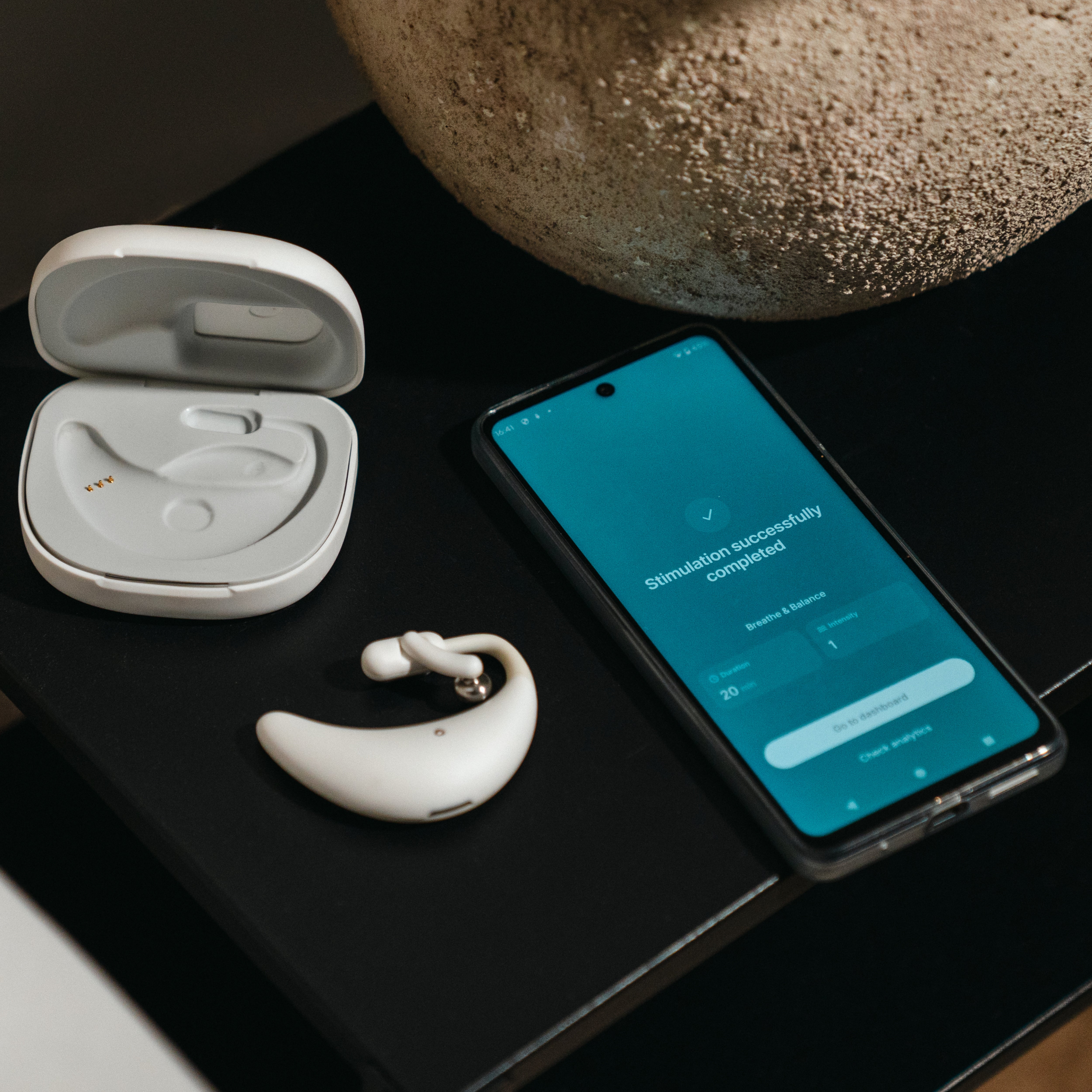
Sona is the world's first truly personalised, AI-powered vagus nerve stimulator, developed at the London Institute for Healthcare Engineering. Where most consumer devices apply the same signal to everyone, Sona was built on a single premise: your nervous system is unique, so your stimulation should be too.
At its heart is a closed-loop, real-time adaptive system. Sona continuously reads your heart rate variability (HRV) and respiration, then adjusts stimulation parameters throughout each session : responding to how your body is actually behaving rather than following a static script. This is the difference between a fixed metronome and a musician who listens and plays along. If you want to understand the underlying mechanism, our guide to how vagus nerve stimulation works explains the science in plain language.
Sona is also multi-modal, which sets it apart from single-channel devices. It combines gentle electrical stimulation with binaural sound and guided breathing, so three evidence-informed pathways work together to shift your state : a bit like tuning several instruments to the same key rather than relying on one alone.
The credibility behind Sona matters. It was created by a team that includes founder and CEO Jane Ollis, a medical biochemist whose career spans NASA, Oxford, and the NHS; Chief Science Officer Tony Steffert, a neuroscientist with research at Imperial College and Goldsmiths; and advisory input from Kevin Dewald, a former Neuralink engineer. That blend of clinical, scientific, and hardware expertise informs every design decision.
Finally, Sona uses a one-time purchase model : £695 (~$950 USD) : with lifetime app access and no subscription. You pay once and own the experience, rather than renting features month after month.
What Is Zenowell? Overview and Key Features
Zenowell is a consumer-grade transcutaneous vagus nerve stimulator (tVNS) positioned around stress reduction and everyday relaxation. It targets the same broad goal as Sona : nudging the nervous system towards a calmer, more parasympathetic state : but takes a markedly simpler technical route.
Does Zenowell actually work for vagus nerve stimulation? The honest answer: the mechanism is legitimate. Zenowell delivers preset, fixed-frequency electrical stimulation to the vagus nerve, typically via an auricular (ear) or neck placement depending on the model, and transcutaneous vagus nerve stimulation is a well-studied approach with a growing evidence base. What Zenowell lacks is adaptive biofeedback: the device cannot read your physiology or tailor its output, so every session applies the same signal regardless of whether you're wired and anxious or already relatively calm.
Zenowell typically offers app connectivity with guided sessions or timers, giving users a structured way to run their stimulation routine. This makes it approachable and easy to adopt, especially for newcomers.
On price, Zenowell sits at a lower consumer tier than Sona, which is a genuine advantage for budget-conscious buyers. In terms of clinical evidence, Zenowell : like most devices in this category : leans on the broader body of tVNS research rather than large, device-specific published trials. That's an important distinction: the general science supporting vagus nerve stimulation is stronger than the specific evidence for any single consumer product. The key gap versus Sona is the absence of closed-loop, real-time personalisation.
Sona vs Zenowell: Side-by-Side Comparison
Here is the Sona vs Zenowell comparison at a glance, covering the factors that most influence a purchase decision : including warranty and returns, which competitor reviews rarely address.
| Feature | Sona | Zenowell |
|---|---|---|
| Stimulation type | tVNS (electrical) + sound + breath | tVNS (electrical) |
| AI / adaptive tech | Yes : closed-loop, real-time | No : fixed presets |
| Placement | Auricular (ear) | Auricular / neck (model dependent) |
| App features | Personalised, biofeedback-driven | Guided sessions / timers |
| Multi-modal delivery | Yes (three pathways) | No (single channel) |
| Clinical evidence | Team-led research; broader tVNS base | Broader tVNS base |
| Price | £695 (~$950) | Lower consumer tier |
| Subscription | None : lifetime access | Check current terms |
| Warranty | Manufacturer warranty | Varies |
| Returns | Trial / return window | Varies |
The single most important differentiator is adaptation. Zenowell gives you vagus nerve stimulation; Sona gives you your vagus nerve stimulation. Because Sona's closed-loop system reads HRV and respiration and adjusts continuously, it delivers a session calibrated to your body's state that day : the technology equivalent of pushing a swing at exactly the right moment rather than shoving it on a fixed timer. On warranty and returns, always confirm the current terms directly, but the deciding question is rarely the sticker price alone: it's whether the device fits the nervous system you actually have.
How Does Each Device Work? Technology Breakdown
Both devices stimulate the vagus nerve transcutaneously, but the intelligence layered on top is where they diverge sharply.
Zenowell applies a preset electrical pulse at a fixed frequency and intensity band. You select a program, the device runs it, and the signal remains constant from start to finish. It's reliable and predictable : the strength of any fixed system : but it treats a stressed morning and a relaxed evening identically.
Sona works differently by design. Its time-locked, closed-loop delivery synchronises stimulation with your heart rhythm and breathing, then modulates parameters in real time based on incoming HRV and respiration data. Research on HRV biofeedback and respiratory-gated stimulation suggests that timing stimulation to the body's own rhythms may enhance vagal engagement, which is the principle Sona is built around. To go deeper on why timing and personalisation matter, see The Science behind SONA.
The practical upshot: with Zenowell you adapt to the device, whereas with Sona the device adapts to you. For users whose stress patterns shift day to day : which is most of us : that adaptive quality is the meaningful advantage.
Price Comparison: Which Offers Better Value?
Value is not the same as price, and this is where the Sona vs Zenowell decision deserves a moment's thought.
Zenowell wins on upfront cost, sitting at a lower consumer price point that makes it an accessible entry into vagus nerve stimulation. If your goal is simply to try tVNS without a significant outlay, that's a legitimate reason to start there.
Sona is £695 (~$950 USD) : a higher initial investment, but structured as a one-time purchase with lifetime app access and no subscription. There are no recurring fees eroding the value over time, and you receive ongoing software updates and the full multi-modal, AI-driven experience. When you divide the cost across years of use rather than a single month, the value calculation shifts considerably. The right question isn't "which is cheaper today?" but "which will I still be using, and benefiting from, in two years?"
Clinical Evidence and Research Behind Each Device
Both devices rest on the same broad scientific foundation, but neither should be confused with an implanted, regulated medical VNS system.
The underlying field is well-supported. Research indicates that transcutaneous vagus nerve stimulation can influence heart rate variability and markers of autonomic balance, and reviews of the tVNS literature point to promising effects on stress and mood regulation, though study quality and sizes vary. Work from HRV biofeedback researchers : including Sona advisory board member Professor Richard Gevirtz : has established that engaging the parasympathetic system through breathing and biofeedback can improve resilience. It's worth being precise here: this is general VNS research, not a claim about any specific consumer device.
Zenowell, like most consumer tVNS products, relies on this broader evidence base rather than large device-specific trials. Sona shares that foundation but adds a research-led design philosophy, with a science team drawn from Imperial College and Goldsmiths and a focus on validating personalised, closed-loop delivery. For a fuller picture of the evidence, our transcutaneous vagus nerve stimulation literature review surveys the current research space.
Ease of Use, Comfort, and Portability
A device only helps if you actually use it, so comfort and daily fit deserve real weight.
Zenowell's simplicity is a genuine strength: fixed presets and a straightforward app mean there's little to learn, and depending on the model, neck or ear placement can suit different preferences. For users who want to press start and relax, that low friction is appealing.
Sona is designed for comfortable auricular wear and pairs with an app that guides breathing and sound alongside stimulation. Because the system responds to you, sessions feel less like following instructions and more like being met where you are. Both devices are portable and app-connected; the difference is depth of experience rather than basic convenience. If you're new to daily use, our vagus nerve stimulation cheatsheet covers fit, intensity, and session length to get you started well.
Who Is Sona Best For?
Sona suits people who want their stimulation to reflect their physiology rather than a factory default. In our experience, that's typically individuals managing ongoing stress, burnout, or the demands of high-performance work, as well as those interested in tracking and improving HRV over time.
If you value personalisation, multi-modal support, a no-subscription model, and a research-led team behind the product : and you're willing to invest more upfront for a device that evolves with you : Sona is the stronger fit. It's especially relevant for women's health and burnout recovery, areas the founding team focuses on directly. Users report that the adaptive, breath-synchronised sessions feel noticeably different from static stimulation.
Who Is Zenowell Best For?
Zenowell is best for the budget-conscious newcomer who wants a simple, affordable way to try vagus nerve stimulation without committing to a premium device. If you prefer a press-and-go experience, don't need biofeedback or personalisation, and want to explore whether tVNS suits you before investing more, Zenowell is a sensible starting point.
It's also a reasonable choice for someone who wants a straightforward relaxation tool and isn't focused on measuring or optimising HRV over the long term. The trade-off you accept is the fixed, one-size-fits-all signal : which is precisely the limitation Sona was built to overcome.
Frequently Asked Questions
What is the difference between Sona and Zenowell?
Sona is a closed-loop, AI-powered vagus nerve stimulator that reads your HRV and breathing and adapts stimulation in real time, combining electrical stimulation with sound and breath guidance. Zenowell delivers fixed, preset electrical stimulation that stays the same for every user. Sona is £695 (~$950) with no subscription; Zenowell sits at a lower consumer price point.
Is Sona or Zenowell better for anxiety and stress relief?
Both stimulate the vagus nerve, which VNS research links to improved autonomic balance and stress regulation. Sona's adaptive, multi-modal approach personalises each session to your nervous-system state, which may offer a more tailored experience, while Zenowell provides a simpler, lower-cost option. Neither device treats or cures anxiety : consult a healthcare professional for clinical concerns.
How much does Zenowell cost compared to Sona?
Sona is £695 (~$950 USD) as a one-time purchase with lifetime app access and no subscription. Zenowell is positioned at a lower consumer price tier, making it cheaper upfront. Because Sona has no recurring fees, the long-term value gap narrows over years of use.
Does Zenowell actually work for vagus nerve stimulation?
Zenowell uses a legitimate mechanism : transcutaneous vagus nerve stimulation, which is a well-studied approach. However, it applies fixed presets without biofeedback, and like most consumer devices it relies on the broader tVNS evidence base rather than large device-specific trials.
Is vagus nerve stimulation safe to use every day?
Transcutaneous VNS is generally considered well-tolerated for regular use by healthy adults, and many people use it daily. That said, effects and individual suitability vary. Always follow the manufacturer's guidance and consult a qualified healthcare professional if you have any medical condition.
Can I use Sona or Zenowell if I have a pacemaker?
If you have a pacemaker or any implanted electronic medical device, you should not use a transcutaneous vagus nerve stimulator without first consulting your cardiologist or a qualified healthcare professional. This applies to both Sona and Zenowell.
What do real customers say about Sona vs Zenowell?
Zenowell users tend to value its simplicity and low price, while Sona users report that the adaptive, breath-synchronised sessions feel more personalised than fixed stimulation. As with any wellness device, long-term follow-up experiences vary between individuals.
Conclusion
The Sona vs Zenowell choice ultimately turns on a single question: do you want a device that runs the same programme for everyone, or one that listens to your body and adapts? Zenowell is a capable, affordable entry point into vagus nerve stimulation, and for a first experiment it does the job. Sona takes a fundamentally different approach : closed-loop AI, real-time HRV and breathing feedback, and multi-modal delivery working in concert : built by a team spanning NASA, the NHS, Imperial College, and Neuralink. If you see nervous-system care as a long-term practice rather than a one-off experiment, the case for personalisation is compelling. The key takeaway: match the device to the physiology you actually have, not the average one.
Ready to experience stimulation that adapts to you? Explore SONA and discover The Science Behind SONA.
Disclaimer
**DISCLAIMER:** Sona is a wellness device and is not a medically regulated product. The information in this article is for educational purposes only and does not constitute medical advice. We do not make any claims about Sona's ability to diagnose, treat, cure, or prevent any medical condition. Vagus nerve stimulation research referenced in this article relates to the broader field of VNS and may not be specific to any particular consumer device. Always consult a qualified healthcare professional before making decisions about your health.
Sources
- https://www.frontiersin.org/articles/10.3389/fnins.2020.00284/full
- https://pubmed.ncbi.nlm.nih.gov/29191975/




Share:
Best Vagus Nerve Stimulation Device for Anxiety (2026): Sona vs Top VNS Options
Sona vs Hoolest Verelief: Which Vagus Nerve Stimulator Is Right for You?