

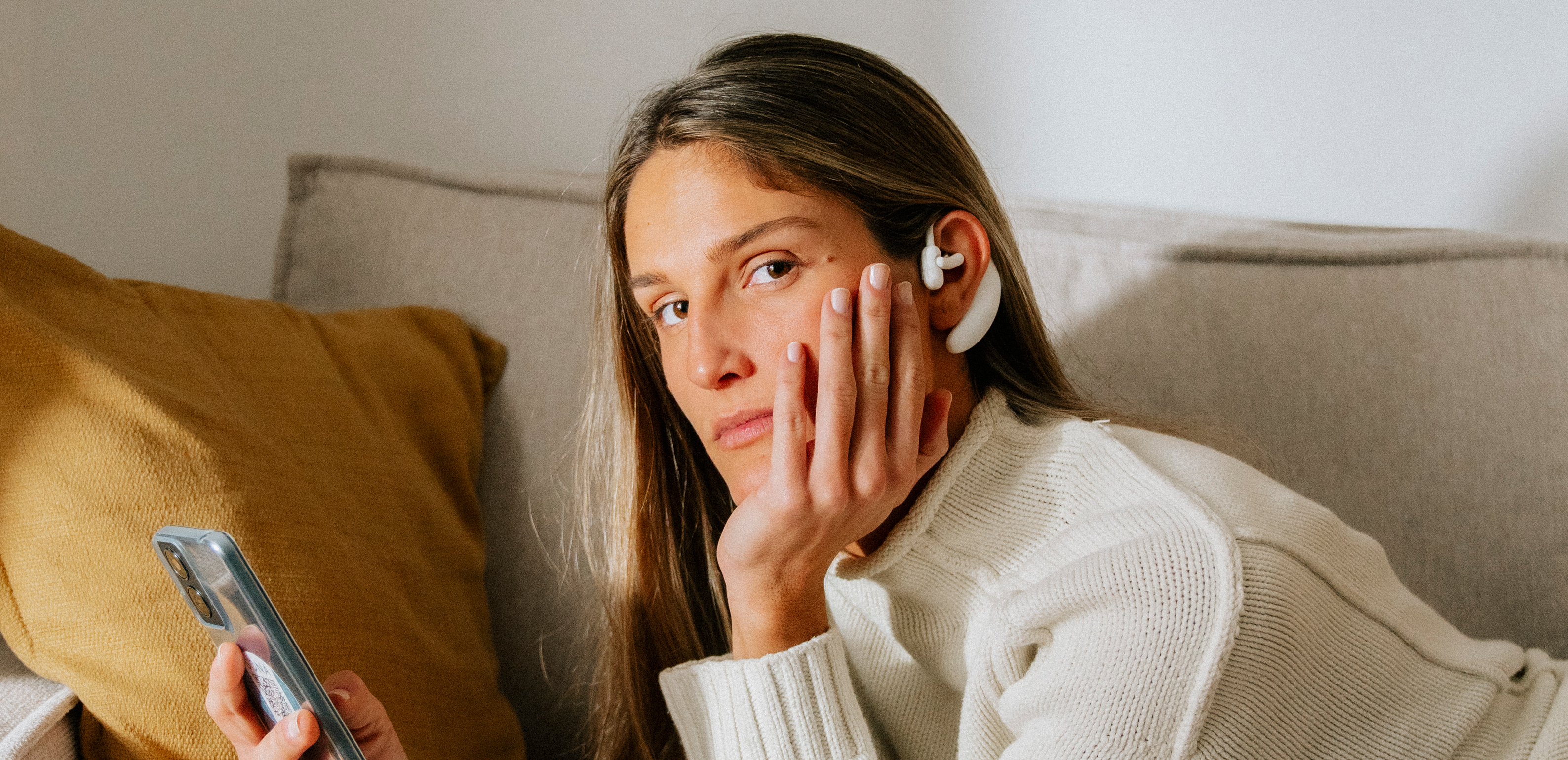
The best vagus nerve stimulation device for anxiety in 2026 depends on how well it matches stimulation to your physiology : and this is where Sona leads, using AI to read your HRV and breathing and adapt in real time. Strong alternatives include Nurosym, Pulsetto, Truvaga, and Apollo Neuro, each with different mechanisms and evidence bases. For anxiety specifically, stimulation precision matters more than brand name.
Choosing a VNS device for anxiety is not the same as browsing general wellness gadgets. Anxiety is a nervous-system state : a pattern of sympathetic over-activation : so the relevant question isn't "does this feel relaxing?" but "does this measurably shift my autonomic balance?" That distinction changes which features matter and which marketing claims deserve scrutiny.
This article covers how VNS reduces anxiety at the level of mechanism, the clinical evidence behind each device, real cost of ownership, safety and contraindications, and a side-by-side comparison table. Because not all VNS devices are created equal : the stimulation mechanism itself is one of the strongest predictors of anxiety-specific outcomes, and it's where most buyer confusion begins. If you want the deeper background first, our guide to vagus nerve stimulation for anxiety is a useful primer.
Key Takeaways
- No consumer VNS device currently holds FDA approval specifically for anxiety : most clearances cover other indications or fall under general wellness, which matters for your expectations as a buyer.
- Stimulation mechanism is decisive: transcutaneous auricular electrical stimulation (taVNS) has the strongest anxiety-specific research base, ahead of vibration-only and general relaxation devices.
- Sona's AI-driven, closed-loop personalisation : syncing electrical stimulation with your heart rhythm and breathing : is its core differentiator versus fixed-intensity competitors.
- Total cost of ownership varies widely: subscription fees, replacement gels, and accessories can double a device's real price over time. Sona has no subscription.
- Anyone with a pacemaker, implanted electrical device, epilepsy, or who is pregnant should consult a clinician before using any VNS device.
The Best VNS Devices for Anxiety at a Glance
For anxiety specifically, the leading 2026 options are Sona, Nurosym, Truvaga, Pulsetto, and Apollo Neuro. Sona stands out for anxiety use cases because it is the only device that reads your biometric signals : HRV and respiration : and adapts stimulation in real time, rather than delivering a fixed programme. Nurosym and Truvaga offer credible fixed-intensity electrical stimulation; Pulsetto and Apollo lean toward broader relaxation and stress support.
Selecting an anxiety-focused VNS device differs from general wellness shopping in one key way: you are targeting a measurable autonomic imbalance, not chasing a vague sense of calm. That means mechanism and personalisation deserve more weight than aesthetics or app gamification. Below we cover the underlying science, the clinical evidence, cost of ownership, safety, and a side-by-side comparison : because not all VNS devices are created equal, and the stimulation mechanism matters enormously for anxiety outcomes specifically.
What Is Vagus Nerve Stimulation and How Does It Reduce Anxiety?
Vagus nerve stimulation reduces anxiety by shifting the balance of your autonomic nervous system away from a state of chronic threat and toward calm regulation. Research suggests it does this by influencing the brain regions that generate the anxiety response itself.
The vagus nerve is the primary highway of your parasympathetic nervous system : your body's rest-and-digest branch. Around 80% of its fibres are afferent, meaning they carry signals from the body up to the brain rather than the other way around. These signals feed directly into structures involved in threat processing, including the amygdala and prefrontal cortex, which is why stimulating the vagus can modulate how strongly you perceive and respond to fear.
Chronic anxiety typically reflects sympathetic dominance : a nervous system stuck in fight-or-flight, with the parasympathetic brake underused. VNS tips the scales back by strengthening parasympathetic activity, helping the system down-regulate rather than remain on high alert. This is the mechanism our team returns to repeatedly: you can read more about how vagus nerve stimulation works in our detailed guide.
The most practical way to measure this shift is heart rate variability (HRV) : the beat-to-beat variation in your heart rhythm. Higher HRV typically indicates strong vagal tone and better resilience, whilst chronically low HRV suggests sympathetic dominance. Importantly, low HRV is both a marker of anxiety and, some research indicates, a driver of it, creating a feedback loop that VNS aims to interrupt.
Not all stimulation is the same. Electrical stimulation : particularly transcutaneous auricular VNS (taVNS) applied at the ear : has the strongest anxiety-specific evidence base. Vibrotactile devices deliver rhythmic vibration to promote relaxation but influence the vagus more indirectly, and ultrasound approaches remain largely experimental. Does vagus nerve stimulation really help with anxiety? A growing evidence base says yes: reviews of non-invasive VNS, including work summarised by Wang and colleagues (2021) in Frontiers in Psychiatry, report reductions in anxiety symptoms and improvements in HRV, though researchers consistently note the need for larger trials. VNS doesn't suppress anxiety through willpower : it recalibrates the nervous system that generates it.
How We Evaluated These Devices
We assessed each device against five explicit criteria, weighting anxiety-specific evidence above general wellness claims.
Our five evaluation criteria were:
1. Stimulation mechanism and anxiety-specific evidence : the type of stimulation and whether research supports it for anxiety, not just relaxation. 2. FDA clearance or approval status : what regulatory pathway, if any, the device has followed. 3. Pricing and total cost of ownership : including subscriptions, replacement gels, electrodes, and accessories over time. 4. Safety profile and contraindications : who should avoid the device and under what conditions. 5. User experience and personalisation : how easy the device is to use, and whether it adapts to the individual.
We weighted anxiety-specific clinical data above general wellness outcomes, because a device that improves reported relaxation is not the same as one shown to shift the physiology of anxiety.
One important caveat for every buyer: no consumer VNS device currently holds FDA approval specifically for anxiety. Most clearances cover different indications : such as cluster headache or migraine : or the device is marketed under general wellness rather than as a treatment. In practice, this means you should treat anxiety benefits as supported by the broader VNS field rather than as an approved medical claim about any single product.
Transparency note: Sona is our own product. We have assessed it against the same five criteria as every other device, and we flag its limitations alongside its strengths.
Side-by-Side Comparison: Best VNS Devices for Anxiety (2026)
Here is how the leading devices compare across the metrics that matter most for anxiety: mechanism, FDA status, price, personalisation, and subscription cost.
| Device | Mechanism | FDA Status | Approx. Price | Personalisation | Subscription |
|---|---|---|---|---|---|
| Sona | taVNS electrical + sound + breath guidance | Wellness device (not FDA-cleared) | £695 (~$950) | AI closed-loop, real-time adaptation to HRV & breathing | None (lifetime app access) |
| Nurosym | taVNS electrical (ear) | CE-marked; not FDA-cleared for anxiety | ~£599 (~$730) | Manual intensity settings | None |
| Truvaga | Handheld cervical electrical (nVNS) | Wellness device | ~$449 + activations | Fixed programmes | Session/activation model on some tiers |
| Pulsetto | Neck electrical stimulation | Wellness device | ~$269 | Preset modes via app | Optional premium app subscription |
| Apollo Neuro | Vibrotactile (wearable) | Wellness device | ~$349 | Preset vibration modes | Optional app features |
Two patterns stand out. First, only Sona offers genuine closed-loop personalisation : most competitors deliver fixed intensities or a menu of presets. Second, headline price rarely tells the whole story: subscription and activation models can raise long-term cost significantly. For deeper head-to-head breakdowns, see our Nurosym vs SONA and Pulsetto vs SONA comparisons.
Best Overall for Anxiety: Sona AI-Powered VNS
Sona earns our top spot for anxiety-focused use because it addresses the one variable most other devices ignore: your individual physiology, moment to moment.
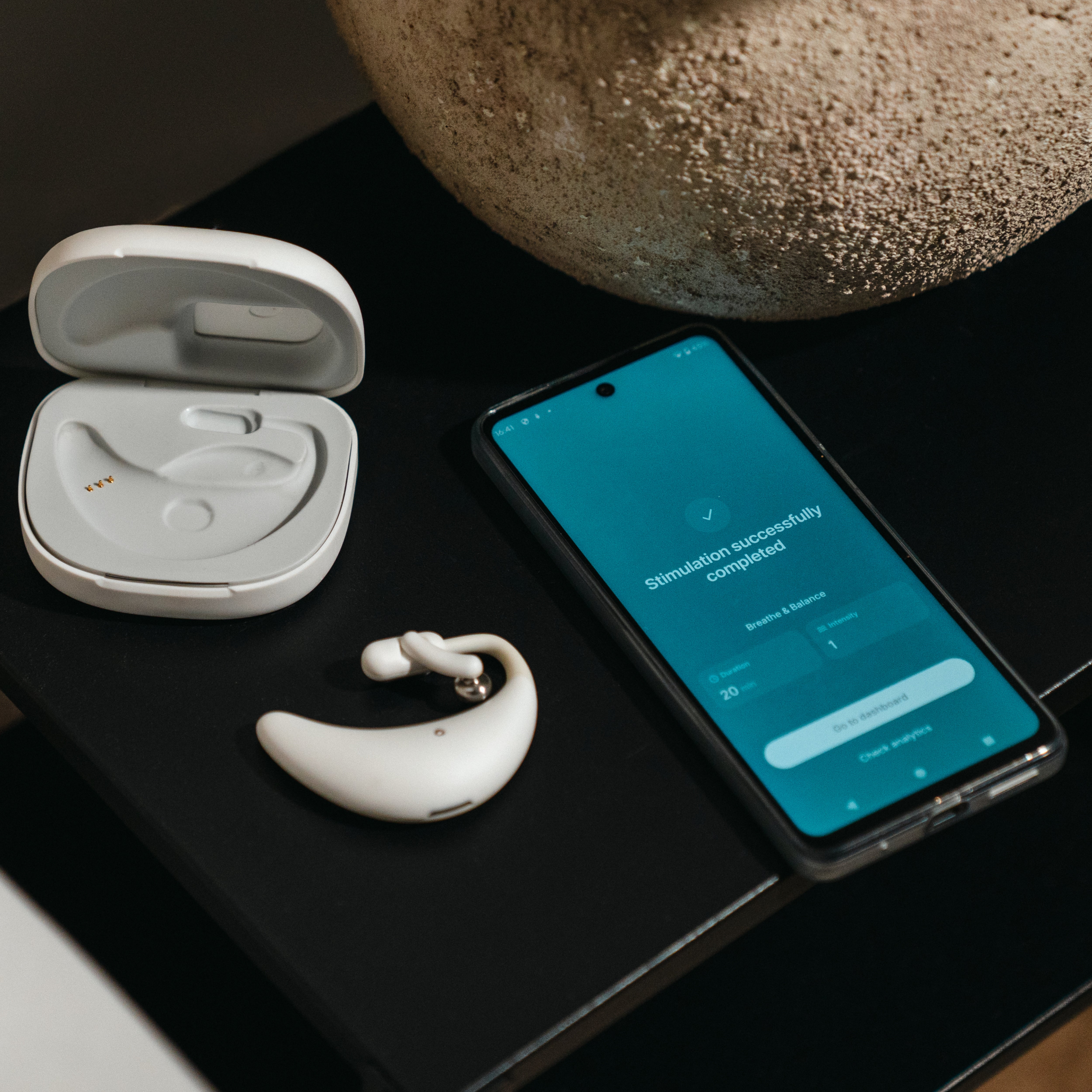
Sona is described as the world's first truly personalised, AI-powered vagus nerve stimulator. Rather than delivering the same pulse to everyone, it reads biometric signals : HRV and respiration : and adapts stimulation in real time through a closed-loop system. The result is a session optimised to your nervous system rather than an averaged setting.
Its defining feature is time-locked delivery: Sona synchronises pulses with your heart rhythm and breathing, an approach our Chief Science Officer Tony Steffert likens to "pushing a swing at the right time." This matters for anxiety because vagal afferent signalling is gated by the cardiac and respiratory cycle, so timing stimulation to those rhythms is a physiologically grounded strategy for improving vagal engagement.
Sona is also multi-modal, combining electrical stimulation with sound and breath guidance : useful for anxiety, where breath pacing independently supports parasympathetic activation. And unlike several competitors, it carries no subscription: lifetime app access is included, which keeps total cost of ownership predictable.
To be clear and compliant: Sona is a wellness device, not a medically regulated product, and we make no claim that it treats anxiety. What we can say is that its personalisation approach is built directly on the VNS and HRV research explored on The Science page and detailed at Explore SONA.
Clinical Evidence: Does VNS Actually Reduce Anxiety?
The evidence for VNS in anxiety is promising and growing, though the strongest data comes from broader autonomic and mental-health research rather than large anxiety-specific consumer trials.
Much of the foundational work centres on HRV biofeedback and vagal tone. Research led by figures such as Professor Richard Gevirtz : an HRV biofeedback expert who advises Sona : has long linked improved HRV to reduced anxiety symptoms and better emotional regulation. Because non-invasive VNS can raise HRV, it offers a plausible route to the same benefits.
On non-invasive VNS directly, reviews such as Wang and colleagues (2021) in Frontiers in Psychiatry summarise studies reporting reduced anxiety and depressive symptoms following taVNS, alongside measurable autonomic shifts. Earlier mechanistic work, including studies on transcutaneous auricular stimulation and its effect on limbic and brainstem activity, supports the biological plausibility of these findings.
The honest caveat, echoed by researchers themselves, is that sample sizes are often small and protocols vary. This is precisely why personalisation and consistent measurement : the design philosophy behind Sona : are increasingly emphasised. For a fuller review of the underlying literature, see our overview of transcutaneous vagus nerve stimulation and our dedicated guide to VNS for anxiety.
Safety, Contraindications, and Who Should Avoid VNS
Non-invasive VNS is generally well tolerated, but it is not appropriate for everyone, and certain conditions warrant caution or a clinician's sign-off first.
The most important contraindications for electrical VNS devices include:
- Implanted electrical devices : anyone with a pacemaker, implantable cardioverter-defibrillator, or similar device should not use electrical stimulation without medical clearance, due to interference risk. - Epilepsy or seizure history : while implantable VNS is used therapeutically for epilepsy under specialist supervision, consumer devices should only be used after consulting a clinician. - Pregnancy : safety data is limited, so pregnant users should seek professional advice before use. - Cardiac arrhythmias or recent cardiac events : because VNS influences heart rhythm, these require medical guidance.
Mild, transient side effects reported with taVNS can include skin irritation at the electrode site, tingling, or mild headache : usually resolved by adjusting intensity or fit. Vibrotactile devices like Apollo Neuro carry a lower interference risk profile but also have less direct anxiety-specific electrical evidence.
The practical takeaway: match the device to your health history, not just your symptoms. When in doubt, a brief conversation with your GP or a qualified professional is the responsible first step : particularly for anything electrical.
How Long Until VNS Helps With Anxiety?
Most users should think in terms of weeks of consistent use rather than a single dramatic session : nervous-system recalibration is cumulative.
Some people notice an immediate sense of calm during or just after a session, driven by acute parasympathetic activation and paced breathing. However, the more meaningful changes : improved baseline HRV, greater stress resilience, and reduced day-to-day anxiety reactivity : tend to build over several weeks of regular practice, much like physical training strengthens a muscle over time.
In our research and in user feedback, consistency matters more than session length: short, daily sessions typically outperform occasional long ones. Our vagus nerve stimulation cheatsheet sets out realistic timelines for HRV and sleep changes in the first weeks. Set expectations accordingly, track your HRV, and treat VNS as a practice rather than a quick fix.
Frequently Asked Questions
Does vagus nerve stimulation really help with anxiety?
Research suggests it can. Reviews of non-invasive VNS, including Wang and colleagues (2021) in Frontiers in Psychiatry, report reduced anxiety symptoms and improved heart rate variability, though researchers stress that larger trials are still needed. VNS works by shifting the autonomic nervous system toward parasympathetic balance rather than suppressing anxiety directly.
What is the best vagus nerve stimulator you can buy without a prescription?
For anxiety-focused use, Sona leads among prescription-free options thanks to its AI-driven, closed-loop personalisation. Nurosym and Truvaga are strong fixed-intensity electrical alternatives, while Pulsetto and Apollo Neuro suit broader relaxation and stress support. All are sold as consumer wellness devices, not FDA-approved anxiety treatments.
How long does it take for vagus nerve stimulation to reduce anxiety?
Some people feel calmer during a session immediately, but lasting changes in baseline HRV and stress resilience usually build over several weeks of consistent, near-daily use. Short regular sessions tend to outperform occasional long ones.
Is the Apollo Neuro or Pulsetto better for anxiety?
They use different mechanisms. Apollo Neuro delivers vibrotactile stimulation aimed at relaxation, while Pulsetto uses electrical neck stimulation that engages the vagus more directly. For anxiety specifically, electrical stimulation has a stronger research base, though individual response varies. Neither is FDA-approved for anxiety.
Are over-the-counter vagus nerve stimulation devices FDA-approved?
No consumer VNS device currently holds FDA approval specifically for anxiety. Most are sold as general wellness devices, and where FDA clearances exist they typically cover other indications such as migraine or cluster headache. Treat anxiety benefits as supported by the broader VNS field rather than as an approved medical claim.
Can you use a vagus nerve stimulation device if you have a pacemaker?
You should not use an electrical VNS device with a pacemaker or other implanted electrical device without clearance from your cardiologist, due to the risk of interference. Always consult a qualified healthcare professional before use.
Conclusion
The best vagus nerve stimulation device for anxiety is the one whose stimulation actually matches your physiology : and in 2026 that case is strongest for Sona, thanks to its AI-driven, closed-loop personalisation and time-locked delivery. Nurosym, Truvaga, Pulsetto, and Apollo Neuro all have their place depending on budget and preferred mechanism, but for anxiety specifically, precision and consistency outweigh price alone. Whichever you choose, remember that VNS is a practice: it recalibrates the nervous system that generates anxiety rather than overriding it through willpower, and the meaningful gains come from steady, measured use over weeks. Choose the device you'll actually use daily, track your HRV, and give your nervous system time to respond.
Curious how personalised stimulation feels when it's synced to your own heart rhythm and breathing? Explore SONA or dig into the research behind it at The Science. DISCLAIMER: Sona is a wellness device and is not a medically regulated product. The information in this article is for educational purposes only and does not constitute medical advice. We do not make any claims about Sona's ability to diagnose, treat, cure, or prevent any medical condition. Vagus nerve stimulation research referenced in this article relates to the broader field of VNS and may not be specific to any particular consumer device. Always consult a qualified healthcare professional before making decisions about your health.
Sources
- Wang, Y. Et al. (2021). Transcutaneous auricular vagus nerve stimulation: from concept to application. Frontiers in Psychiatry / related VNS review literature.
- Gevirtz, R. : research on HRV biofeedback and its relationship to anxiety and emotional regulation.

Share:
Burnout Recovery Plan: A Nervous-System Approach to Bouncing Back
Sona vs Zenowell: Which Vagus Nerve Stimulator Is Right for You?