

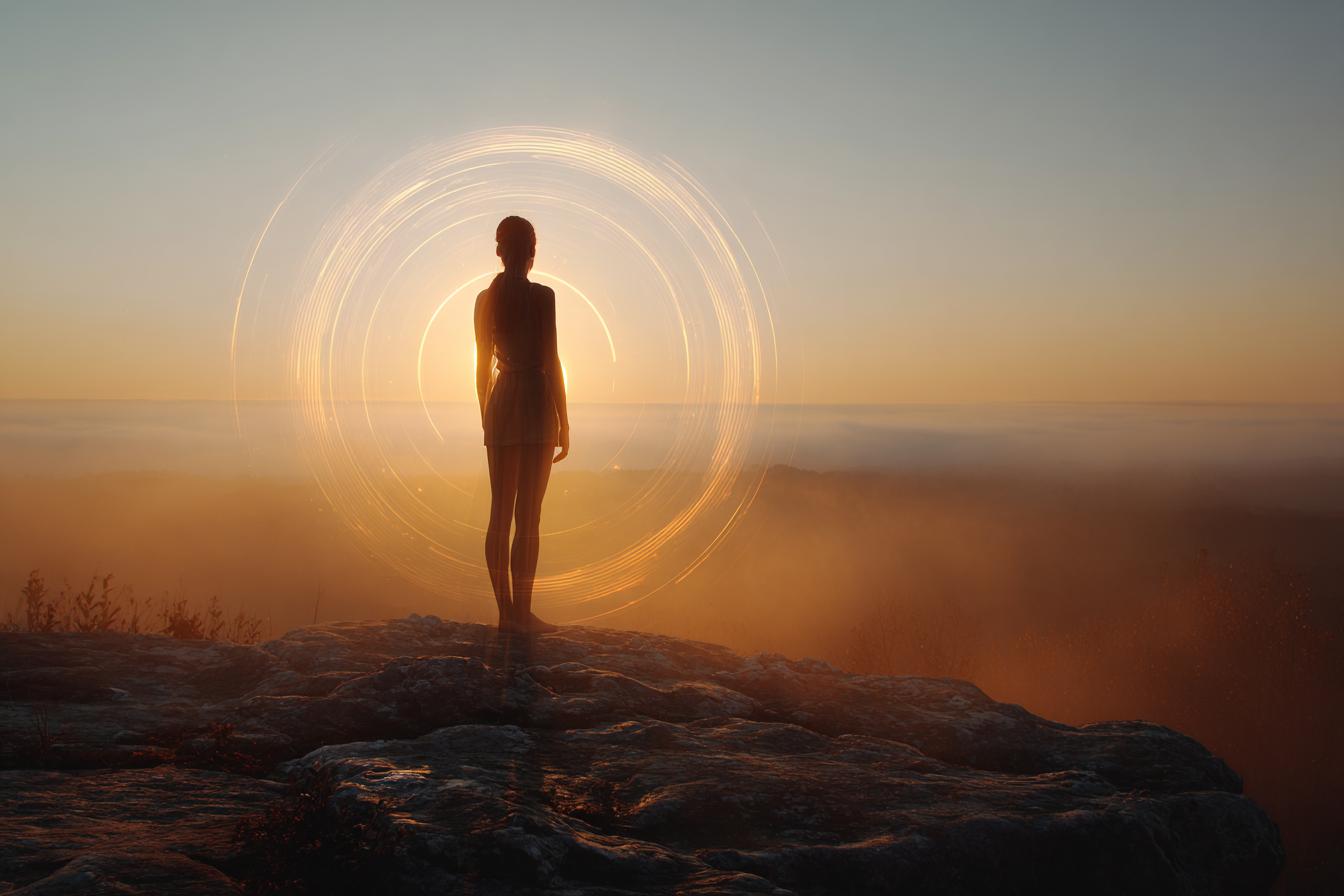
Morning light is the single most powerful signal for setting your circadian rhythm. When you expose your eyes to bright natural light within 30-60 minutes of waking, you reset your internal clock, suppress melatonin, and trigger a healthy cortisol peak that primes you for the day. Ten to thirty minutes of outdoor light each morning is usually enough to anchor a stable sleep-wake cycle. This guide covers the practical detail: the protocols that work, why light quality matters, and what to do when natural sunlight isn't available.
Key Takeaways
- Morning light is the dominant zeitgeber : the strongest daily cue that keeps your circadian rhythm synchronised to the outside world.
- Get outside within 30-60 minutes of waking for 10-30 minutes; longer on overcast days or through cloud.
- Short-wavelength (blue-spectrum) light activates specialised retinal cells (ipRGCs) that signal the brain's master clock, the suprachiasmatic nucleus.
- Window glass, sunglasses and dim indoor lighting dramatically reduce the effective light dose your eyes receive.
- When natural light isn't available, a 10,000-lux light therapy lamp used early in the day is a well-researched alternative.
What Is the Circadian Rhythm?
The circadian rhythm is your body's internal 24-hour biological clock : the timing system that governs sleep, energy, hormone release, metabolism and cognition across the day. In short, it's the master schedule that tells your body when to be alert and when to wind down.
Nearly every cell in your body runs on its own circadian cycle, and these countless local clocks are coordinated by a single master clock in the brain. This central pacemaker keeps the whole system pulling in the same direction, from your morning cortisol surge to your evening melatonin release.
The circadian clock is endogenous, meaning it keeps ticking even without external cues. But left entirely to its own devices it drifts slightly off a true 24-hour cycle, so it needs daily entrainment signals : known as zeitgebers (German for "time-givers") : to stay locked to the external world.
Light is by far the dominant zeitgeber, more powerful than food timing, temperature or exercise. When the clock drifts out of sync, the consequences show up quickly: fragmented sleep, low mood, sluggish mornings and impaired mental and physical performance. That's what makes morning light exposure worth getting right.
How Morning Light Resets Your Internal Clock
Morning light resets your internal clock through a dedicated eye-to-brain pathway. Specialised cells in the retina detect bright light, signal the brain's master clock, and that clock then shuts down melatonin and triggers your morning cortisol rise.
Here's the detail. Your eyes contain intrinsically photosensitive retinal ganglion cells (ipRGCs) : a distinct class of cells that don't handle vision but instead measure ambient brightness. They carry a pigment called melanopsin that is especially sensitive to short-wavelength, blue-spectrum light, which is abundant in natural morning sky.
When these cells are activated, they send a signal down the retinohypothalamic tract directly to the suprachiasmatic nucleus (SCN) in the hypothalamus : the master pacemaker. The SCN responds by instructing the pineal gland to halt melatonin production and by helping to drive the cortisol awakening response (CAR), the natural spike in cortisol that helps you feel alert.
Timing is everything. Light in the first half of the day advances the clock, nudging sleep onset earlier and mornings easier. Light late in the evening does the opposite, delaying the clock and pushing sleep later. Think of morning light as stamping a timestamp on your day : one that anchors every downstream rhythm for the next 24 hours. For a deeper look at how the broader nervous system shapes rest, see our guide on how the nervous system regulates sleep.
The Role of the Suprachiasmatic Nucleus (SCN)
The SCN is a paired cluster of roughly 20,000 neurons sitting in the hypothalamus, just above where the optic nerves cross. Small as it is, it functions as the body's central pacemaker, keeping the thousands of peripheral clocks throughout your organs and tissues synchronised.
Think of the SCN as a conductor and every organ as a musician. Each can keep time alone, but without the conductor they gradually fall out of step. Morning light is the tap of the baton that brings the whole orchestra back into rhythm.
Once the SCN receives its light signal, it broadcasts timing information through both neural and hormonal channels : coordinating melatonin, cortisol, core body temperature and even digestive timing. This is why a well-timed dose of morning light doesn't just improve sleep; it helps align a whole cascade of biological processes.
What Type of Light Triggers Circadian Responses?
Not all light is equal in the eyes of your circadian system. What matters most is intensity (measured in lux) and spectrum : specifically the presence of short-wavelength blue light that melanopsin cells respond to strongly.
Outdoor daylight is dramatically brighter than indoor lighting, and that gap is easy to underestimate. A bright office sits around 300-500 lux. An overcast morning outdoors can still deliver 1,000-10,000 lux, and direct sunlight can exceed 100,000 lux. Because the circadian system responds to intensity, even a cloudy day outdoors typically beats sitting beside a sunny window indoors.
Colour temperature matters too. Morning sky is rich in the blue-enriched light that most efficiently signals "daytime" to the SCN. This is the same reason blue-heavy screen light at night can be disruptive : it sends a daytime message at the wrong hour.
The practical upshot: to trigger a strong circadian response, you want bright, blue-rich light early, and dim, warm light late. Getting outdoors is the simplest way to hit that first target, because the open sky delivers both the intensity and the spectrum your clock is built to read.
How Much Morning Light Do You Need?
For most people, 10-30 minutes of outdoor morning light is enough to anchor the circadian rhythm : but the exact dose depends on conditions. Brighter days need less time; dim, overcast or wintry mornings need more.
As a working guideline:
- Clear, sunny morning: around 10 minutes outdoors is usually sufficient. - Overcast or cloudy: aim for 15-20 minutes, as intensity drops. - Heavy cloud, rain or low winter light: 20-30 minutes or more, and consider a light therapy lamp as a supplement.
You do not need to stare at the sun : never do that. You simply need bright light reaching your eyes, so face towards the sky (not directly at the sun) and let ambient daylight do the work. Wearing regular clear glasses or contact lenses is fine; light still reaches the retina.
Consistency beats intensity. Research on circadian entrainment consistently indicates that a regular daily light schedule stabilises the clock more effectively than occasional large doses. In our work with users building nervous-system routines, the people who see the biggest shifts in sleep timing are almost always those who make morning light a fixed, repeatable habit rather than a one-off effort. If you're building a routine from scratch, our neuroscience-based morning routine guide offers a practical framework.
The Best Time to Get Morning Light Exposure
The best time to get morning light is within the first 30-60 minutes after waking. This is when your circadian system is most sensitive to the "advance" signal that sets an earlier, more stable sleep-wake cycle.
Getting light early in your subjective morning tells the SCN precisely when your day begins, which in turn helps set the timing of that evening's melatonin release. Delay your light exposure by several hours and you effectively tell your body the day started later : nudging your whole rhythm, including bedtime, backwards.
A few practical notes on timing:
- Anchor light to waking, not the clock. If you wake at 6am one day and 8am the next, aim for light shortly after each waking, not at a fixed hour. - Pair it with an existing habit. Drinking your coffee outside, walking the dog or commuting on foot all fold light exposure into things you already do. - Earlier is generally better for advancing the clock, but any bright light in the first half of the day is beneficial compared with none.
For those who use vagus nerve stimulation as part of a routine, timing that session thoughtfully can complement your light exposure : we explore this in Morning, Noon or Night: Timing Your Vagus Nerve Stimulation.
How Morning Light Affects Cortisol and Melatonin Levels
Morning light drives two opposing hormonal shifts at once: it suppresses melatonin, the hormone that promotes sleep, and it reinforces the cortisol awakening response, the natural morning rise that promotes alertness.
Melatonin is produced by the pineal gland when it's dark and normally tails off in the early morning. Bright light accelerates this decline, helping you feel properly awake rather than groggy. Getting light early also helps melatonin rise again at the right time the following evening.
Cortisol follows a natural daily curve, peaking sharply in the first hour or so after waking : the cortisol awakening response. This is a healthy, functional spike, not the chronic stress-driven cortisol elevation that gets so much bad press. A well-timed morning light dose supports a crisp, well-defined cortisol peak, which is associated with better alertness and mood through the day.
It's worth separating a healthy morning cortisol rhythm from problematic chronic stress. We've written before about how the idea of stress-driven facial changes is often overstated in our piece on the "cortisol face" myth. A sharp morning cortisol peak that falls away through the day is exactly what you want : it's flattened or dysregulated cortisol patterns, not the morning spike, that tend to signal trouble.
Morning Light vs. Artificial Light: What's the Difference?
The core difference between natural morning light and typical artificial light is intensity. Ordinary indoor lighting is far too dim to reliably signal "daytime" to your circadian clock, whereas outdoor light : even on a grey day : is bright enough to do the job.
Most home and office lighting sits between 100 and 500 lux. Circadian research generally points to considerably higher intensities being needed for a strong entrainment signal, which is why standard indoor lighting alone usually isn't enough to keep the clock well-anchored.
This is where purpose-built light therapy lamps come in. These devices are designed to deliver around 10,000 lux at a comfortable distance and are widely used in the management of circadian and seasonal mood issues under clinical guidance. Used early in the day, a bright light box can meaningfully supplement : though not perfectly replicate : natural morning sunlight, especially in winter or for people who wake before dawn.
Two everyday factors sharply reduce your effective light dose and are easy to overlook:
- Window glass filters a portion of light and reduces intensity, so light through a window is far weaker than the same light outdoors. - Sunglasses cut the very intensity your circadian system depends on. If your goal is circadian signalling (not sun safety in harsh glare), skip them during your brief morning light window.
The simple takeaway: whenever possible, get the real thing, outdoors, with your eyes uncovered.
Tips for Getting More Morning Light Exposure
Getting more morning light rarely requires extra time : it usually requires stacking light onto things you already do. The most reliable approach is to build exposure into your existing routine so it happens automatically.
Practical strategies:
1. Take your first drink outside. Coffee or tea on a doorstep, balcony or garden turns a passive habit into a light dose. 2. Walk early. A 10-15 minute morning walk delivers light and movement together. 3. Commute in daylight where you can. Walking or cycling part of the way, or getting off transport a stop early, adds up. 4. Sit by the brightest window as a fallback : imperfect, but better than a dim room. 5. Use a light therapy lamp on dark mornings or when you wake before sunrise. 6. Skip the sunglasses during your short morning light window unless glare is genuinely uncomfortable.
Different lifestyles need different tactics. Shift workers may need to treat their personal "morning" as whenever they wake, using bright light strategically to shift their clock. Remote workers should build a deliberate outdoor break into the start of the day, since there's no commute to supply light. People at northern latitudes contend with short, dim winter days and often benefit most from combining what natural light they can get with a light therapy lamp.
Morning light works best as one pillar of a broader nervous-system routine. For the full picture on building resilience day to day, see The Complete Guide to Stress Resilience: Train Your Nervous System.
What Happens When You Don't Get Enough Morning Light?
Without regular morning light, your circadian rhythm gradually drifts and loses its sharp definition. The practical result is often later sleep onset, harder mornings, poorer sleep quality and dips in mood and daytime performance.
When the SCN doesn't receive a strong daily light signal, the boundaries between "day" and "night" blur. Melatonin may linger later into the morning, leaving you groggy, and rise less predictably at night, making it harder to fall asleep. Over time, this misalignment is associated with the same symptoms many people mistake for simple tiredness: low energy, irritability and reduced concentration.
Seasonal and geographic factors amplify all of this. In winter, and at higher latitudes, mornings are darker and shorter, giving the circadian system a weaker and later signal. Many people notice their sleep timing slipping and their mood dipping in these months : a pattern consistent with reduced morning light exposure.
The encouraging news is that this is highly modifiable. Reintroducing consistent morning light : or supplementing with a light therapy lamp when natural light is scarce : is one of the simplest, lowest-cost levers for pulling a drifting rhythm back into line. If poor sleep is affecting your day-to-day performance, our guide on the warning signs that poor sleep is costing you can help you spot the pattern early.
Morning Light Therapy for Circadian Rhythm Disorders
Morning light therapy : timed exposure to a bright light source, typically around 10,000 lux : is a well-established, evidence-informed approach used in the management of certain circadian rhythm and mood conditions, usually under professional guidance.
Clinicians commonly use bright light therapy for conditions such as delayed sleep-wake phase disorder, where sleep and wake times are shifted much later than desired, and for seasonal patterns of low mood linked to reduced winter daylight. Research on light therapy for seasonal affective disorder has been building for decades, and morning-timed bright light is generally regarded as a first-line, non-pharmacological option.
A few practical principles apply if you're considering it:
- Timing matters as much as intensity : morning use is what advances the clock; poorly timed light can make things worse. - Consistency is key, with daily use over weeks rather than sporadic sessions. - Professional input is valuable, particularly for diagnosed circadian rhythm disorders, bipolar spectrum conditions or eye health concerns.
If you suspect a genuine circadian rhythm disorder rather than simple undersleeping, it's worth speaking to a qualified healthcare professional. Light is a powerful biological signal : used well it's notably effective, but the right protocol depends on your individual circumstances.
Frequently Asked Questions
How long should you be in morning light to set your circadian rhythm?
For most people, 10-30 minutes of outdoor morning light is enough. Aim for around 10 minutes on a clear, sunny day, and 20-30 minutes on overcast or dim winter mornings when light intensity is lower.
What time in the morning is best for sunlight exposure?
Within the first 30-60 minutes after waking. This is when your circadian system is most receptive to the signal that sets an earlier, more stable sleep-wake cycle. Anchor light to when you wake, not to a fixed clock time.
Can morning light help with insomnia?
Consistent morning light can help by strengthening the day-night signal to your brain's master clock, which supports better-timed melatonin release at night. It's not a cure, but it's a well-supported behavioural step. Persistent insomnia should be discussed with a healthcare professional.
Does morning light increase cortisol?
Yes, and that's a good thing in the morning. Morning light reinforces the cortisol awakening response : a natural, healthy spike in cortisol that promotes alertness. This is distinct from the chronic, elevated cortisol associated with ongoing stress.
What happens to your circadian rhythm without morning light?
It tends to drift and lose definition. Without a strong daily light cue, melatonin timing becomes less predictable, leading to later sleep onset, groggier mornings, poorer sleep quality and dips in mood and performance.
Is morning light through a window enough to reset your circadian rhythm?
It's better than a dim room but far weaker than being outdoors. Window glass filters and reduces light intensity, so light through a window is much dimmer than the same daylight outside. Whenever possible, get outdoors with your eyes uncovered.
How does blue light in morning sunlight affect the brain?
Short-wavelength blue light activates specialised retinal cells called ipRGCs, which contain the pigment melanopsin. These cells signal the suprachiasmatic nucleus (SCN) : the brain's master clock : via the retinohypothalamic tract, prompting it to suppress melatonin and reinforce the morning cortisol rise.
Can a light therapy lamp replace natural morning sunlight?
A 10,000-lux light therapy lamp used early in the day is a well-researched alternative and can supplement natural light effectively, especially in winter. However, it doesn't perfectly replicate the intensity and spectrum of outdoor sunlight, so real daylight remains the ideal when available.
Conclusion
Morning light is the closest thing we have to a free, universal reset button for the body's internal clock. By getting bright, blue-rich light into your eyes within an hour of waking : for as little as 10-30 minutes outdoors : you suppress lingering melatonin, support a healthy cortisol peak, and stamp a clear timestamp that keeps your entire circadian rhythm aligned for the day ahead. The single most important factor isn't intensity or perfect timing; it's consistency. A repeatable daily habit, adapted to your latitude, season and lifestyle, will do more for your sleep-wake cycle than any occasional heroic effort. And when natural light is scarce, a light therapy lamp is a well-evidenced stand-in. Light sets the rhythm : everything else, from breathing to nervous-system regulation, builds on top of it.
Want to go beyond light and train the nervous system that governs your stress, recovery and sleep? Explore how Sona's AI-powered, personalised vagus nerve stimulation adapts in real time to your physiology : reading your HRV and breathing to optimise every session. Discover how Sona fits into your daily resilience routine.
Disclaimer
**DISCLAIMER:** Sona is a wellness device and is not a medically regulated product. The information in this article is for educational purposes only and does not constitute medical advice. We do not make any claims about Sona's ability to diagnose, treat, cure, or prevent any medical condition. Vagus nerve stimulation research referenced in this article relates to the broader field of VNS and may not be specific to any particular consumer device. Always consult a qualified healthcare professional before making decisions about your health.
Sources
- https://www.ncbi.nlm.nih.gov/pmc/articles/PMC4763527/ : Intrinsically photosensitive retinal ganglion cells and non-image-forming vision (review literature)
- https://www.nigms.nih.gov/education/fact-sheets/Pages/circadian-rhythms.aspx : NIGMS Circadian Rhythms Fact Sheet
- https://www.cdc.gov/niosh/work-hour-training-for-nurses/longhours/mod2/09.html : CDC/NIOSH on light and circadian regulation



Share:
Breathwork for Stress: Techniques That Calm Your Nervous System Fast
Burnout Recovery Plan: A Nervous-System Approach to Bouncing Back