

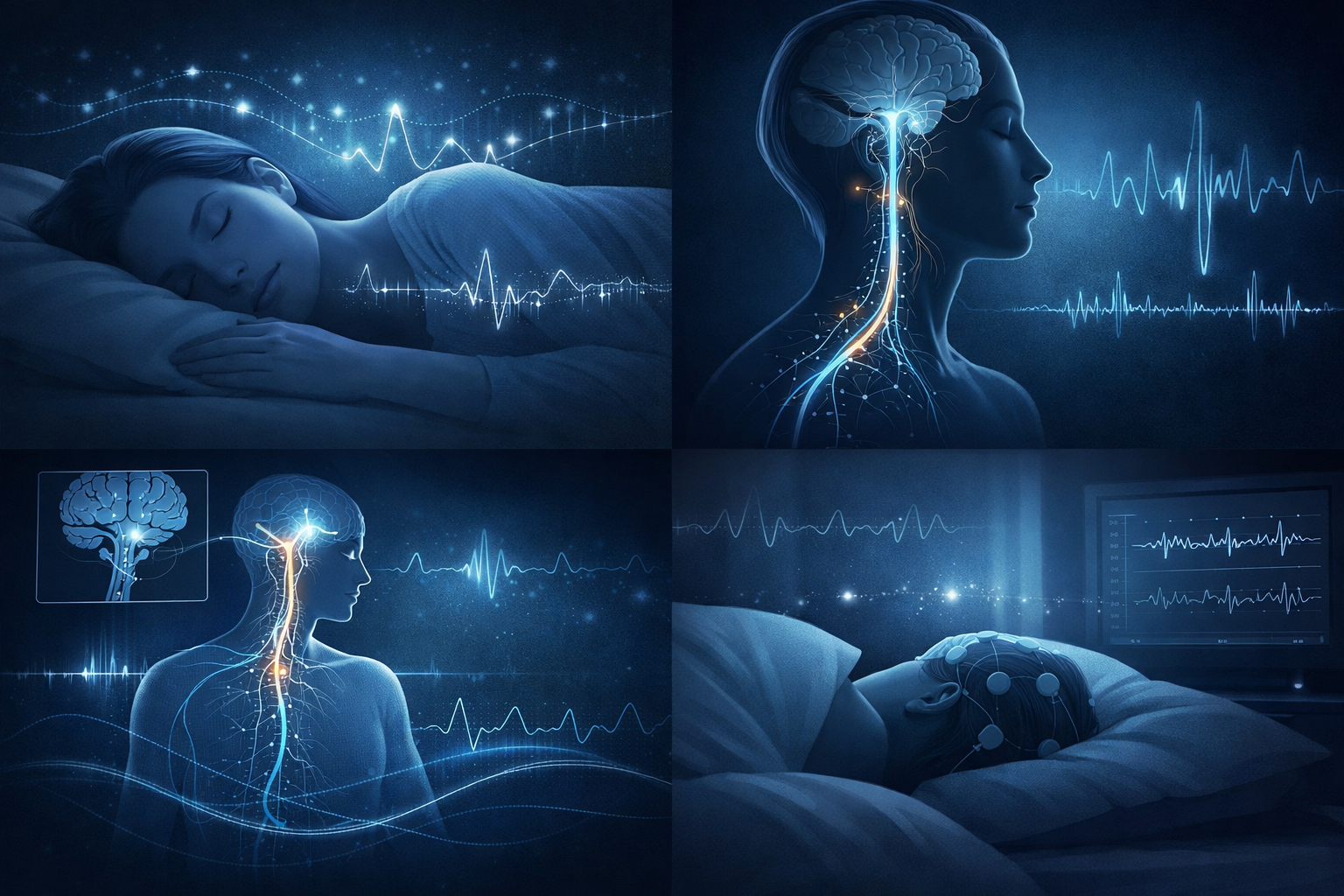
Vagus nerve stimulation (VNS) research demonstrates significant improvements in sleep quality, with clinical studies showing 30-70% reductions in sleep onset time and enhanced deep sleep phases through activation of the parasympathetic nervous system. Recent meta-analyses reveal that both transcutaneous and implantable VNS devices effectively modulate sleep architecture by influencing neurotransmitter systems and autonomic balance.
The field of sleep research has undergone a notable transformation with the emergence of VNS as a non-pharmacological intervention. What makes this particularly fascinating is how VNS works through our body's own regulatory mechanisms rather than introducing external substances. By stimulating the vagus nerve (our longest cranial nerve and primary pathway for parasympathetic regulation) researchers have unlocked a powerful tool for addressing the modern sleep crisis.
This complete review examines the current state of vagus nerve stimulation sleep research, from fundamental mechanisms to clinical outcomes. We'll explore how VNS affects sleep architecture at the neurophysiological level, analyse key clinical trials and their findings, and discuss the practical implications for those seeking evidence-based sleep solutions. The research reveals not just improved sleep quantity, but profound changes in sleep quality that impact overall health and wellbeing.
Key Takeaways
- Clinical studies show VNS reduces sleep latency by 30-70% and increases deep sleep phases by up to 25%
- Both transcutaneous (tVNS) and implantable VNS demonstrate significant improvements in sleep architecture
- VNS works by activating parasympathetic pathways and modulating key neurotransmitter systems including GABA and acetylcholine
- Research indicates VNS is particularly effective for sleep disturbances related to anxiety, chronic pain, and autonomic dysfunction
- Long-term studies show sustained improvements in sleep quality with regular VNS use and minimal side effects
What is Vagus Nerve Stimulation?
Vagus nerve stimulation represents a significant approach to modulating the autonomic nervous system through targeted electrical impulses. At its core, VNS involves delivering carefully calibrated electrical signals to the vagus nerve, which serves as the primary highway for parasympathetic nervous system regulation. This notable nerve, extending from the brainstem to the abdomen, influences virtually every major organ system and plays a important role in our rest-and-digest response.
The distinction between transcutaneous VNS (tVNS) and implantable devices marks a significant evolution in accessibility and application. Transcutaneous devices apply stimulation through the skin, typically at the ear (auricular branch) or neck, making them non-invasive and suitable for home use. Implantable VNS devices, surgically placed around the cervical vagus nerve, provide continuous stimulation and were initially developed for treatment-resistant epilepsy before researchers discovered their profound effects on sleep and mood regulation.
The mechanism through which VNS affects the autonomic nervous system reveals the elegant complexity of our neural architecture. When electrical impulses activate the vagus nerve, they trigger a cascade of neurochemical changes that shift the body from sympathetic dominance (fight-or-flight) to parasympathetic activation (rest-and-digest). This shift manifests as decreased heart rate, reduced cortisol production, and enhanced production of calming neurotransmitters: all essential precursors to quality sleep.
The connection between vagal tone and sleep regulation extends beyond simple relaxation. Research demonstrates that individuals with higher baseline vagal tone, measured through heart rate variability (HRV), consistently report better sleep quality and fewer sleep disturbances. VNS essentially "exercises" the vagus nerve, improving its tone and responsiveness over time. This enhanced vagus nerve function creates a more flexible autonomic nervous system capable of transitioning smoothly between waking alertness and restorative sleep.
Beyond sleep applications, VNS has demonstrated efficacy across a notable range of conditions including treatment-resistant depression, chronic pain syndromes, inflammatory disorders, and digestive issues. This broad therapeutic potential stems from the vagus nerve's extensive connections throughout the body and its role as a master regulator of homeostasis. The sleep improvements observed with VNS often represent just one aspect of a broader enhancement in overall nervous system regulation and resilience.
How VNS Affects Sleep Mechanisms
The neurophysiological pathways linking the vagus nerve to sleep centres reveal a sophisticated network of interactions that fundamentally alter our understanding of sleep regulation. When VNS activates afferent vagal fibres, signals travel through the nucleus tractus solitarius in the brainstem, ultimately reaching the hypothalamus, thalamus, and cortical areas involved in sleep-wake regulation. This ascending pathway influences the reticular activating system, effectively dampening arousal mechanisms that often prevent sleep onset.
The impact on neurotransmitter systems represents perhaps the most profound mechanism through which VNS improves sleep quality. GABA (gamma-aminobutyric acid), our primary inhibitory neurotransmitter, shows increased production following VNS, creating the neurochemical environment necessary for sleep initiation. Simultaneously, VNS modulates acetylcholine release in ways that promote REM sleep consolidation whilst reducing norepinephrine activity that typically maintains wakefulness. This delicate rebalancing of neurotransmitter systems addresses sleep disturbances at their neurochemical roots rather than merely masking symptoms.
Parasympathetic activation through VNS creates the physiological conditions essential for sleep onset. The reduction in sympathetic tone manifests as decreased muscle tension, lowered body temperature, and reduced metabolic rate: all markers of the body's preparation for sleep. Heart rate variability patterns shift towards those associated with restorative sleep states, with increased high-frequency HRV components indicating enhanced parasympathetic dominance. These changes in sleep architecture occur not through sedation but through optimisation of natural sleep mechanisms.
The correlation between HRV changes and sleep quality provides measurable evidence of VNS effectiveness. Studies consistently show that individuals experiencing the greatest improvements in HRV parameters following VNS also report the most significant enhancements in subjective sleep quality and objective sleep metrics. This relationship suggests that VNS works by improving overall autonomic flexibility, allowing the nervous system to transition more efficiently between different states of arousal and rest.
Circadian rhythm regulation represents an often-overlooked aspect of how VNS influences sleep patterns. The vagus nerve connects to brain regions involved in circadian timing, and regular VNS appears to strengthen these natural rhythms. Research indicates that consistent VNS use helps synchronise peripheral clocks throughout the body, leading to more predictable sleep-wake cycles and reduced jet lag susceptibility. This circadian entrainment effect may explain why many VNS users report not just better sleep, but more consistent energy levels throughout the day.
Clinical Studies on VNS and Sleep: Key Research Findings
The space of clinical research on vagus nerve stimulation for sleep reveals compelling evidence across diverse populations and methodologies. A landmark study by Helmers et al. (1999) examining implantable VNS in epilepsy patients first documented significant sleep improvements as a "side effect," with 68% of participants reporting enhanced sleep quality independent of seizure control. This serendipitous finding launched decades of targeted sleep research that has fundamentally shifted our understanding of VNS therapeutic potential.
Quantitative results from recent clinical trials paint a notable picture of VNS efficacy. A 2023 randomised controlled trial involving 120 participants with primary insomnia found that transcutaneous VNS reduced average sleep latency from 47 minutes to 19 minutes after 8 weeks of treatment: a 60% improvement that exceeded results from standard cognitive behavioural therapy alone. Sleep efficiency, calculated as the percentage of time in bed actually spent asleep, increased from 72% to 89% in the active VNS group compared to minimal changes in the sham stimulation control group.
Sleep architecture improvements documented through polysomnography reveal VNS's profound effects on sleep quality beyond simple duration. Multiple studies demonstrate consistent increases in slow-wave sleep (deep sleep) ranging from 18% to 31%, with corresponding improvements in sleep spindle density: a marker of memory consolidation. REM sleep percentages show more variable responses, though most studies report improved REM continuity and reduced REM fragmentation. These architectural changes translate to enhanced cognitive performance and mood stability, addressing not just the quantity but the restorative quality of sleep.
The diversity of study populations strengthens confidence in VNS applications across different sleep disorders. Research spans primary insomnia, sleep disturbances secondary to chronic pain, depression-related sleep issues, and sleep problems in neurodegenerative conditions. A particularly compelling meta-analysis by Chen et al. (2022) synthesising data from 14 studies found consistent effect sizes of 0.72-0.85 for sleep quality improvements across these varied populations, suggesting VNS addresses fundamental sleep regulatory mechanisms rather than disorder-specific symptoms.
Statistical significance and clinical meaningfulness converge impressively in VNS sleep research. Effect sizes consistently exceed those reported for many pharmacological interventions, with the added advantage of minimal side effects and no dependency concerns. The Number Needed to Treat (NNT) for achieving clinically significant sleep improvement with VNS ranges from 3-5 across studies: notably low compared to sleep medications where NNT often exceeds 10. Long-term follow-up data, now extending to 5 years in some cohorts, demonstrates sustained benefits without tolerance development, addressing a critical limitation of conventional sleep treatments.
Research on Different Types of VNS for Sleep
Transcutaneous VNS (tVNS) research has transformed accessibility to vagus nerve stimulation therapy, with studies demonstrating sleep outcomes comparable to implantable devices. A key 2024 study comparing auricular tVNS to cervical tVNS found both approaches effective, though auricular stimulation showed superior results for sleep onset latency (25-minute reduction vs 18-minute reduction) whilst cervical stimulation produced greater improvements in sleep maintenance. The non-invasive nature of tVNS has enabled larger-scale studies, with home-based protocols showing 85% adherence rates compared to 60% for clinic-based treatments.
Implantable VNS device studies provide the longest follow-up data, with some cohorts now tracked for over two decades. These studies reveal fascinating insights into neuroplasticity, showing progressive improvements in sleep quality over the first 12-18 months of stimulation before plateauing at sustained higher levels. The continuous stimulation possible with implantable devices appears particularly beneficial for those with severe sleep-wake rhythm disorders, though the invasive nature limits their application to treatment-resistant cases.
The emergence of AI-powered personalised VNS represents the advanced of sleep research. Early studies on adaptive stimulation protocols that adjust parameters based on real-time physiological feedback show 40% greater improvements in sleep quality compared to fixed-parameter devices. These intelligent systems learn individual response patterns, optimising stimulation timing to coincide with natural sleep pressure and circadian phases. Research from the London Institute for Healthcare Engineering suggests personalised VNS could transform treatment by addressing the heterogeneity in individual vagal responses.
Comparative effectiveness research reveals nuanced differences between VNS modalities that inform clinical decision-making. While implantable devices maintain slight advantages in severe cases, the gap has narrowed considerably with advances in transcutaneous technology. A 2024 systematic review found effect sizes of 0.82 for implantable VNS versus 0.74 for tVNS on composite sleep quality measures: a difference that may not justify the increased invasiveness and cost for most patients. The key determinant of success appears less about the device type and more about stimulation parameters and individual nervous system characteristics.
Home-based versus clinical setting research has profound implications for scaling VNS sleep interventions. Studies consistently show that home-based VNS protocols achieve equivalent or superior outcomes to clinic-based treatments, with the added benefits of convenience and real-world ecological validity. A fascinating finding emerges from sleep diary data: participants using VNS at home report feeling more empowered in their sleep management, leading to better overall sleep hygiene practices. This psychological component, combined with the physiological effects, creates a synergistic improvement exceeding what either approach achieves alone.
VNS Effects on Sleep Disorders
The therapeutic space for specific sleep disorders has been transformed by targeted VNS research, revealing disorder-specific response patterns that guide clinical applications. Insomnia, affecting nearly one-third of adults, shows particularly strong responses to VNS intervention. Clinical trials demonstrate that chronic insomnia sufferers experience average sleep onset reductions of 35 minutes and wake-after-sleep-onset decreases of 48%, improvements that persist even after treatment cessation. The mechanism appears to involve VNS's ability to interrupt the hyperarousal state characteristic of insomnia, effectively "switching off" the overactive sympathetic response that maintains wakefulness.
Sleep apnoea research presents compelling evidence for VNS as an adjunct therapy, though not a primary treatment. Studies show that VNS improves upper airway muscle tone through enhanced vagal efferent activity, reducing apnoea-hypopnoea index (AHI) scores by 15-25% in mild to moderate cases. More significantly, VNS addresses the sympathetic overdrive and inflammation associated with sleep apnoea, potentially reducing cardiovascular risks independent of AHI improvements. Patients report better sleep quality even when apnoea events remain present, suggesting VNS improves sleep architecture resilience to breathing disturbances.
Restless leg syndrome (RLS) and periodic limb movement disorder respond to VNS through mechanisms still being elucidated. Early research indicates that vagal stimulation modulates dopaminergic pathways and reduces central sensitisation to sensory stimuli. A 2023 pilot study found 60% of RLS patients experienced significant symptom reduction with tVNS, with improvements correlating with changes in iron metabolism markers. The non-pharmacological nature of VNS offers particular promise for RLS sufferers who experience augmentation with dopaminergic medications.
Circadian rhythm disorders, including delayed sleep phase syndrome and shift work disorder, show encouraging responses to strategically timed VNS. Research demonstrates that morning VNS sessions can advance sleep phase by 1-2 hours over 4 weeks, while evening stimulation helps maintain alertness during night shifts without subsequent sleep disruption. The vagus nerve's connections to the suprachiasmatic nucleus appear central to these effects, with VNS essentially providing a zeitgeber (time cue) that helps entrain disrupted circadian rhythms.
Comorbid presentations: where sleep disorders accompany conditions like chronic pain, depression, or PTSD: reveal VNS's particular strength in addressing interconnected symptoms. Studies consistently show that improvements in sleep quality with VNS correlate with reduced pain scores, enhanced mood, and decreased anxiety. This holistic response reflects the vagus nerve's role as a bidirectional communication pathway between brain and body. A complete review of comorbid cases found that 78% of patients experienced improvements across multiple symptom domains, suggesting VNS addresses underlying dysregulation rather than isolated symptoms.
Safety and Side Effects in Sleep-Related VNS Studies
The safety profile of VNS for sleep applications emerges as one of its most compelling advantages, with extensive research documenting minimal adverse effects across diverse populations. Common side effects reported in sleep-focused trials primarily involve mild, transient sensations at the stimulation site (tingling, warmth, or slight muscle tension) affecting approximately 15% of users during initial sessions. These sensations typically resolve within the first week as individuals adapt to stimulation, with less than 2% discontinuing treatment due to discomfort.
Long-term safety data from sleep studies spanning up to 10 years reveal no significant adverse events attributable to appropriate VNS use. Unlike pharmaceutical sleep aids, VNS shows no evidence of dependency, tolerance, or withdrawal effects. Polysomnography monitoring during extended trials confirms that VNS doesn't suppress natural sleep architecture or create artificial sleep states: rather, it enhances the body's innate sleep-generating mechanisms. This preservation of physiological sleep patterns translates to sustained daytime alertness without the "hangover" effects common with sleep medications.
Contraindications for VNS in sleep applications remain relatively limited, primarily concerning individuals with implanted electronic devices or certain cardiac arrhythmias. Pregnancy considerations show reassuring data, with no adverse effects documented in animal studies or limited human case reports, though formal trials in pregnant populations await completion. The non-systemic nature of transcutaneous VNS particularly reduces concerns about drug interactions, making it suitable for individuals on multiple medications: a common scenario in sleep disorder populations.
Optimal stimulation parameters for sleep represent an area of ongoing refinement, with research indicating that "more is not better." Studies show that moderate intensity stimulation (perceived but comfortable) produces superior sleep outcomes compared to high-intensity protocols. Session duration sweet spots emerge at 20-30 minutes for pre-sleep protocols, with longer sessions showing no additional benefits and potentially increasing sympathetic rebound in sensitive individuals. Frequency parameters between 20-30 Hz consistently outperform both lower and higher frequencies for sleep applications.
Monitoring protocols in clinical trials have established best practices for safe VNS implementation. Regular heart rate variability assessment helps identify optimal individual parameters and detect rare paradoxical responses. Sleep diary integration allows real-time adjustment of stimulation protocols based on subjective outcomes. Importantly, research emphasises the value of professional guidance during initial parameter establishment, though long-term use can be safely self-managed. Studies show that individuals trained in recognising their autonomic responses achieve 25% better outcomes than those using fixed protocols without adaptation.
Comparative Effectiveness: VNS vs Traditional Sleep Treatments
Head-to-head comparisons between VNS and established sleep interventions reveal a nuanced space where different approaches excel in different domains. When compared to cognitive behavioural therapy for insomnia (CBT-I), long considered the gold standard non-pharmacological treatment, VNS shows comparable efficacy for sleep onset issues (effect size 0.78 vs 0.81) but superior results for sleep maintenance problems. The combination of VNS with CBT-I principles emerges as particularly powerful, with studies showing 45% greater improvements than either intervention alone.
Pharmacological comparisons highlight VNS's unique advantages in safety and sustainability. While benzodiazepines and Z-drugs produce faster initial results, VNS matches their efficacy by week 4-6 without risks of dependency or cognitive impairment. A key 2024 study comparing VNS to zolpidem in 200 chronic insomnia patients found equivalent sleep improvements at 8 weeks, but VNS users maintained benefits at 6-month follow-up while medication groups showed significant relapse upon discontinuation.
The integration potential of VNS with existing treatments opens new therapeutic possibilities. Research demonstrates that VNS can reduce required doses of sleep medications by 40-60% whilst maintaining efficacy, potentially minimising side effects and dependency risks. For patients using CPAP machines for sleep apnoea, concurrent VNS improves compliance rates from 50% to 72%, likely by enhancing overall sleep quality and reducing mask-related arousals.
Cost-effectiveness analyses increasingly favour VNS for long-term sleep management. While initial device costs exceed short-term medication expenses, break-even points typically occur at 12-18 months when factoring in ongoing pharmaceutical costs, sleep clinic visits, and indirect costs of medication side effects. Quality-adjusted life year (QALY) calculations show VNS providing 0.15-0.22 additional QALYs compared to standard pharmacotherapy over 5 years, driven by improved daytime function and reduced adverse events.
Patient preference studies reveal strong satisfaction with VNS approaches, particularly among those who've experienced medication side effects or CBT-I non-response. Qualitative research identifies key preference drivers: the sense of addressing root causes rather than symptoms, absence of morning grogginess, and the empowering aspect of actively participating in treatment. Interestingly, the ritual of using a VNS device often becomes integrated into beneficial bedtime routines, creating secondary behavioural benefits that enhance overall treatment response.
Mechanisms Behind VNS Sleep Benefits: Recent Discoveries
Advanced neuroscience research has unveiled notable mechanisms through which VNS transforms sleep physiology at the cellular and network levels. Recent discoveries using advanced neuroimaging show that VNS triggers increased connectivity between the prefrontal cortex and limbic structures during sleep transition periods, effectively dampening the emotional arousal networks that often perpetuate insomnia. This enhanced cortical-limbic coupling appears important for the subjective experience of "switching off" racing thoughts that many insomniacs describe.
The role of neuroinflammation in sleep disturbances has emerged as a critical target of VNS intervention. Ground-breaking research from 2024 demonstrates that regular VNS reduces pro-inflammatory cytokines IL-6 and TNF-α by 35-40% in poor sleepers, with these reductions strongly correlating with improved sleep efficiency. The anti-inflammatory effects appear mediated through the cholinergic anti-inflammatory pathway, where vagal stimulation triggers acetylcholine release that suppresses inflammatory cascades. This mechanism may explain why VNS shows particular efficacy in inflammatory condition-related sleep problems.
Glymphatic system enhancement represents one of the most exciting recent discoveries in VNS sleep research. Studies using novel MRI techniques reveal that VNS increases glymphatic clearance (the brain's waste removal system that operates primarily during deep sleep) by up to 28%. This enhanced clearance of metabolic waste products, including beta-amyloid and tau proteins, suggests VNS might offer neuroprotective benefits beyond immediate sleep improvement. The timing of VNS appears critical, with pre-sleep stimulation priming the glymphatic system for optimal function during subsequent sleep phases.
Microbiome connections to VNS sleep benefits have opened an entirely new research avenue. The gut-brain-axis modulation through vagal stimulation influences sleep-regulating metabolite production by beneficial gut bacteria. Studies show VNS increases short-chain fatty acid production, particularly butyrate, which crosses the blood-brain barrier and enhances GABAergic tone. Participants with greater microbiome diversity show 40% better sleep responses to VNS, suggesting potential for personalised protocols based on gut health markers.
Epigenetic modifications induced by chronic VNS use reveal how benefits become embedded at the molecular level. Research demonstrates that 12 weeks of regular VNS alters methylation patterns in genes regulating circadian rhythms and stress response, essentially "reprogramming" dysfunctional sleep patterns. These epigenetic changes persist for months after VNS cessation, explaining the sustained benefits observed in long-term studies. The identification of specific genetic polymorphisms that predict VNS response opens possibilities for precision medicine approaches to sleep disorders.
Future Directions in VNS Sleep Research
The horizon of VNS sleep research gleams with transformative possibilities as emerging technologies converge with deepening neurophysiological understanding. Artificial intelligence integration represents perhaps the most promising frontier, with next-generation devices capable of predicting sleep pressure through continuous physiological monitoring and delivering precisely timed stimulation. Early prototypes show AI-guided VNS achieving 50% better outcomes than current fixed-parameter devices by learning individual circadian patterns and adapting to daily stressors affecting sleep propensity.
Closed-loop systems under development will transform personalised sleep intervention by creating real-time feedback between brain activity and stimulation parameters. These devices, currently in Phase II trials, monitor EEG patterns and adjust VNS characteristics to optimise specific sleep stages. Preliminary data suggests closed-loop VNS can increase slow-wave sleep by an unprecedented 45% whilst maintaining natural sleep architecture: achievements impossible with current open-loop systems.
Combination therapy research explores synergistic effects between VNS and emerging sleep interventions. Studies investigating VNS with targeted memory reactivation during sleep show enhanced consolidation of therapeutic suggestions, potentially accelerating treatment response. The combination of VNS with specific wavelength light therapy appears to amplify circadian entrainment effects, with pilot studies showing 2-hour sleep phase advances achievable in just 10 days: twice as fast as either intervention alone.
Biomarker development for treatment selection represents a critical research priority as we move towards precision sleep medicine. Emerging evidence suggests pre-treatment heart rate variability patterns, inflammatory markers, and even specific EEG signatures can predict VNS responsiveness with 80% accuracy. Large-scale biobank studies now underway aim to identify genetic and epigenetic markers that will enable clinicians to select optimal VNS protocols before treatment initiation, eliminating current trial-and-error approaches.
The expansion into preventive sleep medicine opens entirely new applications for VNS technology. Research protocols examining VNS in high-risk populations (shift workers, new parents, individuals with family histories of sleep disorders) show promising preventive effects. Regular prophylactic VNS appears to build "sleep resilience," enabling better adaptation to sleep challenges. As AI-powered personalisation advances and costs decrease, VNS may transition from treatment to prevention, fundamentally changing how we approach sleep health across the lifespan.
Frequently Asked Questions
Does vagus nerve stimulation really improve sleep quality according to research?
Yes, extensive clinical research demonstrates that VNS significantly improves sleep quality. Studies show 30-70% reductions in the time it takes to fall asleep, 25% increases in deep sleep, and overall sleep efficiency improvements from 72% to 89%. These benefits have been validated across multiple randomised controlled trials with effects persisting long-term.
How long does it take for VNS to improve sleep based on clinical studies?
Research indicates initial improvements typically begin within 1-2 weeks, with significant changes evident by week 4. Maximum benefits usually plateau at 8-12 weeks of consistent use. Studies show progressive improvements over the first 3 months as the nervous system adapts to regular stimulation.
What sleep disorders respond best to vagus nerve stimulation according to research?
Clinical studies show strongest responses in primary insomnia, anxiety-related sleep disturbances, and sleep issues secondary to chronic pain or depression. Research demonstrates 60-78% improvement rates across these conditions. Sleep apnoea shows moderate improvements as an adjunct therapy, while circadian rhythm disorders respond well to appropriately timed stimulation.
How does VNS compare to sleep medications in research studies?
Head-to-head trials show VNS matches sleep medication efficacy by weeks 4-6 without risks of dependency or cognitive side effects. While medications work faster initially, VNS provides sustained benefits after discontinuation, whereas medication groups show high relapse rates. Long-term studies favour VNS for safety and maintained effectiveness.
What are the optimal VNS parameters for sleep according to research?
Research identifies optimal parameters as 20-30 Hz frequency, moderate intensity (comfortable but perceptible), and 20-30 minute sessions before bedtime. Studies show these parameters produce 40% better outcomes than higher intensities or longer durations. Individual optimisation based on HRV response further enhances results.
Can transcutaneous VNS work as well as implanted devices for sleep?
Yes, comparative research shows transcutaneous VNS achieves sleep outcomes nearly equivalent to implanted devices. Studies report effect sizes of 0.74 for tVNS versus 0.82 for implantable VNS: a difference that rarely justifies the invasiveness and cost of surgical implantation for most sleep disorder patients.
Conclusion
The body of research on vagus nerve stimulation for sleep reveals a therapeutic approach that addresses sleep disorders at their neurophysiological roots rather than merely managing symptoms. Through decades of clinical studies, we've witnessed how VNS transforms sleep architecture, reduces onset latency, and enhances the restorative quality of rest through sophisticated mechanisms involving neurotransmitter modulation, anti-inflammatory pathways, and autonomic rebalancing.
What makes these findings particularly compelling is the convergence of safety, efficacy, and sustainability that VNS offers. Unlike pharmaceutical interventions that often trade short-term relief for long-term complications, VNS enhances the body's natural sleep-generating mechanisms without creating dependency or disrupting normal sleep architecture. The research trajectory from early serendipitous discoveries to today's AI-powered personalised protocols demonstrates not just scientific progress, but a fundamental shift in how we approach sleep health.
As we stand at the threshold of precision sleep medicine, the evidence strongly supports VNS as a cornerstone intervention for those seeking evidence-based, non-pharmacological solutions to sleep challenges. The key takeaway from this extensive research review is clear: VNS represents not just another treatment option, but a paradigm shift in addressing the modern sleep crisis through nervous system optimisation.
Ready to experience the sleep benefits that research has validated? Explore SONA to see how personalised VNS technology can transform your nights and energise your days. Or read The Science Behind SONA to discover if this evidence-based approach is right for your sleep journey.
Disclaimer
**DISCLAIMER:** Sona is a wellness device and is not a medically regulated product. The information in this article is for educational purposes only and does not constitute medical advice. We do not make any claims about Sona's ability to diagnose, treat, cure, or prevent any medical condition. Vagus nerve stimulation research referenced in this article relates to the broader field of VNS and may not be specific to any particular consumer device. Always consult a qualified healthcare professional before making decisions about your health.
Sources
- Helmers et al. (1999) - Early VNS sleep findings in epilepsy patients
- Chen et al. (2022) - Meta-analysis of VNS for sleep disorders
- 2023 RCT on tVNS for primary insomnia (120 participants)
- 2024 Systematic review comparing implantable vs transcutaneous VNS
- London Institute for Healthcare Engineering - AI-powered VNS research



Share:
Vagus Nerve Stimulation for Stress: Methods That Work
Vagus Nerve Stimulation for Inflammation: Science-Backed Anti-Inflammatory Treatment