


Vagus nerve stimulation (VNS) for depression delivers controlled electrical impulses to the vagus nerve, activating brain regions that regulate mood, stress response, and emotional processing. This FDA-approved treatment offers hope for those with treatment-resistant depression, with clinical studies showing 30-40% response rates where traditional medications have failed.
Whilst implantable VNS devices have been used clinically since 2005, recent advances in non-invasive transcutaneous VNS (taVNS) technology are making this powerful therapy more accessible. Unlike conventional antidepressants that work solely through chemical pathways, VNS engages the body's natural nervous system regulation, creating lasting changes in brain connectivity and function.
The science reveals a profound connection: depression often correlates with reduced vagal tone and impaired heart rate variability (HRV). By stimulating the vagus nerve, we can restore this vital mind-body communication, helping shift the nervous system from states of shutdown or hypervigilance back toward balanced regulation. There is also a growing inflammatory angle to depression: our guide to why your immune system won't turn off covers how chronic inflammation shows up as low mood and fatigue.
Key Takeaways
- VNS delivers electrical impulses to regulate mood centres in the brain, offering a non-pharmaceutical approach to depression treatment
- FDA-approved implantable devices show 30-40% response rates in treatment-resistant depression, with benefits increasing over time
- Non-invasive taVNS options now provide accessible alternatives without surgery, using ear-based stimulation
- VNS works by improving vagal tone, increasing neurotransmitter production, and promoting neuroplasticity
- Best candidates have tried multiple medications without success and seek complementary or alternative treatment approaches
What Is Vagus Nerve Stimulation?
The vagus nerve, your body's longest cranial nerve, acts as a superhighway between brain and body, carrying critical information that shapes your emotional state, stress response, and overall wellbeing. When we talk about vagus nerve stimulation, we're describing the process of sending gentle electrical pulses along this pathway to influence how your nervous system functions.
In the context of depression, the vagus nerve plays a notable role. It connects directly to brain regions involved in mood regulation, including the limbic system, prefrontal cortex, and brainstem nuclei that produce key neurotransmitters. Research shows that people with depression often have lower vagal tone: essentially, their vagus nerve isn't communicating as effectively as it should.
VNS devices work by delivering precisely calibrated electrical impulses that activate the vagus nerve's afferent fibres: the pathways that carry signals up to the brain. These impulses can be delivered through surgical implants that wrap around the nerve itself, or through non-invasive devices that stimulate nerve branches in the ear. For a deeper understanding of how these devices work, see our complete guide to vagus nerve stimulation.
The connection between vagal function and depression becomes clearer through polyvagal theory, which explains how our nervous system moves between different states. Depression often involves being stuck in either sympathetic overdrive (anxiety, agitation) or dorsal vagal shutdown (numbness, hopelessness). VNS helps restore ventral vagal function: the state associated with social connection, emotional balance, and resilience.
How VNS Works for Depression: The Neuroscience
Vagus nerve stimulation for depression works through multiple interconnected mechanisms that fundamentally alter how the brain processes emotions and stress. When electrical impulses travel up the vagus nerve, they first reach the nucleus tractus solitarius in the brainstem: a important relay station that distributes signals throughout the emotional brain.
From here, the stimulation cascades through a network of mood-regulating regions. The locus coeruleus increases norepinephrine production, enhancing alertness and motivation. The raphe nuclei boost serotonin synthesis, improving mood and emotional regulation. Meanwhile, connections to the amygdala and hippocampus help modulate fear responses and memory formation, breaking the cycle of negative thought patterns characteristic of depression.
What makes VNS particularly powerful is its impact on neuroplasticity: the brain's ability to form new connections and pathways. Studies using functional MRI show that regular VNS increases connectivity between the prefrontal cortex (executive function) and limbic regions (emotional processing). This enhanced communication helps restore top-down emotional regulation that's often impaired in depression.
The timing of stimulation matters profoundly. Research reveals that synchronising VNS pulses with natural biological rhythms (particularly heart rate and breathing patterns) significantly enhances effectiveness. This time-locked delivery works like pushing a swing at the perfect moment, amplifying the body's natural oscillations rather than disrupting them.
Perhaps most importantly, VNS improves heart rate variability (HRV), a key marker of nervous system flexibility. Depression typically correlates with reduced HRV, indicating a rigid, poorly adaptive stress response. By enhancing vagal tone, VNS helps restore this flexibility, allowing the nervous system to shift more easily between states of activation and rest.
Types of Vagus Nerve Stimulation for Depression
The space of VNS for depression has evolved dramatically since the first FDA approval in 2005. Understanding your options helps you make an informed decision about which approach might work best for your unique situation.
Implantable VNS devices represent the gold standard for severe, treatment-resistant depression. These surgically implanted systems wrap electrodes directly around the left vagus nerve in the neck, delivering consistent stimulation controlled by a pacemaker-like generator in the chest. The FDA-approved VNS Therapy System has helped thousands of patients who haven't responded to multiple medication trials. Whilst highly effective, the surgical requirement and cost (often £20,000-30,000) make this option less accessible for many.
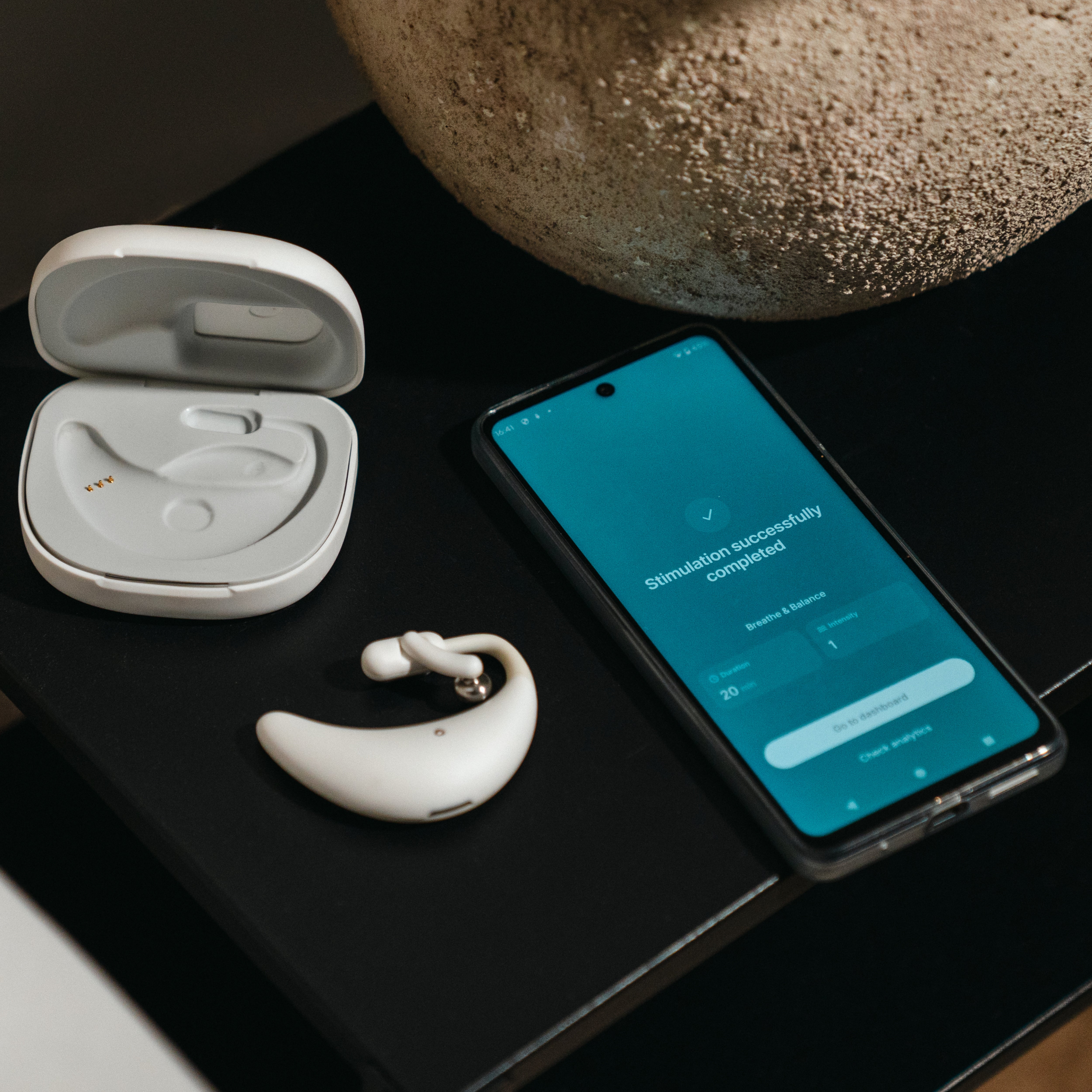
Transcutaneous auricular VNS (taVNS) offers a non-invasive alternative by stimulating the auricular branch of the vagus nerve through the ear. These devices use specialised electrodes placed on specific ear points where the vagus nerve is accessible near the skin surface. Recent studies show taVNS can produce similar brain activation patterns to implanted devices, making it an increasingly popular option for moderate depression.
AI-powered personalised VNS represents the newest evolution in this field. Unlike fixed-parameter devices that deliver the same stimulation to everyone, these systems use real-time biometric monitoring to adapt stimulation patterns to your unique physiology. By reading signals like HRV and breathing patterns, they optimise each session for maximum effectiveness. Learn more about why personalised vagus nerve stimulation is transforming this treatment approach.
Natural vagus nerve stimulation techniques: including cold exposure, deep breathing, singing, and yoga: complement device-based approaches. Whilst these methods alone may not suffice for clinical depression, they enhance overall vagal tone and can amplify the benefits of VNS devices. For an accessible entry point, our guide to the secret rhythm behind HRV explains how slow breathing paced at ~6 breaths per minute reliably lifts vagal tone.
Clinical Evidence and Research
The journey of VNS from experimental treatment to FDA-approved therapy for depression spans over two decades of rigorous research. Understanding this evidence helps set realistic expectations about what VNS can and cannot do for depression.
The key FDA approval in 2005 came after extensive trials demonstrating safety and efficacy in treatment-resistant depression. The landmark study by Rush et al. (2005) followed 235 patients who had failed at least four antidepressant trials. After one year of VNS therapy, 30% showed significant improvement: a notable result given this population's treatment history. More impressively, five-year follow-up data revealed that benefits not only persisted but often increased over time, with response rates climbing to 40-50%.
Comparing implantable versus non-invasive approaches reveals nuanced differences. A 2020 systematic review in Neuropsychiatric Disease and Treatment analysed 14 studies of taVNS for depression. Whilst response rates were somewhat lower than implanted devices (20-35%), the absence of surgical risks and lower cost make taVNS an attractive first-line option. Importantly, both approaches showed similar improvements in HRV and inflammatory markers: suggesting they work through comparable mechanisms.
Recent research is uncovering how VNS effectiveness varies by depression subtype. Bipolar depression appears particularly responsive, with a 2018 study showing 63% of patients achieving remission after two years. Major depressive disorder with high anxiety shows strong responses to morning VNS sessions, whilst melancholic depression responds better to evening stimulation: highlighting the importance of personalised treatment timing.
Long-term neuroimaging studies reveal profound brain changes with sustained VNS use. Functional connectivity between the default mode network (overactive in depression) and executive control networks normalises over 6-12 months. These structural changes correlate strongly with symptom improvement and may explain why VNS benefits continue growing over time rather than plateauing like many medications.
Who Is a Candidate for VNS Depression Treatment?
Determining candidacy for VNS requires careful consideration of your depression history, current treatments, and overall health status. The criteria differ significantly between implantable devices and non-invasive options.
For FDA-approved implantable VNS, strict criteria apply. You must have documented treatment-resistant depression, defined as failure to respond to at least four adequate antidepressant trials from different medication classes. Additionally, candidates should be 18 or older with chronic depression lasting two years or more. The depression must be unipolar or bipolar without rapid cycling. Exclusion criteria include certain heart conditions, asthma, sleep apnoea, and previous vagotomy.
Non-invasive taVNS devices have much broader accessibility. Whilst not FDA-approved specifically for depression, these devices are cleared for general wellness and stress reduction. Ideal candidates include those with mild to moderate depression seeking complementary treatment, individuals unable or unwilling to try additional medications, and those interested in preventive nervous system regulation. Many people use taVNS whilst continuing their current treatments, as it generally doesn't interact with medications.
Importantly, certain groups should exercise caution or avoid VNS entirely. Pregnant women should consult their healthcare provider, as effects on foetal development aren't fully understood. Those with cardiac arrhythmias, pacemakers, or other implanted electrical devices need careful evaluation. Active substance abuse, psychosis, or severe personality disorders may complicate treatment and require stabilisation first.
What to Expect During VNS Treatment
Understanding the VNS journey helps set realistic expectations and maximise your chances of success. The experience differs considerably between implantable and non-invasive approaches.
For implantable VNS, the process begins with complete evaluation including psychiatric assessment, medical clearance, and often neuropsychological testing. The outpatient surgery takes 1-2 hours under general anaesthesia. Your surgeon places the generator under the skin below your collarbone and wraps electrodes around the vagus nerve in your neck. Initial programming begins 2-4 weeks post-surgery, with stimulation parameters adjusted gradually over several months.
Non-invasive taVNS offers a gentler introduction. After receiving your device, you'll typically start with 15-minute sessions once or twice daily. Initial sessions focus on finding your optimal stimulation intensity: strong enough to feel but never painful. Most people describe a mild tingling or warming sensation in the ear. The key is consistency; benefits accumulate with regular use rather than appearing overnight.
The timeline for improvement varies but follows predictable patterns. Sleep often improves first, usually within 2-4 weeks. Energy and motivation typically increase by weeks 4-8. Mood improvements generally emerge after 8-12 weeks of consistent use. Some people experience an initial adjustment period with mild headaches or ear discomfort that resolves within days.
During treatment, maintaining a symptom diary helps track progress and identify optimal stimulation times. Many find morning sessions energising and evening sessions calming. Combining VNS with breathwork, meditation, or gentle movement often enhances effects. Regular HRV monitoring provides objective feedback on your nervous system's improving flexibility. See morning, noon, or night: timing your vagus nerve stimulation for evidence on when to schedule sessions for depression-specific outcomes.
Side Effects and Safety Considerations
VNS has an excellent safety profile established through decades of clinical use, but understanding potential side effects helps you make an informed decision and manage any challenges that arise.
Common side effects of implantable VNS are typically mild and related to stimulation sensations. During active stimulation cycles, about 60% of users experience voice changes or mild hoarseness. Throat discomfort, cough, or shortness of breath affects 20-30% initially but usually decreases as the body adapts. Surgical risks include infection (3-5%), vocal cord paralysis (less than 1%), and lead breakage requiring revision (5% over 10 years).
Non-invasive taVNS shows even fewer side effects due to its external application. The most common issues include temporary ear redness or irritation at electrode sites (10-15%), mild headaches during initial sessions (5-10%), and occasional nausea if stimulation intensity is too high (rare). These effects typically resolve by adjusting electrode placement or reducing intensity.
Serious adverse events with VNS are exceptionally rare but worth understanding. Implanted devices may rarely trigger cardiac arrhythmias in susceptible individuals. Excessive stimulation could theoretically worsen certain types of headaches or trigger manic episodes in bipolar disorder: though proper screening minimises these risks. No evidence suggests VNS causes cognitive impairment; studies actually show improved cognitive function in many users.
Safety considerations extend to device interactions. VNS devices are generally MRI-compatible with specific protocols. Airport security and anti-theft systems pose no risk. However, certain medical procedures like diathermy or electroconvulsive therapy require special precautions. Always inform healthcare providers about your VNS device before any procedure.
VNS vs. Other Depression Treatments
Understanding how VNS compares to other depression treatments helps position it within your overall treatment strategy. Rather than viewing treatments as competitors, consider how they might work synergistically.
Compared to antidepressant medications, VNS offers several unique advantages. It doesn't cause weight gain, sexual dysfunction, or emotional blunting: common medication side effects that lead many to discontinue treatment. VNS effects tend to increase over time rather than diminishing like many drugs. However, medications work faster initially (4-6 weeks vs 2-3 months) and don't require device management. Many people successfully combine VNS with medications, often allowing for lower doses.
Electroconvulsive therapy (ECT) remains the gold standard for severe, life-threatening depression with 70-80% response rates. However, ECT requires anaesthesia, causes memory impairment, and effects often don't persist without maintenance treatment. VNS provides a gentler alternative with lasting benefits, though response rates are lower (30-40%). Some treatment-resistant patients try VNS before ECT; others use VNS for maintenance after ECT.
Transcranial magnetic stimulation (TMS) shares similarities with VNS as a neuromodulation approach. TMS typically requires daily clinic visits for 4-6 weeks but shows faster initial response (4-6 weeks). VNS offers the convenience of continuous therapy without clinic visits. Response rates are comparable (30-40%), and some evidence suggests combining approaches may enhance outcomes.
Psychotherapy remains essential regardless of other treatments. Cognitive behavioural therapy (CBT), particularly when combined with VNS, shows enhanced outcomes. The improved emotional regulation from VNS may make patients more receptive to therapeutic interventions. Many find VNS helps them engage more effectively in therapy by reducing overwhelming emotional states. If anxiety or burnout is driving your low mood, our guides to VNS for anxiety, VNS for stress, and VNS for burnout cover comorbid protocols worth considering alongside depression treatment.
Cost and Insurance Coverage
The financial space of VNS treatment varies dramatically between countries and device types. Understanding costs and coverage options helps you plan effectively.
Implantable VNS systems carry substantial upfront costs. In the United States, total expenses including device, surgery, and programming typically range from $30,000-50,000. UK private costs are similar at £20,000-35,000. The device itself accounts for about 60% of total cost. Most insurance plans in the US cover FDA-approved VNS for treatment-resistant depression after prior authorisation. NHS coverage in the UK is limited but expanding, with some specialist centres offering funded treatment for severe cases.
Non-invasive taVNS devices present a more accessible option at £500-1,500 for quality systems. Whilst not covered by insurance for depression specifically, some flexible spending accounts (FSA) or health savings accounts (HSA) allow purchase. The lack of ongoing clinical visits makes long-term costs significantly lower than implantable systems.
When evaluating cost-effectiveness, consider the hidden expenses of untreated depression. Lost productivity, repeated medication trials, and emergency interventions often exceed VNS costs within 2-3 years. A health economics analysis published in 2019 found VNS cost-effective compared to continued medication trials, with break-even at approximately 18 months for severe depression.
Financing options continue expanding. Some device manufacturers offer payment plans. Medical credit cards provide interest-free periods for healthcare expenses. Certain clinical trials offer free or reduced-cost access to VNS treatment. Advocacy organisations sometimes provide grants for innovative depression treatments.
Latest Innovations in VNS Technology
The field of vagus nerve stimulation is experiencing rapid innovation, with developments that promise to make treatment more effective, accessible, and personalised than ever before.
Closed-loop VNS systems represent the most significant advance. Unlike traditional open-loop devices delivering fixed stimulation, these systems monitor physiological signals in real-time and adjust parameters accordingly. By tracking HRV, breathing patterns, and even EEG signals, closed-loop devices optimise stimulation moment by moment. Early studies show 50-70% improvement in outcomes compared to fixed-parameter devices.
AI integration is transforming treatment personalisation. Machine learning algorithms analyse patterns in your physiological responses, mood ratings, and activity data to predict optimal stimulation times and parameters. These systems learn your unique patterns: perhaps discovering you respond better to morning stimulation on workdays but evening sessions on weekends. This level of personalisation was impossible with traditional devices.
Miniaturisation continues advancing rapidly. Next-generation implantable devices are 70% smaller than current models, with some experimental systems injectable via needle rather than requiring surgery. Battery life extends to 15-20 years through improved efficiency. Non-invasive devices now integrate into everyday wearables, making treatment truly smooth.
Combination therapies show particular promise. Researchers are exploring VNS paired with specific medications, psychedelic-assisted therapy, and targeted psychotherapy protocols. Preliminary data suggests certain combinations may double response rates. Multi-modal devices combining VNS with transcranial direct current stimulation (tDCS) or photobiomodulation are entering trials.
The future points toward precision psychiatry: treatments tailored to individual neurobiology rather than trial-and-error approaches. Biomarker development allows prediction of VNS response before treatment begins. Genetic testing identifies optimal stimulation parameters. Neuroimaging guides electrode placement for maximum effect. These advances transform VNS from a last resort to a first-line precision treatment.
Making Your Decision: Is VNS Right for You?
Deciding whether to pursue VNS for depression requires careful consideration of your unique circumstances, treatment history, and personal preferences. This isn't a decision to make alone: involve your healthcare team, loved ones, and potentially others who've experienced VNS.
Start by honestly assessing your current situation. How long have you struggled with depression? Which treatments have you tried, and why did they fall short? Are side effects from medications significantly impacting your quality of life? VNS tends to work best for those who've given traditional treatments a fair trial but need a fundamentally different approach. Our piece on the neuroscience of burnout is useful context if your depression sits alongside chronic work exhaustion.
Consider your treatment goals and timeline. VNS requires patience: benefits accumulate over months rather than weeks. If you're in crisis, stabilisation through other means may be necessary first. However, if you're seeking sustainable, long-term improvement and can commit to consistent use, VNS offers unique advantages. The absence of cognitive side effects makes it particularly suitable for those whose work or studies demand mental clarity.
Practical factors matter too. For implantable devices, can you manage the surgical recovery and ongoing device maintenance? For non-invasive options, will you consistently use the device daily? Consider your support system: having someone encourage adherence during the initial weeks before benefits emerge proves invaluable.
Don't overlook the importance of finding the right provider or device. For implantable VNS, seek centres with extensive experience and complete support programmes. For taVNS devices, research the technology carefully: not all devices are created equal. Look for evidence of effectiveness, personalisation capabilities, and strong customer support.
Remember, choosing VNS doesn't mean abandoning other treatments. The most successful outcomes often involve integrated approaches: VNS alongside therapy, lifestyle modifications, and sometimes medications. Think of VNS as adding a powerful tool to your treatment toolkit rather than replacing everything else.
Frequently Asked Questions
How effective is vagus nerve stimulation for depression?
Clinical studies show VNS achieves 30-40% response rates in treatment-resistant depression, with effectiveness increasing over time. Five-year data reveals response rates climbing to 40-50%, suggesting VNS benefits grow rather than plateau like many treatments.
What are the side effects of VNS for depression?
Common side effects include temporary voice changes (60%), mild throat discomfort (20-30%), and cough during stimulation. Non-invasive devices may cause ear irritation (10-15%) or mild headaches initially. Serious adverse events are rare (less than 1%).
How long does it take for VNS to work for depression?
Improvement follows a predictable timeline: sleep often improves within 2-4 weeks, energy increases by 4-8 weeks, and mood lifts after 8-12 weeks of consistent use. Full benefits may continue developing over 6-12 months.
Is vagus nerve stimulation covered by insurance for depression?
FDA-approved implantable VNS is typically covered by insurance for documented treatment-resistant depression after prior authorisation. Non-invasive devices aren't covered specifically for depression but may qualify for FSA/HSA spending.
Who is a good candidate for VNS depression treatment?
Ideal candidates have tried multiple antidepressants without success, experience medication side effects, seek non-pharmaceutical options, or want to augment current treatments. Implantable VNS requires failing four medication trials; non-invasive options have broader accessibility.
What is the success rate of VNS for treatment-resistant depression?
Success rates vary by device type and duration. Implantable VNS shows 30-40% response rates at one year, increasing to 40-50% at five years. Non-invasive taVNS achieves 20-35% response rates, with higher success when combined with other treatments.
How much does vagus nerve stimulation cost for depression?
Implantable VNS systems cost $30,000-50,000 (£20,000-35,000) including surgery and programming. Non-invasive taVNS devices range from $500-2,000 (£400-1,500), making them more accessible for many people.
Can you do vagus nerve stimulation at home for depression?
Yes, non-invasive taVNS devices enable safe, effective home treatment. These devices stimulate the vagus nerve through the ear, requiring just 15-30 minutes daily. Whilst not FDA-approved specifically for depression, many find them helpful for mood support.
Conclusion
Vagus nerve stimulation represents a model shift in depression treatment: moving beyond purely chemical interventions to engage the body's natural regulatory systems. The evidence is clear: for those who haven't found relief through traditional approaches, VNS offers genuine hope with lasting benefits that grow over time.
The key insight is that depression isn't just a brain disorder: it's a whole-body condition involving disrupted nervous system regulation. By restoring healthy vagal function, VNS addresses this root dysfunction rather than merely managing symptoms. Whether through FDA-approved implants or accessible non-invasive devices, this approach provides options for different needs and circumstances.
As technology advances, particularly with AI-powered personalisation, VNS is becoming more effective and accessible than ever. The future of depression treatment lies not in one-size-fits-all solutions but in precisely tailored interventions that honour your unique neurobiology.
If you're exploring non-invasive VNS options, discover how personalised stimulation can support your journey toward better mental health. Explore SONA to learn about AI-powered vagus nerve stimulation, or dive deeper into the science behind VNS.
Disclaimer
**DISCLAIMER:** Sona is a wellness device and is not a medically regulated product. The information in this article is for educational purposes only and does not constitute medical advice. We do not make any claims about Sona's ability to diagnose, treat, cure, or prevent any medical condition. Vagus nerve stimulation research referenced in this article relates to the broader field of VNS and may not be specific to any particular consumer device. Always consult a qualified healthcare professional before making decisions about your health.
Sources
- Rush et al. (2005) - FDA key trial for VNS in treatment-resistant depression
- Neuropsychiatric Disease and Treatment (2020) - Systematic review of taVNS for depression
- 2018 study on VNS for bipolar depression
- 2019 health economics analysis of VNS cost-effectiveness


Share:
Vagus Nerve Stimulation for Inflammation: Science-Backed Anti-Inflammatory Treatment
Vagus Nerve Stimulation for Biohackers: Complete Guide to VNS Devices & Optimization