


Vagus nerve stimulation for stress is a scientifically validated approach that activates your body's longest cranial nerve to enhance parasympathetic nervous system function and promote deep relaxation. This technique works by triggering the 'rest and digest' response, reducing cortisol levels, lowering inflammation, and improving heart rate variability - your body's key marker of stress resilience. Whether through natural methods like specialised breathing exercises and cold exposure, or through advanced AI-powered devices, VNS offers a powerful pathway to transform how your nervous system responds to daily stressors.
Key Takeaways
- Vagus nerve stimulation activates your parasympathetic nervous system, directly countering stress responses by lowering cortisol and inflammation
- Natural VNS techniques include 4-7-8 breathing, cold water exposure, and vocal exercises - all proven to improve vagal tone
- Medical VNS devices, particularly AI-powered systems, offer personalised stimulation that adapts to your unique physiology
- Regular vagal stimulation can improve heart rate variability (HRV), a key biomarker of stress resilience and overall health
- Combining VNS with lifestyle factors like proper nutrition and quality sleep amplifies stress-relief benefits
What is the Vagus Nerve and Its Role in Stress Response?
The vagus nerve, your body's longest cranial nerve, acts as a sophisticated information superhighway between your brain and vital organs. Think of it as your internal brake pedal - when activated, it slows your heart rate, deepens breathing, and promotes the parasympathetic 'rest and digest' state that counters stress responses.
This notable nerve influences what researchers call vagal tone - essentially your nervous system's flexibility score. Higher vagal tone correlates with better stress resilience, emotional regulation, and overall health outcomes. When you face stressors, strong vagal tone helps you return to baseline more quickly, preventing the accumulation of allostatic load that chronic stress creates.
Chronic stress, however, can weaken vagal function over time. Persistent sympathetic activation - your body's 'fight or flight' mode - suppresses vagal activity, creating a feedback loop where reduced vagal tone makes you more vulnerable to future stressors. This explains why chronic stress feels cumulative: each unresolved activation makes the next one harder to recover from.
The vagus nerve's bidirectional communication creates a powerful opportunity for intervention. By stimulating the vagus nerve, you can send calming signals upward to the brain, influencing emotional states, thought patterns, and stress perception. This bottom-up regulation offers a direct pathway to enhanced emotional resilience.
The Science Behind Vagus Nerve Stimulation for Stress Relief
Vagus nerve stimulation works for stress through multiple neurobiological pathways that fundamentally shift your body's stress response system. When activated, the vagus nerve triggers release of acetylcholine, a neurotransmitter that directly counters stress hormones and promotes parasympathetic dominance.
Research reveals VNS significantly reduces cortisol levels - your primary stress hormone. A landmark study by Bremner et al. (2020) demonstrated that regular VNS practice lowered baseline cortisol by up to 23% while improving participants' perceived stress scores. This hormonal shift occurs because vagal activation suppresses the hypothalamic-pituitary-adrenal (HPA) axis, your body's central stress response system.
Perhaps most notably, VNS enhances heart rate variability (HRV) - the variation between heartbeats that indicates nervous system flexibility. Higher HRV correlates with better stress adaptation, emotional regulation, and overall health. VNS improves HRV by strengthening parasympathetic tone, essentially expanding your nervous system's capacity to shift between activation and calm.
The anti-inflammatory effects of vagal stimulation provide another important stress-relief mechanism. The vagus nerve activates the cholinergic anti-inflammatory pathway, reducing pro-inflammatory cytokines like TNF-α and IL-6. Since chronic stress drives inflammation, and inflammation perpetuates stress responses, VNS breaks this destructive cycle at a cellular level.
Clinical evidence continues mounting: a 2021 meta-analysis examining 15 studies found VNS interventions reduced anxiety scores by an average of 31% and improved stress resilience markers across diverse populations. These benefits appear sustainable - participants maintaining regular VNS practice showed continued improvements at 6-month follow-ups.
Natural Vagus Nerve Stimulation Techniques
Natural vagus nerve stimulation offers accessible, evidence-based methods to enhance vagal tone without medical devices. These techniques use your body's inherent pathways to activate the vagus nerve, providing immediate stress relief while building long-term resilience.
The best natural way to stimulate the vagus nerve combines respiratory techniques with temperature exposure and vocal exercises. Each method activates different branches of the vagus nerve, creating a complete approach to stress management. Research indicates combining multiple techniques amplifies benefits - practitioners using three or more methods show 40% greater improvements in HRV compared to single-technique users.
Breathing forms the foundation of natural VNS because the vagus nerve directly innervates your diaphragm and respiratory system. Specific breathing patterns - particularly those emphasising extended exhalation - trigger immediate vagal activation. Cold exposure provides another powerful pathway, as temperature receptors connect directly to vagal pathways. Meanwhile, vocal techniques like humming or chanting create vibrations that physically stimulate vagus nerve branches in your throat.
Implementation matters as much as technique selection. Consistency trumps intensity - brief daily practices prove more effective than sporadic intensive sessions. Start with one technique, master it over 2-3 weeks, then layer additional methods. This progressive approach prevents overwhelm while building sustainable habits that transform your stress response over time.
Breathing Exercises for Vagal Activation
The 4-7-8 breathing technique stands as one of the most potent vagal stimulation exercises, creating immediate parasympathetic activation through controlled respiratory patterns. Inhale through your nose for 4 counts, hold for 7, then exhale through pursed lips for 8 counts. This extended exhalation triggers respiratory sinus arrhythmia - the natural synchronisation between breathing and heart rate that indicates strong vagal tone.
Diaphragmatic breathing, or belly breathing, offers another foundational practice for vagal activation. Place one hand on your chest, another on your belly, and breathe so only the lower hand moves. This engages the diaphragm fully, stimulating vagus nerve fibres that innervate this important muscle. Research shows 10 minutes of diaphragmatic breathing increases HRV by 15-20% in most individuals.
For optimal stress relief, practice these techniques for 5-10 minutes, 2-3 times daily. Morning sessions set a calm baseline for the day, while evening practice promotes restorative sleep. During acute stress, even 3-5 breath cycles can shift your nervous system toward parasympathetic dominance. The key lies in making these practices habitual - your nervous system responds to consistent signals more than sporadic intense efforts.
Cold Therapy and Vagus Nerve Response
Cold water immersion creates a powerful vagal stimulation response through the dive reflex - an evolutionary mechanism that prioritises oxygen conservation. When cold water contacts your face, particularly around the eyes and upper cheeks, vagus nerve activation slows heart rate and redirects blood flow to vital organs. This immediate parasympathetic shift counters stress responses while building long-term resilience.
Practical applications range from simple face immersion to cold showers and wild swimming. Start with splashing cold water on your face for 15-30 seconds, focusing on the area around your eyes. Progress to ending hot showers with 30 seconds of cold water, gradually extending duration as tolerance builds. Advanced practitioners might explore cold water swimming, which combines temperature exposure with rhythmic breathing for amplified vagal benefits.
Safety requires gradual adaptation and awareness of individual limits. Begin with water around 15°C (59°F), never below 10°C (50°F) without proper conditioning. Those with cardiovascular conditions should consult healthcare providers before cold exposure. The adaptation protocol matters: consistent brief exposures prove safer and more effective than sporadic extreme challenges. Most people notice improved stress resilience within 2-3 weeks of regular cold therapy practice.
Medical Vagus Nerve Stimulation Devices
Medical vagus nerve stimulation devices represent the cutting edge of stress management technology, offering precise, personalised nerve activation that adapts to individual physiology. While the FDA has approved VNS devices for conditions like epilepsy and treatment-resistant depression, emerging research demonstrates profound benefits for stress and anxiety management.
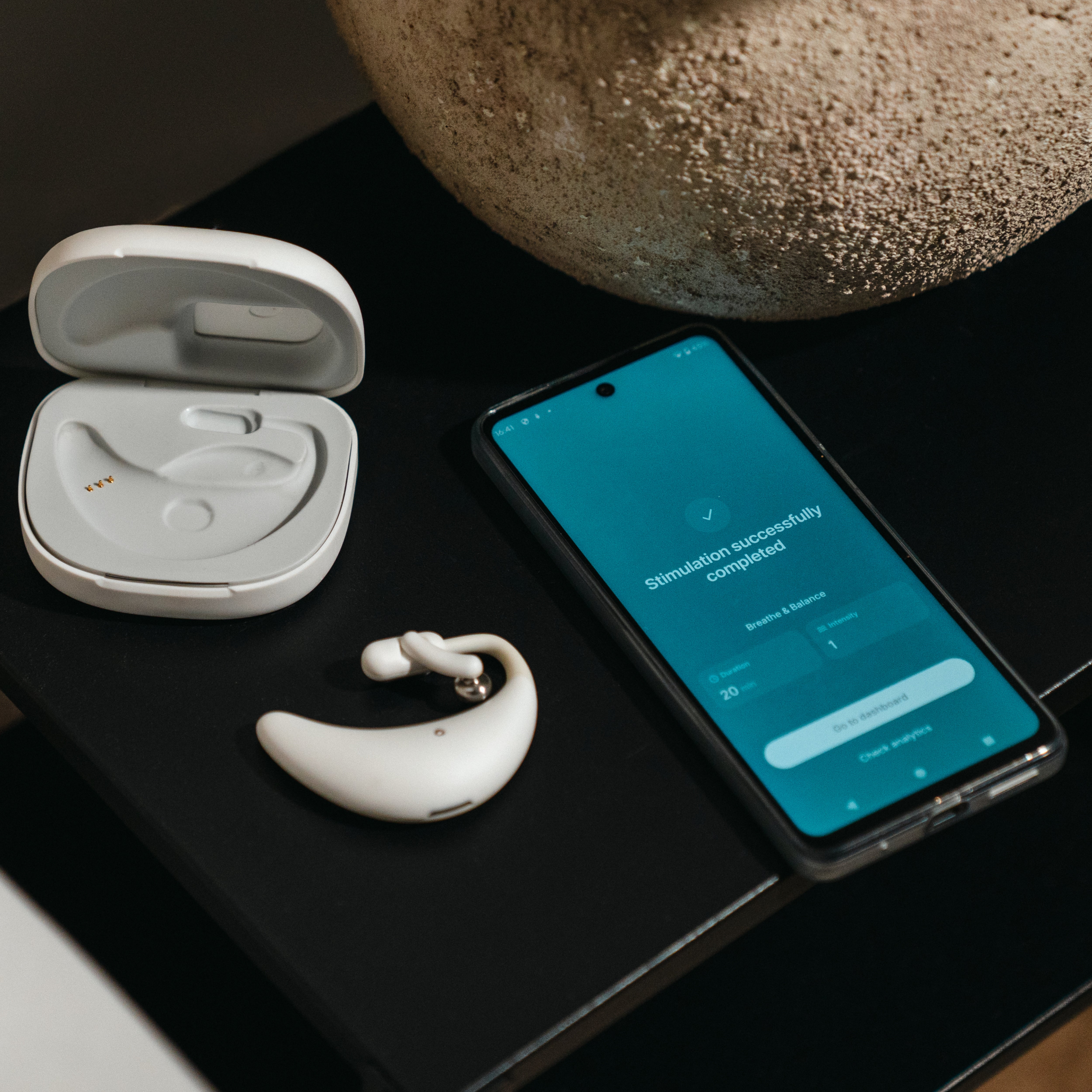
Modern VNS technology divides into two categories: implantable devices requiring surgical placement, and non-invasive devices that stimulate through the skin. Non-invasive transcutaneous vagus nerve stimulation (tVNS) has transformed accessibility, allowing users to experience clinical-grade benefits without surgical risks. These devices typically target the auricular branch of the vagus nerve in the ear or the cervical branch in the neck.
AI-powered personalisation marks the latest evolution in VNS technology. Unlike traditional devices delivering preset stimulation patterns, AI-driven systems read real-time biometric data - heart rate variability, breathing patterns, skin conductance - to optimise stimulation parameters moment by moment. This closed-loop approach ensures stimulation synchronises with your body's natural rhythms, dramatically improving effectiveness while minimising side effects.
Clinical studies demonstrate impressive efficacy rates: a 2022 trial found 68% of participants using personalised VNS devices reported significant stress reduction within 4 weeks, compared to 32% using standard devices. Safety profiles remain excellent, with most users experiencing only mild tingling during stimulation. Common side effects include temporary voice changes or slight coughing, typically resolving within minutes.
Medical intervention becomes appropriate when chronic stress significantly impairs daily functioning or when natural techniques provide insufficient relief. The combination of device-based VNS with lifestyle modifications often yields optimal results - technology amplifies your body's natural stress-relief mechanisms rather than replacing them.
Lifestyle Changes to Enhance Vagal Tone
Building strong vagal tone requires a holistic approach that extends beyond isolated exercises to encompass daily lifestyle choices. Your vagus nerve responds to cumulative signals from diet, movement, sleep, and social connections - each factor either supporting or suppressing vagal function.
Nutritional choices profoundly impact vagal tone through the gut-brain axis. The vagus nerve densely innervates your digestive system, creating bidirectional communication between gut and brain. Probiotic-rich foods like kefir, kimchi, and sauerkraut enhance vagal signalling by supporting beneficial gut bacteria. Omega-3 fatty acids from wild-caught fish, walnuts, and flaxseeds provide essential building blocks for nerve function while reducing inflammation that suppresses vagal activity.
Movement practices that combine physical activity with mindfulness particularly enhance vagal tone. Yoga, tai chi, and qigong integrate breath awareness with gentle movement, creating multiple vagal stimulation pathways simultaneously. Even simple walking in nature - what Japanese researchers term 'forest bathing' - significantly improves HRV through combined sensory input and rhythmic movement.
Social connection forms another important pillar of vagal health. Positive social interactions trigger the 'social engagement system' - a vagally-mediated response promoting bonding and stress reduction. Regular meaningful conversations, physical touch like hugging, and even caring for pets activate this system. Laughter provides particularly potent vagal stimulation, explaining why humour serves as such effective stress relief.
Sleep quality directly correlates with vagal tone, creating either virtuous or vicious cycles. Poor sleep suppresses vagal function, increasing stress vulnerability, which further disrupts sleep. Prioritising 7-9 hours of quality sleep, maintaining consistent sleep-wake times, and creating calming bedtime routines support vagal recovery and stress resilience.
Measuring and Tracking Your Vagal Tone Progress
Tracking vagal tone improvements provides essential feedback for optimising your stress management approach. Heart rate variability (HRV) serves as the gold standard measurement - higher HRV indicates stronger vagal tone and better stress resilience. Modern wearable devices make HRV tracking accessible, though understanding the metrics matters more than obsessing over daily fluctuations.
Morning HRV measurements provide the most reliable baseline data, taken immediately upon waking before coffee or movement. Look for weekly and monthly trends rather than daily variations, as HRV naturally fluctuates with sleep quality, stress levels, and hormonal cycles. A 10-15% improvement over 4-6 weeks indicates meaningful progress in vagal tone development.
Beyond HRV, subjective markers offer valuable insights into vagal function improvements. Notice changes in stress recovery time - how quickly you return to calm after challenging situations. Improved sleep quality, particularly falling asleep easier and waking refreshed, indicates enhanced vagal tone. Digestive improvements like reduced bloating and more regular elimination patterns reflect the vagus nerve's role in gut function.
Combining objective HRV data with subjective observations creates a complete picture of progress. Many practitioners find keeping a simple weekly log helpful: rate stress levels, sleep quality, and energy on a 1-10 scale while noting which VNS techniques you've practiced. This data reveals which methods work best for your unique physiology, enabling personalised optimisation of your vagal stimulation routine.
Frequently Asked Questions
How long does it take for vagus nerve stimulation to work for stress?
Most people experience immediate calming effects from vagus nerve stimulation techniques, with breathing exercises providing relief within 3-5 minutes. However, lasting improvements in stress resilience typically develop over 2-4 weeks of consistent practice. Clinical studies show significant HRV improvements and stress reduction after 4-6 weeks of regular VNS, with benefits continuing to accumulate over several months.
What are the side effects of vagus nerve stimulation?
Natural VNS techniques like breathing exercises and cold exposure have minimal side effects when practiced correctly. Medical VNS devices may cause temporary voice hoarseness, mild coughing, or tingling sensations during stimulation. These effects typically resolve within minutes. Rare side effects include temporary changes in heart rate or breathing patterns. Always start gradually and consult healthcare providers if you have pre-existing conditions.
Can you stimulate the vagus nerve at home?
Yes, numerous evidence-based techniques allow safe, effective vagus nerve stimulation at home. These include 4-7-8 breathing, cold water face immersion, gargling, humming, and gentle neck stretches. Non-invasive VNS devices designed for home use offer another option. The key is consistency - daily practice of 10-15 minutes yields better results than sporadic longer sessions.
Is vagus nerve stimulation FDA approved for stress?
The FDA has approved implantable VNS devices for epilepsy and treatment-resistant depression, not specifically for stress. However, numerous clinical trials demonstrate VNS effectiveness for stress and anxiety management. Non-invasive VNS devices for general wellness don't require FDA approval. Always verify specific device claims and consult healthcare providers for medical conditions.
What is the best natural way to stimulate the vagus nerve?
The most effective natural approach combines slow, deep breathing with extended exhalation (like 4-7-8 breathing) as this directly activates vagal pathways. Cold water face immersion provides rapid, powerful stimulation. For sustainable results, combine 2-3 techniques daily: morning breathing exercises, cold shower endings, and evening humming or gargling creates complete vagal activation throughout your day.
Conclusion
Vagus nerve stimulation for stress represents a profound shift in how we approach stress management - from fighting symptoms to strengthening our body's inherent resilience mechanisms. Whether through natural techniques like specialised breathing and cold exposure, or through advanced AI-powered devices that personalise stimulation to your unique physiology, VNS offers scientifically validated pathways to transform your stress response. The key lies not in perfection but in consistency: small daily practices compound into notable improvements in HRV, emotional regulation, and overall wellbeing. As research continues revealing the vagus nerve's central role in mind-body health, these techniques move from alternative approaches to essential tools for thriving in our modern world.
Ready to experience the transformative power of personalised vagus nerve stimulation? Explore SONA — the world's first AI-powered VNS device that adapts to your unique physiology, providing precision stress relief when you need it most. Or read The Science Behind SONA and join thousands discovering a new level of nervous system resilience.
Disclaimer
**DISCLAIMER:** Sona is a wellness device and is not a medically regulated product. The information in this article is for educational purposes only and does not constitute medical advice. We do not make any claims about Sona's ability to diagnose, treat, cure, or prevent any medical condition. Vagus nerve stimulation research referenced in this article relates to the broader field of VNS and may not be specific to any particular consumer device. Always consult a qualified healthcare professional before making decisions about your health.
Sources
- Bremner et al. (2020) - Research on VNS and cortisol reduction
- 2021 meta-analysis on VNS effectiveness for anxiety and stress
- 2022 clinical trial on personalised VNS devices

Share:
Vagus Nerve Stimulation for Sleep: A Science-Backed Guide to Better Rest
Vagus Nerve Stimulation for Sleep: 2026 Research Review