


The vagus nerve is the main communication line between your gut and your brain. It carries signals in both directions along the gut-brain axis, helps control digestion, and shapes how your gut responds to stress. Supporting healthy vagal tone will not cure a digestive condition, but it is increasingly seen as one lever for a calmer, better-regulated gut. Here is what the research suggests in 2026.
Most people think of the gut and the brain as separate. In fact they are in constant two-way conversation, and the vagus nerve carries the majority of that traffic, far more of it travelling from gut to brain than the other way around. That is why stress can upset your stomach, and why an unsettled gut can affect mood.
This guide explains how the vagus nerve connects gut and brain, the role it plays in digestion and gut inflammation, and how you can support vagal tone, from free breathing techniques to personalised, AI-guided stimulation with Sona.
Key Takeaways
- The vagus nerve is the principal nerve of the gut-brain axis, carrying signals in both directions between the digestive system and the brain.
- It helps regulate digestion, stomach acid, gut motility and the release of digestive enzymes, as part of the "rest and digest" response.
- Chronic stress lowers vagal activity, which is one reason stress so often shows up as digestive trouble.
- Research suggests supporting vagal tone may help with gut comfort and the gut's inflammatory balance, though VNS is not a treatment for any digestive condition.
- Breathing, eating mindfully and managing stress support the vagus nerve; transcutaneous VNS devices such as Sona add HRV-guided stimulation.
What Is the Vagus Nerve?
The vagus nerve is the longest of the cranial nerves, running from the brainstem down through the neck and chest into the abdomen, where it branches across the stomach and intestines. As the main pathway of the parasympathetic nervous system, the "rest and digest" branch, it governs the body's recovery and digestive functions.
Crucially, the vagus nerve is a two-way road. Although we tend to imagine the brain issuing orders to the body, roughly four-fifths of vagal fibres are afferent, carrying information from the organs up to the brain. The gut is one of the loudest senders on that line.
For the full picture of how the nerve works and how it can be stimulated, see our complete guide to vagus nerve stimulation.
The Gut-Brain Axis: How the Vagus Nerve Connects Gut and Brain
The gut-brain axis is the name for the constant communication between the digestive system and the central nervous system. It runs through several channels, hormones, immune signals and the gut's own nervous system, but the vagus nerve is the fastest and most direct of them.
Through the vagus, the brain can shift the gut into or out of digestive mode, while the gut continuously reports back on its state: fullness, discomfort, the activity of its resident microbes. This is why the gut is sometimes called the "second brain", and why emotional states and digestive states are so tightly linked.
When this signalling is well-regulated, digestion runs smoothly and the system stays calm. When it is disrupted, often by chronic stress, the conversation becomes noisy, and both gut and mood can suffer.
How the Vagus Nerve Controls Digestion
Does the vagus nerve affect digestion? Yes, directly. When the vagus nerve is active, it switches the body into the parasympathetic state that digestion depends on.
Practically, vagal activity stimulates the release of stomach acid and digestive enzymes, supports the rhythmic muscular contractions (peristalsis) that move food through the gut, and coordinates the release of hormones that signal fullness. It is, in effect, the green light for the whole digestive process.
The opposite is also true. In a stressed, sympathetic "fight or flight" state, the body diverts resources away from digestion, which is why eating on the run, or while anxious, so often leads to discomfort, bloating or sluggish digestion. Supporting vagal tone helps keep the body in the state where digestion works as intended.
The Vagus Nerve, the Microbiome and Gut Signalling
The trillions of microbes living in your gut are active participants in the gut-brain conversation. They produce compounds, including neurotransmitters and short-chain fatty acids, that can influence vagal signalling, and the vagus nerve appears to be one route by which the microbiome communicates with the brain.
Research in this area is still developing, and much of it remains early or based on animal studies, so it is important not to overstate it. What is increasingly clear is that the gut microbiome and the nervous system are linked, and that the vagus nerve is a key part of the bridge.
A balanced microbiome, supported by a varied, fibre-rich diet, and a well-toned vagus nerve are complementary goals: each supports the system the other depends on.
Stress, the Gut and the Vagus Nerve
Can stress and anxiety upset your gut? Almost everyone has felt it, butterflies before a presentation, a knotted stomach under pressure. These are the gut-brain axis at work.
Chronic stress keeps the sympathetic nervous system dominant and lowers vagal activity. Because the vagus is the digestive system's main regulator, sustained stress can translate into real digestive symptoms: discomfort, altered motility and a gut that feels reactive. This is the mechanism behind the familiar link between stressful periods and flare-ups of digestive trouble.
Supporting vagal tone is therefore a sensible part of looking after your gut. Our guides to VNS for stress and what your HRV reveals about stress explain how to track and support that balance.
The Vagus Nerve and Gut Inflammation
Beyond digestion, the vagus nerve plays a role in regulating inflammation through what researchers call the cholinergic anti-inflammatory pathway. In simple terms, vagal activity can help signal the immune system to dial down excessive inflammation.
Because much of the body's immune activity is concentrated around the gut, this pathway is of particular interest for gut health. It is one reason vagus nerve stimulation is being studied in the context of inflammatory conditions, though, importantly, that research relates to the broader field and does not mean any consumer device treats those conditions.
For more on this mechanism, see our guide to VNS and inflammation and the wider story in the inflammation connection.
Signs Your Vagus Nerve May Need Support
There is no simple at-home test for vagal tone, but heart rate variability (HRV) is a widely used proxy: higher HRV generally reflects stronger vagal activity. Beyond that, certain patterns may suggest your nervous system is stuck in a stressed state that could affect digestion.
These include digestion that worsens noticeably under stress, a persistent feeling of being "wired but tired", poor recovery from stressful events, and disturbed sleep. None of these is diagnostic, and all can have other causes, but together they point to a nervous system that would benefit from more time in its recovery state.
If you notice these patterns, the supportive steps below are a reasonable place to start, alongside, not instead of, medical advice for persistent symptoms.
Can Vagus Nerve Stimulation Support Gut Health?
This is where honesty matters. Vagus nerve stimulation is an active area of medical research for several digestive and inflammatory conditions, but that research relates to the broader field of VNS and specific clinical settings, not to claims that any wellness device treats those conditions.
What can be said more confidently is that supporting vagal tone helps keep the body in the parasympathetic state that digestion depends on. For people whose gut symptoms are closely tied to stress, that is a meaningful and low-risk thing to work on.
In other words: think of vagal support as creating better conditions for your gut to do its job, rather than as a treatment for a specific diagnosis.
How to Support Your Vagus Nerve for Gut Health
How can you stimulate the vagus nerve for digestion? Several everyday practices help, and most cost nothing.
Slow, exhale-led breathing before and during meals activates the vagus nerve and shifts the body into digestive mode. Eating mindfully, slowing down, chewing thoroughly, not eating while stressed or distracted, gives the parasympathetic system time to engage. Humming, gargling and gentle post-meal movement such as a short walk also support vagal activity and digestion.
Managing baseline stress matters too; our 12 science-backed vagus nerve exercises and polyvagal theory explained give more context on building vagal tone over time.
VNS Devices and Gut Health
If you want a more structured, measurable way to support vagal tone, transcutaneous vagus nerve stimulation (tVNS) devices deliver targeted stimulation through the ear. Their advantage over free techniques is consistency and feedback.
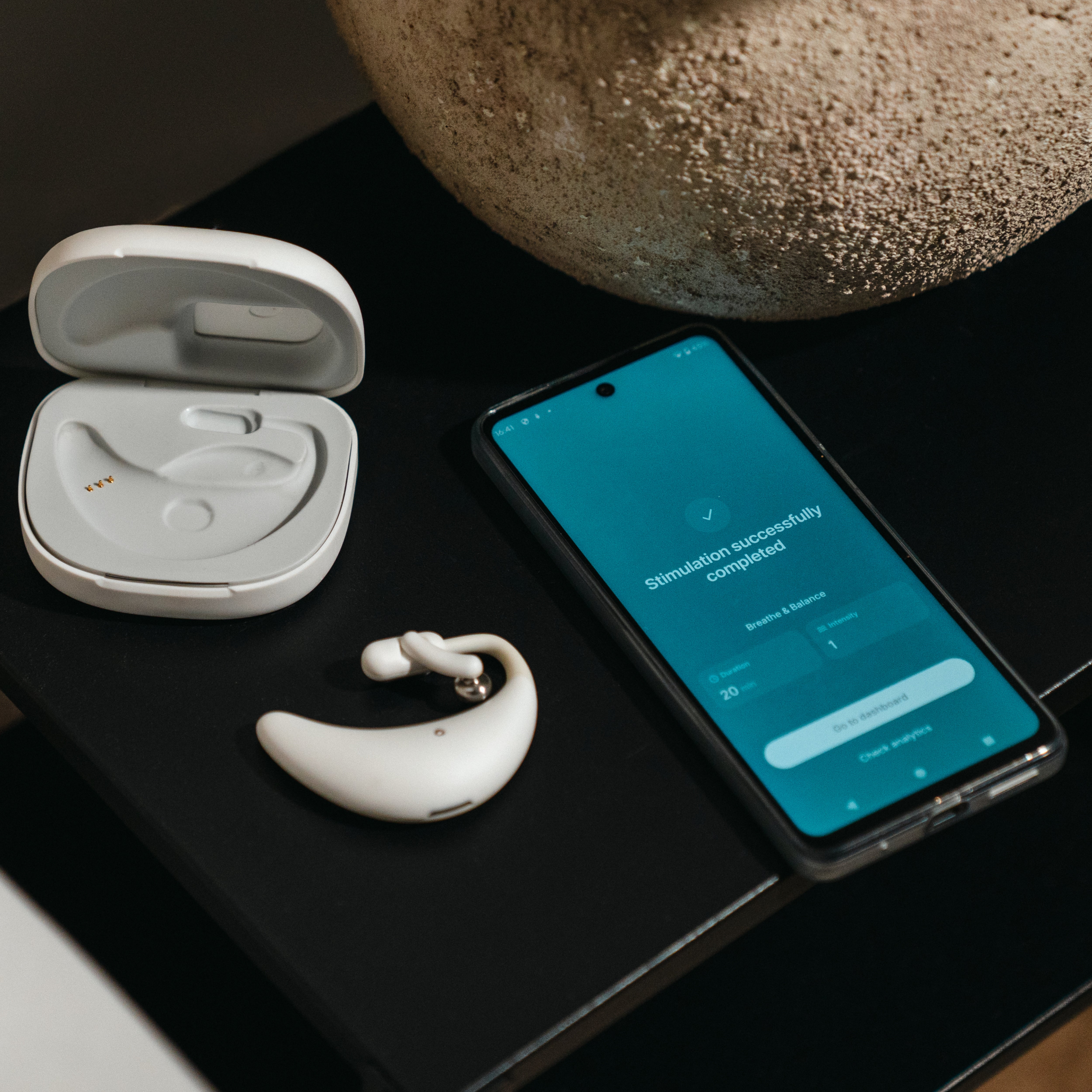
Sona is an AI-powered, personalised tVNS device (£695) that adapts each session to your real-time HRV rather than applying a fixed setting. For gut health specifically, the value is indirect but real: by helping you spend more time in a parasympathetic state and supporting vagal tone, a device can complement the dietary and lifestyle work that gut health ultimately rests on.
A device is a complement to good fundamentals, diet, sleep and stress management, not a substitute for them.
When to See a Doctor
Supporting your vagus nerve is a sensible part of general wellbeing, but it is not a substitute for medical care, and some digestive symptoms need proper assessment.
See a healthcare professional if you have persistent or severe digestive symptoms, unexplained weight loss, blood in your stool, difficulty swallowing, or any sudden change in bowel habits. These can have serious causes that require diagnosis and treatment, and no amount of vagal support replaces that.
Think of nervous-system work as something you do alongside good medical care, particularly where symptoms are persistent or worrying.
Frequently Asked Questions
Does the vagus nerve affect digestion?
Yes. The vagus nerve is the main regulator of the "rest and digest" response, stimulating stomach acid and digestive enzymes and supporting the muscular contractions that move food through the gut. When vagal activity is low, for example under chronic stress, digestion often suffers.
Can stress cause digestive problems through the vagus nerve?
Chronic stress keeps the body in a sympathetic "fight or flight" state and lowers vagal activity, which diverts resources away from digestion. This is one reason stress so often shows up as stomach discomfort, bloating or altered bowel habits.
Can vagus nerve stimulation help with gut health?
VNS is an active area of medical research for some digestive and inflammatory conditions, but that does not mean a wellness device treats them. Supporting vagal tone may help keep the body in the state digestion depends on, which can be useful where gut symptoms are stress-related.
How can I stimulate my vagus nerve to aid digestion?
Slow, exhale-led breathing before meals, eating mindfully, humming or gargling, and a gentle walk after eating all support vagal activity. Transcutaneous VNS devices such as Sona add HRV-guided stimulation.
What is the gut-brain axis?
The gut-brain axis is the two-way communication between the digestive system and the brain. The vagus nerve is its main and fastest channel, carrying signals in both directions, most of them from gut to brain.
Conclusion
The vagus nerve sits at the heart of the gut-brain axis, linking how you feel with how you digest. It is the reason stress and the gut are so tightly connected, and the reason supporting vagal tone is increasingly part of the conversation about gut health.
None of this replaces good fundamentals or medical care: a varied, fibre-rich diet, decent sleep, and proper assessment of persistent symptoms remain the foundation. But within that, looking after your vagus nerve is a low-risk, well-grounded way to give your gut better conditions to work in.
Start with breathing and mindful eating, manage your baseline stress, and consider personalised tVNS if you want a measurable way to support vagal tone. Your gut and your brain are one conversation, and the vagus nerve is how they talk.
Want to support the nerve at the centre of your gut-brain axis? Explore Sona at sona.help, the world's first AI-powered, personalised vagus nerve stimulation device.
Sources
- Cleveland Clinic, Vagus Nerve (anatomy and function)
- Harvard Health, The gut-brain connection
- Nature Reviews Gastroenterology & Hepatology, The vagus nerve and the gut-brain axis (overview)
Disclaimer
DISCLAIMER: Sona is a wellness device and is not a medically regulated product. The information in this article is for educational purposes only and does not constitute medical advice. We do not make any claims about Sona's ability to diagnose, treat, cure, or prevent any medical condition. Vagus nerve stimulation research referenced in this article relates to the broader field of VNS and may not be specific to any particular consumer device. Always consult a qualified healthcare professional before making decisions about your health.




Share:
Vagus Nerve Stimulation for Women's Health: A 2026 Guide
Vagus Nerve Dysfunction: Signs, Causes and Recovery (2026)