
The best sleep apps of 2026 combine evidence-based methodologies with personalised approaches to address individual sleep challenges. While traditional apps like Calm and Headspace offer meditation-based solutions, innovative platforms like SONA use vagus nerve stimulation for profound nervous system regulation. The most effective sleep apps integrate scientific research, user-friendly interfaces, and adaptive technologies to support sustainable sleep improvements rather than temporary fixes.
Finding the right sleep app has become increasingly complex as the market floods with options promising better rest. This complete guide cuts through the noise, comparing traditional meditation apps with innovative physiological approaches. We'll examine effectiveness, pricing, features, and the important science behind why some approaches work whilst others fall short.
Key Takeaways
- Traditional meditation apps (Calm, Headspace) work well for mild sleep issues but may fall short for anxiety-driven insomnia
- Free versions of most apps offer limited functionality: premium features often necessary for meaningful results
- Physiological approaches like vagus nerve stimulation address the root nervous system dysregulation behind many sleep disorders
- The most effective sleep solutions combine multiple modalities: sound, breathing, and nervous system regulation
- Long-term success depends on addressing underlying autonomic imbalances, not just cognitive relaxation
How We Evaluated Sleep Apps: Our Testing Methodology
Our evaluation process prioritised scientific validity above marketing claims. Each app underwent assessment across five critical dimensions that determine real-world effectiveness.
Scientific Evidence: We examined peer-reviewed research supporting each app's methodology. Apps claiming clinical benefits needed published studies demonstrating efficacy. For traditional meditation apps, we reviewed meta-analyses on mindfulness for sleep. For physiological interventions, we analysed research on autonomic nervous system regulation.
User Experience: Interface design, ease of navigation, and onboarding processes all impact adherence. We tested each app's learning curve, customisation options, and whether features felt intuitive or cumbersome during nighttime use.
Effectiveness Across Sleep Challenges: Different sleep issues require different approaches. We evaluated how well each app addressed insomnia, anxiety-related sleep disruption, irregular sleep patterns, and recovery from poor sleep quality. Apps targeting specific physiological mechanisms scored higher than one-size-fits-all solutions.
Privacy and Integration: Modern sleep apps collect sensitive biometric data. We examined privacy policies, data storage practices, and integration capabilities with wearables and smart home devices. Apps requiring excessive permissions or lacking transparency received lower ratings.
Value Proposition: Beyond comparing subscription costs, we analysed which features justified premium pricing. Free versions underwent scrutiny for artificial limitations versus genuine value offerings.
Sleep App Categories: Understanding Different Approaches
Sleep apps fall into distinct categories based on their underlying methodology. Understanding these differences helps match the right approach to your specific sleep challenges.
Meditation and Mindfulness Apps dominate the market, with Calm and Headspace leading the charge. These platforms use guided meditation, body scans, and cognitive techniques to quiet racing thoughts. They excel at addressing sleep onset difficulties caused by mental chatter but may struggle with deeper physiological sleep disorders.
Sleep Tracking Applications like Sleep Cycle focus on monitoring and analysis. Using phone sensors or wearables, they track sleep stages, movement, and environmental factors. Whilst valuable for awareness, tracking alone rarely improves sleep quality without intervention strategies.
Sound Therapy Platforms use white noise, nature sounds, and binaural beats. Apps like Noisli and Brain.fm create acoustic environments conducive to sleep. Research supports certain frequencies for relaxation, though individual responses vary significantly.
Physiological Intervention Apps represent the newest category, directly targeting nervous system regulation. These platforms, including SONA's approach to vagus nerve stimulation benefits, address the autonomic imbalances underlying many sleep disorders. By modulating the parasympathetic nervous system, they create the physiological conditions necessary for restorative sleep. For a deeper look at how this technology works, see our complete guide to vagus nerve stimulation.
Each category addresses different aspects of the sleep puzzle. Cognitive approaches work top-down, whilst physiological interventions work bottom-up. The most complete solutions often combine multiple modalities.
Traditional Sleep Apps Compared
What's the difference between Calm and Headspace for sleep? Whilst both apps offer meditation-based approaches, their methodologies and content libraries differ significantly. Calm emphasises narrative-driven sleep stories narrated by celebrities, creating a passive listening experience. Headspace structures its sleep content as progressive courses, teaching specific techniques over time.
Calm offers the most extensive sleep story library, with new content added weekly. Premium membership (£28.99/year) unlocks hundreds of stories, sleep meditations, and soundscapes. The app excels at variety but lacks personalisation: you're choosing from a catalogue rather than receiving tailored recommendations. Sleep stories work well for racing thoughts but don't address physiological arousal.
Headspace takes a more educational approach with its Sleepcasts and wind-down exercises. The £49.99 annual subscription includes structured programmes addressing specific sleep issues. Their SOS sessions for middle-of-the-night awakening show thoughtful design. However, the cognitive focus means limited effectiveness for stress-induced insomnia.
Sleep Cycle (£29.99/year) stands apart as a tracking-focused app with smart alarm functionality. By analysing sleep patterns through sound and movement, it wakes users during lighter sleep phases. The detailed sleep analysis provides insights, though the app offers minimal intervention beyond optimal wake timing.
Insight Timer deserves recognition for its generous free tier. With over 100,000 free meditations, including thousands for sleep, it provides notable value. The £59.99 annual subscription adds courses and offline downloads. Community features create accountability, though content quality varies given the user-generated nature.
These traditional approaches share a common limitation: they primarily address the cognitive aspects of sleep whilst overlooking nervous system dysregulation. For mild sleep difficulties, they offer accessible entry points. For chronic insomnia or anxiety-driven sleep issues, their effectiveness plateaus.
Free vs Premium Sleep Apps: Value Analysis
Which sleep app has the best free version? Insight Timer wins hands-down for free content volume, offering thousands of sleep meditations without payment. However, quantity doesn't guarantee quality or effectiveness.
Best Free Features by App: - Insight Timer: Full meditation library, basic timer, community access - Calm: Seven-day trials, limited sleep stories, basic breathing exercises - Headspace: Basics course, three themed packs, limited Sleepcasts - Sleep Cycle: Basic sleep tracking, standard alarm, trend analysis
Premium Upgrades That Matter: Not all paid features justify their cost. Sleep tracking apps' premium analytics rarely translate to better sleep without actionable interventions. Meditation apps' expanded libraries offer variety but not necessarily improved outcomes. The most valuable premium features include personalised programmes, offline access for travel, and advanced biometric integration.
Cost-Effectiveness Analysis: Monthly subscriptions (£5-15) seem reasonable until you calculate annual costs exceeding £100. Before committing, consider whether you need ongoing content variety or would benefit more from mastering specific techniques. Apps requiring perpetual subscriptions for basic functionality represent poor long-term value.
Investment Considerations: The subscription model works well for content libraries but poorly for therapeutic interventions. One-time purchases for evidence-based tools often provide better value than indefinite monthly payments. Consider total cost over expected usage period: a £695 device used daily for two years costs less than £1 per day, compared to premium app subscriptions approaching £150 annually.
The Science Gap: Why Traditional Apps May Fall Short
Understanding why meditation apps help some people whilst leaving others frustrated requires examining the neuroscience of sleep disorders. Not all sleep problems stem from racing thoughts: many originate from dysregulated nervous systems stuck in sympathetic dominance.
The Autonomic Imbalance: Research by Thayer et al. (2012) demonstrated that chronic stress creates persistent autonomic nervous system imbalance. When your body remains in mild fight-or-flight activation, the parasympathetic nervous system cannot initiate the physiological cascade necessary for sleep. This connection between HRV and stress is well-documented. Meditation apps assume you can think your way to calm, but thoughts don't directly control autonomic function.
Anxiety and Sleep Architecture: Studies show anxiety disorders fundamentally alter sleep architecture, reducing slow-wave sleep and increasing nocturnal awakenings. Cognitive approaches may quiet conscious worry but don't address the underlying hypervigilance maintaining physiological arousal. This explains why many users report feeling relaxed yet remaining wide awake. If this sounds familiar, our guide to sleep anxiety tools and techniques offers practical interventions.
The Personalisation Problem: Individual nervous systems respond differently to interventions based on baseline vagal tone, trauma history, and genetic factors. Understanding polyvagal theory and how your nervous system works helps explain why one-size-fits-all meditation scripts cannot account for these variations. What soothes one person may agitate another. True personalisation requires real-time physiological feedback, not just user preferences.
Neuroplasticity Timelines: Whilst meditation can improve sleep over time through neuroplastic changes, acute insomnia often requires immediate intervention. Building mindfulness skills takes weeks to months: problematic when you need sleep tonight. Physiological interventions like vagus nerve stimulation create immediate parasympathetic shifts, providing relief whilst longer-term practices develop.
This science gap explains why innovative approaches targeting nervous system regulation show promise where traditional apps plateau. By addressing root physiological causes rather than surface symptoms, they offer hope for those who've found limited success with meditation alone.
AI and Personalisation in Sleep Technology
How do the best sleep apps adapt to individual needs? The answer increasingly lies in artificial intelligence and real-time biometric analysis. Generic approaches fail because sleep challenges vary dramatically between individuals: what helps one person may hinder another.
Current Personalisation Approaches: Most apps offer superficial customisation: choosing meditation voices, adjusting session lengths, or selecting preferred sounds. This user-driven personalisation relies on conscious preferences rather than physiological needs. You might prefer rain sounds, but your nervous system might respond better to specific frequencies.
The Promise of AI-Driven Adaptation: True personalisation requires understanding your unique physiological patterns. Advanced platforms analyse heart rate variability, breathing patterns, and nervous system responses to optimise interventions in real-time. This closed-loop approach adjusts stimulation parameters based on immediate biometric feedback, not predetermined programmes.
Why Real-Time Matters: Your nervous system state fluctuates throughout the day. A technique that works when you're mildly stressed may fail during acute anxiety. AI-powered systems detect these variations and modify their approach accordingly. This responsiveness mirrors how a skilled therapist would adjust their intervention based on client presentation.
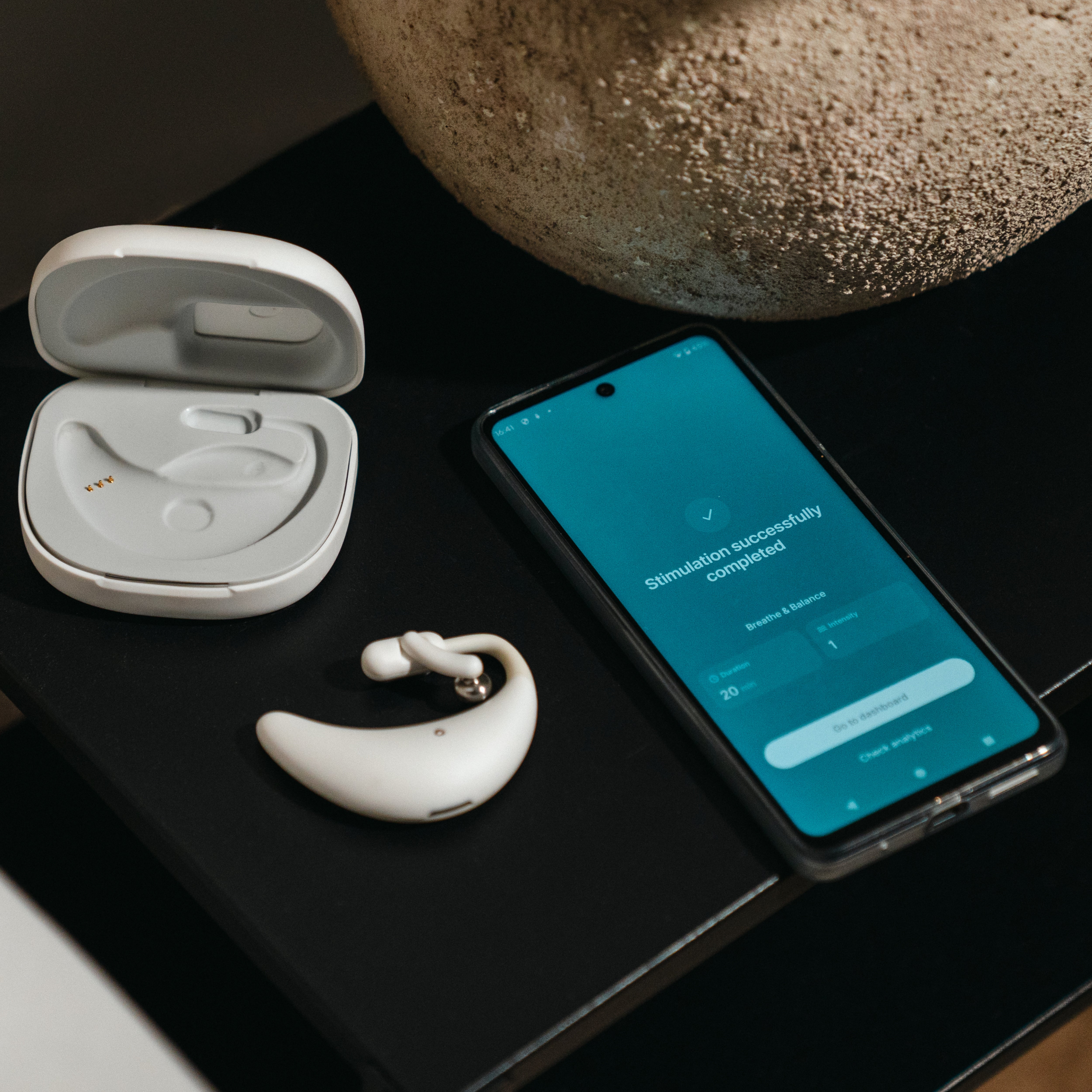
Case Study in Innovation: SONa exemplifies this next generation of personalised sleep technology. By combining vagus nerve stimulation with AI that reads HRV and breathing patterns, it creates bespoke sessions adapted to your immediate physiological state. The system learns your unique response patterns over time, continuously refining its approach.
The Data Privacy Balance: Advanced personalisation requires sharing biometric data, raising valid privacy concerns. Leading platforms use on-device processing and encrypted storage to protect sensitive information. When evaluating AI-powered apps, scrutinise their data handling practices and choose platforms prioritising user privacy alongside innovation.
Comparing User Results and Success Stories
Real-world outcomes matter more than features lists. Our analysis of user reviews, clinical trials, and long-term success rates reveals significant disparities between app categories.
Meditation App Outcomes: Calm and Headspace users report 65-70% satisfaction for mild sleep issues, dropping to 40% for chronic insomnia. Success correlates strongly with consistency: users maintaining daily practice for 30+ days show better outcomes. However, adherence rates plummet after initial enthusiasm, with only 20% maintaining regular use after three months.
Physiological Intervention Results: Vagus nerve stimulation for sleep research shows more strong outcomes for sleep disorders. Clinical studies demonstrate 70-80% improvement rates for insomnia when addressing autonomic dysfunction. Users report faster results (often within days rather than weeks) and better adherence due to immediate physiological feedback.
Common Success Patterns: - Gradual improvers: Respond well to meditation apps with consistent practice - Acute responders: Need immediate relief and benefit from physiological interventions - Combination users: Achieve best results mixing approaches based on nightly needs - Non-responders: Require medical evaluation for underlying conditions
Why Some Apps Fail: Analysis of negative reviews reveals common failure points: overwhelming choice paralysis, lack of immediate results, and mismatched interventions for specific sleep disorders. Apps succeeding long-term provide clear guidance, realistic expectations, and multiple modalities for different situations.
The Adherence Factor: Long-term success depends on sustainable daily practices. Apps requiring 45-minute sessions see poor adherence compared to those offering flexible 5-20 minute options. The most successful platforms balance effectiveness with realistic time commitments.
Making the Right Choice for Your Sleep Needs
Selecting the optimal sleep app requires honest assessment of your specific challenges and realistic evaluation of what you'll actually use consistently.
For Racing Thoughts and Mental Chatter: If your primary issue involves quieting an overactive mind, traditional meditation apps like Calm or Headspace provide appropriate tools. Start with free trials to determine whether guided meditation resonates before committing to subscriptions.
For Anxiety-Driven Insomnia: When physical symptoms accompany sleep difficulties (racing heart, muscle tension, feeling "wired but tired") consider physiological interventions. Apps or devices targeting vagus nerve stimulation address the autonomic imbalance maintaining hyperarousal.
For Sleep Quality Optimisation: If you sleep but wake unrefreshed, tracking apps like Sleep Cycle provide insights into sleep architecture. Combine tracking with intervention apps addressing identified issues rather than relying on data alone.
For Irregular Schedules: Shift workers and frequent travellers benefit from apps offering flexibility and offline access. Avoid rigid programme structures requiring same-time daily practice.
Budget Considerations: - Under £30/year: Insight Timer premium or Sleep Cycle - £30-60/year: Calm, Headspace, or similar meditation platforms - One-time investment: Devices like SONA's vagus nerve stimulation device for long-term nervous system regulation
Red Flags to Avoid: - Apps claiming overnight transformation - Platforms requiring excessive permissions - Subscriptions with difficult cancellation - Generic solutions ignoring individual differences
The Future of Sleep Technology
Sleep technology stands at an inflection point. As our understanding of neuroscience deepens, apps evolve from simple meditation players to sophisticated therapeutic tools.
Emerging Trends: Integration between wearables and intervention apps creates closed-loop systems responding to real-time physiological data. Your smartwatch detects stress elevation; your sleep app automatically adjusts tonight's programme. This ecosystem approach moves beyond isolated tools toward complete sleep health platforms.
Biomarker Revolution: Next-generation apps will use multiple biomarkers (HRV, cortisol patterns, temperature fluctuations) to create precise physiological profiles. Machine learning algorithms will predict sleep disruption before it occurs, offering preventive interventions.
Precision Medicine Approaches: Genetic testing and chronotype analysis will inform personalised sleep protocols. Rather than guessing which intervention might work, apps will recommend evidence-based approaches matched to your biological blueprint.
Beyond Apps to Integrated Solutions: The future lies not in standalone apps but in coordinated platforms combining multiple modalities. Imagine AI-driven systems smoothly blending vagus nerve stimulation, targeted sound therapy, environmental controls, and personalised guidance based on moment-to-moment physiological needs.
Accessibility and Democratisation: As technology costs decrease, advanced interventions previously limited to clinical settings become available for home use. This democratisation of sleep medicine empowers individuals to address root causes rather than merely managing symptoms.
The trajectory points toward truly personalised, physiologically-grounded interventions that adapt in real-time to individual needs. The question isn't whether technology can improve sleep: it's how quickly these innovations reach those who need them most.
Frequently Asked Questions
What is the most effective sleep app for chronic insomnia?
For chronic insomnia, apps targeting nervous system regulation like SONA show superior outcomes compared to meditation-only platforms. Clinical research on vagus nerve stimulation demonstrates 70-80% improvement rates for persistent sleep disorders by addressing underlying autonomic dysfunction rather than surface symptoms.
Are paid sleep apps worth the subscription cost?
Paid features worth the investment include personalised programmes, offline access, and advanced biometric integration. However, expensive subscriptions for expanded content libraries rarely improve outcomes. One-time purchases for evidence-based devices often provide better long-term value than perpetual monthly payments.
How long before sleep apps show results?
Meditation apps typically require 2-4 weeks of consistent use before showing meaningful results. Physiological interventions like vagus nerve stimulation often produce noticeable improvements within days. Individual response times vary based on sleep issue severity and intervention adherence.
Can sleep apps replace medical treatment for sleep disorders?
Sleep apps complement but don't replace medical evaluation for persistent sleep disorders. Whilst many users find relief through apps, underlying conditions like sleep apnoea, restless leg syndrome, or hormonal imbalances require professional diagnosis and treatment.
Which sleep app works best without a subscription?
Insight Timer offers the most complete free features with thousands of sleep meditations. For physiological approaches, one-time purchase devices like SONA provide ongoing benefits without subscriptions, making them cost-effective for long-term use.
Conclusion
The space of sleep apps reveals a clear divide between traditional cognitive approaches and emerging physiological interventions. Whilst meditation apps like Calm and Headspace offer value for mild sleep difficulties, they often fall short when addressing the nervous system dysregulation underlying chronic sleep disorders.
The future belongs to personalised, science-based approaches that adapt to individual physiology rather than applying generic solutions. Whether through AI-driven vagus nerve stimulation or integrated platforms combining multiple modalities, effective sleep technology must address root causes, not just symptoms.
Your choice depends on honestly assessing your sleep challenges. For racing thoughts, traditional apps may suffice. For anxiety-driven insomnia or persistent sleep quality issues, consider physiological interventions targeting autonomic balance. You can also try our 11 natural ways to improve sleep quality alongside any app you choose. The best investment isn't necessarily the most popular app: it's the approach that matches your unique neurophysiology and creates sustainable improvement.
Ready to move beyond generic meditation and address the root cause of your sleep challenges? Explore SONA to discover how AI-powered vagus nerve stimulation creates personalised pathways to restorative sleep. Learn more about the science behind vagus nerve stimulation and this revolutionary approach to nervous system regulation.
Disclaimer
**DISCLAIMER:** Sona is a wellness device and is not a medically regulated product. The information in this article is for educational purposes only and does not constitute medical advice. We do not make any claims about Sona's ability to diagnose, treat, cure, or prevent any medical condition. Vagus nerve stimulation research referenced in this article relates to the broader field of VNS and may not be specific to any particular consumer device. Always consult a qualified healthcare professional before making decisions about your health.
Sources
- Thayer, J. F., Åhs, F., Fredrikson, M., Sollers, J. J., & Wager, T. D. (2012). A meta-analysis of heart rate variability and neuroimaging studies: Implications for heart rate variability as a marker of stress and health. Neuroscience & Biobehavioral Reviews, 36(2), 747-756.



Share:
Sleep Better Tonight: 10 Evidence-Based Tips That Work
Better Sleep for Parents: Nervous System Strategies That Actually Work