


Stress resilience is your nervous system's trained capacity to absorb a stressor, adapt to it, and recover efficiently back to baseline. It is not a fixed personality trait or a matter of willpower : it is a physiological and psychological skill that is learnable, measurable, and improvable at any age. The evidence is clear: with the right knowledge and consistent practice, you can meaningfully increase how well your body responds to pressure and how quickly it recovers afterwards.
That matters because chronic, poorly-recovered stress accumulates a physiological cost : what researchers call allostatic load : that erodes health over time. The good news is that the same systems that make you vulnerable to stress can be trained to make you resilient. At the centre of this physiology sits the vagus nerve and a measurable biomarker called heart rate variability (HRV), a thread that runs through this entire guide. In the sections that follow, you'll understand exactly what's happening in your body under pressure and leave with a concrete, prioritised action plan. This isn't about controlling your responses through willpower alone : it's about working with your body's innate wisdom to build genuine, lasting resilience. If you're new to the physiology, our overview of vagus nerve stimulation is a useful companion to this article.
Key Takeaways
- Stress resilience is your nervous system's trainable capacity to respond to and recover from stress : it's the recovery that matters, not the absence of stress.
- The vagus nerve and HRV are the central physiology of resilience; strengthening vagal tone improves how efficiently you bounce back.
- Distinguish acute resilience (fast in-the-moment recovery, e.g. Breathwork) from chronic resilience (long-term habits that prevent physiological debt).
- Genetics sets your baseline but not your ceiling : habits, environment and regulation practices shape a large share of resilience.
- The evidence-backed pillars are breath, sleep, movement, nutrition, temperature, light and connection, and they reinforce one another.
- Track your progress objectively with HRV trends over weeks, paired with honest subjective self-assessment.
- Trauma history calls for a gentler, safety-first approach, and persistent or clinical-level stress warrants professional support.
Quick Summary
- Stress resilience is a trainable capacity of the nervous system : not a fixed personality trait : that governs how fast you recover from stressors.
- The vagus nerve and heart rate variability (HRV) are the central physiology of resilience; higher resting HRV is associated with faster stress recovery and better emotional regulation.
- There is a important distinction between acute resilience (rapid recovery from a single event) and chronic resilience (preventing accumulated physiological debt) : each needs different strategies.
- Genetics accounts for only part of resilience; a large share is shaped by learnable habits, environment, and nervous-system regulation.
- The evidence-backed pillars include breathwork, sleep, movement, nutrition, temperature exposure, morning light, and social connection.
- You can track resilience objectively using HRV trends from wearables, alongside subjective measures of recovery.
- Trauma history changes how resilience is built, requiring gentler, safety-first approaches.
What Is Stress Resilience : and How Is It Different from Just Handling Stress?
Stress resilience is best understood as allostatic regulation: the capacity of your nervous system to mount an appropriate stress response when a challenge arrives, and then return efficiently to baseline once it passes. It is the recovery : not the absence of stress : that defines resilience.
The difference between stress tolerance and stress resilience: Stress tolerance is white-knuckling through pressure while your body stays in a heightened state; stress resilience is the trained physiological ability to respond and then recover quickly and completely. Tolerance is endurance under load. Resilience is elasticity : the ability to bend and spring back. The two can look identical from the outside, yet only one protects your long-term health.
There's also a persistent myth worth dismantling: the idea of stress immunity, or that resilient people simply don't feel stress. They do. Resilient people often feel stress as intensely as anyone : their nervous systems are simply more efficient at down-regulating afterwards. The goal is never to feel nothing; it's to recover well.
One distinction that most articles miss is the difference between acute and chronic resilience. Acute resilience is about rapid recovery from a single high-stakes moment : a presentation, a difficult conversation, a near-miss in traffic. Chronic resilience is about preventing the slow accumulation of physiological debt across weeks, months and years of sustained demand. This matters practically: the breathing technique that helps you recover in ninety seconds before a meeting is a very different tool from the sleep, movement and connection habits that prevent burnout over a decade.
This framework draws on foundational work including Bruce McEwen's model of allostatic load : the wear-and-tear the body accumulates when stress responses are repeatedly activated or poorly switched off : and the resilience research of Southwick and Charney, who identified psychological and neurobiological factors that distinguish those who thrive under adversity. Understanding stress as something you recover from rather than something you must eliminate is the first and most empowering shift.
Deep dive: Not all stress is harmful. Read Meet the Stress That Makes You Stronger to understand how the right dose of challenge actually builds capacity.
The Science Behind Stress Resilience: What's Happening in Your Body
Building resilience starts with understanding the machinery under the bonnet : and the good news is that this machinery is trainable.
The HPA axis and the fight-or-flight cascade
When your brain perceives a threat, the hypothalamic-pituitary-adrenal (HPA) axis springs into action. The amygdala signals the hypothalamus, the sympathetic nervous system fires, and adrenaline surges within seconds, followed by cortisol over minutes. Your heart rate climbs, blood is redirected to your muscles, and your attention narrows. This is not a malfunction : it is a beautifully adaptive response that evolved to keep you alive. The problem arises only when the response fails to switch off.
Autonomic balance: accelerator and brake
Your autonomic nervous system has two branches working in constant dialogue: the sympathetic branch (the accelerator) and the parasympathetic branch (the brake), the latter largely governed by the vagus nerve. Resilience is fundamentally about the quality of this balance : how readily you can accelerate when needed and, just as importantly, how efficiently you can brake afterwards. A nervous system stuck with its foot on the accelerator is the signature of chronic stress.
HRV: the measurable biomarker of resilience
Heart rate variability : the natural beat-to-beat variation in the timing of your heartbeats : is the most useful window we have into this balance. Higher HRV typically indicates strong vagal tone and better recovery capacity, whilst chronically low HRV suggests sympathetic dominance and reduced resilience. Research associated with Thayer and Lane's neurovisceral integration model links higher vagally-mediated HRV to better emotional regulation, cognitive flexibility, and physiological recovery. In practical terms, HRV is a proxy for how good your brake is.
The vagus nerve: the recovery highway
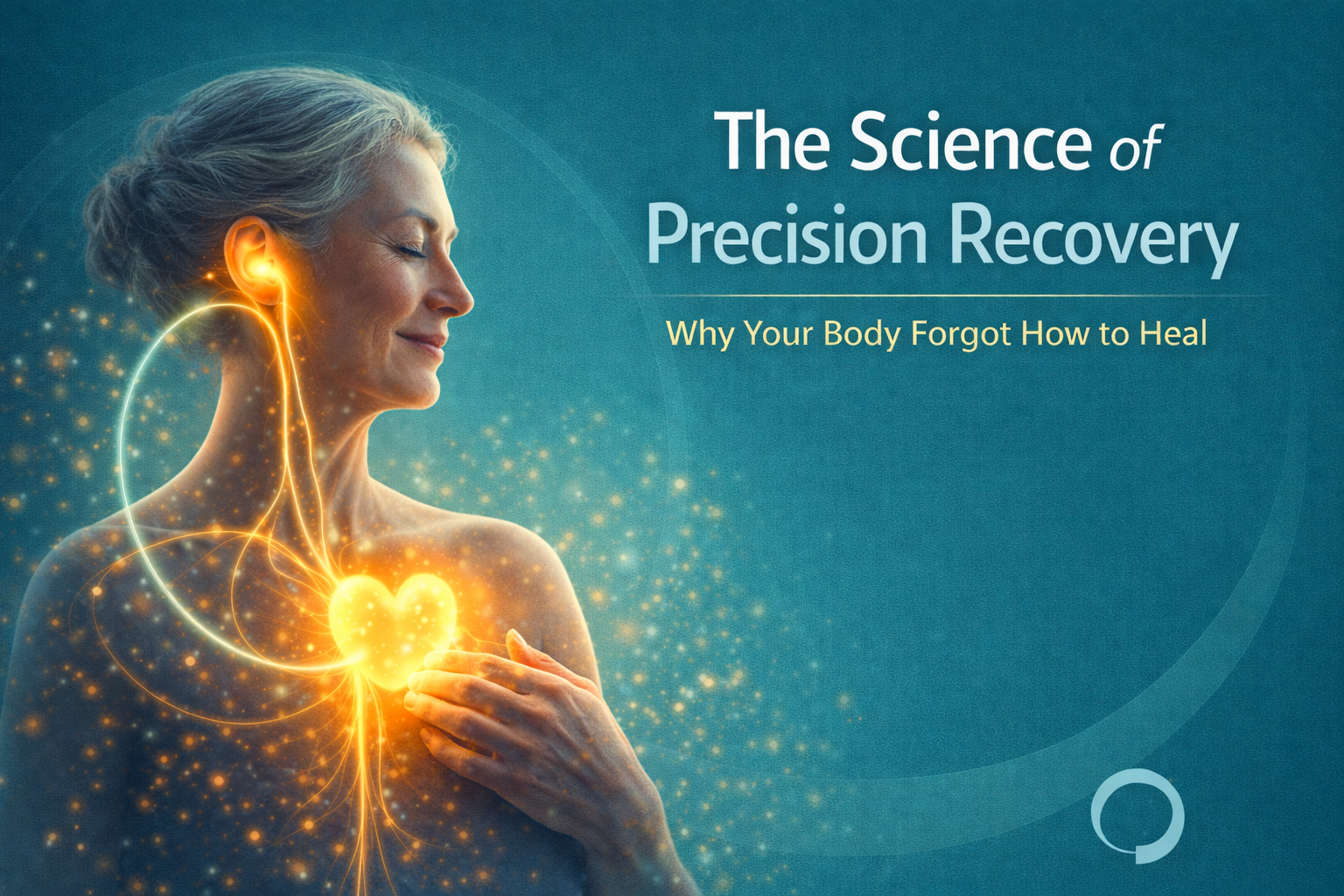
The vagus nerve, whose name derives from the Latin word for 'wandering,' is aptly named : it wanders from the brainstem to the heart, lungs, and gut, carrying the parasympathetic signals that calm the body after stress. Strengthening vagal tone is therefore one of the most direct routes to greater resilience, and it's why so many of the strategies later in this guide converge on the vagus nerve. To understand HRV in depth, our guide to heart rate variability: what it is and how to improve it breaks down the metric and how to read it.
Want the full physiology? Read our complete guide to vagus nerve stimulation and what your HRV reveals about stress.
Why Some People Are More Resilient Than Others
Resilience is neither purely inherited nor purely earned : it is the product of an ongoing interaction between your genes, your history, and your habits. This is genuinely good news, because it means a substantial portion of your resilience is within your influence.
Twin and behavioural-genetics studies suggest that heritability accounts for a meaningful but far from decisive share of resilience-related traits. Genes influence your baseline reactivity : how quickly your stress response fires and how strongly cortisol rises : but they do not fix your ceiling. The remainder is shaped by early experience, learned coping patterns, social environment, and the physiological habits you build over time.
Several factors reliably differentiate more resilient nervous systems. The first is autonomic flexibility : the ability to move fluidly between activation and recovery rather than getting stuck in one gear. The second is perceived control and meaning: Southwick and Charney's research highlights that people who find purpose in adversity and believe they can influence outcomes show measurably better stress physiology. The third is social connection, which we'll return to as a pillar, because safe relationships directly down-regulate the stress response.
Importantly, the window within which your nervous system feels safe and capable : what clinicians call the window of tolerance : can be actively widened with practice. This is the mechanistic heart of resilience training: you are not changing your personality, you are expanding the range of experience your nervous system can handle without tipping into overwhelm or shutdown.
Deep dive: Learn how to expand your capacity in Window of Tolerance: How to Expand Yours for Better Emotional Regulation.
The Pillars of Stress Resilience
Resilience isn't built from a single practice but from several reinforcing pillars : each of which sends your nervous system repeated signals of safety and recovery. Think of these as the load-bearing structures of a resilient physiology.
1. Breath
Slow, extended-exhale breathing is the fastest voluntary route to activating the vagus nerve and shifting you out of sympathetic arousal. Because you can control your breath consciously, it is the one lever that gives you direct, in-the-moment access to your autonomic nervous system.
2. Sleep
Sleep is when the nervous system consolidates recovery and clears the physiological residue of the day's stress. Poor sleep raises next-day cortisol and lowers HRV, creating a vicious cycle that erodes resilience.
3. Movement
Exercise is a form of controlled hormetic stress: it briefly challenges the body, then triggers adaptations that improve stress tolerance and cardiovascular flexibility. Regular aerobic activity is one of the most strongly evidenced ways to raise resting HRV.
4. Nutrition and metabolic stability
Stable blood sugar, adequate omega-3 intake, and a healthy gut microbiome all shape the substrate on which your stress response operates. Blood-sugar crashes, in particular, can mimic and amplify a stress response.
5. Temperature and light
Deliberate cold and heat exposure, and correctly timed light, are powerful signals to the autonomic and circadian systems that help calibrate your baseline arousal.
6. Connection
Safe social contact is a biological regulator. Positive interaction increases vagal tone and buffers the cortisol response : humans are wired to co-regulate.
These pillars are synergistic: improve one and the others tend to follow. The strategies in the next section show you how to act on each.
Each pillar has a dedicated guide below : start with the one that feels most within reach today.
How to Build Stress Resilience: Proven Strategies
Here is the practical core of the guide : evidence-backed strategies organised so you can choose the right tool for the right job. Remember the acute-versus-chronic distinction: some of these calm you in the moment, while others build capacity over time.
Breathwork: your fastest acute tool
When you need to recover quickly, nothing beats the breath. Slow breathing at roughly six breaths per minute, with a longer exhale than inhale, maximises vagal activation and has been shown in HRV biofeedback research : a field advanced by Sona advisory board member Professor Richard Gevirtz : to rapidly increase heart rate variability. A simple starting protocol: inhale for four seconds, exhale for six, for five minutes. Use this before a high-stakes moment or immediately after a stressful spike.
Cold and heat exposure
Brief cold exposure triggers a sharp autonomic response followed by a parasympathetic rebound, and over time may help train autonomic flexibility. Heat exposure, such as sauna use, has separately been associated with cardiovascular and stress-recovery benefits. The key is deliberate, progressive dosing rather than shock.
Movement as hormetic training
Aim for a mix of regular moderate aerobic activity and occasional higher-intensity work. The goal isn't exhaustion : it's the repeated cycle of challenge and recovery that teaches your nervous system to down-regulate efficiently. Overtraining, by contrast, suppresses HRV and undermines resilience.
Optimising light and circadian rhythm
Morning light exposure anchors your circadian rhythm, which in turn regulates the daily cortisol curve. A healthy cortisol rhythm : high in the morning, tapering by night : is a hallmark of a well-regulated stress system.
Nutrition for a stable stress response
Prioritise protein and fibre to stabilise blood sugar, include omega-3 rich foods, and support gut health, given the vagus nerve's central role in the gut-brain axis. Reducing reliance on caffeine late in the day protects both sleep and HRV.
Direct vagus nerve stimulation
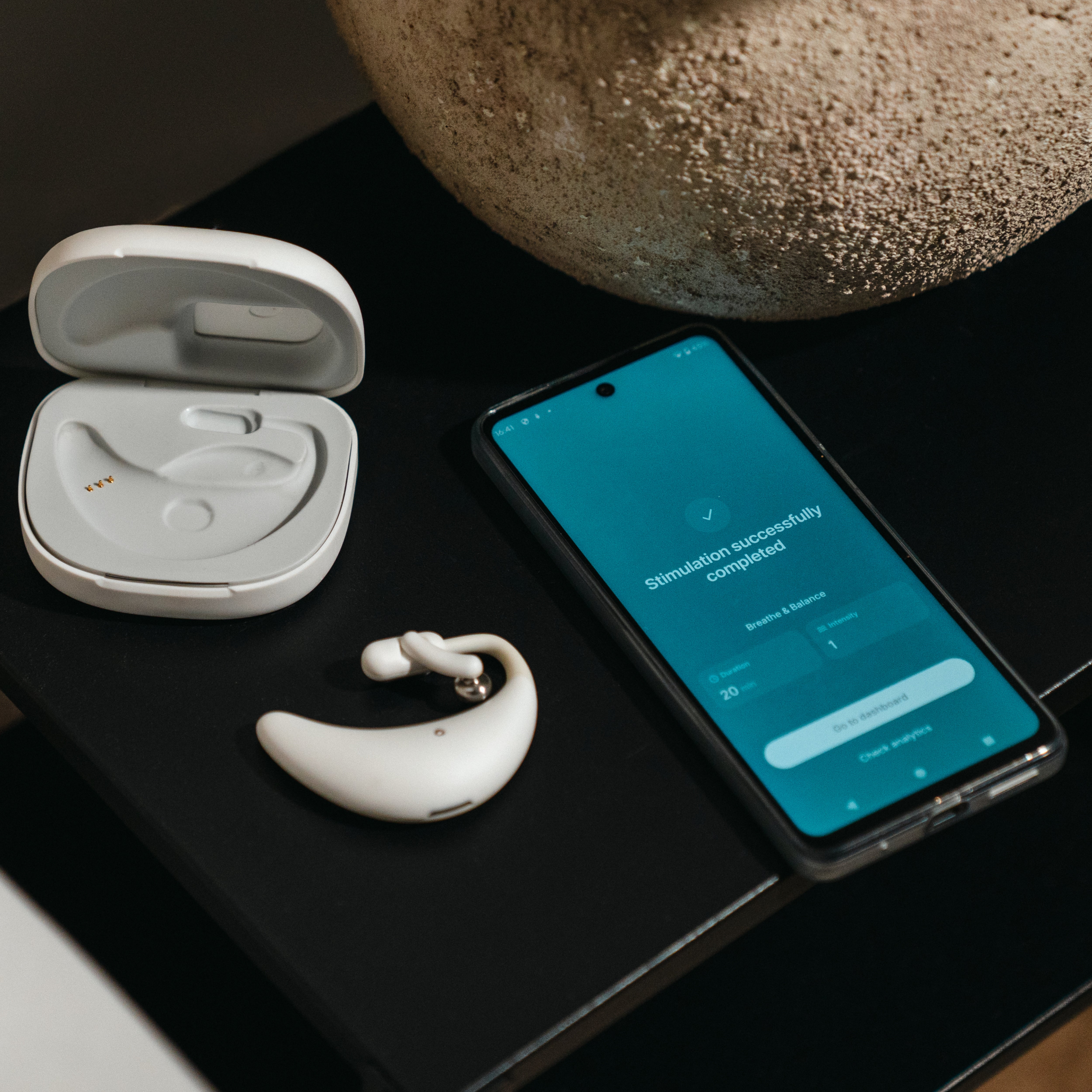
Beyond breath and cold, transcutaneous vagus nerve stimulation (tVNS) has become an area of significant research interest for supporting autonomic balance. Studies on VNS indicate potential benefits for stress and HRV, though it's important to note this research relates to the broader VNS field rather than to any specific consumer device. Sona's approach : reading HRV and respiration in real time and time-locking gentle stimulation to your heart rhythm : is designed to make this kind of vagal training personalised and consistent.
Go deeper on each strategy: Breathwork for Stress, Cold Exposure and the Vagus Nerve, How Temperature Affects Stress, and Morning Light and Your Circadian Rhythm.
Daily Habits That Build Long-Term Resilience
Chronic resilience is built not in dramatic gestures but in the small, repeatable habits that accumulate into a well-regulated nervous system. Consistency beats intensity every time.
Anchor your morning
A reliable morning routine : natural light within the first hour of waking, a few minutes of slow breathing, and some movement : sets your circadian and cortisol rhythms for the day. These cues tell your nervous system that the day is beginning on a footing of safety and predictability.
Manage cortisol across the day
Rather than trying to eliminate cortisol : which you need : the aim is a healthy rhythm. Regular meals, movement breaks, moments of recovery between demands, and protected wind-down time all help keep the curve where it should be. Small recovery pauses between tasks prevent the day's stressors from stacking.
Protect your sleep
Treat sleep as the foundation of recovery, not the thing you sacrifice. A consistent sleep-wake schedule, a cool dark room, and a genuine wind-down period do more for resilience than almost any single intervention.
Build in connection
Schedule real social contact as deliberately as you schedule work. A conversation with someone who makes you feel safe is one of the most direct ways to raise vagal tone and buffer stress.
Watch for early warning signs
Accumulating physiological debt announces itself before full burnout: declining HRV, disrupted sleep, irritability, and a shrinking window of tolerance. Catching these signals early allows you to add recovery before you hit the wall.
Deep dive: If you're already running on empty, our Burnout Recovery: A Nervous-System Plan to Bounce Back offers a structured route back, and How to Lower Cortisol Naturally gives you a daily routine.
How to Measure Your Stress Resilience
One of the reasons resilience feels abstract is that people rarely measure it : yet it is genuinely measurable, and tracking it turns a vague goal into a feedback loop you can act on.
HRV as your primary metric
Heart rate variability is the most accessible objective marker of resilience capacity. What matters is not a single reading but your trend over weeks: a gradually rising resting HRV suggests your recovery capacity is improving, while a sustained decline is an early warning that stress is outpacing recovery. Because HRV is highly individual, compare yourself only to your own baseline : never to someone else's numbers.
Using wearables wisely
Modern wearables and dedicated HRV trackers make daily measurement effortless. The most reliable approach is a consistent morning reading taken under the same conditions. Watch the multi-day and multi-week trend, and correlate dips with lifestyle factors : a poor night's sleep, alcohol, illness, or an unusually demanding day : to learn what most affects your nervous system. This biometric feedback loop is exactly what closed-loop systems like Sona are built around: measuring your physiology and adapting to it.
Subjective measures still matter
Objective data is powerful, but pair it with honest self-assessment: How quickly do I recover after a setback? How is my sleep quality? Do I feel resourced or depleted? The combination of biometric trend and lived experience gives the fullest picture of your resilience.
Deep dive: Compare the tools in our guide to the best HRV tracking devices and learn practical methods in How to Improve HRV Naturally: 11 Proven Methods.
Resilience Across Life Stages and After Trauma
Resilience-building is not one-size-fits-all : the right approach depends on your life stage, your demands, and your history.
High-performance professionals
For those operating under sustained cognitive load, the risk is chronic sympathetic dominance masked by high functioning. Here, the priority is deliberate recovery: structured downtime, HRV monitoring, and short vagal-activation practices between demands to prevent the slow slide into burnout.
Parents and caregivers
When sleep is fragmented and demands are relentless, perfect routines are unrealistic. The strategy shifts to micro-recovery : brief breathing resets, snatched moments of daylight, and leaning on connection and co-regulation. Small, frequent doses of regulation matter more than long sessions.
Ageing adults
HRV naturally declines with age, but the capacity to improve autonomic function through movement, breathing and social engagement remains throughout life. Resilience training is genuinely available at any age.
After trauma: a safety-first approach
Trauma history meaningfully changes how resilience is built. A nervous system shaped by trauma may have a narrower window of tolerance and can perceive certain regulation practices : including intense breathwork or cold exposure : as threatening rather than calming. The evidence-informed approach here is gentler and slower: prioritising felt safety, titrating exposure carefully, and working with a qualified trauma-informed professional. If a practice consistently increases distress rather than easing it, that is important information, not a failure. Sometimes the nervous system moves into a shutdown or 'freeze' state, and understanding that response is the first step toward recovery.
Deep dive: Understand shutdown states in Dorsal Vagal Response: Signs, Causes & How to Recover and explore the framework in Polyvagal Theory Explained.
When to Seek Professional Help
Building resilience is empowering, but it is not a substitute for professional care when stress crosses into a clinical concern. Self-directed strategies work best as part of a broader picture of health.
Consider seeking professional support if stress or low mood persists for weeks and interferes with your work, relationships or daily functioning; if you experience persistent sleep disruption, panic, or physical symptoms without a clear cause; or if you find yourself unable to recover no matter what you try. Chronic stress can contribute to, and coexist with, conditions that deserve proper assessment : and reaching out is a sign of self-awareness, not weakness.
Understanding a shutdown or freeze state as a protective response rather than a personal failing reduces the self-judgement that often compounds suffering. A GP, therapist, or trauma-informed practitioner can help you distinguish between the ordinary stress that resilience training addresses and something requiring clinical support. The two are not mutually exclusive : many people benefit from both.
Frequently Asked Questions
What is stress resilience and why is it important?
Stress resilience is your nervous system's trained capacity to respond appropriately to a stressor and then recover efficiently back to baseline. It matters because it's the recovery : not the absence of stress : that protects your long-term health; poorly-recovered chronic stress accumulates physiological wear-and-tear (allostatic load) that erodes wellbeing over time. Importantly, resilience is a learnable, measurable skill, not a fixed trait.
Can stress resilience be learned or is it genetic?
Both, but the learnable portion is substantial. Genetics influences your baseline stress reactivity, but it does not set a fixed ceiling. Early experience, learned coping patterns, social environment and : importantly : physiological habits like breathwork, sleep, movement and connection shape a large share of your resilience. This is why resilience can be actively built at any age.
What is the difference between stress tolerance and stress resilience?
Stress tolerance is white-knuckling through pressure while your body stays in a heightened state : endurance under load. Stress resilience is the trained physiological ability to respond and then recover quickly and completely : elasticity. Both can look identical from the outside, but only resilience protects your long-term health, because it's built on efficient recovery rather than sustained strain.
How long does it take to build stress resilience?
You can feel acute benefits from tools like slow breathing within minutes, but measurable changes to your baseline : such as a rising resting HRV : typically emerge over several weeks of consistent practice. Resilience is built through repeated signals of safety and recovery, so consistency over weeks and months matters far more than intensity in any single session.
What are the 5 pillars of resilience?
While frameworks vary, the physiologically-grounded pillars of stress resilience are: breath (fast vagal activation), sleep (nightly recovery), movement (hormetic challenge and adaptation), nutrition and metabolic stability, and social connection (biological co-regulation). Temperature and light exposure are powerful additional levers. These pillars reinforce one another : improving one tends to lift the others.
How does exercise help with stress resilience?
Exercise is a form of controlled hormetic stress: it briefly challenges the body, then triggers adaptations that improve stress tolerance and autonomic flexibility. Regular moderate aerobic activity is one of the most strongly evidenced ways to raise resting HRV. The key is the cycle of challenge and recovery : overtraining without adequate recovery actually suppresses HRV and undermines resilience.
What foods help build resilience to stress?
Prioritise foods that stabilise blood sugar (protein and fibre), include omega-3 rich foods such as oily fish, and support gut health given the vagus nerve's central role in the gut-brain axis. Blood-sugar crashes can mimic and amplify a stress response, so steady fuelling helps keep your stress physiology calm. Moderating late-day caffeine also protects both sleep and HRV.
How does the vagus nerve affect stress resilience?
The vagus nerve carries the parasympathetic 'brake' signals that calm your body after a stress response, so its tone largely determines how efficiently you recover. Higher vagal tone : reflected in higher HRV : is associated with faster stress recovery and better emotional regulation. This is why so many resilience strategies, from slow breathing to cold exposure, work by strengthening vagal activation.
Can I measure my stress resilience at home?
Yes. Heart rate variability (HRV), measurable with many wearables and dedicated trackers, is the most accessible objective marker. Take a consistent morning reading and watch your multi-week trend rather than any single number, comparing only to your own baseline. Pair this biometric data with honest self-assessment of your sleep, mood and recovery speed for the fullest picture.
Is stress ever good for you?
Yes : the right dose of manageable, recoverable stress is how the nervous system builds capacity, a principle called hormesis. Acute stress sharpens focus, mobilises energy and, when followed by good recovery, strengthens resilience over time. The problem is not stress itself but chronic stress that never fully switches off. The goal is better recovery, not the elimination of all challenge.
Conclusion
Stress resilience is not a lucky inheritance handed to a fortunate few : it is a physiological skill your nervous system can learn, and the evidence for that is clear. By understanding what happens in your body under pressure, distinguishing the acute recovery tools from the long-term habits that prevent physiological debt, and consistently strengthening the vagal 'brake' at the heart of your recovery system, you can meaningfully change how you meet whatever pressure life brings. This isn't about controlling your responses through willpower alone : it's about working with your body's innate wisdom to build genuine, lasting resilience. Start with a single pillar this week, track your HRV trend, and let small, repeatable signals of safety compound into a nervous system that doesn't just cope, but thrives.
Sona is the world's first truly personalised, AI-powered vagus nerve stimulator : reading your HRV and respiration in real time and time-locking gentle stimulation to your own heart rhythm to make vagal training effortless and consistent. If you're ready to build resilience with a tool designed around your physiology, discover how Sona works and take the next step in training your nervous system to thrive under pressure.
References
- McEwen, B.S. (1998). Protective and Damaging Effects of Stress Mediators. New England Journal of Medicine, 338(3), 171-179.
- Southwick, S.M. & Charney, D.S. (2012). Resilience: The Science of Mastering Life's Greatest Challenges. Cambridge University Press.
- Thayer, J.F. & Lane, R.D. (2000). A model of neurovisceral integration in emotion regulation and dysregulation. Journal of Affective Disorders, 61(3), 201-216.
- Thayer, J.F., Åhs, F., Fredrikson, M., Sollers, J.J. & Wager, T.D. (2012). A meta-analysis of heart rate variability and neuroimaging studies. Neuroscience & Biobehavioral Reviews, 36(2), 747-756.
- Lehrer, P.M. & Gevirtz, R. (2014). Heart rate variability biofeedback: how and why does it work? Frontiers in Psychology, 5, 756.
- Porges, S.W. (2007). The polyvagal perspective. Biological Psychology, 74(2), 116-143.
- McEwen, B.S. & Wingfield, J.C. (2003). The concept of allostasis in biology and biomedicine. Hormones and Behavior, 43(1), 2-15.
- Laborde, S., Mosley, E. & Thayer, J.F. (2017). Heart Rate Variability and Cardiac Vagal Tone in Psychophysiological Research. Frontiers in Psychology, 8, 213.
Disclaimer
DISCLAIMER: Sona is a wellness device and is not a medically regulated product. The information in this article is for educational purposes only and does not constitute medical advice. We do not make any claims about Sona's ability to diagnose, treat, cure, or prevent any medical condition. Vagus nerve stimulation research referenced in this article relates to the broader field of VNS and may not be specific to any particular consumer device. Always consult a qualified healthcare professional before making decisions about your health.
Sources
- https://www.nejm.org/doi/full/10.1056/NEJM199801153380307
- https://www.frontiersin.org/articles/10.3389/fpsyg.2014.00756/full
- https://www.frontiersin.org/articles/10.3389/fpsyg.2017.00213/full
- https://www.sciencedirect.com/science/article/abs/pii/S0149763411001904

Share:
How to Lower Cortisol Naturally: A Science-Backed Daily Routine
Best Vagus Nerve Stimulation Device for Sleep (2026): Sona vs Top VNS Options Compared