


If you're reading this at 3am, wired but exhausted, or dragging yourself through another afternoon crash, I want you to hear something first: your body isn't broken. It's overwhelmed. Chronic stress has flooded your system with cortisol, and it's simply doing what it evolved to do : trying to keep you safe.
To lower cortisol naturally, focus on consistent daily habits that calm the nervous system: prioritise sleep and morning light, eat blood-sugar-stabilising meals, practise slow diaphragmatic breathing, move your body without over-training, and stimulate the vagus nerve. These habits shift you out of sympathetic "fight or flight" dominance and restore healthy cortisol rhythms over weeks, not days.
This isn't another scattered list of tips. It's a practical daily protocol, built around how cortisol actually behaves in your body : including the parts most articles skip: the vagus nerve, heart rate variability (HRV), and the cortisol awakening response. If you'd like to understand what chronic cortisol elevation actually does to your body, we've covered that too. For now, let's build you a routine that works with your physiology, not against it.
Key Takeaways
- Cortisol is a survival hormone : the goal isn't to eliminate it, but to restore its natural daily rhythm (high in the morning, low at night).
- The most effective natural cortisol-lowering habits target the nervous system: sleep, morning light, slow breathing, balanced blood sugar, and vagus nerve stimulation.
- Heart rate variability (HRV) is a measurable, objective marker of cortisol regulation : rising HRV usually signals your nervous system is recovering.
- Lowering cortisol naturally takes consistency; expect meaningful shifts over 4-8 weeks, not overnight.
- Persistent or severe symptoms warrant a GP visit and possible cortisol testing : natural strategies complement, not replace, medical care.
What Is Cortisol and Why Does It Matter?
Before you can lower cortisol, it helps to understand what it is : and why your body works so hard to produce it.
Cortisol is a glucocorticoid hormone released by your adrenal glands, controlled by a feedback system called the HPA axis (hypothalamic-pituitary-adrenal axis). Its release is driven primarily by perceived stress, low blood sugar, and your circadian rhythm. Far from being the villain it's often painted as, cortisol is essential: it helps you wake up, regulates blood sugar, and mobilises energy when you genuinely need it.
The problem isn't cortisol itself : it's the pattern. In a healthy system, cortisol follows a distinct daily curve. It peaks 30-45 minutes after waking, a phenomenon called the cortisol awakening response (CAR), then tapers steadily across the day to reach its lowest point at night. Most people living with chronic stress have a flattened or dysregulated CAR: they wake up depleted and feel most "switched on" late in the evening.
Here's the important distinction. Acute cortisol spikes : before a presentation, during exercise, in a real emergency : are healthy and adaptive. Chronic elevation is different. Sustained high cortisol drives inflammation, encourages abdominal fat storage, disrupts sleep, and suppresses immune function.
Everything that follows in this guide rests on one mechanism: the HPA axis and your autonomic nervous system are locked in a constant feedback loop. Calm the nervous system, and you gently signal the HPA axis to stand down.
Signs and Symptoms of High Cortisol: A Quick Checklist
Wondering whether your cortisol is dysregulated? The clearest signal is a cluster of symptoms that persist despite adequate rest.
Run through this checklist : you don't need every item to have a cortisol problem, because these symptoms exist on a spectrum:
- Fatigue that doesn't resolve with a full night's sleep - Waking regularly between 2-4am, often wide awake - Afternoon energy crashes around 3-4pm - Persistent cravings for sugar and salt - Stubborn belly fat that resists diet and exercise - Low libido - Brain fog and difficulty concentrating - Free-floating anxiety or feeling "wired but tired" - Getting sick more often than you used to
There's also an objective marker worth introducing here: heart rate variability (HRV), the tiny beat-to-beat variation in your heart rhythm. Low HRV often correlates with sympathetic dominance and elevated cortisol, whilst rising HRV suggests your nervous system is regaining balance. We'll return to HRV throughout this guide as a way to track your progress : you can read more about what your heart rate variability reveals.
One important note: if your symptoms are persistent or severe, book a GP visit. A serum or saliva cortisol test can rule out underlying conditions and give you a clear baseline.
Morning Routine: Working With Your Cortisol Awakening Response
Your morning sets the tone for your entire cortisol curve : so the goal is to support a clean, sharp awakening spike, then let it taper naturally.
1. Get morning light within 30-60 minutes of waking. Natural light exposure anchors your circadian rhythm and helps regulate the cortisol awakening response. Aim for 5-10 minutes outdoors, even on an overcast day : outdoor light is dramatically brighter than indoor lighting. Our practical guide to morning light and your circadian rhythm breaks this down further.
2. Delay caffeine by 60-90 minutes. Drinking coffee the moment you wake stacks caffeine on top of your natural cortisol peak. Waiting until your CAR begins to taper means you get the energising benefit without amplifying an already-high signal.
3. Hydrate and add a pinch of salt. Overnight you lose fluid, and cortisol interacts closely with sodium balance. A glass of water with a little salt supports adrenal function and can blunt that mid-morning crash.
4. Move gently, not intensely. A short walk or light mobility work supports cortisol's natural rhythm. Save high-intensity training for later : hammering your body first thing can exaggerate the morning spike in an already-stressed system.
The key is consistency: think of your morning routine as strength training for your circadian rhythm. If you want a framework that actually sticks, we've written a neuroscience-based approach to building a morning routine.
How Diet Affects Cortisol: Foods That Help and Foods That Hurt
What you eat : and when : sends direct signals to your HPA axis, because blood sugar instability is one of the most reliable triggers of cortisol release.
Here's the mechanism. When blood sugar drops sharply after a refined-carb meal, your body treats it as a mini-emergency and releases cortisol to restore glucose. Repeat this several times a day and you keep the HPA axis chronically activated. Stabilising blood sugar is therefore one of the most powerful dietary levers you have.
Foods that support lower cortisol:
- Protein at every meal : eggs, fish, legumes, and lean meat blunt blood-sugar swings - Fatty fish rich in omega-3s (salmon, mackerel, sardines); research suggests omega-3 intake may modestly reduce cortisol reactivity - Magnesium-rich foods : dark leafy greens, pumpkin seeds, dark chocolate. Magnesium supports HPA axis regulation and is often depleted by chronic stress - Fibre-rich whole foods that feed a healthy gut microbiome - Fermented foods : yoghurt, kefir, kimchi : which support the gut-brain axis
Foods and habits that raise cortisol:
- Refined sugar and ultra-processed carbohydrates - Excess caffeine, especially late in the day - Alcohol, which fragments sleep and elevates overnight cortisol - Skipping meals, which triggers reactive cortisol spikes
There's a deeper layer here worth naming: the cortisol-gut axis. Your gut and brain communicate constantly via the vagus nerve, and a disrupted microbiome can keep your stress response elevated. We explore this two-way street in our guide to the vagus nerve and gut health.
How Sleep Regulates Cortisol (and How Cortisol Wrecks Sleep)
Sleep and cortisol exist in a two-way relationship: poor sleep raises cortisol, and elevated cortisol sabotages sleep : a loop that's exhausting to be trapped inside.
During deep, restorative sleep, cortisol should sit at its daily low. When you're chronically stressed, that nighttime dip flattens, leaving you with just enough cortisol circulating to jolt you awake in the early hours. This is why so many people report waking between 2 and 4am, hearts racing, minds spinning.
Breaking the cycle means protecting your sleep environment and your evening nervous-system state:
- Dim the lights two hours before bed to allow melatonin to rise as cortisol falls - Keep your bedroom cool : a slightly lower core temperature supports deeper sleep - Set a consistent wake time, even at weekends, to stabilise your cortisol curve - Avoid screens and stressful inputs in the final hour, which can spike evening cortisol - Wind down deliberately with breathwork or gentle stretching
For a fuller protocol, our list of evidence-based things to do tonight for better sleep is a practical starting point. Parents, whose sleep is fragmented by definition, may find our nervous-system strategies for better sleep more realistic.
Remember: you're not failing at sleep. Your nervous system is stuck in a protective, alert state : and that's something you can gently retrain.
Exercise and Cortisol: The Goldilocks Principle
Movement is one of the best tools for regulating cortisol : but the dose matters enormously, because exercise itself is a stressor.
Here's the paradox. Any workout raises cortisol acutely; that's part of how exercise makes you stronger. In a well-recovered body, this spike resolves quickly and leaves you calmer and more resilient. But in an already-depleted, high-stress system, chronic intense training : long endurance sessions, daily HIIT, over-reaching : can keep cortisol chronically elevated and stall your progress.
Think of it as a Goldilocks principle: not too little, not too much.
- Zone 2 cardio (brisk walking, easy cycling, jogging you can hold a conversation through) supports parasympathetic recovery - Strength training 2-3 times weekly improves stress resilience without overloading the system - Yoga and tai chi have been shown in research to lower perceived stress and support vagal tone - Walking outdoors stacks movement with morning light and nature exposure
If you're already burnt out, prioritise gentle, restorative movement first. Can exercise lower cortisol? Yes : but only when it's matched to your current capacity. Watch your HRV: if it's dropping despite training hard, that's your body asking for recovery, not more effort.
Breathwork and the Nervous System: Your Fastest Cortisol Lever
If you want the single fastest way to lower cortisol in the moment, it's your breath : because slow, deliberate breathing directly activates the parasympathetic nervous system.
The mechanism is elegant. When you extend your exhale longer than your inhale, you stimulate the vagus nerve, which sends a "you are safe" signal to your brain. This shifts you out of sympathetic dominance and down-regulates the HPA axis. It's not willpower : it's physiology you can access on demand.
Three evidence-informed techniques to try:
- Extended exhale breathing: inhale for 4 counts, exhale for 6-8. Even a few minutes measurably shifts your autonomic state - Physiological sigh: a double inhale through the nose followed by a long exhale, shown to reduce acute stress quickly - Resonance (coherent) breathing: roughly 6 breaths per minute, the rhythm that maximises HRV
That last technique is worth dwelling on. Resonance breathing is the sweet spot where your heart rhythm and breath synchronise, producing the highest HRV : a state of nervous-system balance. Our guide on the secret rhythm behind HRV explains why this pace works so well.
For more structured practices, explore our collection of breathwork techniques that calm your nervous system fast. The beauty of breath is that it's always available : no equipment, no cost, just your own physiology working for you.
The Vagus Nerve: Your Body's Built-In Cortisol Brake
This is the piece most cortisol guides miss entirely : and it may be the most important. The vagus nerve is the primary pathway through which your body switches off the stress response.
The vagus nerve is the main nerve of your parasympathetic ("rest and digest") system, connecting your brainstem to your heart, lungs, and gut. When it's well-toned, it acts as a brake on the HPA axis, helping cortisol return to baseline after stress. When vagal tone is low : common in chronic stress and burnout : that brake weakens, and cortisol lingers. This is measurable: HRV is essentially a window onto vagal tone, which is why it tracks so closely with cortisol regulation.
So does the vagus nerve control cortisol? Not directly : but it powerfully modulates the systems that do. Higher vagal tone is associated with faster stress recovery, lower inflammation, and a healthier cortisol rhythm.
You can strengthen vagal tone through several accessible practices:
- Slow, extended-exhale breathing (as above) - Cold exposure : a cold face splash or the end of a cold shower - Humming, gargling, and singing, which engage the vagus via the throat - Social connection and laughter, genuine cues of safety - Vagus nerve stimulation (VNS) : targeted electrical stimulation of the nerve
Research on transcutaneous VNS : non-invasive stimulation through the ear : indicates it can increase HRV and support parasympathetic activity, though the field is still developing. Studies on VNS more broadly show promise for stress and inflammation regulation, but this relates to the general field rather than any single device. If you'd like the deeper science, our complete guide to vagus nerve stimulation and our roundup of 12 science-backed vagus nerve exercises are good next reads.
Tracking Progress with HRV: Making the Invisible Visible
Because you can't feel your cortisol levels directly, HRV gives you an objective proxy for how your nervous system : and by extension your stress response : is recovering.
Here's the logic. Higher HRV typically indicates strong vagal tone and better stress resilience, whilst chronically low HRV suggests sympathetic dominance and reduced capacity to recover. As your cortisol rhythm normalises through the habits in this guide, you'd generally expect to see your baseline HRV trend upward over weeks.
A few principles for tracking well:
- Watch trends, not single days. HRV is noisy day to day; the direction over weeks is what matters - Measure at a consistent time, ideally on waking - Use it as feedback, not judgement. A low reading isn't a failure : it's information telling you to prioritise recovery today
This is where personalisation becomes powerful. At Sona, our approach : led by Chief Science Officer Tony Steffert, a neuroscientist specialising in HRV and neurofeedback : is built around reading your biometric signals in real time. If you're choosing a way to track, our comparison of the best HRV tracking devices and our guide to improving HRV naturally with 11 proven methods will help you get started.
Your Personalised Daily Cortisol Protocol
Generic advice ignores the reality that a burnt-out executive, a sleep-deprived new parent, and an over-training athlete have very different cortisol profiles. Here's how to adapt the protocol to your life.
Morning (all profiles): morning light within an hour, delay caffeine 60-90 minutes, protein-rich breakfast, a few minutes of slow breathing.
The high-stress professional: Your risk is a flattened evening taper : wired late, crashing mid-afternoon. Prioritise micro-breaks with extended-exhale breathing between meetings, a hard stop on caffeine by early afternoon, and a deliberate wind-down. Our guide to vagus nerve stimulation for professionals is written for exactly this profile.
The new parent: With fragmented sleep as a given, you can't fix the nights : so focus on nervous-system recovery in the gaps. Short breathwork sessions, morning light with the pram, and self-compassion over perfection. Start with nervous-system strategies for tired parents.
The athlete: Your challenge is distinguishing productive training stress from chronic overload. Track HRV daily, build in genuine deload weeks, and treat recovery as training. The athlete's guide to tVNS goes deeper.
Recovering from burnout? Go gentler than feels necessary. Our nervous-system approach to burnout recovery walks through the full process.
Whatever your profile, this all connects to a larger skill: training your nervous system to recover faster. For the full picture, see The Complete Guide to Stress Resilience: Train Your Nervous System.
When to See a Doctor and How Long Results Take
Natural strategies are powerful, but they aren't a substitute for medical care when something more serious is going on.
Book an appointment with your GP if you experience: symptoms that are severe or worsening despite lifestyle changes, unexplained rapid weight changes, very high blood pressure, purple stretch marks, or profound persistent fatigue. These can point to conditions such as Cushing's syndrome or adrenal dysfunction that require proper testing : typically a serum or saliva cortisol test, or a dexamethasone suppression test.
So how long does it take to lower cortisol naturally? Be realistic and kind to yourself here. Acute interventions : a few minutes of extended-exhale breathing : can lower cortisol in the moment. But restoring a dysregulated cortisol rhythm is a matter of consistent practice over 4 to 8 weeks, sometimes longer if you're recovering from prolonged burnout.
The reassuring truth is that your nervous system is notably plastic. Each time you signal safety : through breath, light, sleep, or vagal stimulation : you're gently retraining the feedback loop that governs your stress response. This isn't about controlling your responses through willpower alone; it's about working with your body's innate wisdom to create genuine, lasting resilience.
Frequently Asked Questions
What is the fastest way to lower cortisol?
The fastest way to lower cortisol in the moment is slow, extended-exhale breathing : inhaling for about 4 counts and exhaling for 6-8. This directly activates the vagus nerve and parasympathetic nervous system, shifting you out of the stress state within minutes. For lasting change, though, consistent daily habits matter more than any single quick fix.
What foods reduce cortisol levels?
Foods that help stabilise cortisol include protein-rich meals, fatty fish high in omega-3s (salmon, mackerel, sardines), magnesium-rich foods like leafy greens and pumpkin seeds, fibre-rich whole foods, and fermented foods such as yoghurt and kefir. The underlying principle is stabilising blood sugar, since sharp glucose drops are a reliable cortisol trigger.
Does magnesium lower cortisol?
Magnesium supports healthy HPA axis regulation, and chronic stress is known to deplete magnesium levels. Research suggests adequate magnesium intake may help moderate the stress response, though it's best viewed as one supportive factor rather than a standalone solution. Magnesium-rich foods and, if advised by a professional, supplementation can both help.
How do I know if my cortisol is too high?
Common signs of elevated cortisol include fatigue that doesn't resolve with sleep, waking between 2-4am, afternoon energy crashes, sugar and salt cravings, stubborn belly fat, low libido, brain fog, and anxiety. Low HRV can be an objective indicator. If symptoms are persistent or severe, ask your GP about a serum or saliva cortisol test.
Does the vagus nerve control cortisol?
The vagus nerve doesn't control cortisol directly, but it powerfully modulates the systems that do. As the main nerve of the parasympathetic system, it acts as a brake on the HPA axis, helping cortisol return to baseline after stress. Higher vagal tone : measurable via HRV : is associated with faster stress recovery and healthier cortisol rhythms.
What vitamins and supplements help reduce cortisol?
Magnesium, omega-3 fatty acids, and vitamin C are most commonly associated with supporting a healthy stress response, and some research explores adaptogens like ashwagandha. However, evidence quality varies, and supplements work best alongside : not instead of : sleep, breathwork, and nervous-system regulation. Always consult a healthcare professional before starting any supplement.
How long does it take to lower cortisol naturally?
Acute interventions like breathwork can lower cortisol within minutes, but restoring a dysregulated daily cortisol rhythm typically takes consistent practice over 4 to 8 weeks : sometimes longer when recovering from prolonged burnout. Tracking HRV trends over weeks is a helpful way to see whether your nervous system is genuinely recovering.
Conclusion
Lowering cortisol naturally isn't about willpower or a single miracle habit : it's about consistently sending your nervous system the signal that you are safe. Morning light, balanced blood sugar, protected sleep, the right dose of movement, slow breathing, and a well-toned vagus nerve all work together to restore cortisol's natural daily rhythm. Track your progress through HRV, be patient across those first 4-8 weeks, and treat setbacks as information rather than failure. Your body isn't broken; it's been doing its best to protect you. Give it the right cues, and it will remember how to rest.
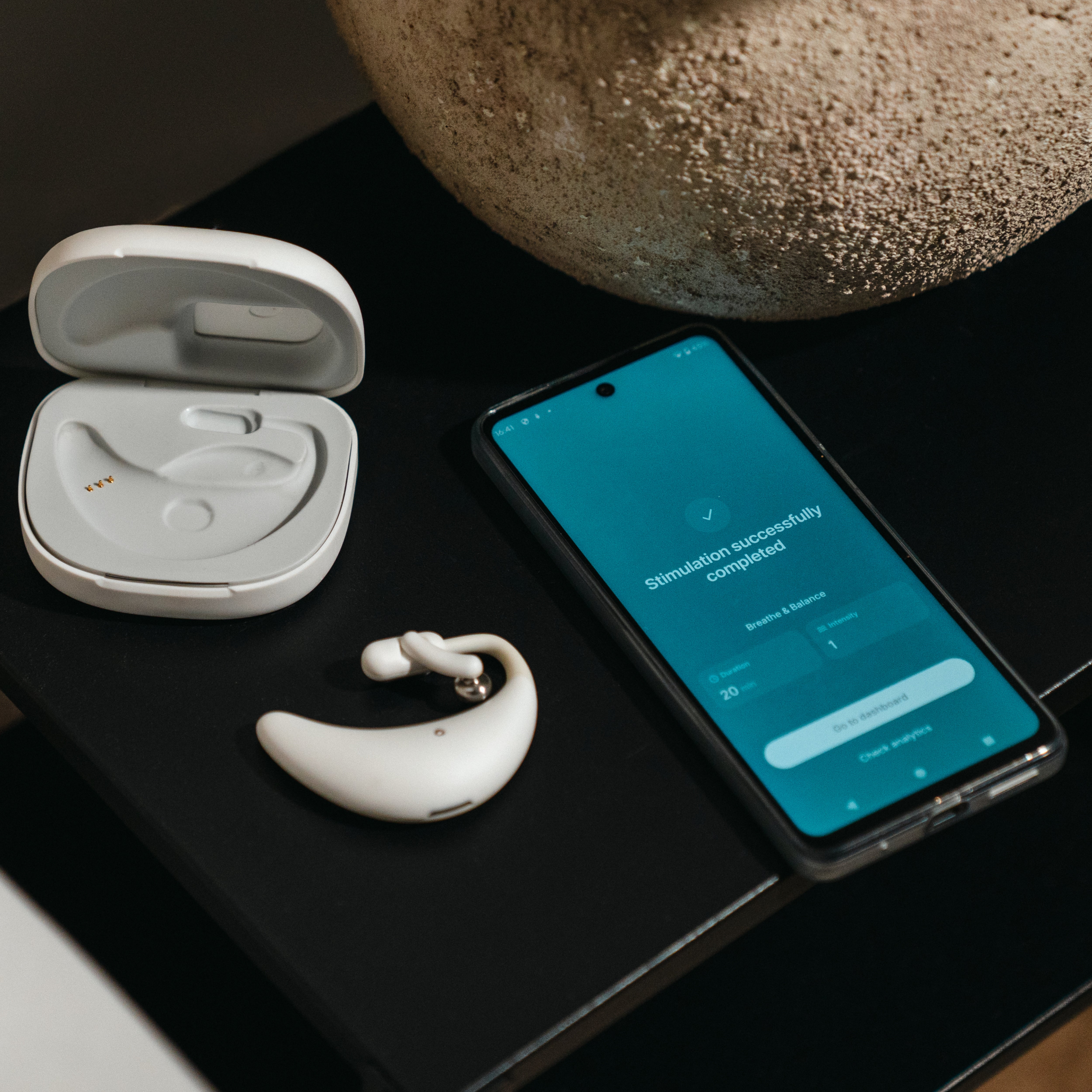
Ready to work with your nervous system instead of against it? Sona is the world's first truly personalised, AI-powered vagus nerve stimulator : reading your HRV and breathing in real time to guide you toward calm. Explore how personalised vagus nerve stimulation could support your stress resilience journey at sona.help.
Disclaimer
DISCLAIMER: Sona is a wellness device and is not a medically regulated product. The information in this article is for educational purposes only and does not constitute medical advice. We do not make any claims about Sona's ability to diagnose, treat, cure, or prevent any medical condition. Vagus nerve stimulation research referenced in this article relates to the broader field of VNS and may not be specific to any particular consumer device. Always consult a qualified healthcare professional before making decisions about your health.
Sources
- https://www.ncbi.nlm.nih.gov/books/NBK538239/ (Physiology, Cortisol : StatPearls, NCBI Bookshelf)
- https://www.ncbi.nlm.nih.gov/pmc/articles/PMC5476783/ (The cortisol awakening response : review literature)
- https://www.frontiersin.org/articles/10.3389/fpsyt.2018.00044/full (Breathing practices and autonomic regulation research)


Share:
Sona vs Neuvana Xen: Which Vagus Nerve Stimulator Is Right for You?
How to Build Stress Resilience: Train Your Nervous System to Thrive Under Pressure